
BuddhistCatholicContemplativeEvangelicalGeneral ChristianHinduJewishLatter-day SaintMuslimNew VisionsProgressive Christian
Beliefs
- Buddhist
- Catholic
- Contemplative
- Evangelical
- General Christian
- Hindu
- Jewish
- Latter-day Saint
- More Voices
- Muslim
- New Visions
- Pagan
- Progressive Christian
Topics
- Religion News
- Food and Religion
- Sports and Religion
- Religious Art
- Religious Music and Entertainment
- Religious Events
- History and Religion
- Style and Religion
- Politics and Religion
- Women in Religion
- Recreation Outdoors and Religion
- Business Finance and Religion
- Careers Workplace and Religion
- Education and Religion
- Family Parenting and Religion
- Health Fitness and Religion
- Home and Religion
- Relationships and Religion
- Technology and Religion
- Travel and Religion
Columnists
- Buddhist Columnists
- Business Finance and Religion Columnists
- Careers Workplace and Religion Columnists
- Catholic Columnists
- Contemplative Columnists
- Education and Religion Columnists
- Evangelists Columnists
- Family Parenting and Religion Columnists
- General Christian Columnists
- Health Fitness and Religion Columnists
- Hindu Columnists
- History and Religion Columnists
- Home and Religion Columnists
- Jewish Columnists
- More Voices Columnists
- Latter Day Columnists
- Muslim Columnists
- New Visions Columnists
- Nonreligious Columnists
- Pagan Columnists
- Politics and Religion Columnists
- Progressive Columnists
- Recreation Outdoors and Religion Columnists
- Relationships and Religion Columnists
- Religion News Columnists
- Religious Art Columnists
- Religious Events Columnists
- Religious Music and Entertainment Columnists
- Sports and Religion Columnists
- Style and Religion Columnists
- Technology and Religion Columnists
- Travel and Religion Columnists
- Women in Religion Columnists
Resource Library
- 2026 Calendar
- Library of World Religions
- The 100 Most Holy Places on Earth
- Patheos Answers
- Podcasts
- Videos
- Faith Leaders Database
- Anglican Episcopalian
- Bahai
- Baptist
- Buddhism
- Christianity
- Confucianism
- Eastern Orthodoxy
- Hinduism
- Holiness and Pentecostal
- ISKCON
- Islam
- Judaism
- Lutheran
- Methodist
- The Church of Jesus Christ of Latter-day Saints
- New Age
- Paganism
- Presbytarian and Reformed
- Protestantism
- Religion Behind the Scenes
- Roman Catholic
- Scientology
- Shia Islam
- Sikhism
- Sufism
- Sunni Islam
- Taoism
- Zen
- See all religions
Research Tools
 Ad-Free & Subscriber Log-In Subscription Support
Ad-Free & Subscriber Log-In Subscription Support
Follow Patheos 

- Trending:
- Forgiveness
- |
- Marriage
- |
- Consciousness
- |
- Death Penalty
- |
- Election
- |
- Halloween
 Just and Sinner
- Home
- Evangelical
- Fr. Jack Whritenour defines the term "Evangelical Catholic"
Fr. Jack Whritenour defines the term "Evangelical Catholic"
Last updated on: November 24, 2014 at 12:47 am by trentdemarest
Fr. Jack Whritenour defines the term "Evangelical Catholic" 2014-11-24T00:47:43-06:00 trentdemarest
Patheos Explore the world's faith through different perspectives on religion and spirituality! Patheos has the views of the prevalent religions and spiritualities of the world.
The views expressed in the following material are not necessarily the views of Just & Sinner, any of its contributing editors, or Rev. Jordan B. Cooper. They are presented as food for thought with the permission of their author. Any comments which are not directly germane to the material content of the post, but which instead seek to impugn or discredit the source, will be deleted and their authors will be banned from the site. –admin
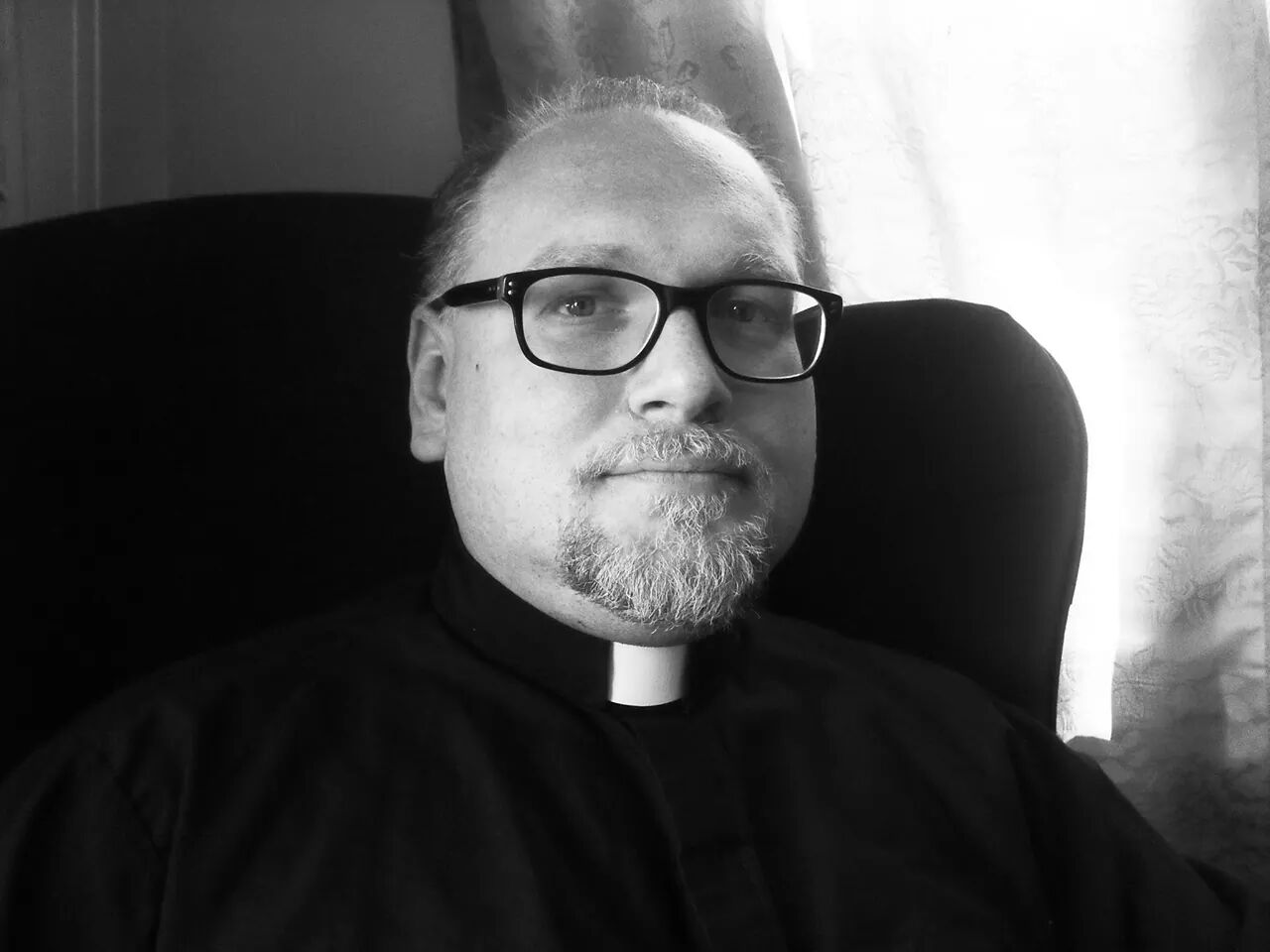
You don’t know Fr. Jack. Yet. Unless you do.
Fr. Jack Whritenour, stalwart conservative ELCA clergyman and administrator of the Society for the Preservation of the Evangelical Lutheran Liturgy on Facebook, defines the term “Evangelical Catholic”:
An Evangelical Catholic (and here I use the term as it applies to Lutherans) is one who views the Church of the Augsburg Confession as not just a Protestant denomination (or several denominations) but a branch of the one, holy, catholic, and apostolic Church of Jesus Christ, and sees Lutheranism as a reforming movement within the catholic Church. Carl Braaten has coined the phrase “catholics in exile.” Most of us believe that full communion with the See and Bishop of Rome is something for which we should pray and strive under the guidance of the Holy Spirit and in accordance with the high priestly prayer of our Lord Jesus Christ.
Evangelical Catholics, while obviously acknowledging the primary importance of the right preaching and teaching of the Holy Gospel, also place the sacraments of Baptism, Confession & Absolution, and the Lord’s Supper on the same level of importance as the right preaching of the Gospel for our faith and life as Christians. Evangelical Catholics, therefore, believe, as the Lutheran Confessions say, that the Lord’s Supper is celebrated every Lord’s Day and at other times (Holy Days). We adamantly defend the doctrine of the True Presence of our living Lord Jesus Christ in the bread and wine of His Holy Supper. We have a high view of ordination, believing that the ministry of the Apostles has been perpetuated in the Church down through the ages by those who have received the laying on of hands in ordination (by those who themselves have been ordained) and who have been called by the Holy Spirit through the Church to this Holy Office. We value the historic liturgy of the Church—her rites, prayers, ceremonies, vestments, ornaments, sacred art, and sacred music—which we consider treasures of the Church which should be used and carefully guarded against the heresy of iconoclasm. We reject only those ceremonies, rites, practices, etc. that obscure the Gospel, but we receive everything from the Great Tradition that is in accordance with the Gospel and is helpful in the proclamation of the Gospel.
Finally, let me say that the Evangelical Catholicism is not a party within Lutheranism; it IS Lutheranism. In truth “Evangelical Catholic” is a redundancy; for we believe that to be evangelical is to be catholic and to be catholic is to be evangelical.
(Nota Bene: in the original text of Fr. Jack’s comments “Evangelical Catholic” and its derivatives were not capitalized. I made the choice to capitalize them here—just so you know where to lob the verbal tomatoes. Again, lob them at me, not him. I have my reasons, the foremost of which is grammatical: “Evangelical Catholic” is used as a proper noun; thus it should be capitalized. Secondly, I will not cede the adjective “catholic” or the capital “C” to the Church of Rome. I do not accept the dissolution of language which has led to the eponymous use of the term “Catholic” for “communicant member of the Church of Rome.” Furthermore, we would all do well to remember that the antonym of the term “Catholic” is not “Protestant” but “sectarian.” Context should determine the use of the term so as to avoid confusion, yes; however, all I ask is that we as Lutherans acknowledge that there are contexts which would bid us proclaim “We are Western Catholic Christians,” even perhaps even simply, “We are Catholics.” This is a matter of in statu confessionis. No parallax of time and no devolution of language can ever tie the term “Catholic” exclusively to the Roman see. Words shape our thinking. Ideas have consequences. Lex orandi lex credendi. –TDD)
+SDG+

Browse Our Archives
Select a Category American Lutheran Classics Blog Posts Book Review Christian Dogmatics Course Church Resources Curtis Leins Dogmatic Theology Ethics FAQs Historical Theology Just & Sinner Publications Luther Quotations Podcast Sermons The American Lutheran Theological Journal The complete works of Revere Franklin Weidner Theology Proper Uncategorized Videos
Select a Month October 2019 September 2019 July 2019 June 2019 May 2019 April 2019 March 2019 February 2019 January 2019 December 2018 November 2018 October 2018 September 2018 July 2018 June 2018 May 2018 April 2018 March 2018 February 2018 January 2018 December 2017 November 2017 October 2017 September 2017 August 2017 July 2017 June 2017 May 2017 April 2017 March 2017 February 2017 January 2017 December 2016 November 2016 October 2016 September 2016 August 2016 July 2016 June 2016 May 2016 April 2016 March 2016 February 2016 January 2016 December 2015 November 2015 October 2015 September 2015 August 2015 July 2015 June 2015 May 2015 April 2015 March 2015 February 2015 January 2015 December 2014 November 2014 October 2014 September 2014 August 2014 July 2014 June 2014 May 2014
Follow Us!
TAKE THE
Religious Wisdom Quiz
Dry bones in a valley came together, received sinews and flesh, then breath entered them. What did this valley represent?
Select your answer to see how you score.
The dead God's army The resurrection The house of Israel
Related posts from Just and Sinner
Why it's important to say "Catholic" in Article...

Gradually Embracing Jack Kevorkian's World?: Christians and Death...

Fighting Critical Theory Approaches in the Academic Library...

"Finding God at the State Fair" by Paul...
TRENDING AT PATHEOS Evangelical

The REST of Your Life: A Creative Wrestles...
This week I had a conversation with a good friend from church....

How the author of the world's best hymn...
I've been working with John Newton for a while now. This makes...

Long before this Lectio Divina, Psalm 130 - the song - started...

What About the Trees? Another Living Parable
After I finished writing the last article about falling leaves as a...

Why Classical Education Is a Conversation, Not a...
Come and Read: Joy in Classical Education When I was a little...

Cornell University has received a great deal of negative publicity and intense...
view all Evangelical blogs
Ad-Free & Subscriber Log-In Subscription Support
- About Us
- 2026 Calendar
- Videos
- Podcasts
- Library of World Religions
- Faith In Media Tracker
- Advertise With Us
- Write for Us
- Privacy Policy
- Terms of Service
- Do Not Sell My Data
- Contact Us
- Radiant Digital
- Manage Newsletter Subscriptions
- Unsubscribe From Notifications
- Sitemap
Copyright 2008-2026, Patheos. All rights reserved.
Subscription Support Ad-Free & Subscriber Log-In
Follow Patheos