
BuddhistCatholicContemplativeEvangelicalGeneral ChristianHinduJewishLatter-day SaintMuslimNew VisionsProgressive Christian
Beliefs
- Buddhist
- Catholic
- Contemplative
- Evangelical
- General Christian
- Hindu
- Jewish
- Latter-day Saint
- More Voices
- Muslim
- New Visions
- Pagan
- Progressive Christian
Topics
- Religion News
- Food and Religion
- Sports and Religion
- Religious Art
- Religious Music and Entertainment
- Religious Events
- History and Religion
- Style and Religion
- Politics and Religion
- Women in Religion
- Recreation Outdoors and Religion
- Business Finance and Religion
- Careers Workplace and Religion
- Education and Religion
- Family Parenting and Religion
- Health Fitness and Religion
- Home and Religion
- Relationships and Religion
- Technology and Religion
- Travel and Religion
Columnists
- Buddhist Columnists
- Business Finance and Religion Columnists
- Careers Workplace and Religion Columnists
- Catholic Columnists
- Contemplative Columnists
- Education and Religion Columnists
- Evangelists Columnists
- Family Parenting and Religion Columnists
- General Christian Columnists
- Health Fitness and Religion Columnists
- Hindu Columnists
- History and Religion Columnists
- Home and Religion Columnists
- Jewish Columnists
- More Voices Columnists
- Latter Day Columnists
- Muslim Columnists
- New Visions Columnists
- Nonreligious Columnists
- Pagan Columnists
- Politics and Religion Columnists
- Progressive Columnists
- Recreation Outdoors and Religion Columnists
- Relationships and Religion Columnists
- Religion News Columnists
- Religious Art Columnists
- Religious Events Columnists
- Religious Music and Entertainment Columnists
- Sports and Religion Columnists
- Style and Religion Columnists
- Technology and Religion Columnists
- Travel and Religion Columnists
- Women in Religion Columnists
Resource Library
- 2026 Calendar
- Library of World Religions
- The 100 Most Holy Places on Earth
- Patheos Answers
- Podcasts
- Videos
- Faith Leaders Database
- Anglican Episcopalian
- Bahai
- Baptist
- Buddhism
- Christianity
- Confucianism
- Eastern Orthodoxy
- Hinduism
- Holiness and Pentecostal
- ISKCON
- Islam
- Judaism
- Lutheran
- Methodist
- The Church of Jesus Christ of Latter-day Saints
- New Age
- Paganism
- Presbytarian and Reformed
- Protestantism
- Religion Behind the Scenes
- Roman Catholic
- Scientology
- Shia Islam
- Sikhism
- Sufism
- Sunni Islam
- Taoism
- Zen
- See all religions
Research Tools
 Ad-Free & Subscriber Log-In Subscription Support
Ad-Free & Subscriber Log-In Subscription Support
Follow Patheos 

- Trending:
- Forgiveness
- |
- Marriage
- |
- Consciousness
- |
- Death Penalty
- |
- Election
- |
- Halloween
 Just and Sinner
- Home
- Evangelical
- Forde's Article: "The Lutheran View of Sanctification"
Forde's Article: "The Lutheran View of Sanctification"
Last updated on: June 3, 2014 at 1:41 am by Jordan Cooper
Forde's Article: "The Lutheran View of Sanctification" 2014-06-03T01:41:50-06:00 Jordan Cooper
Patheos Explore the world's faith through different perspectives on religion and spirituality! Patheos has the views of the prevalent religions and spiritualities of the world.
Much of the contemporary debate on sanctification stems from Gerhard Forde’s essay “the Lutheran View of Sanctification”, published in the volume Five Views on Sanctification, and republished in The Preached God (these are the page numbers I will be referencing). This article has not only influenced the liberal to moderate circles of which Forde himself was involved, but conservative Lutheranism, and even certain Reformed writers.
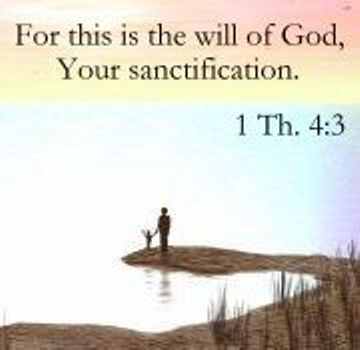
Forde’s main thesis is that sanctification is simply “the art of getting used to justification.” (226) Forde’s contention is that sanctification and justification are synonymous realities that need not be carefully distinguished. “In fact, the Scriptures rarely, if ever, treat sanctification as a movement distinct from justification.” (229)Divorcing the discussion of sanctification from justification allows one to fall into moralism and lose the unconditional nature of the gospel. Forde equates the majority view of sanctification with moralism. He argues that we “make the mistake of equating sanctification with what we might call the moral life.” (227) The two primary errors in this approach are that it makes sanctification about works, and it conflates civil righteousness with that which one needs to stand before God.
The problem with Forde’s definition of sanctification is that it doesn’t exhaust the Biblical and Confessional testimonies on the subject. There is a sense in which sanctification involves a greater understand of grace. As the knowledge of one’s own sin increases, so does one’s understanding of the forgiveness of sins. In this sense, our sanctification involves “getting used to justification.” Yet, at the same time, there are ethical and moral implications to sanctification. On this point, Forde falls into a false dichotomy. Either justification and sanctification are synonymous, or God’s unconditional grace is lost. Forde argues that “the distinction between justification and sanctification is a strictly dogmatic one made because people got nervous about what would happen when unconditional grace was preached, especially in Reformation times.” (230) This sweeping statement contains no reference, and presumes a motivation on the part of those who utilize the distinction which isn’t always there. The distinction between justification and sanctification is not a post-Reformation dogmatic tradition, but is inherent in Church teaching from the first centuries of the Church.
The early church distinguished between the forgiveness of sins that one receives through baptism, confession, and the Eucharist, from the inward work of God wherein the Christian’s actions are changed. The terminology was often in terms of theosis rather than sanctification, but the same distinction between forgiveness of sins, and the destruction of the sin nature applies. This distinction applied throughout the middle ages and into the Reformation period itself. Unfortunately. Forde’s essay has barely any footnotes or references, and so I am unsure where he sees this supposed shift in the dogmatic tradition between identifying sanctification as justification. I presume that Forde sees this error arising as early as the Formula of Concord which distinguishes between justification and sanctification precisely in the manner that Forde criticizes,
“Therefore, even if the converted and believers have the beginnings of renewal, sanctification, love, virtues, and good works, yet these cannot, should not, and must not be introduced or mixed with the article of justification before God.” SD III.35
Though Forde seeks to divorce sanctification from morality, placing it solely in the civil sphere, the Formula connects sanctification with virtue and good works, which would certainly be considered “moral issues.” In fact, Websters Dictionary cites “virtue” as a synonym for “morality.” Unless Forde has an extremely unusual definition of morality, he disagrees with the Formula on this point. Paul himself equates sanctification with certain moral issues as well,
“Finally, then, brothers, we ask and urge you in the Lord Jesus, that as you received from us how you ought to walk and to please God, just as you are doing, that you do so more and more. For you know what instructions we gave you through the Lord Jesus. For this is the will of God, your sanctification: that you abstain from sexual immorality; that each one of you know how to control his own body in holiness and honor, not in the passion of lust like the Gentiles who do not know God; that no one transgress and wrong his brother in this matter, because the Lord is an avenger in all these things, as we told you beforehand and solemnly warned you. For God has not called us for impurity, but in holiness. Therefore whoever disregards this, disregards not man but God, who gives his Holy Spirit to you.” (1 Thessalonians 4:1-8)
Forde sees a genuine problem within the contemporary church that he seeks to correct: moralism. However, Forde’s solution is not tenable, as it ignores certain aspects of Scripture, the Confessions, and the catholic tradition. Rather than denying sanctification (or at least central parts of sanctification), the solution is to teach a more robust doctrine of justification. The problem with many evangelical churches is not that they don’t equate sanctification and justification, but that they lack a proper understanding of justification. If justification is simply a one-time event, an entrance term at the beginning of one’s life of faith, then sanctification takes the central position, and grace can be lost in the mix. We need to emphasize justification as the central reality of the Christian’s life. Justification is not just an “entrance term” but defines our entire life in Christ. Justification is continual, not as a process, but as the continuous life giving declaration that our sins are forgiven. This occurs through the sacraments of Baptism, Holy Absolution, and the Eucharist. This solution to moralism, rather than Forde’s, is consistent with Scripture, the catholic tradition, and the sacramental theology of the Lutheran Church.
One of the primary issues with Forde’s article is that he doesn’t do any real exegetical work, and doesn’t explain how his position is consistent with various passages of Scripture. He even brings up the question, “Does the Bible not follow the declaration of grace with certain exhortations and imperatives?” (232). But rather than answering this valid question, Forde retorts, “So the protestations go, for the most part designed to reimpose at least a minimal conditionality on the promise.” (232) These types of pithy and dismissive responses characterize Forde’s work on this issue. Rather than deal
ing with the Biblical data, he dismisses any opposition as a denial of unconditional grace.
Forde basically limits all talk of sanctification to one solitary passage in Scripture, Romans 6. On this text Forde states, “Actually, all evangelical treatment of sanctification should be little more than comment on this passage.” (233) Rather than taking the Biblical data as a whole and consequently analyzing it, Forde takes one section of Scripture, isolates it, and then determines it to be the sole determinative text on sanctification. Ironically, the text doesn’t even use the term “sanctification” as does the above quoted statement from 1 Thessalonians which would refute Forde’s primary contention. While Paul does certainly point Christians back to the gospel in Romans 6 as the means of sanctification, that doesn’t deny the fact that ethical exhortation is a necessary part of the Pastoral office. Romans 6 cannot be pitted against Romans 8, or Romans 12-15. These texts simply don’t fit into Forde’s system which equates morality purely with civil righteousness. If Paul were talking about civil righteousness, why would the discussion begin with the phrase, “in view of God’s mercies” (Rom 12:1)?
One final issue I have with this essay is that Forde reverses the existential order of Law and Gospel. For Forde, the gospel, the message of God’s unconditional grace, comes first, and consequently one understands sin. “We begin to see the truth of the situation when we realize that because God had to do that, we must have been at the same time sinners. God would be wasting his breath declaring people to be righteous if they were not actually and wholly sinners!” (238) Our understanding of sin, in Forde’s view, arises from the unconditional nature of the gospel. If God’s grace is unconditional, then I must be a sinner and have nothing to do with my own redemption. This reverses the traditional approach that the Law shows sin, and consequently the gospel shows God’s grace. Ironically, Forde agrees here with Krister Stendahl’s critique of the traditional Lutheran view, wherein he argues that “solution precedes plight.”
It has to be said that Forde does allow for progress in sanctification in some sense. He says, “there is a kind of growth and progress, it is to be hoped, but it is growth in grace – a growth in coming to be captivated more and more, if we can so to speak, by the totality, the unconditionality, of the grace of God.” (240) But this growth is really a growth, not in good works, but in understanding justification better, or, “getting used to the fact that if we are to be saved it will have to be by grace alone.” (240) He describes this as a process wherein God is coming down to us. It is a downward movement, rather than upward moral progress. In this context, he is willing to say “it is not that sin is taken away from us, but rather that we are taken away from sin – heart, soul, and mind, as Luther put it.” (242) In some sense then, Forde is willing to say that Christians begin to hate sin, and even stop “particular sins” (242) The good works of the Christian are real, and they show themselves through earthly things, through vocation, and love of neighbor. He rejects the idea of deification, or any “upward movement” of the soul toward God.
I am glad that Forde can speak of progress, yet the way that growth is explained is one dimensional. Growth demonstrates itself almost exclusively in having a greater understanding of justification. This simply does not comport with the Biblical data. It is certainly true, but not to the exclusion of other aspects of growth in faith. Forde is also right in his eschatological emphasis, and his focus on vocation. However, again, he is teaching truth to the exclusion of other realities. The Christian does move toward the goal, just as the goal moves toward him. Paul is willing to say that he presses on toward the goal. (Philippians 3:14) This is not a purely downward movement. Also, vocation is not all there is to say about the Christian life. It is certainly a central theme in Scripture, and Luther’s writings, but there are other important themes as well. Involved in growth is communion with the Trinity – participation in God that works itself out through prayer, the sacraments, the divine liturgy, etc. While good works are performed “downward” there is also an upward movement of the soul toward God. This is even confessed in our liturgy. We are to “lift up our hearts” to the Lord.
Frankly, of all the work of Forde that I have read, this article is the weakest. Forde adopts certain important Biblical themes, but in doing that he denies others. He doesn’t deal seriously with the Biblical text, the Confessional tradition, or even cite the theology he is critiquing. I am personally amazed that this article has had such a broad impact on the church.
Previous Post

June 3, 2014
Universal Objective Justification: My Position on the Issue
Next Post
June 3, 2014 Luther on the Necessity of Preaching Sanctification
Browse Our Archives
Select a Category American Lutheran Classics Blog Posts Book Review Christian Dogmatics Course Church Resources Curtis Leins Dogmatic Theology Ethics FAQs Historical Theology Just & Sinner Publications Luther Quotations Podcast Sermons The American Lutheran Theological Journal The complete works of Revere Franklin Weidner Theology Proper Uncategorized Videos
Select a Month October 2019 September 2019 July 2019 June 2019 May 2019 April 2019 March 2019 February 2019 January 2019 December 2018 November 2018 October 2018 September 2018 July 2018 June 2018 May 2018 April 2018 March 2018 February 2018 January 2018 December 2017 November 2017 October 2017 September 2017 August 2017 July 2017 June 2017 May 2017 April 2017 March 2017 February 2017 January 2017 December 2016 November 2016 October 2016 September 2016 August 2016 July 2016 June 2016 May 2016 April 2016 March 2016 February 2016 January 2016 December 2015 November 2015 October 2015 September 2015 August 2015 July 2015 June 2015 May 2015 April 2015 March 2015 February 2015 January 2015 December 2014 November 2014 October 2014 September 2014 August 2014 July 2014 June 2014 May 2014
Follow Us!
TAKE THE
Religious Wisdom Quiz
Who interpreted Pharaoh's dreams in Egypt?
Select your answer to see how you score.
Moses Aaron Daniel Joseph
Related posts from Just and Sinner
Rev. Lewis Polzin is Back on the Show...

God Knows When We Won't Do Good. And...


What Can We Learn About the New Man...
TRENDING AT PATHEOS Evangelical

The REST of Your Life: A Creative Wrestles...
This week I had a conversation with a good friend from church....

How the author of the world's best hymn...
I've been working with John Newton for a while now. This makes...

Long before this Lectio Divina, Psalm 130 - the song - started...

What About the Trees? Another Living Parable
After I finished writing the last article about falling leaves as a...

Why Classical Education Is a Conversation, Not a...
Come and Read: Joy in Classical Education When I was a little...

Cornell University has received a great deal of negative publicity and intense...
view all Evangelical blogs
Ad-Free & Subscriber Log-In Subscription Support
- About Us
- 2026 Calendar
- Videos
- Podcasts
- Library of World Religions
- Faith In Media Tracker
- Advertise With Us
- Write for Us
- Privacy Policy
- Terms of Service
- Do Not Sell My Data
- Contact Us
- Radiant Digital
- Manage Newsletter Subscriptions
- Unsubscribe From Notifications
- Sitemap
Copyright 2008-2026, Patheos. All rights reserved.
Subscription Support Ad-Free & Subscriber Log-In
Follow Patheos