
BuddhistCatholicContemplativeEvangelicalGeneral ChristianHinduJewishLatter-day SaintMuslimNew VisionsProgressive Christian
Beliefs
- Buddhist
- Catholic
- Contemplative
- Evangelical
- General Christian
- Hindu
- Jewish
- Latter-day Saint
- More Voices
- Muslim
- New Visions
- Pagan
- Progressive Christian
Topics
- Religion News
- Food and Religion
- Sports and Religion
- Religious Art
- Religious Music and Entertainment
- Religious Events
- History and Religion
- Style and Religion
- Politics and Religion
- Women in Religion
- Recreation Outdoors and Religion
- Business Finance and Religion
- Careers Workplace and Religion
- Education and Religion
- Family Parenting and Religion
- Health Fitness and Religion
- Home and Religion
- Relationships and Religion
- Technology and Religion
- Travel and Religion
Columnists
- Buddhist Columnists
- Business Finance and Religion Columnists
- Careers Workplace and Religion Columnists
- Catholic Columnists
- Contemplative Columnists
- Education and Religion Columnists
- Evangelists Columnists
- Family Parenting and Religion Columnists
- General Christian Columnists
- Health Fitness and Religion Columnists
- Hindu Columnists
- History and Religion Columnists
- Home and Religion Columnists
- Jewish Columnists
- More Voices Columnists
- Latter Day Columnists
- Muslim Columnists
- New Visions Columnists
- Nonreligious Columnists
- Pagan Columnists
- Politics and Religion Columnists
- Progressive Columnists
- Recreation Outdoors and Religion Columnists
- Relationships and Religion Columnists
- Religion News Columnists
- Religious Art Columnists
- Religious Events Columnists
- Religious Music and Entertainment Columnists
- Sports and Religion Columnists
- Style and Religion Columnists
- Technology and Religion Columnists
- Travel and Religion Columnists
- Women in Religion Columnists
Resource Library
- 2026 Calendar
- Library of World Religions
- The 100 Most Holy Places on Earth
- Patheos Answers
- Podcasts
- Videos
- Faith Leaders Database
- Anglican Episcopalian
- Bahai
- Baptist
- Buddhism
- Christianity
- Confucianism
- Eastern Orthodoxy
- Hinduism
- Holiness and Pentecostal
- ISKCON
- Islam
- Judaism
- Lutheran
- Methodist
- The Church of Jesus Christ of Latter-day Saints
- New Age
- Paganism
- Presbytarian and Reformed
- Protestantism
- Religion Behind the Scenes
- Roman Catholic
- Scientology
- Shia Islam
- Sikhism
- Sufism
- Sunni Islam
- Taoism
- Zen
- See all religions
Research Tools
 Ad-Free & Subscriber Log-In Subscription Support
Ad-Free & Subscriber Log-In Subscription Support
Follow Patheos 

- Trending:
- Forgiveness
- |
- Marriage
- |
- Consciousness
- |
- Death Penalty
- |
- Election
- |
- Halloween
 Just and Sinner
- Home
- Evangelical
- Does Absolution Obscure Christ's Mediatorial Role?
Does Absolution Obscure Christ's Mediatorial Role?
Last updated on: June 3, 2014 at 1:14 am by Jordan Cooper
Does Absolution Obscure Christ's Mediatorial Role? 2014-06-03T01:14:39-06:00 Jordan Cooper
Patheos Explore the world's faith through different perspectives on religion and spirituality! Patheos has the views of the prevalent religions and spiritualities of the world.
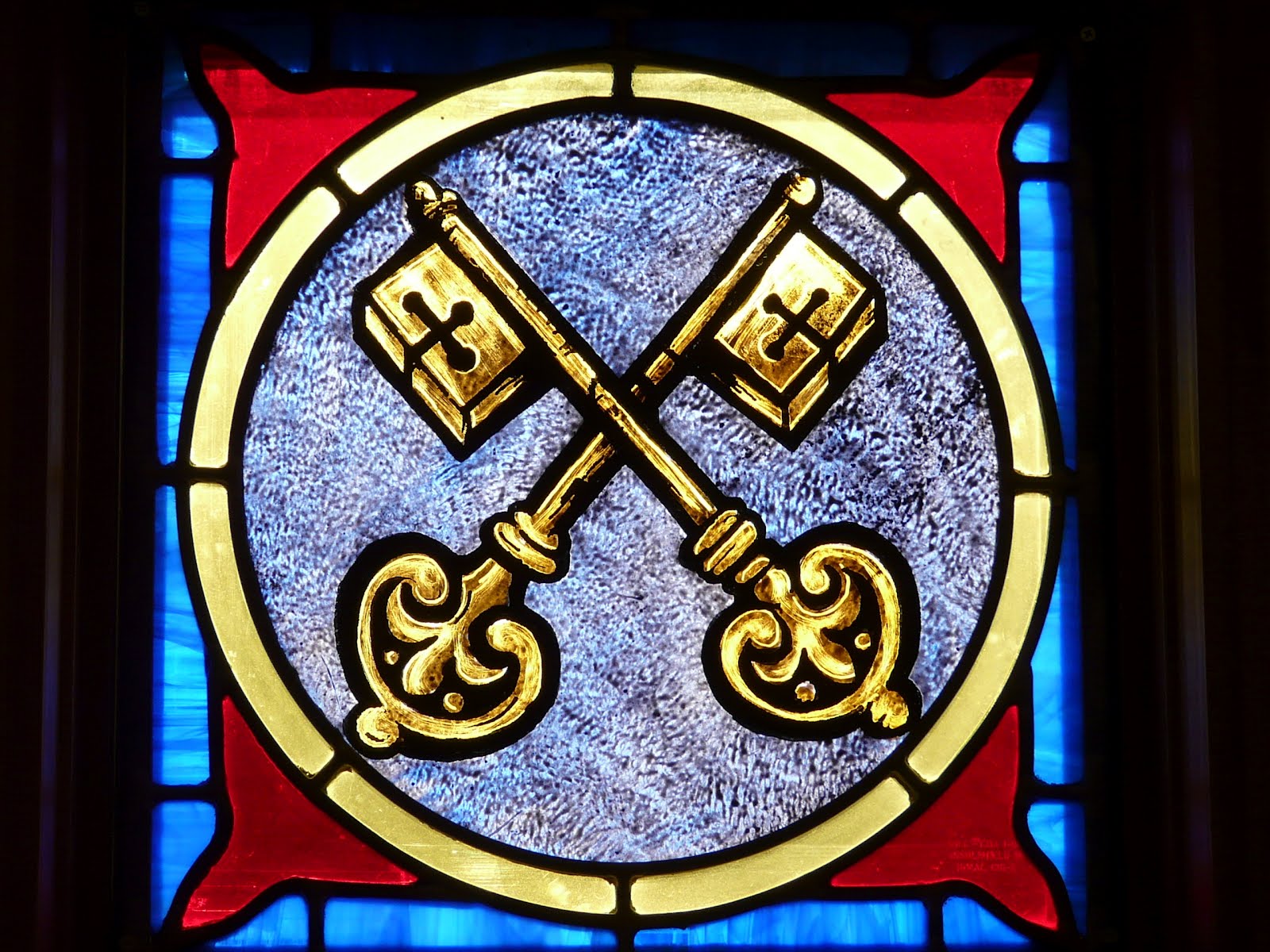
I received the following question which I think deserves a response since it is so commonly asked:
Hey, I just started watching your video “Just and Sinner: What is the doctrine on the two kindoms?” And you mentioned that if someone were to commit a crime to someone else, and they went to the pastor for forgiveness, then it was then the pastor’s job to forgive them. Now I was wondering how that perspective matches with I John 1:9 “If we confess our sins, He is faithful and just and will forgive us our sins and purify us from all unrighteousness.” And I Timothy 2:5 “For there is one God and one mediator between God and men, the man Christ Jesus”.
It is a common objection to our practice of pastoral absolution, that it obscures the role of Christ as sole mediator, placing the pastor in Christ’s role. However, I don’t think this is the case.
First a distinction needs to be made between a Lutheran and Roman view of ordination. In Roman Catholic theology, ordination is a sacrament. When the priest is ordained, there is an ontological change; there is indelible mark placed into the individuals character. He is declared an “alter Christus“, meaning “another Christ.” The man who is ordained then becomes a priest, and is able to offer sacrifices up to God on behalf of the congregation and re-present Christ’s sacrifice during the mass.
In a Lutheran view of ordination, there is no indelible mark placed on the individual. Ordination is not a sacrament and there is no special grace thereby received by the one ordained. However, ordination is a divine call. It is a call from God, enacted through the church which places one into a specific office in the church. In this office one is to preach the word an administer the sacraments. The pastor’s calling is not higher than other essential roles in the church, it is merely different. Thus all roles in the body of Christ are significant and no one needs to be placed above another as if a pastor is on a higher spiritual plane than other members of the church. But because of the divine nature of the call, the pastoral office should not and cannot be usurped by the laity, and the pastor should not usurp the role of the laity either.
It’s clear that the Roman and Lutheran views of ordination are different. What Luther feared about the priesthood laying claim to aspects of Christ’s own unique priesthood was done away with during the Reformation. However, Luther still promoted the pastoral office as one in which God acts to forgive sins. Does this not still make the pastor a co-mediator?
Think about what a mediator is. A mediator is a go-between, acting in an intercessory role between two parties. Technically, if you pray for someone else, you are acting as a mediator. If my brother falls into sin and I pray for his repentance and forgiveness, I am interceding before my brother, being a mediator between him and God. The point is that Christ has a unique mediatorial role which does not negate other mediators in a lesser sense. In the instance of confession and absolution, I don’t believe that Christ’s mediatorial role is being violated. This is apparent in the fact that Christ himself commands it.
Look at the following two texts:
“I will give you the keys of the kingdom of heaven, and whatever you bind on earth shall be bound in heaven, and whatever you loose on earth shall be loosed in heaven.” (Matthew 16:19)
“If you forgive the sins of any, they are forgiven them; if you withhold forgiveness from any, it is withheld.” (John 20:23)
John commands his disciples, the leaders of the first century church, to forgive sins. He does not tell them to talk about the forgiveness of sins, or tell them where to receive the forgiveness of sins; rather, Jesus commands the actual forgiving of sins by his disciples. All contemporary evangelical interpretations of this text try so hard to twist its clear meaning. Looking at them was one of my primary reasons for becoming a Lutheran. The texts are simply so clear.
Remember that it is the same John who writes the epistle wherein he commands personal confession to God for forgiveness, who also writes of the forgiveness that the disciples could offer those in the church. The two concepts are not mutually exclusive. God does forgive sins through confession in prayer. However, he has also instituted a means by which the forgiveness that we receive can be heard and received visibly. This does not mean that Christ is obscured, but that when the minister proclaims forgiveness, it is the act of God coming through the pastor to bring forgiveness. It does not point us away from Christ’s mediatorial role but points us to the one who continues to be our intercessor, assuring our salvation.
It is not the pastoral office that makes the word effective. It is not that the pastors words and actions have magical powers. Rather, it is the word itself which is effective, the minister is merely a means to bring that word to people’s ears, and forgiveness to sinful saints.
Previous Post

June 3, 2014
Response to Dr. Kilcrease on Justification
Next Post
June 3, 2014 The Incoherence of Atheism
Browse Our Archives
Select a Category American Lutheran Classics Blog Posts Book Review Christian Dogmatics Course Church Resources Curtis Leins Dogmatic Theology Ethics FAQs Historical Theology Just & Sinner Publications Luther Quotations Podcast Sermons The American Lutheran Theological Journal The complete works of Revere Franklin Weidner Theology Proper Uncategorized Videos
Select a Month October 2019 September 2019 July 2019 June 2019 May 2019 April 2019 March 2019 February 2019 January 2019 December 2018 November 2018 October 2018 September 2018 July 2018 June 2018 May 2018 April 2018 March 2018 February 2018 January 2018 December 2017 November 2017 October 2017 September 2017 August 2017 July 2017 June 2017 May 2017 April 2017 March 2017 February 2017 January 2017 December 2016 November 2016 October 2016 September 2016 August 2016 July 2016 June 2016 May 2016 April 2016 March 2016 February 2016 January 2016 December 2015 November 2015 October 2015 September 2015 August 2015 July 2015 June 2015 May 2015 April 2015 March 2015 February 2015 January 2015 December 2014 November 2014 October 2014 September 2014 August 2014 July 2014 June 2014 May 2014
Follow Us!
TAKE THE
Religious Wisdom Quiz
Multitudes, multitudes in the valley of decision! What is this valley also called?
Select your answer to see how you score.
The valley of Jehoshaphat The valley of Megiddo The valley of Kidron The valley of judgment
Related posts from Just and Sinner
An Explanation and Defense of Holy Absolution


The Connection Between the Bondage of the Will...
TRENDING AT PATHEOS Evangelical

The REST of Your Life: A Creative Wrestles...
This week I had a conversation with a good friend from church....

How the author of the world's best hymn...
I've been working with John Newton for a while now. This makes...

Long before this Lectio Divina, Psalm 130 - the song - started...

What About the Trees? Another Living Parable
After I finished writing the last article about falling leaves as a...

Why Classical Education Is a Conversation, Not a...
Come and Read: Joy in Classical Education When I was a little...

Cornell University has received a great deal of negative publicity and intense...
view all Evangelical blogs
Ad-Free & Subscriber Log-In Subscription Support
- About Us
- 2026 Calendar
- Videos
- Podcasts
- Library of World Religions
- Faith In Media Tracker
- Advertise With Us
- Write for Us
- Privacy Policy
- Terms of Service
- Do Not Sell My Data
- Contact Us
- Radiant Digital
- Manage Newsletter Subscriptions
- Unsubscribe From Notifications
- Sitemap
Copyright 2008-2026, Patheos. All rights reserved.
Subscription Support Ad-Free & Subscriber Log-In
Follow Patheos