
BuddhistCatholicContemplativeEvangelicalGeneral ChristianHinduJewishLatter-day SaintMuslimNew VisionsProgressive Christian
Beliefs
- Buddhist
- Catholic
- Contemplative
- Evangelical
- General Christian
- Hindu
- Jewish
- Latter-day Saint
- More Voices
- Muslim
- New Visions
- Pagan
- Progressive Christian
Topics
- Religion News
- Food and Religion
- Sports and Religion
- Religious Art
- Religious Music and Entertainment
- Religious Events
- History and Religion
- Style and Religion
- Politics and Religion
- Women in Religion
- Recreation Outdoors and Religion
- Business Finance and Religion
- Careers Workplace and Religion
- Education and Religion
- Family Parenting and Religion
- Health Fitness and Religion
- Home and Religion
- Relationships and Religion
- Technology and Religion
- Travel and Religion
Columnists
- Buddhist Columnists
- Business Finance and Religion Columnists
- Careers Workplace and Religion Columnists
- Catholic Columnists
- Contemplative Columnists
- Education and Religion Columnists
- Evangelists Columnists
- Family Parenting and Religion Columnists
- General Christian Columnists
- Health Fitness and Religion Columnists
- Hindu Columnists
- History and Religion Columnists
- Home and Religion Columnists
- Jewish Columnists
- More Voices Columnists
- Latter Day Columnists
- Muslim Columnists
- New Visions Columnists
- Nonreligious Columnists
- Pagan Columnists
- Politics and Religion Columnists
- Progressive Columnists
- Recreation Outdoors and Religion Columnists
- Relationships and Religion Columnists
- Religion News Columnists
- Religious Art Columnists
- Religious Events Columnists
- Religious Music and Entertainment Columnists
- Sports and Religion Columnists
- Style and Religion Columnists
- Technology and Religion Columnists
- Travel and Religion Columnists
- Women in Religion Columnists
Resource Library
- 2026 Calendar
- Library of World Religions
- The 100 Most Holy Places on Earth
- Patheos Answers
- Podcasts
- Videos
- Faith Leaders Database
- Anglican Episcopalian
- Bahai
- Baptist
- Buddhism
- Christianity
- Confucianism
- Eastern Orthodoxy
- Hinduism
- Holiness and Pentecostal
- ISKCON
- Islam
- Judaism
- Lutheran
- Methodist
- The Church of Jesus Christ of Latter-day Saints
- New Age
- Paganism
- Presbytarian and Reformed
- Protestantism
- Religion Behind the Scenes
- Roman Catholic
- Scientology
- Shia Islam
- Sikhism
- Sufism
- Sunni Islam
- Taoism
- Zen
- See all religions
Research Tools
 Ad-Free & Subscriber Log-In Subscription Support
Ad-Free & Subscriber Log-In Subscription Support
Follow Patheos 

- Trending:
- Forgiveness
- |
- Marriage
- |
- Consciousness
- |
- Death Penalty
- |
- Election
- |
- Halloween
 Just and Sinner
- Home
- Evangelical
- Certitude vs. Certainty: What Can Neil Gorsuch and Martin Luther Teach Us About Knowledge and Truth?
Certitude vs. Certainty: What Can Neil Gorsuch and Martin Luther Teach Us About Knowledge and Truth?
Last updated on: February 3, 2017 at 6:04 am by nathanrinne
Certitude vs. Certainty: What Can Neil Gorsuch and Martin Luther Teach Us About Knowledge and Truth? 2017-02-03T06:04:00-06:00 nathanrinne
Patheos Explore the world's faith through different perspectives on religion and spirituality! Patheos has the views of the prevalent religions and spiritualities of the world.

Judge Neil Gorsuch
Neil Gorsuch, President Donald Trump’s widely lauded pick for new Supreme Court Justice, will be big news for weeks to come. Gorsuch is, like Antonin Scalia before him, an “originalist” judge, meaning that he “interprets the Constitution based on its plain language and original public meaning.” (see here)
According to Wikipedia, “originalism is a way to interpret the Constitution‘s meaning as stable from the time of enactment” (italics mine). Stanley Fish however, rightly argues that “[originalism] is not an approach to interpretation, it is interpretation, because what else could you be doing when you’re trying to interpret the words of another except trying to figure out what that other meant by these words?” (italics mine; see more on Fish’s view and my response here). Therefore, the originalist is one who takes the words of the Constitution very seriously.
I suggest that Christians can see this as an opportunity for having discussions about the Bible and what it means for people today (which yes, many people are open to exploring when given the opportunity!). Particularly, we can appreciate how Christians like Martin Luther believed that hearing the words of Scripture not only brings personal certitude, but certainty. The distinction is subtle but important…

We will get to that below, but first we need to cover some preliminary ground. Here we go…
How does the judicial philosophy of originalism connect with Scriptural interpretation? The main point is this: like the originalist with the Constitution, the Christian takes the words of the Bible very seriously. And, in a critical difference, he does this not only because these words are thought to be wise, like the Constitution, but because they are believed to be the very word of God.
Not only this, but the Christian even talks about knowing these words to be the very Word of God. And this, of course, means Truth with a capital T. Knowledge. Wisdom. And Certainty. And the really crazy thing? It is not only Christians who know this, but at some level those who hear the word and do not put their trust in it know it as well.
Is this a Lutheran thing to say? Is this a Christian thing to say?
Yes. For example, Martin Luther not only held to a view of the Holy Scriptures that is similar to the way originalists deal with the constitution (directly comparing the Bible to the laws written in societies), but he also believed, contrary to many theologians today, that God made Himself and His will known to all though these words.
Seriously? Again, yes. Lutherans who adhere to the Lutheran Confessions today like to emphasize, along with the giant of 20th century theology Karl Barth, that unbelievers are not able to understand the true meaning of the Scripture (see I Cor. 2:14, for example). Luther, of course, believed that this was true as well in a sense: unbelievers could not begin to discern the depths of the Bible – its spiritual meaning. That said, at the same time he also taught, per passages like John 16:8-11, that the unbeliever could be given real knowledge of the truth though the Scriptures.
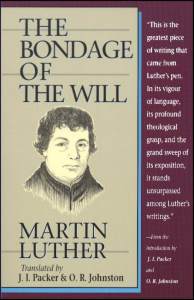 In his famed work The Bondage of the Will, we see concrete examples of this (all following quotations are from the J.I. Packer translation).
Luther begins his teaching on the nature of Scripture by noting that Isaiah 40:13 “does not say: ‘who has known the mind of Scripture?’ but: ‘who has known the mind of the Lord?’” Not only does God reveal His own mind in the Scriptures, but He also brings clarity:
“the perspicuity [i.e. clarity] of Scripture is twofold… The first is external, and relates to the ministry of the Word [“all that is in Scripture is through the Word brought forth into the clearest light and proclaimed to the whole world”!]: the second concerns the knowledge of the heart [“nobody who has not the Spirit of God sees a jot of what is in the Scriptures”!]” (BOTW, Packer ed., 73, 74).
This only gives us a clue of where Luther is going. Later in this book he uses Isaiah 8:20 (“…to the law and to the testimony…”*) to circle back to the importance of the clarity and decisiveness of Scripture. Simply from the Old Testament, to say nothing of the New, he marshals passages from Deuteronomy 17:8, Psalms 19:8 and 119:130, Malachai 2:7 and more to make his case. He writes:
“if laws need to be luminous and definite in secular societies, where only temporal issues are concerned, and such laws have in fact been bestowed by Divine bounty upon all the world, how should He not give to Christians, His own people and His elect, laws and rules of much greater clarity and certainty by which to adjust and settle themselves and all issues between them?… let us go on, and overwhelm this pestilent saying of the Sophists with passages of Scripture.”
Luther goes on to point out that Stephen, in the book of Acts, quotes Isaiah 66:1, “What is the house that ye build unto me?,” to prove to the Jewish council that God did not command his people to build a temple to Him. And here, he notes that Luke writes “they could not resist the spirit and wisdom with which he spake” (Acts 6:10), and that Jesus Christ Himself says of the words His heralds speak, “your adversaries shall not be able to resist.” Luther recalls that in response to Stephen’s words the council “shut their eyes and summoned false witnesses against him” – to which he replied “Ye uncircumcised in heart and ears, ye do always resist the Holy Ghost.”
Luther than drops the hammer: “He says that they do resist, although they could not resist”, meaning that they very well knew the truth the external word brought but internally suppressed it in unrighteousness (see Romans 1). With Erasmus (and Rome) in his sights, Luther asks, with great rhetorical effect: “What is this but to say that their actual resistance will show their inability to resist?” (130-131)
In other words they know.
Do we have such confidence of the external clarity of the Bible – and the knowledge of truth that it brings? If not, why not? Should we seek such confidence? If not, why not?
Quoting Isaiah 6:10, “Hearing ye shall hear and shall not understand and seeing ye shall see and shall not perceive”, Luther is absolutely relentless:
“…reveal… how mighty is the dominion and power of Satan over the sons of men, which prevents them from hearing and grasping the plainest words of God, and makes them like men whom an illusionist has mesmerized into thinking that the sun is a cold cinder, or believing that a stone is gold… [Satan is the cause of man’s failure to grasp God’s words, and] if [he] did not do so, the whole world could be converted by a single word of God, hear once; there would be no need of more” (133-134).

From the parable of the sower: “the evil one comes and snatches away what was sown in their heart.”
Man’s failure to grasp God’s clear words (i.e. trust) does not result from weak understanding, as men like Erasmus claim, but on the contrary, weak understanding is ideal for grasping God’s words (133-134). Of course the Holy Spirit figures into all of this as well, as He works according to and through God’s word…
Can we, if we adopt the more subjective posture invoked by many modern biblical scholars, ever hope to nurture such confidence? That we possess knowledge of the truth and can and should assert the same to others?
Where was Luther wrong?
Is he wrong about the perspicuity, i.e. clarity, of Holy Scripture? Is he wrong about the knowledge that it brings those who hear it?
Today, we are told that even though we as Christians believe in Christ and know Him and His word to be true (and that we grow in this understanding!) this is, really, ultimately about our own personal certitude. In other words, this means that certainty is no longer associated with something that we can call real knowledge, but is actually just individual confidence, assurance, etc.
Regrettably, the fact/value split put forth most aggressively by the 18th c. philosopher David Hume has comes to an ever-greater flowering in what remains of Christendom.
I suggest that even one of the most conservative and respected Lutheran theologians of the last century got inadvertently caught up in this trap, saying the following almost 50 years ago:
“Scientific knowledge is evident knowledge; theology is by no means evident in the same sense, for it deals not with things to be known but things to be believed (τά πιστά). Therefore theology insists that reason that seeks to know theological matters be taken captive…”
The unintended implications of this view, I think, are that we lose Luther’s ability to assert. Luther believed that the Scriptures granted all persons true knowledge – even if that knowledge was suppressed and not understood in its full spiritual sense. And objective certainty triumphed over mere subjective certitude.
What does Christ’s church today believe? When He returns, will he find faith on earth?
Run for your life – to the Word (Isaiah 8:20, Acts 17:11).
FIN
Notes:
*Of the Isaiah passage in particular he says it “dispatches all questions ‘to the law and to the testimony,’ and threatens that unless we comply the light of dawn must be denied us” (126).
Image credit for Gorsuch:
“As a work of the United States Federal Government, the file is in the public domain in the United States.”
The sower, Kew Gardens in London. Picture by mira 66, Attribution 2.0 Generic (CC BY 2.0)
Previous Post
January 31, 2017
Todd Wilken on Radical Lutheranism
Next Post

February 4, 2017 The Formula of Concord
Browse Our Archives
Select a Category American Lutheran Classics Blog Posts Book Review Christian Dogmatics Course Church Resources Curtis Leins Dogmatic Theology Ethics FAQs Historical Theology Just & Sinner Publications Luther Quotations Podcast Sermons The American Lutheran Theological Journal The complete works of Revere Franklin Weidner Theology Proper Uncategorized Videos
Select a Month October 2019 September 2019 July 2019 June 2019 May 2019 April 2019 March 2019 February 2019 January 2019 December 2018 November 2018 October 2018 September 2018 July 2018 June 2018 May 2018 April 2018 March 2018 February 2018 January 2018 December 2017 November 2017 October 2017 September 2017 August 2017 July 2017 June 2017 May 2017 April 2017 March 2017 February 2017 January 2017 December 2016 November 2016 October 2016 September 2016 August 2016 July 2016 June 2016 May 2016 April 2016 March 2016 February 2016 January 2016 December 2015 November 2015 October 2015 September 2015 August 2015 July 2015 June 2015 May 2015 April 2015 March 2015 February 2015 January 2015 December 2014 November 2014 October 2014 September 2014 August 2014 July 2014 June 2014 May 2014
Follow Us!
TAKE THE
Religious Wisdom Quiz
Which Psalm opens and closes with "Bless the Lord, O my soul"?
Select your answer to see how you score.
Psalm 37 Psalm 22 Psalm 1 Psalm 103
Related posts from Just and Sinner

Fighting Critical Theory Approaches in the Academic Library...
On the Eleatic Philosophers (A History of Western...
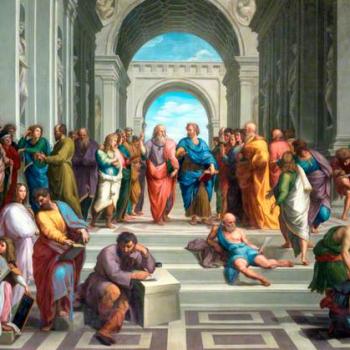
A History of Western Thought YouTube Videos
TRENDING AT PATHEOS Evangelical

The REST of Your Life: A Creative Wrestles...
This week I had a conversation with a good friend from church....

How the author of the world's best hymn...
I've been working with John Newton for a while now. This makes...

Long before this Lectio Divina, Psalm 130 - the song - started...

What About the Trees? Another Living Parable
After I finished writing the last article about falling leaves as a...

Why Classical Education Is a Conversation, Not a...
Come and Read: Joy in Classical Education When I was a little...

Cornell University has received a great deal of negative publicity and intense...
view all Evangelical blogs
Ad-Free & Subscriber Log-In Subscription Support
- About Us
- 2026 Calendar
- Videos
- Podcasts
- Library of World Religions
- Faith In Media Tracker
- Advertise With Us
- Write for Us
- Privacy Policy
- Terms of Service
- Do Not Sell My Data
- Contact Us
- Radiant Digital
- Manage Newsletter Subscriptions
- Unsubscribe From Notifications
- Sitemap
Copyright 2008-2026, Patheos. All rights reserved.
Subscription Support Ad-Free & Subscriber Log-In
Follow Patheos