
BuddhistCatholicContemplativeEvangelicalGeneral ChristianHinduJewishLatter-day SaintMuslimNew VisionsProgressive Christian
Beliefs
- Buddhist
- Catholic
- Contemplative
- Evangelical
- General Christian
- Hindu
- Jewish
- Latter-day Saint
- More Voices
- Muslim
- New Visions
- Pagan
- Progressive Christian
Topics
- Religion News
- Food and Religion
- Sports and Religion
- Religious Art
- Religious Music and Entertainment
- Religious Events
- History and Religion
- Style and Religion
- Politics and Religion
- Women in Religion
- Recreation Outdoors and Religion
- Business Finance and Religion
- Careers Workplace and Religion
- Education and Religion
- Family Parenting and Religion
- Health Fitness and Religion
- Home and Religion
- Relationships and Religion
- Technology and Religion
- Travel and Religion
Columnists
- Buddhist Columnists
- Business Finance and Religion Columnists
- Careers Workplace and Religion Columnists
- Catholic Columnists
- Contemplative Columnists
- Education and Religion Columnists
- Evangelists Columnists
- Family Parenting and Religion Columnists
- General Christian Columnists
- Health Fitness and Religion Columnists
- Hindu Columnists
- History and Religion Columnists
- Home and Religion Columnists
- Jewish Columnists
- More Voices Columnists
- Latter Day Columnists
- Muslim Columnists
- New Visions Columnists
- Nonreligious Columnists
- Pagan Columnists
- Politics and Religion Columnists
- Progressive Columnists
- Recreation Outdoors and Religion Columnists
- Relationships and Religion Columnists
- Religion News Columnists
- Religious Art Columnists
- Religious Events Columnists
- Religious Music and Entertainment Columnists
- Sports and Religion Columnists
- Style and Religion Columnists
- Technology and Religion Columnists
- Travel and Religion Columnists
- Women in Religion Columnists
Resource Library
- 2026 Calendar
- Library of World Religions
- The 100 Most Holy Places on Earth
- Patheos Answers
- Podcasts
- Videos
- Faith Leaders Database
- Anglican Episcopalian
- Bahai
- Baptist
- Buddhism
- Christianity
- Confucianism
- Eastern Orthodoxy
- Hinduism
- Holiness and Pentecostal
- ISKCON
- Islam
- Judaism
- Lutheran
- Methodist
- The Church of Jesus Christ of Latter-day Saints
- New Age
- Paganism
- Presbytarian and Reformed
- Protestantism
- Religion Behind the Scenes
- Roman Catholic
- Scientology
- Shia Islam
- Sikhism
- Sufism
- Sunni Islam
- Taoism
- Zen
- See all religions
Research Tools
 Ad-Free & Subscriber Log-In Subscription Support
Ad-Free & Subscriber Log-In Subscription Support
Follow Patheos 

- Trending:
- Forgiveness
- |
- Marriage
- |
- Consciousness
- |
- Death Penalty
- |
- Election
- |
- Halloween
 Just and Sinner
- Home
- Evangelical
- You Can’t Do Theology Without Philosophy
You Can’t Do Theology Without Philosophy
Last updated on: September 22, 2017 at 10:16 am by Jordan Cooper
You Can’t Do Theology Without Philosophy 2017-09-22T10:16:54-06:00 Jordan Cooper
Patheos Explore the world's faith through different perspectives on religion and spirituality! Patheos has the views of the prevalent religions and spiritualities of the world.
“What hath Athens to do with Jerusalem?” The old question attributed to Tertullian has been answered in several ways throughout the centuries as Christian thinkers have had to make decisions surrounding the usefulness of philosophy. Thinkers such as Origen and Clement of Alexandria tended to adopt such a strong adherence to Platonic ideas that Scripture was squeezed into a particular philosophical mold into which it didn’t always fit. Others have argued for the complete divorce of theology from philosophy. In my doctoral research on scholasticism, I have increasingly encountered modern thinkers who disparage philosophy, lamenting the Protestant scholastic era as one which imposed foreign categories over the Biblical text. The irony in this is that those same writers who criticize the use of Aristotle (as one example) themselves are beholden to certain philosophies. They just happen to be different ones.
No one can engage in any intellectual endeavor apart from philosophy. The average individual in any given society has certain concepts of being, knowledge, and ethics that have been adopted, likely without any critical examination whatsoever. The concepts first explained by academic philosophers tend to slowly move into the consciousness of society, whether one recognizes such influences or not. Because of such prejudices, when one rejects classical philosophy for a pure Biblicism, the result is usually that they have simply adopted the current philosophical trends without recognizing it. The more I read, the more obvious this becomes.
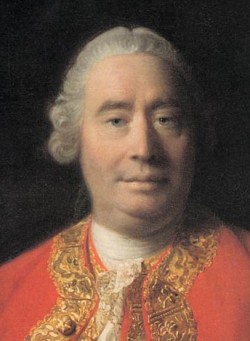 One example of this is the criticisms leveled against the ordo salutis. In contemporary disparagement of scholastic thought, theologians are quick to condemn any concept of an order of salvation as beholden to Aristotelian ideas of causation. Such might make a convincing argument at first glance, as terms such as efficient and final causality are not found in the Biblical text. However, one cannot just reject Aristotle’s notion of causation without simultaneously adopting some other idea of the concept. Language of cause and effect is common in casual conversation, and is apparent Scripturally. Thus, there is a necessity to interpret what such an idea means. That this happens is apparent in criticisms of the scholastics which contend that the ordo salutis necessitates some kind of temporal sequence of events in the application of redemption. In the Aristotelian conception, temporality is not part of causation. The timing of cause and effect are simultaneous. For example, when I put my foot on the gas pedal, the car is speeding up at the same time that my foot is pressed down. My foot is a cause of the motion of the car, not in a temporal sense, but because it logically precedes the latter event. However, in David Hume’s rejection of Aristotle’s theory of causes, he redefines this notion in a temporally-sequential manner. Through observation, one notes that when a specific event occurs, another event follows such an occurrence. Thus, the relationship of cause and effect is a time-bound one, wherein one sequence (the cause) temporally precedes another (the effect). In modern writers, Hume’s ideas of causality are simply assumed, and Aristotle’s are rejected as an imposition of philosophy. In reality, no one can actually escape these philosophical concerns.
The idea of causality is simply one example among many. I am convinced, for example, that the various strands of the “Theology of Hope” popular in the later twentieth century are inherently Hegelian. That is not to say that such thinkers purposefully echo the thoughts of Hegel. However, Hegel’s prioritization of becoming over the Aristotelian-Platonic concepts of being is, I think, a necessary backdrop for the developments of such ideas. To be a theologian is also to be a philosopher, whether one wants to affirm such a reality or not. We simply have to be self-aware enough to express what that philosophy is.
Previous Post
September 21, 2017
Apologetics in Confessing the Gospel
Next Post
September 23, 2017 An Introduction to Philosophy
Browse Our Archives
Select a Category American Lutheran Classics Blog Posts Book Review Christian Dogmatics Course Church Resources Curtis Leins Dogmatic Theology Ethics FAQs Historical Theology Just & Sinner Publications Luther Quotations Podcast Sermons The American Lutheran Theological Journal The complete works of Revere Franklin Weidner Theology Proper Uncategorized Videos
Select a Month October 2019 September 2019 July 2019 June 2019 May 2019 April 2019 March 2019 February 2019 January 2019 December 2018 November 2018 October 2018 September 2018 July 2018 June 2018 May 2018 April 2018 March 2018 February 2018 January 2018 December 2017 November 2017 October 2017 September 2017 August 2017 July 2017 June 2017 May 2017 April 2017 March 2017 February 2017 January 2017 December 2016 November 2016 October 2016 September 2016 August 2016 July 2016 June 2016 May 2016 April 2016 March 2016 February 2016 January 2016 December 2015 November 2015 October 2015 September 2015 August 2015 July 2015 June 2015 May 2015 April 2015 March 2015 February 2015 January 2015 December 2014 November 2014 October 2014 September 2014 August 2014 July 2014 June 2014 May 2014
Follow Us!
TAKE THE
Religious Wisdom Quiz
Who said: "The reason the Son of God appeared was to destroy the devil's work"?
Select your answer to see how you score.
John Jesus Peter Paul
Related posts from Just and Sinner

Fighting Critical Theory Approaches in the Academic Library...

On the Eleatic Philosophers (A History of Western...
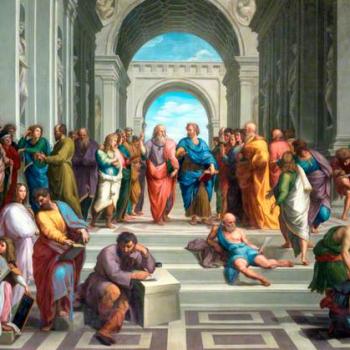
A History of Western Thought YouTube Videos
TRENDING AT PATHEOS Evangelical

The REST of Your Life: A Creative Wrestles...
This week I had a conversation with a good friend from church....

How the author of the world's best hymn...
I've been working with John Newton for a while now. This makes...

Long before this Lectio Divina, Psalm 130 - the song - started...

What About the Trees? Another Living Parable
After I finished writing the last article about falling leaves as a...

Why Classical Education Is a Conversation, Not a...
Come and Read: Joy in Classical Education When I was a little...

Cornell University has received a great deal of negative publicity and intense...
view all Evangelical blogs
Ad-Free & Subscriber Log-In Subscription Support
- About Us
- 2026 Calendar
- Videos
- Podcasts
- Library of World Religions
- Faith In Media Tracker
- Advertise With Us
- Write for Us
- Privacy Policy
- Terms of Service
- Do Not Sell My Data
- Contact Us
- Radiant Digital
- Manage Newsletter Subscriptions
- Unsubscribe From Notifications
- Sitemap
Copyright 2008-2026, Patheos. All rights reserved.
Subscription Support Ad-Free & Subscriber Log-In
Follow Patheos