
BuddhistCatholicContemplativeEvangelicalGeneral ChristianHinduJewishLatter-day SaintMuslimNew VisionsProgressive Christian
Beliefs
- Buddhist
- Catholic
- Contemplative
- Evangelical
- General Christian
- Hindu
- Jewish
- Latter-day Saint
- More Voices
- Muslim
- New Visions
- Pagan
- Progressive Christian
Topics
- Religion News
- Food and Religion
- Sports and Religion
- Religious Art
- Religious Music and Entertainment
- Religious Events
- History and Religion
- Style and Religion
- Politics and Religion
- Women in Religion
- Recreation Outdoors and Religion
- Business Finance and Religion
- Careers Workplace and Religion
- Education and Religion
- Family Parenting and Religion
- Health Fitness and Religion
- Home and Religion
- Relationships and Religion
- Technology and Religion
- Travel and Religion
Columnists
- Buddhist Columnists
- Business Finance and Religion Columnists
- Careers Workplace and Religion Columnists
- Catholic Columnists
- Contemplative Columnists
- Education and Religion Columnists
- Evangelists Columnists
- Family Parenting and Religion Columnists
- General Christian Columnists
- Health Fitness and Religion Columnists
- Hindu Columnists
- History and Religion Columnists
- Home and Religion Columnists
- Jewish Columnists
- More Voices Columnists
- Latter Day Columnists
- Muslim Columnists
- New Visions Columnists
- Nonreligious Columnists
- Pagan Columnists
- Politics and Religion Columnists
- Progressive Columnists
- Recreation Outdoors and Religion Columnists
- Relationships and Religion Columnists
- Religion News Columnists
- Religious Art Columnists
- Religious Events Columnists
- Religious Music and Entertainment Columnists
- Sports and Religion Columnists
- Style and Religion Columnists
- Technology and Religion Columnists
- Travel and Religion Columnists
- Women in Religion Columnists
Resource Library
- 2026 Calendar
- Library of World Religions
- The 100 Most Holy Places on Earth
- Patheos Answers
- Podcasts
- Videos
- Faith Leaders Database
- Anglican Episcopalian
- Bahai
- Baptist
- Buddhism
- Christianity
- Confucianism
- Eastern Orthodoxy
- Hinduism
- Holiness and Pentecostal
- ISKCON
- Islam
- Judaism
- Lutheran
- Methodist
- The Church of Jesus Christ of Latter-day Saints
- New Age
- Paganism
- Presbytarian and Reformed
- Protestantism
- Religion Behind the Scenes
- Roman Catholic
- Scientology
- Shia Islam
- Sikhism
- Sufism
- Sunni Islam
- Taoism
- Zen
- See all religions
Research Tools
 Ad-Free & Subscriber Log-In Subscription Support
Ad-Free & Subscriber Log-In Subscription Support
Follow Patheos 

- Trending:
- Forgiveness
- |
- Marriage
- |
- Consciousness
- |
- Death Penalty
- |
- Election
- |
- Halloween
 Just and Sinner
- Home
- Evangelical
- Calvinists are Not Augustinian
Calvinists are Not Augustinian
Last updated on: June 3, 2014 at 12:18 am by Jordan Cooper
Calvinists are Not Augustinian 2014-06-03T00:18:58-06:00 Jordan Cooper
Patheos Explore the world's faith through different perspectives on religion and spirituality! Patheos has the views of the prevalent religions and spiritualities of the world.
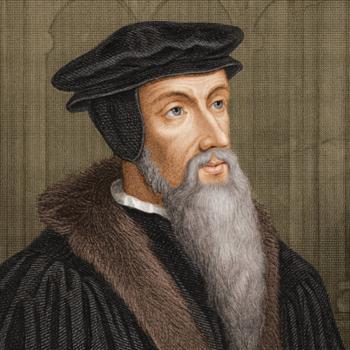
Calvinists often claim that their theology is not something which arose through the writings of John Calvin and Ulrich Zwingli. To support this thesis, they usually cite St. Augustine, the doctor of grace. Here are five reasons why I do not believe Calvinists are truly Augustinian in their soteriology. Though they can certainly cite him as an influence, the theology of Concord is much closer to that of Augustine and his early predecessors.
1. Augustine saw baptismal regeneration as essential for his soteriology. In some ways, baptism is the foundation of Augustine’s theology. Read for example, his treatise On the Forgiveness of Sins and Baptism. His entire defense of original sin was through its remedy in baptism. Within his anti-Pelagian writings, Augustine constantly refers back to baptism as a primary means God uses to give his free grace, and free man’s will. There is no immediate operation of the Spirit in Augustine. The Spirit works through word and Sacrament. The Lutheran church from the beginning held to baptism as the means which God uses to give grace and overcome our Adamic state.
2. Augustine denied the “P” of Tulip. In his treatise On the Perseverance of the Saints, Augustine defends the perseverance of the elect, but defends at length that those who are truly regenerated and saved can fall away from the faith. This both Luther and the Lutheran Confessions confessed.
3. Augustine did not believe in limited atonement- at least not in the Calvinistic sense of the term. Yes, there are times when he talks about the particularity of the death of Christ. However, it would not do justice to Augustine to say that he only talked of particular grace. He believed that God gave true grace to non-elect men. His discussions of baptism and the means of grace make it clear that there is universal grace. This is more than mere common grace which only restricts the wicked actions of men and gives some outward blessings men do not deserve. None elect men are truly forgiven through baptism, though they will eventually reject it.
4. The Augustinian definition of double predestination, at least as explained by later writers, is not Calvinistic. Augustine himself did not focus much on the double aspect of predestination and explain what the predestination of the reprobate means. However, the later Augustinian tradition as developed by Prosper of Aquitaine, Fulgentius of Ruspe, and ultimately the Council of Orange, when defining double predestination always made the point that when men are predestined unto death, they are only predestined based upon foreseen future demerits. This goes against not only a supralapsarian view, but also an infralapsarian view which would argue that the reprobate were predestined in view of Adam’s sin but not necessarily their own. The Augustinian tradition would thus argue that is man is saved it is unconditional, though if he is damned it is conditional.
5. Augustine started his discussions of predestination from Biblical anthropology and the greatness of God’s grace to fallen sinners. Calvinism has often, though not always, discussed predestination under the realm of God’s sovereignty. This is secondary for Augustine, and for the Lutheran Confessions.
Previous Post

June 3, 2014
Justification and Grace in Bernard of Clairvaux
Next Post
June 3, 2014 1 John 2:2 and the Extent of the Atonement
Browse Our Archives
Select a Category American Lutheran Classics Blog Posts Book Review Christian Dogmatics Course Church Resources Curtis Leins Dogmatic Theology Ethics FAQs Historical Theology Just & Sinner Publications Luther Quotations Podcast Sermons The American Lutheran Theological Journal The complete works of Revere Franklin Weidner Theology Proper Uncategorized Videos
Select a Month October 2019 September 2019 July 2019 June 2019 May 2019 April 2019 March 2019 February 2019 January 2019 December 2018 November 2018 October 2018 September 2018 July 2018 June 2018 May 2018 April 2018 March 2018 February 2018 January 2018 December 2017 November 2017 October 2017 September 2017 August 2017 July 2017 June 2017 May 2017 April 2017 March 2017 February 2017 January 2017 December 2016 November 2016 October 2016 September 2016 August 2016 July 2016 June 2016 May 2016 April 2016 March 2016 February 2016 January 2016 December 2015 November 2015 October 2015 September 2015 August 2015 July 2015 June 2015 May 2015 April 2015 March 2015 February 2015 January 2015 December 2014 November 2014 October 2014 September 2014 August 2014 July 2014 June 2014 May 2014
Follow Us!
TAKE THE
Religious Wisdom Quiz
Who killed his own brother out of jealousy and became the first murderer in the Bible?
Select your answer to see how you score.
Jacob Esau Ishmael Cain
Related posts from Just and Sinner
A Discussion of Romans 9 and Predestination


TRENDING AT PATHEOS Evangelical

The REST of Your Life: A Creative Wrestles...
This week I had a conversation with a good friend from church....

How the author of the world's best hymn...
I've been working with John Newton for a while now. This makes...

Long before this Lectio Divina, Psalm 130 - the song - started...

What About the Trees? Another Living Parable
After I finished writing the last article about falling leaves as a...

Why Classical Education Is a Conversation, Not a...
Come and Read: Joy in Classical Education When I was a little...

Cornell University has received a great deal of negative publicity and intense...
view all Evangelical blogs
Ad-Free & Subscriber Log-In Subscription Support
- About Us
- 2026 Calendar
- Videos
- Podcasts
- Library of World Religions
- Faith In Media Tracker
- Advertise With Us
- Write for Us
- Privacy Policy
- Terms of Service
- Do Not Sell My Data
- Contact Us
- Radiant Digital
- Manage Newsletter Subscriptions
- Unsubscribe From Notifications
- Sitemap
Copyright 2008-2026, Patheos. All rights reserved.
Subscription Support Ad-Free & Subscriber Log-In
Follow Patheos