
BuddhistCatholicContemplativeEvangelicalGeneral ChristianHinduJewishLatter-day SaintMuslimNew VisionsProgressive Christian
Beliefs
- Buddhist
- Catholic
- Contemplative
- Evangelical
- General Christian
- Hindu
- Jewish
- Latter-day Saint
- More Voices
- Muslim
- New Visions
- Pagan
- Progressive Christian
Topics
- Religion News
- Food and Religion
- Sports and Religion
- Religious Art
- Religious Music and Entertainment
- Religious Events
- History and Religion
- Style and Religion
- Politics and Religion
- Women in Religion
- Recreation Outdoors and Religion
- Business Finance and Religion
- Careers Workplace and Religion
- Education and Religion
- Family Parenting and Religion
- Health Fitness and Religion
- Home and Religion
- Relationships and Religion
- Technology and Religion
- Travel and Religion
Columnists
- Buddhist Columnists
- Business Finance and Religion Columnists
- Careers Workplace and Religion Columnists
- Catholic Columnists
- Contemplative Columnists
- Education and Religion Columnists
- Evangelists Columnists
- Family Parenting and Religion Columnists
- General Christian Columnists
- Health Fitness and Religion Columnists
- Hindu Columnists
- History and Religion Columnists
- Home and Religion Columnists
- Jewish Columnists
- More Voices Columnists
- Latter Day Columnists
- Muslim Columnists
- New Visions Columnists
- Nonreligious Columnists
- Pagan Columnists
- Politics and Religion Columnists
- Progressive Columnists
- Recreation Outdoors and Religion Columnists
- Relationships and Religion Columnists
- Religion News Columnists
- Religious Art Columnists
- Religious Events Columnists
- Religious Music and Entertainment Columnists
- Sports and Religion Columnists
- Style and Religion Columnists
- Technology and Religion Columnists
- Travel and Religion Columnists
- Women in Religion Columnists
Resource Library
- 2026 Calendar
- Library of World Religions
- The 100 Most Holy Places on Earth
- Patheos Answers
- Podcasts
- Videos
- Faith Leaders Database
- Anglican Episcopalian
- Bahai
- Baptist
- Buddhism
- Christianity
- Confucianism
- Eastern Orthodoxy
- Hinduism
- Holiness and Pentecostal
- ISKCON
- Islam
- Judaism
- Lutheran
- Methodist
- The Church of Jesus Christ of Latter-day Saints
- New Age
- Paganism
- Presbytarian and Reformed
- Protestantism
- Religion Behind the Scenes
- Roman Catholic
- Scientology
- Shia Islam
- Sikhism
- Sufism
- Sunni Islam
- Taoism
- Zen
- See all religions
Research Tools
 Ad-Free & Subscriber Log-In Subscription Support
Ad-Free & Subscriber Log-In Subscription Support
Follow Patheos 

- Trending:
- Forgiveness
- |
- Marriage
- |
- Consciousness
- |
- Death Penalty
- |
- Election
- |
- Halloween
 Just and Sinner
- Home
- Evangelical
- Book Review of Reclaiming Pietism: Retrieving an Evangelical Tradition
Book Review of Reclaiming Pietism: Retrieving an Evangelical Tradition
Last updated on: January 25, 2015 at 11:19 pm by Jordan Cooper
Book Review of Reclaiming Pietism: Retrieving an Evangelical Tradition 2015-01-25T23:19:22-06:00 Jordan Cooper
Patheos Explore the world's faith through different perspectives on religion and spirituality! Patheos has the views of the prevalent religions and spiritualities of the world.
Reclaiming Pietism: Retrieving an Evangelical Tradition by Roger E. Olson and Christian T. Collins Winn is a brief introduction and defense of Christian pietism. Throughout this work, Olson and Winn seek to dispel common misconceptions about the pietist movement, such as the common contention that pietism is staunchly legalistic, opposed to social action, and intent on achieving Christian perfection. Olson and Winn argue that pietism is an essential forerunner of the contemporary evangelical tradition, and that the contemporary church would gain much by studying its own pietist heritage.
Perhaps the most helpful part of this book is the authors’ extensive survey of the history of the pietist movement. Olson and Winn begin by examining the forerunners of the pietist movement such as Johann Arndt and Jakob Bohme. They catalog the beginnings of the pietist movement with the publication of Philip Jacob Spener’s Pia Desideria, and its rise through the writings of August Herman Francke and subsequent pietist figures. The authors strictly distinguish between a historic churchly pietism, and radical forms of pietism. They also demonstrate that Zinzendorf and the Moravians are not pietists in the traditional sense, but alter in some important ways the teachings of Spener and Francke. Throughout the historical section, it is apparent that Olson and Winn take a rather negative view of the Protestant scholastic tradition, in which they view pietism as a corrective movement. While there certainly were problems in being overly-intellectual (especially in the pulpit), and in promoting a form of Christianity which does not affect the heart, these problems do not characterize the entire scholastic era. Figures like Johann Gerhard (who is briefly mentioned in the book) and Ernst Loescher recognized such deficiencies, and promoted practical piety from within the scholastic tradition. Olson and Winn seem to pit scholastic theology against practical piety, whereas in figures like Gerhard, these two emphases cohere with one another.
Though a strict confessional Lutheran will not be convinced by all of the arguments, Olson and Winn do succeed in demonstrating that pietism is often portrayed in an inaccurate manner devoid of historical context. The claim that pietism is concerned only with individual salvation, neglecting Christian community and the broader world, is particularly inaccurate. Francke, in particular, fought for social reforms, and was active in caring for orphans in particular. These social implications are systemic throughout the pietist tradition. Olson and Winn also demonstrate that spirituality is not, in pietism, viewed as an individualistic enterprise. The formation of the pietist movement was essentially based around the formation of collegia pietatis, which “were ultimately not just for mutual edification, but for the renewal of the whole church” (44). Pietist spirituality was corporate in nature, and due to the postmillennial leanings of many pietists, this spirituality was hoped to influence society as a whole. One final point that Olson and Winn demonstrate successfully is that the pietists did not hold to Christian perfectionism in the manner that Wesley did. They mention, for example, that Zinzendorf (who himself was quite radical in some ways) departed ways with Wesley over the nature of indwelling sin. Though one might justly make the argument that they pietists overemphasized the importance of sanctification over that of justification, claims of pietist perfectionism are inaccurate.
The most problematic aspects of this book are due to the theological convictions of the authors. Because they are not Lutheran, Olson and Winn fail to discuss the pietists’ views of the sacraments in relation to traditional Lutheran orthodoxy. However, since pietism came from a sacramental background, and that Spener himself continued to defend Luther’s understanding of both Baptism and the Lord’s Supper throughout his life, this is a glaring omission. This likely is due to the authors’ evangelical Arminian convictions which do not hold a strict view of sacramental efficacy. There are also several statements made in passing that the pietists held to something like classical Arminianism and denied the inerrancy of Scripture. Though these characteristics might be true of some pietists, it is unlikely that such were held by those who, like Spener, contended for firm adherence to the Lutheran confessions. Some more evidence should be presented in this regard, or these comments simply seem to betray the authors’ own convictions rather than that of the pietist theologians.
This book is an essential read for anyone interested in the pietist movement. It is helpful for evangelicals in demonstrating the impact of pietism upon the contemporary church, which is too often only associated with Puritanism. This book is also a helpful read for Lutherans, whether in the pietist, scholastic (like myself), or other traditions. It’s historical section is a great overview of the movement for any interested from either a positive or negative perspective, and the work presents many important arguments for the critics of pietism to engage.
The book can be purchased here.
Previous Post

January 23, 2015
An Interview with Eric Swensson on Pietism
Next Post
January 25, 2015 Preaching the Two Kinds of Righteousness
Browse Our Archives
Select a Category American Lutheran Classics Blog Posts Book Review Christian Dogmatics Course Church Resources Curtis Leins Dogmatic Theology Ethics FAQs Historical Theology Just & Sinner Publications Luther Quotations Podcast Sermons The American Lutheran Theological Journal The complete works of Revere Franklin Weidner Theology Proper Uncategorized Videos
Select a Month October 2019 September 2019 July 2019 June 2019 May 2019 April 2019 March 2019 February 2019 January 2019 December 2018 November 2018 October 2018 September 2018 July 2018 June 2018 May 2018 April 2018 March 2018 February 2018 January 2018 December 2017 November 2017 October 2017 September 2017 August 2017 July 2017 June 2017 May 2017 April 2017 March 2017 February 2017 January 2017 December 2016 November 2016 October 2016 September 2016 August 2016 July 2016 June 2016 May 2016 April 2016 March 2016 February 2016 January 2016 December 2015 November 2015 October 2015 September 2015 August 2015 July 2015 June 2015 May 2015 April 2015 March 2015 February 2015 January 2015 December 2014 November 2014 October 2014 September 2014 August 2014 July 2014 June 2014 May 2014
Follow Us!
TAKE THE
Religious Wisdom Quiz
What animal did Daniel survive with?
Select your answer to see how you score.
Bears Leopards Lions Wolves
Related posts from Just and Sinner

Review of CPH's New “So-Called Third Use of...

Completely Impartial Book Review of Pastor Jordan Cooper's...
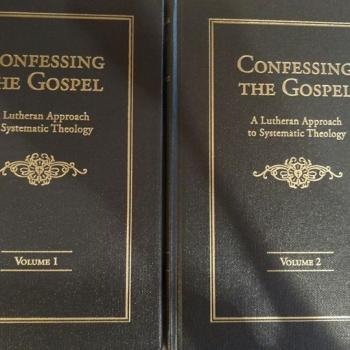
A Review of Confessing the Gospel: A Lutheran...
TRENDING AT PATHEOS Evangelical

The REST of Your Life: A Creative Wrestles...
This week I had a conversation with a good friend from church....

How the author of the world's best hymn...
I've been working with John Newton for a while now. This makes...

Long before this Lectio Divina, Psalm 130 - the song - started...

What About the Trees? Another Living Parable
After I finished writing the last article about falling leaves as a...

Why Classical Education Is a Conversation, Not a...
Come and Read: Joy in Classical Education When I was a little...

Cornell University has received a great deal of negative publicity and intense...
view all Evangelical blogs
Ad-Free & Subscriber Log-In Subscription Support
- About Us
- 2026 Calendar
- Videos
- Podcasts
- Library of World Religions
- Faith In Media Tracker
- Advertise With Us
- Write for Us
- Privacy Policy
- Terms of Service
- Do Not Sell My Data
- Contact Us
- Radiant Digital
- Manage Newsletter Subscriptions
- Unsubscribe From Notifications
- Sitemap
Copyright 2008-2026, Patheos. All rights reserved.
Subscription Support Ad-Free & Subscriber Log-In
Follow Patheos