
BuddhistCatholicContemplativeEvangelicalGeneral ChristianHinduJewishLatter-day SaintMuslimNew VisionsProgressive Christian
Beliefs
- Buddhist
- Catholic
- Contemplative
- Evangelical
- General Christian
- Hindu
- Jewish
- Latter-day Saint
- More Voices
- Muslim
- New Visions
- Pagan
- Progressive Christian
Topics
- Religion News
- Food and Religion
- Sports and Religion
- Religious Art
- Religious Music and Entertainment
- Religious Events
- History and Religion
- Style and Religion
- Politics and Religion
- Women in Religion
- Recreation Outdoors and Religion
- Business Finance and Religion
- Careers Workplace and Religion
- Education and Religion
- Family Parenting and Religion
- Health Fitness and Religion
- Home and Religion
- Relationships and Religion
- Technology and Religion
- Travel and Religion
Columnists
- Buddhist Columnists
- Business Finance and Religion Columnists
- Careers Workplace and Religion Columnists
- Catholic Columnists
- Contemplative Columnists
- Education and Religion Columnists
- Evangelists Columnists
- Family Parenting and Religion Columnists
- General Christian Columnists
- Health Fitness and Religion Columnists
- Hindu Columnists
- History and Religion Columnists
- Home and Religion Columnists
- Jewish Columnists
- More Voices Columnists
- Latter Day Columnists
- Muslim Columnists
- New Visions Columnists
- Nonreligious Columnists
- Pagan Columnists
- Politics and Religion Columnists
- Progressive Columnists
- Recreation Outdoors and Religion Columnists
- Relationships and Religion Columnists
- Religion News Columnists
- Religious Art Columnists
- Religious Events Columnists
- Religious Music and Entertainment Columnists
- Sports and Religion Columnists
- Style and Religion Columnists
- Technology and Religion Columnists
- Travel and Religion Columnists
- Women in Religion Columnists
Resource Library
- 2026 Calendar
- Library of World Religions
- The 100 Most Holy Places on Earth
- Patheos Answers
- Podcasts
- Videos
- Faith Leaders Database
- Anglican Episcopalian
- Bahai
- Baptist
- Buddhism
- Christianity
- Confucianism
- Eastern Orthodoxy
- Hinduism
- Holiness and Pentecostal
- ISKCON
- Islam
- Judaism
- Lutheran
- Methodist
- The Church of Jesus Christ of Latter-day Saints
- New Age
- Paganism
- Presbytarian and Reformed
- Protestantism
- Religion Behind the Scenes
- Roman Catholic
- Scientology
- Shia Islam
- Sikhism
- Sufism
- Sunni Islam
- Taoism
- Zen
- See all religions
Research Tools
 Ad-Free & Subscriber Log-In Subscription Support
Ad-Free & Subscriber Log-In Subscription Support
Follow Patheos 

- Trending:
- Forgiveness
- |
- Marriage
- |
- Consciousness
- |
- Death Penalty
- |
- Election
- |
- Halloween
 Just and Sinner
- Home
- Evangelical
- Athenagoras and Iconography
Athenagoras and Iconography
Last updated on: June 3, 2014 at 1:35 am by Jordan Cooper
Athenagoras and Iconography 2014-06-03T01:35:48-06:00 Jordan Cooper
Patheos Explore the world's faith through different perspectives on religion and spirituality! Patheos has the views of the prevalent religions and spiritualities of the world.
Because I have an interest in Patristic studies, I have occasionally been asked why I’m Lutheran rather than Eastern Orthodox; it is claimed that the Eastern church is consistent with the Patristic tradition, but the Lutheran church is not. Well, there are various reasons why I wouldn’t join the Orthodox church including a denial of sola fide and sola gratia, but among these reasons is the Patristic tradition itself.
I understand the desire to have some kind of consistent theology between the early church and the contemporary church. The Eastern Orthodox do this by claiming to have identical doctrine with the Church Fathers. The Roman Catholics used to do it by professing a “unanimous consensus” among the fathers. Thomas Oden tries to do it today by arguing the Protestant distinctives are found in the majority of the fathers.
The problem is that there is no monolithic teaching of the church fathers, though it is my contention that all of the doctrines found in the Book of Concord can be found in Patristic writings. And, there are certain teachings that are unanimous among the fathers such as baptismal regeneration and the conviction that salvation can be lost.
Nonetheless, while many Eastern Orthodox teachings can be found in the fathers, or at least certain fathers, the teachings of the Eastern Church on iconography are not found in the earliest sources, which actually argue against such a view.
In the Eastern Church, icons are sacramental. They serve as windows into heaven when blessed by an Orthodox priest, and should be venerated by the faithful. This includes both images of Christ and of the Theotokos and the saints.
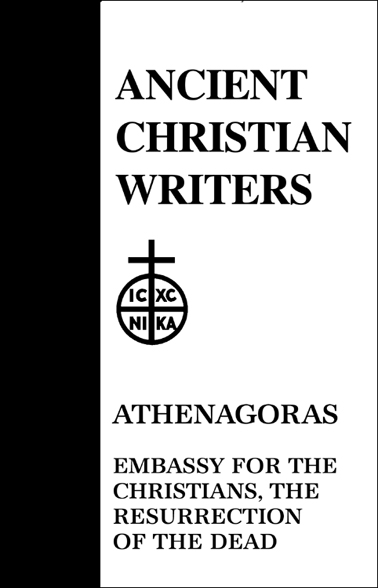
One of the early apologists for the Christian faith, Athenagoras demonstrates that this teaching was absent from the early church. One of the primary arguments that Athenagorus uses throughout this book is that the Christian God cannot be contained in images made by human hands. Within this polemic, he attacks the use of images by pagans in the Roman Empire, arguing against using them as instruments of worship. One would think that if images were used in worship, this would have been brought up, and would have actually hurt the point that Athenagorus was making. But he makes no such qualification that images could be used for veneration rather than worship, etc.
Well, an argument from silence doesn’t prove the point, but there are some statements in Athenagoras that make his position more clear. One of the qualifications made by the Eastern Church is that they are not venerating images, but are venerating the saint or Christ behind the image. This flows from their doctrine of the images as windows into heaven.
Athenagoras understands this distinction, and when critiquing the Pagan version of image worship, he does not only critique the idea that images can’t be worshiped, but also that they can be used as objects to worship their representations. He condemns the following idea:
“[I]t is affirmed by some that, although these are only images, yet there exist gods in honour of whom they are made; and that the images are to be referred to the gods, and are in fact made to the gods; and that there is not any other way of coming to them.” (A Plea for the Christians XVIII)
Now, to be clear I am not an iconoclast. I have icons in my office, and a crucifix on the altar in my church sanctuary. I think that these can be helpful things. However, what I disagree with is the idea of using images as objects of worship or veneration. It seems to be a consistent point in all of the early Apologists, when writing against paganism, that images are not used as objects of worship in the Christian faith.
Previous Post

June 3, 2014
Melito of Sardis on Christ as the Passover Lamb
Next Post
June 3, 2014 Theonas of Alexandria on the Importance of Holy Scripture
Browse Our Archives
Select a Category American Lutheran Classics Blog Posts Book Review Christian Dogmatics Course Church Resources Curtis Leins Dogmatic Theology Ethics FAQs Historical Theology Just & Sinner Publications Luther Quotations Podcast Sermons The American Lutheran Theological Journal The complete works of Revere Franklin Weidner Theology Proper Uncategorized Videos
Select a Month October 2019 September 2019 July 2019 June 2019 May 2019 April 2019 March 2019 February 2019 January 2019 December 2018 November 2018 October 2018 September 2018 July 2018 June 2018 May 2018 April 2018 March 2018 February 2018 January 2018 December 2017 November 2017 October 2017 September 2017 August 2017 July 2017 June 2017 May 2017 April 2017 March 2017 February 2017 January 2017 December 2016 November 2016 October 2016 September 2016 August 2016 July 2016 June 2016 May 2016 April 2016 March 2016 February 2016 January 2016 December 2015 November 2015 October 2015 September 2015 August 2015 July 2015 June 2015 May 2015 April 2015 March 2015 February 2015 January 2015 December 2014 November 2014 October 2014 September 2014 August 2014 July 2014 June 2014 May 2014
Follow Us!
TAKE THE
Religious Wisdom Quiz
Who took Jesus’ body and placed it in a tomb?
Select your answer to see how you score.
Peter John Joseph of Arimathea Nicodemus
Related posts from Just and Sinner
"Walking Together in Faith and Worship" ~ Rev....
Why it's important to say "Catholic" in Article...


TRENDING AT PATHEOS Evangelical

The REST of Your Life: A Creative Wrestles...
This week I had a conversation with a good friend from church....

How the author of the world's best hymn...
I've been working with John Newton for a while now. This makes...

Long before this Lectio Divina, Psalm 130 - the song - started...

What About the Trees? Another Living Parable
After I finished writing the last article about falling leaves as a...

Why Classical Education Is a Conversation, Not a...
Come and Read: Joy in Classical Education When I was a little...

Cornell University has received a great deal of negative publicity and intense...
view all Evangelical blogs
Ad-Free & Subscriber Log-In Subscription Support
- About Us
- 2026 Calendar
- Videos
- Podcasts
- Library of World Religions
- Faith In Media Tracker
- Advertise With Us
- Write for Us
- Privacy Policy
- Terms of Service
- Do Not Sell My Data
- Contact Us
- Radiant Digital
- Manage Newsletter Subscriptions
- Unsubscribe From Notifications
- Sitemap
Copyright 2008-2026, Patheos. All rights reserved.
Subscription Support Ad-Free & Subscriber Log-In
Follow Patheos