
BuddhistCatholicContemplativeEvangelicalGeneral ChristianHinduJewishLatter-day SaintMuslimNew VisionsProgressive Christian
Beliefs
- Buddhist
- Catholic
- Contemplative
- Evangelical
- General Christian
- Hindu
- Jewish
- Latter-day Saint
- More Voices
- Muslim
- New Visions
- Pagan
- Progressive Christian
Topics
- Religion News
- Food and Religion
- Sports and Religion
- Religious Art
- Religious Music and Entertainment
- Religious Events
- History and Religion
- Style and Religion
- Politics and Religion
- Women in Religion
- Recreation Outdoors and Religion
- Business Finance and Religion
- Careers Workplace and Religion
- Education and Religion
- Family Parenting and Religion
- Health Fitness and Religion
- Home and Religion
- Relationships and Religion
- Technology and Religion
- Travel and Religion
Columnists
- Buddhist Columnists
- Business Finance and Religion Columnists
- Careers Workplace and Religion Columnists
- Catholic Columnists
- Contemplative Columnists
- Education and Religion Columnists
- Evangelists Columnists
- Family Parenting and Religion Columnists
- General Christian Columnists
- Health Fitness and Religion Columnists
- Hindu Columnists
- History and Religion Columnists
- Home and Religion Columnists
- Jewish Columnists
- More Voices Columnists
- Latter Day Columnists
- Muslim Columnists
- New Visions Columnists
- Nonreligious Columnists
- Pagan Columnists
- Politics and Religion Columnists
- Progressive Columnists
- Recreation Outdoors and Religion Columnists
- Relationships and Religion Columnists
- Religion News Columnists
- Religious Art Columnists
- Religious Events Columnists
- Religious Music and Entertainment Columnists
- Sports and Religion Columnists
- Style and Religion Columnists
- Technology and Religion Columnists
- Travel and Religion Columnists
- Women in Religion Columnists
Resource Library
- 2026 Calendar
- Library of World Religions
- The 100 Most Holy Places on Earth
- Patheos Answers
- Podcasts
- Videos
- Faith Leaders Database
- Anglican Episcopalian
- Bahai
- Baptist
- Buddhism
- Christianity
- Confucianism
- Eastern Orthodoxy
- Hinduism
- Holiness and Pentecostal
- ISKCON
- Islam
- Judaism
- Lutheran
- Methodist
- The Church of Jesus Christ of Latter-day Saints
- New Age
- Paganism
- Presbytarian and Reformed
- Protestantism
- Religion Behind the Scenes
- Roman Catholic
- Scientology
- Shia Islam
- Sikhism
- Sufism
- Sunni Islam
- Taoism
- Zen
- See all religions
Research Tools
 Ad-Free & Subscriber Log-In Subscription Support
Ad-Free & Subscriber Log-In Subscription Support
Follow Patheos 

- Trending:
- Forgiveness
- |
- Marriage
- |
- Consciousness
- |
- Death Penalty
- |
- Election
- |
- Halloween
 Just and Sinner
- Home
- Evangelical
- Answering Arguments for Women in Ministry: The Old Testament
Answering Arguments for Women in Ministry: The Old Testament
Last updated on: June 3, 2014 at 1:29 am by Jordan Cooper
Answering Arguments for Women in Ministry: The Old Testament 2014-06-03T01:29:02-06:00 Jordan Cooper
Patheos Explore the world's faith through different perspectives on religion and spirituality! Patheos has the views of the prevalent religions and spiritualities of the world.
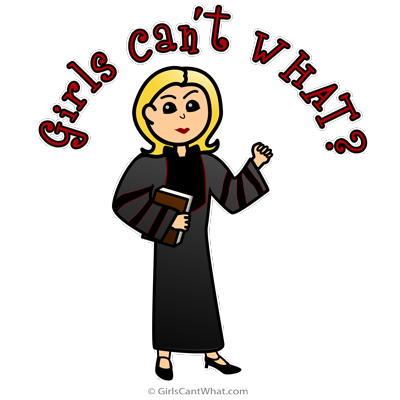
I was pointed to an article by one of my readers regarding the issue of women in ministry. This article (which can be found here)is an official document of the Evangelical Covenant church in defense of their allowance of female clergy. This is particularly interesting to me because I was raised in the Evangelical Covenant church, a small church body which has its roots in Swedish Pietism. Because this paper gives many of the common reasons that many use to argue for women in ministry, I have decided to respond to the major arguments utilized here.
The first part of the article presents evidence from the Old Testament that women were active in the ministry of Israel. Exodus 38:8 mentions women who minister, as does Exodus 15:20-21. The gift of prophecy was sometimes given to women, such as Deborah in Judges 4-5. The story of Deborah also demonstrates that a woman could be fit as a leader for the people of Israel. This is then placed in contradistinction to other ancient societies which did not allow women any place in leadership, assigning her a relatively insignificant role in society.
What these texts demonstrate is not an egalitarian perspective on gender, but simply that God loves and utilizes both sexes to accomplish his purpose. It is significant that the Biblical narrative places women in a higher role than did many other ancient societies. This shows that both men and women are created in the imago Dei; it does not mean that their roles are interchangeable.
The unique male role in spiritual leadership is demonstrate in several places and institutions throughout the Old Testament. The two primary roles which governed the faith and civil law of Israel were the priesthood and the monarchy. The priesthood is first seen with the story of Melchizedek in Genesis 14. This priest was a male, who Abraham offered tithes to. This priesthood was typological (Hebrews 5:6), pointing to Christ as the true high priest. There was then a priesthood instituted through the tribe of Levi. Aaron was instituted as the high priest at the time of the Exodus, and the priesthood continued through his male lineage. The priesthood, both Melchizedekian and Levitical, is an office instituted solely for men. One could argue that this was done solely for the purpose of cultural sensitivity, due to the fact that women were not respected in the Ancient Near East. However, this is negated by the fact that there were female priests in some ancient pagan religions.
Similarly, the monarchy was passed on through male lineage. Saul was appointed as king, later to be removed from the throne so that David would rule over Israel. The monarchy passed to Solomon, and then to his male descendants. There were no female kings. This is significant especially because the monarchy of the Old Covenant was, like the priesthood, typological. Christ, through his incarnation, death, and resurrection, fulfilled both the roles of priest and king. He did this because these were the two most important institutions in the life of the nation of Israel, and both were limited to males.
The role of prophet is also linked almost exclusively to men. As the paper demonstrates, there are certain examples of women who prophesied at times. There were even exceptional cases like with Deborah, who was a leader and prophet. However, the normal pattern is for a prophet to be male. Just take a look at the prophets who have written books which are included in Scripture: Joshua, Ezekiel, Daniel, Jeremiah, and all of the minor prophets. They were all men.
We can gather some important truths in the Old Testament regarding the role of women in the spiritual life of the church/Israel. First, women are an essential part of the life of Israel. God created both male and female in his image, giving them both inherent dignity. Women have exceptional skills and are utilized for God’s purpose. However, women were not designed to be the spiritual leaders of Israel. The priests were men. The kings were men. The prophets were most often men. Of the three leadership roles prominent in Israel’s worship life, two are tied exclusively to males, and the third is most often attached to a male figure. This does not mean that either sex has more worth, dignity, or ability than the other; it simply shows that God created both genders to compliment one another, with different tasks in both the world and the church.
Previous Post

June 3, 2014
Sola Fide in Patristic Literature
Next Post
June 3, 2014 St. Augustine on the Law
Browse Our Archives
Select a Category American Lutheran Classics Blog Posts Book Review Christian Dogmatics Course Church Resources Curtis Leins Dogmatic Theology Ethics FAQs Historical Theology Just & Sinner Publications Luther Quotations Podcast Sermons The American Lutheran Theological Journal The complete works of Revere Franklin Weidner Theology Proper Uncategorized Videos
Select a Month October 2019 September 2019 July 2019 June 2019 May 2019 April 2019 March 2019 February 2019 January 2019 December 2018 November 2018 October 2018 September 2018 July 2018 June 2018 May 2018 April 2018 March 2018 February 2018 January 2018 December 2017 November 2017 October 2017 September 2017 August 2017 July 2017 June 2017 May 2017 April 2017 March 2017 February 2017 January 2017 December 2016 November 2016 October 2016 September 2016 August 2016 July 2016 June 2016 May 2016 April 2016 March 2016 February 2016 January 2016 December 2015 November 2015 October 2015 September 2015 August 2015 July 2015 June 2015 May 2015 April 2015 March 2015 February 2015 January 2015 December 2014 November 2014 October 2014 September 2014 August 2014 July 2014 June 2014 May 2014
Follow Us!
TAKE THE
Religious Wisdom Quiz
What is the key message of Proverbs about how to live?
Select your answer to see how you score.
Win battles Amass riches Seek power Pursue wisdom
Related posts from Just and Sinner

Gradually Embracing Jack Kevorkian's World?: Christians and Death...

Fighting Critical Theory Approaches in the Academic Library...

"Finding God at the State Fair" by Paul...

TRENDING AT PATHEOS Evangelical

The REST of Your Life: A Creative Wrestles...
This week I had a conversation with a good friend from church....

How the author of the world's best hymn...
I've been working with John Newton for a while now. This makes...

Long before this Lectio Divina, Psalm 130 - the song - started...

What About the Trees? Another Living Parable
After I finished writing the last article about falling leaves as a...

Why Classical Education Is a Conversation, Not a...
Come and Read: Joy in Classical Education When I was a little...

Cornell University has received a great deal of negative publicity and intense...
view all Evangelical blogs
Ad-Free & Subscriber Log-In Subscription Support
- About Us
- 2026 Calendar
- Videos
- Podcasts
- Library of World Religions
- Faith In Media Tracker
- Advertise With Us
- Write for Us
- Privacy Policy
- Terms of Service
- Do Not Sell My Data
- Contact Us
- Radiant Digital
- Manage Newsletter Subscriptions
- Unsubscribe From Notifications
- Sitemap
Copyright 2008-2026, Patheos. All rights reserved.
Subscription Support Ad-Free & Subscriber Log-In
Follow Patheos