
BuddhistCatholicContemplativeEvangelicalGeneral ChristianHinduJewishLatter-day SaintMuslimNew VisionsProgressive Christian
Beliefs
- Buddhist
- Catholic
- Contemplative
- Evangelical
- General Christian
- Hindu
- Jewish
- Latter-day Saint
- More Voices
- Muslim
- New Visions
- Pagan
- Progressive Christian
Topics
- Religion News
- Food and Religion
- Sports and Religion
- Religious Art
- Religious Music and Entertainment
- Religious Events
- History and Religion
- Style and Religion
- Politics and Religion
- Women in Religion
- Recreation Outdoors and Religion
- Business Finance and Religion
- Careers Workplace and Religion
- Education and Religion
- Family Parenting and Religion
- Health Fitness and Religion
- Home and Religion
- Relationships and Religion
- Technology and Religion
- Travel and Religion
Columnists
- Buddhist Columnists
- Business Finance and Religion Columnists
- Careers Workplace and Religion Columnists
- Catholic Columnists
- Contemplative Columnists
- Education and Religion Columnists
- Evangelists Columnists
- Family Parenting and Religion Columnists
- General Christian Columnists
- Health Fitness and Religion Columnists
- Hindu Columnists
- History and Religion Columnists
- Home and Religion Columnists
- Jewish Columnists
- More Voices Columnists
- Latter Day Columnists
- Muslim Columnists
- New Visions Columnists
- Nonreligious Columnists
- Pagan Columnists
- Politics and Religion Columnists
- Progressive Columnists
- Recreation Outdoors and Religion Columnists
- Relationships and Religion Columnists
- Religion News Columnists
- Religious Art Columnists
- Religious Events Columnists
- Religious Music and Entertainment Columnists
- Sports and Religion Columnists
- Style and Religion Columnists
- Technology and Religion Columnists
- Travel and Religion Columnists
- Women in Religion Columnists
Resource Library
- 2026 Calendar
- Library of World Religions
- The 100 Most Holy Places on Earth
- Patheos Answers
- Podcasts
- Videos
- Faith Leaders Database
- Anglican Episcopalian
- Bahai
- Baptist
- Buddhism
- Christianity
- Confucianism
- Eastern Orthodoxy
- Hinduism
- Holiness and Pentecostal
- ISKCON
- Islam
- Judaism
- Lutheran
- Methodist
- The Church of Jesus Christ of Latter-day Saints
- New Age
- Paganism
- Presbytarian and Reformed
- Protestantism
- Religion Behind the Scenes
- Roman Catholic
- Scientology
- Shia Islam
- Sikhism
- Sufism
- Sunni Islam
- Taoism
- Zen
- See all religions
Research Tools
 Ad-Free & Subscriber Log-In Subscription Support
Ad-Free & Subscriber Log-In Subscription Support
Follow Patheos 

- Trending:
- Forgiveness
- |
- Marriage
- |
- Consciousness
- |
- Death Penalty
- |
- Election
- |
- Halloween
 Just and Sinner
- Home
- Evangelical
- A Review of Peter Lombard’s “The Sentences” Book 1
A Review of Peter Lombard’s “The Sentences” Book 1
Last updated on: September 25, 2015 at 4:12 pm by Jordan Cooper
A Review of Peter Lombard’s “The Sentences” Book 1 2015-09-25T16:12:04-06:00 Jordan Cooper
Patheos Explore the world's faith through different perspectives on religion and spirituality! Patheos has the views of the prevalent religions and spiritualities of the world.
Most of my reading tends to be related to my current writing projects. Because of that, I don’t often have the time to read books that I just really want to read. When I do, I tend to gravitate toward Patristic and Medieval theology. Well, I finally had some time to do some reading just for fun and personal edification, so I decided to pick up a copy of Peter Lombard’s The Sentences.
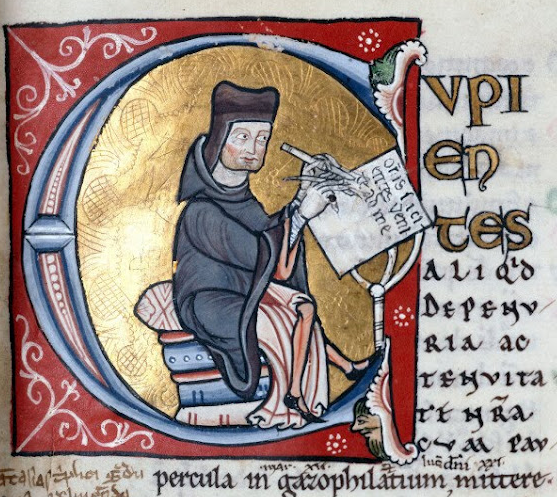 Peter Lombard (1096-1160) is one of the most influential figures in the history of Western theology, yet for some reason, his major work had not been translated into English until recently. Giulio Silano has thus done a great work for the church by translating all four volumes for the Medieval Sources in Translation series from the Pontifical Institute of Medieval Studies. This first volume was published in 2007, with a revision in 2010.
Silano includes a very helpful introduction at the beginning of this work with an overview of Lombard’s life and influence, as well as a short summary of the arguments set forth in this volume. The layout of this book is unfortunately somewhat poor, as the text is much to close to the spine of the book. This means that one might have to bend the pages somewhat excessively to read the entirety of the work. I would also prefer to see such an important work in a hardcover format. These are, however, minor complaints for what is a very valuable publication.
Medieval theology tends to have the reputation of being overly technical, philosophically driven, and scientifically naive. None of these assumptions are warranted in reading Lombard’s work. In this volume, Lombard does not seek to construct a Christian philosophy, nor does he ask an extensive number of useless questions and engage in pointless speculation. Rather, Lombard seeks simply to explain the historic Christian teaching on God and the Trinity. He does this primarily by citing Patristic authors, primarily Augustine, and reconciling teachings from church fathers which seem to conflict with one another.
This book is very well organized. Lombard outlines a number of “distinctions,” which are then followed by short chapters on each topic. In this way, Lombard anticipates the later Loci method which would dominate Western systematic theology. Each distinction contains a question or proposition which is then defended with Patristic citations. He will often then cite something from a father which seems to contradict his claim. He then attempts to harmonize the two statements, and at times he admits that real differences of opinion exist among the fathers. Often the harmonizations are plausible interpretations, but occasionally, Lombard is unwilling to admit that there are differences of opinion among the fathers on various issues where they clearly exist.
The majority of the first volume of Lombard’s work is on the doctrine of the Trinity. Most of this is simply a restatement of Augustine’s masterful De Trinitate. Due to its structure, the work is a little easier to read than De Trinitate, and serves as an accurate summary of Augustine’s Trinitarian theology. He affirms some of the unique aspects of Augustinian Trinitarianism, such as the identification of the Holy Spirit with the love that exists between the Father and Son. In this particular section, Lombard takes great care to emphasize the fact that this language is not speculative, but is grounded in Augustine’s exegesis of 1 John. As a Western theologian, Lombard also defends the filioque, but does not spend as much space to the issue as one might expect for a medieval theologian.
The latter section of Lombard’s work is devoted to the doctrine of God in general. He does not discuss each attribute of God separately as would become customary in a later period. Rather, he addresses several very specific questions related to the doctrine of God regarding God’s omnipotence, foreknowledge, and predestination. Lombard’s treatment of predestination is thoroughly Augustinian. He does not display any hint of the Semipelagianism which would dominate the late medieval era. Lombard argues that God’s predestination is unconditional. He writes: “God elected whom he willed by a freely given mercy, not because the would be faithful in the future, but so that they might be faithful” (228). Lombard explicitly excludes foreseen obedience and faith as a cause of election. Rather, both faith and obedience are a result of God’s election. He is quick to qualify that reprobation is not unconditional, however. Instead, God damns based on one’s rejection of grace. He argues, following Fulgentius, that God doesn’t predestine the person for reprobation, but simply the punishment for their obstinance.
Lombard treats divine foreknowledge in general, and argues that God predestines all good things to happen, but simply foreknows evil actions. God is not a cause of evil. He cites differences among the fathers regarding the nature of God’s willing evil actions, admitting that God wills evil insofar as he can use that evil for good purposes. He does not, however, will the evil act itself.
There is not much in this volume that I would disagree with. It’s largely a restatement of patristic Trinitarian theology. Lombard does not seek to be an innovator, but expounds upon the Western Augustinian tradition, as he understands it, in a systematic fashion. The only place where I disagreed with Lombard is in his section on the will of God, wherein he argues–following Augustine–that the passages referring to God’s universal saving will might actually refer only to the elect (247). Though Lombard might, in this passage, sound rather “Calvinistic,” he is elsewhere extremely careful to separate God from the predestination of evil actions.
Whatever your theological positions are, Lombard will surely prove to be an edifying and challenging read. I look forward to reading the other three volumes, where differences with the author will probably be much more pronounced.
Previous Post

September 24, 2015
What Should Christians Make of “Banned Books Week"?
Next Post
September 26, 2015 Come to the Just and Sinner Conference!
Browse Our Archives
Select a Category American Lutheran Classics Blog Posts Book Review Christian Dogmatics Course Church Resources Curtis Leins Dogmatic Theology Ethics FAQs Historical Theology Just & Sinner Publications Luther Quotations Podcast Sermons The American Lutheran Theological Journal The complete works of Revere Franklin Weidner Theology Proper Uncategorized Videos
Select a Month October 2019 September 2019 July 2019 June 2019 May 2019 April 2019 March 2019 February 2019 January 2019 December 2018 November 2018 October 2018 September 2018 July 2018 June 2018 May 2018 April 2018 March 2018 February 2018 January 2018 December 2017 November 2017 October 2017 September 2017 August 2017 July 2017 June 2017 May 2017 April 2017 March 2017 February 2017 January 2017 December 2016 November 2016 October 2016 September 2016 August 2016 July 2016 June 2016 May 2016 April 2016 March 2016 February 2016 January 2016 December 2015 November 2015 October 2015 September 2015 August 2015 July 2015 June 2015 May 2015 April 2015 March 2015 February 2015 January 2015 December 2014 November 2014 October 2014 September 2014 August 2014 July 2014 June 2014 May 2014
Follow Us!
TAKE THE
Religious Wisdom Quiz
What does Hebrews define as "confidence in what we hope for"?
Select your answer to see how you score.
Righteousness Faith Salvation Love
Related posts from Just and Sinner
Was Martin Luther a Nominalist?
Completely Impartial Book Review of Pastor Jordan Cooper's...

Confessing the Gospel: John F. Johnson on the...
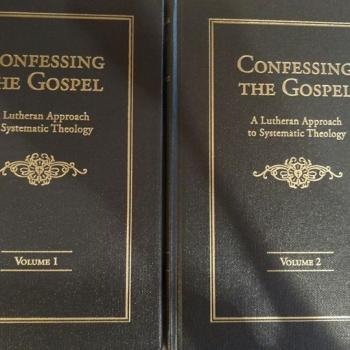
A Review of Confessing the Gospel: A Lutheran...
TRENDING AT PATHEOS Evangelical

The REST of Your Life: A Creative Wrestles...
This week I had a conversation with a good friend from church....

How the author of the world's best hymn...
I've been working with John Newton for a while now. This makes...

Long before this Lectio Divina, Psalm 130 - the song - started...

What About the Trees? Another Living Parable
After I finished writing the last article about falling leaves as a...

Why Classical Education Is a Conversation, Not a...
Come and Read: Joy in Classical Education When I was a little...

Cornell University has received a great deal of negative publicity and intense...
view all Evangelical blogs
Ad-Free & Subscriber Log-In Subscription Support
- About Us
- 2026 Calendar
- Videos
- Podcasts
- Library of World Religions
- Faith In Media Tracker
- Advertise With Us
- Write for Us
- Privacy Policy
- Terms of Service
- Do Not Sell My Data
- Contact Us
- Radiant Digital
- Manage Newsletter Subscriptions
- Unsubscribe From Notifications
- Sitemap
Copyright 2008-2026, Patheos. All rights reserved.
Subscription Support Ad-Free & Subscriber Log-In
Follow Patheos