
BuddhistCatholicContemplativeEvangelicalGeneral ChristianHinduJewishLatter-day SaintMuslimNew VisionsProgressive Christian
Beliefs
- Buddhist
- Catholic
- Contemplative
- Evangelical
- General Christian
- Hindu
- Jewish
- Latter-day Saint
- More Voices
- Muslim
- New Visions
- Pagan
- Progressive Christian
Topics
- Religion News
- Food and Religion
- Sports and Religion
- Religious Art
- Religious Music and Entertainment
- Religious Events
- History and Religion
- Style and Religion
- Politics and Religion
- Women in Religion
- Recreation Outdoors and Religion
- Business Finance and Religion
- Careers Workplace and Religion
- Education and Religion
- Family Parenting and Religion
- Health Fitness and Religion
- Home and Religion
- Relationships and Religion
- Technology and Religion
- Travel and Religion
Columnists
- Buddhist Columnists
- Business Finance and Religion Columnists
- Careers Workplace and Religion Columnists
- Catholic Columnists
- Contemplative Columnists
- Education and Religion Columnists
- Evangelists Columnists
- Family Parenting and Religion Columnists
- General Christian Columnists
- Health Fitness and Religion Columnists
- Hindu Columnists
- History and Religion Columnists
- Home and Religion Columnists
- Jewish Columnists
- More Voices Columnists
- Latter Day Columnists
- Muslim Columnists
- New Visions Columnists
- Nonreligious Columnists
- Pagan Columnists
- Politics and Religion Columnists
- Progressive Columnists
- Recreation Outdoors and Religion Columnists
- Relationships and Religion Columnists
- Religion News Columnists
- Religious Art Columnists
- Religious Events Columnists
- Religious Music and Entertainment Columnists
- Sports and Religion Columnists
- Style and Religion Columnists
- Technology and Religion Columnists
- Travel and Religion Columnists
- Women in Religion Columnists
Resource Library
- 2026 Calendar
- Library of World Religions
- The 100 Most Holy Places on Earth
- Patheos Answers
- Podcasts
- Videos
- Faith Leaders Database
- Anglican Episcopalian
- Bahai
- Baptist
- Buddhism
- Christianity
- Confucianism
- Eastern Orthodoxy
- Hinduism
- Holiness and Pentecostal
- ISKCON
- Islam
- Judaism
- Lutheran
- Methodist
- The Church of Jesus Christ of Latter-day Saints
- New Age
- Paganism
- Presbytarian and Reformed
- Protestantism
- Religion Behind the Scenes
- Roman Catholic
- Scientology
- Shia Islam
- Sikhism
- Sufism
- Sunni Islam
- Taoism
- Zen
- See all religions
Research Tools
 Ad-Free & Subscriber Log-In Subscription Support
Ad-Free & Subscriber Log-In Subscription Support
Follow Patheos 

- Trending:
- Forgiveness
- |
- Marriage
- |
- Consciousness
- |
- Death Penalty
- |
- Election
- |
- Halloween
 Just and Sinner
- Home
- Evangelical
- A Review of Luther on the Christian Life: Cross and Freedom by Carl Trueman
A Review of Luther on the Christian Life: Cross and Freedom by Carl Trueman
Last updated on: March 3, 2015 at 1:10 pm by Jordan Cooper
A Review of Luther on the Christian Life: Cross and Freedom by Carl Trueman 2015-03-03T13:10:43-06:00 Jordan Cooper
Patheos Explore the world's faith through different perspectives on religion and spirituality! Patheos has the views of the prevalent religions and spiritualities of the world.
I am always a little wary of books written on Luther from those who are not part of the Lutheran tradition. Like Bonhoeffer and C.S. Lewis, every tradition wants to claim Luther as their own, and thus books on Luther often emphasize the particular aspects of his theology that are consistent with the author’s views. Though I have appreciated the work of Carl Trueman in the past, I will admit that I was somewhat cautious when approaching this volume, wondering if there would be an inordinate amount of space devoted to Luther’s Bondage of the Will, and little discussion of Luther’s sacramentology. Thankfully, none of these fears were realized when reading this book. Trueman offers an accurate and honest picture of Luther, acknowledging his own disagreements with the Reformer.
This book is written from a popular perspective, rather than a particularly academic one, and is immensely readable. One will not get bogged down in footnotes, though it is apparent throughout the work that Trueman is very well informed of Luther’s thought as well as contemporary Luther scholarship. Trueman begins the book with a brief overview of Luther’s life, contending that his life must be understood in order for one to comprehend the nature of his thought. He then proceeds to extrapolate various aspects of Luther’s theology throughout the following chapters.
Like most works on Luther, Trueman spends a majority of his writing on Luther’s early writings. He devotes a large amount of space to Luther’s Heidelberg Disputation, and his 1520 reformation treatises. Yet, Trueman does recognize the importance of the late Luther, and contends that one has an imbalanced view of the Reformer by neglecting the post 1525 writings. He argues that this difference in approach is due to Luther’s early eschatological expectations which were not realized. Trueman, rightly I think, argues that the later Luther emphasizes good works due to his controversies with the antinomians, and even teaches something like a “third use of the law,” even if that specific terminology is not utilized. These topics are discussed in his chapter “Luther on Christian Righteousness,” which is the most original contribution Trueman makes in this work. He demonstrates that Luther does not view sanctification merely as “getting used to justification,” but as a process of spiritual growth. Because of Luther’s heavy emphasis on the distinction between law and gospel, this aspect of Luther’s theology is often ignored.
As a historian, Trueman expounds Luther in light of his late medieval context. This allows Trueman to deal more honestly with categories like “theologies of glory,” and “theology of the cross.” He explains them as an expansion and rejection of various aspects of medieval theology and piety, while not arguing that they are overarching theological categories by which all theology must be judged (a problem many contemporary Lutheran theologians have). He also places the Bondage of the Will in its proper context without trying to prove that Luther was a double-predestinarian Calvinist. In his chapter on the sacraments, Trueman clearly articulates a Lutheran approach to baptism and the Lord’s Supper, while acknowledging his disagreement with Luther on these particular points. He gives some helpful clarifications to try to help Protestants gain a sympathetic understanding to Luther’s concern on these points.
There are two primary issues I had with this work. First, Trueman makes the contention that Luther’s sermons follow a law-gospel structure. He writes: “The modern reader of Luther’s sermons will probably also notice that, after a while, the sermons all start to seem much the same. That is because the law-gospel pattern is reflected in them all” (95). While Luther certainly preaches law and gospel in nearly all of his sermons, he does not adhere to a strict sermon structure. At times, Luther was fine ending his sermons with commands. For example, in a 1535 sermon on covetousness, Luther ends his message saying:
In this example of the rich man and poor Lazarus, we have a terrifying and earnest lesson against covetousness. It is a particularly shameful evil at work among greedy, loveless people, full of great injustice, thwarting all the fruits of the gospel. The Lord rebukes this evil, therefore, for good reason, especially since it adorns itself as a virtue, refusing to be viewed as sin. If we find ourselves in it, may God help us, so that we come free of it. Amen. -Complete Sermons of Martin Luther 6:240.
This is not merely the late Luther, but it is the early Luther who preached his sermon on the Two Kinds of Righteousness, which utilizes a justification then sanctification structure. I don’t think Luther can clearly be placed in one particular mode of preaching, though the law-gospel structure is certainly prominent.
The second issue I had with this book is Trueman’s contention that Luther is in accord with late medieval Nominalism and rejects essentialist ontology for one of God’s Word. This is a common contention in Luther scholarship, but I simply don’t find the case compelling. Luther’s most oft-cited sources (Tauler, the Theologica Germanica, etc.) are rather Platonic in outlook. Luther also approved several of Melanchthon’s works which utilized traditional Greek philosophical categories.
Though not a perfect work on Luther, this book is an immensely helpful introduction to the Reformer’s thought. Trueman’s approach is balanced, and he emphasizes the most important areas of Luther’s life and thought in an immensely readable and practical volume.
Previous Post
February 28, 2015
New Sermons

Browse Our Archives
Select a Category American Lutheran Classics Blog Posts Book Review Christian Dogmatics Course Church Resources Curtis Leins Dogmatic Theology Ethics FAQs Historical Theology Just & Sinner Publications Luther Quotations Podcast Sermons The American Lutheran Theological Journal The complete works of Revere Franklin Weidner Theology Proper Uncategorized Videos
Select a Month October 2019 September 2019 July 2019 June 2019 May 2019 April 2019 March 2019 February 2019 January 2019 December 2018 November 2018 October 2018 September 2018 July 2018 June 2018 May 2018 April 2018 March 2018 February 2018 January 2018 December 2017 November 2017 October 2017 September 2017 August 2017 July 2017 June 2017 May 2017 April 2017 March 2017 February 2017 January 2017 December 2016 November 2016 October 2016 September 2016 August 2016 July 2016 June 2016 May 2016 April 2016 March 2016 February 2016 January 2016 December 2015 November 2015 October 2015 September 2015 August 2015 July 2015 June 2015 May 2015 April 2015 March 2015 February 2015 January 2015 December 2014 November 2014 October 2014 September 2014 August 2014 July 2014 June 2014 May 2014
Follow Us!
TAKE THE
Religious Wisdom Quiz
What does "Peter" mean?
Select your answer to see how you score.
Mercy Light Rock Faithful
Related posts from Just and Sinner
Review of CPH's New “So-Called Third Use of...
Completely Impartial Book Review of Pastor Jordan Cooper's...
A Review of Confessing the Gospel: A Lutheran...
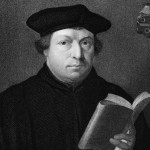
The Life and Legacy of Martin Luther
TRENDING AT PATHEOS Evangelical

The REST of Your Life: A Creative Wrestles...
This week I had a conversation with a good friend from church....

How the author of the world's best hymn...
I've been working with John Newton for a while now. This makes...

Long before this Lectio Divina, Psalm 130 - the song - started...

What About the Trees? Another Living Parable
After I finished writing the last article about falling leaves as a...

Why Classical Education Is a Conversation, Not a...
Come and Read: Joy in Classical Education When I was a little...

Cornell University has received a great deal of negative publicity and intense...
view all Evangelical blogs
Ad-Free & Subscriber Log-In Subscription Support
- About Us
- 2026 Calendar
- Videos
- Podcasts
- Library of World Religions
- Faith In Media Tracker
- Advertise With Us
- Write for Us
- Privacy Policy
- Terms of Service
- Do Not Sell My Data
- Contact Us
- Radiant Digital
- Manage Newsletter Subscriptions
- Unsubscribe From Notifications
- Sitemap
Copyright 2008-2026, Patheos. All rights reserved.
Subscription Support Ad-Free & Subscriber Log-In
Follow Patheos