
BuddhistCatholicContemplativeEvangelicalGeneral ChristianHinduJewishLatter-day SaintMuslimNew VisionsProgressive Christian
Beliefs
- Buddhist
- Catholic
- Contemplative
- Evangelical
- General Christian
- Hindu
- Jewish
- Latter-day Saint
- More Voices
- Muslim
- New Visions
- Pagan
- Progressive Christian
Topics
- Religion News
- Food and Religion
- Sports and Religion
- Religious Art
- Religious Music and Entertainment
- Religious Events
- History and Religion
- Style and Religion
- Politics and Religion
- Women in Religion
- Recreation Outdoors and Religion
- Business Finance and Religion
- Careers Workplace and Religion
- Education and Religion
- Family Parenting and Religion
- Health Fitness and Religion
- Home and Religion
- Relationships and Religion
- Technology and Religion
- Travel and Religion
Columnists
- Buddhist Columnists
- Business Finance and Religion Columnists
- Careers Workplace and Religion Columnists
- Catholic Columnists
- Contemplative Columnists
- Education and Religion Columnists
- Evangelists Columnists
- Family Parenting and Religion Columnists
- General Christian Columnists
- Health Fitness and Religion Columnists
- Hindu Columnists
- History and Religion Columnists
- Home and Religion Columnists
- Jewish Columnists
- More Voices Columnists
- Latter Day Columnists
- Muslim Columnists
- New Visions Columnists
- Nonreligious Columnists
- Pagan Columnists
- Politics and Religion Columnists
- Progressive Columnists
- Recreation Outdoors and Religion Columnists
- Relationships and Religion Columnists
- Religion News Columnists
- Religious Art Columnists
- Religious Events Columnists
- Religious Music and Entertainment Columnists
- Sports and Religion Columnists
- Style and Religion Columnists
- Technology and Religion Columnists
- Travel and Religion Columnists
- Women in Religion Columnists
Resource Library
- 2026 Calendar
- Library of World Religions
- The 100 Most Holy Places on Earth
- Patheos Answers
- Podcasts
- Videos
- Faith Leaders Database
- Anglican Episcopalian
- Bahai
- Baptist
- Buddhism
- Christianity
- Confucianism
- Eastern Orthodoxy
- Hinduism
- Holiness and Pentecostal
- ISKCON
- Islam
- Judaism
- Lutheran
- Methodist
- The Church of Jesus Christ of Latter-day Saints
- New Age
- Paganism
- Presbytarian and Reformed
- Protestantism
- Religion Behind the Scenes
- Roman Catholic
- Scientology
- Shia Islam
- Sikhism
- Sufism
- Sunni Islam
- Taoism
- Zen
- See all religions
Research Tools
 Ad-Free & Subscriber Log-In Subscription Support
Ad-Free & Subscriber Log-In Subscription Support
Follow Patheos 

- Trending:
- Forgiveness
- |
- Marriage
- |
- Consciousness
- |
- Death Penalty
- |
- Election
- |
- Halloween

- Home
- Jewish
- Women in Religion
- Celebrating World Food Day: My Top 3 Favorite Jewish Foods
Celebrating World Food Day: My Top 3 Favorite Jewish Foods
Last updated on: October 21, 2024 at 1:25 pm by Kelley Rouland M.A.
Celebrating World Food Day: My Top 3 Favorite Jewish Foods 2024-10-21T13:25:19-06:00 Kelley Rouland M.A.
Patheos Explore the world's faith through different perspectives on religion and spirituality! Patheos has the views of the prevalent religions and spiritualities of the world.
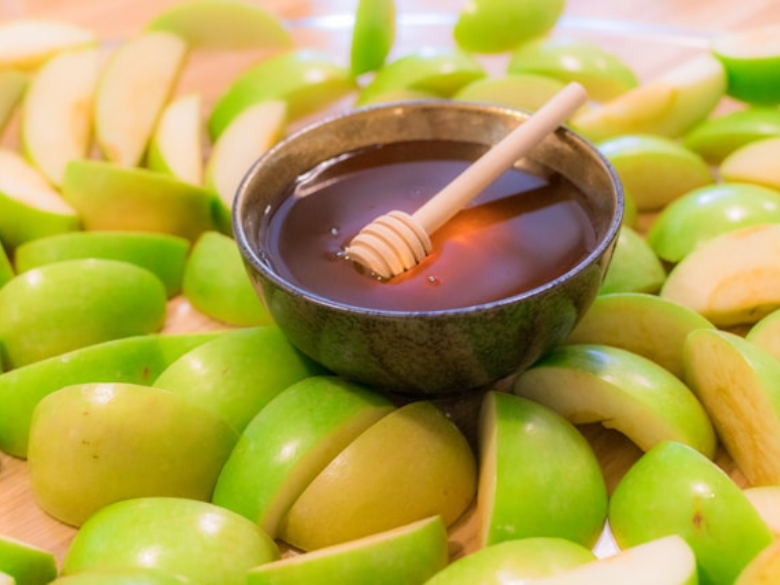
Photo by Igal Ness on Unsplash/One of my favorite traditions on Rosh Hashanah is apples and honey.
Happy World Food Day to all! Wherever you may be in the world, I hope you can stop and enjoy some of the delicious food that the many cultures of this planet have to offer. After all, food is meant to be fun, right? It is meant to taste delicious, bring people together, and help us create memories that last a lifetime.
In my corner of the world, I am still busy learning about the many traditional Jewish foods synonymous with each Jewish holiday and celebration. This journey has been nothing short of amazing and although my life as a Jew is just beginning, I have already compiled a list of some of my favorite culinary traditions thus far.
Without further ado, here are my top 3 favorite Jewish foods and the celebrations they are synonymous with.
1.Challah Bread on Shabbat
Challah Bread and Shabbat will always hold a special place in my heart. Every Friday just before sunset, Jews across the globe, gather for Shabbat dinner. They light the candles, say the blessing, and eat the Challah bread. It is a beautiful experience from beginning to end.
But for me, making Challah is more than just baking bread, it is a spiritual experience. This is when I slow down, become present, and prepare to welcome the Shabbat Bride. I know that with each step, whether sifting the flour or kneading the dough I am fulfilling a mitzvah and connecting with something much bigger than myself.
Making Challah is also a time to pray, reflect, and experience God’s love. It connects us to a Jewish tradition that has existed for thousands of years. The Challah represents the manna from heaven God gave to the Israelites following their Exodus from Egypt.
Although the thought of baking Challah may seem overwhelming, it is quite simple and the benefits of fulfilling this mitzvah are beyond measure. Here is a link to my favorite recipe: https://www.thekitchn.com/how-to-make-challah-bread-181004
2. Apples and Round Challah Dipped in Honey on Rosh Hashanah
These culinary delights may seem overly simple but delicious does not have to be complicated. What’s more, these 3 foods have a symbolic and spiritual meaning when consumed on one of the holiest of all Jewish holidays.
Rosh Hashanah is the start of the new Jewish year. It’s a time when Jews say goodbye to the past and celebrate the new year ahead. It’s a time for reflection, introspection, and determining what we must do differently moving forward. But, why are apples and round honey dipped in Challah you ask?
The apples are known for their sweetness and health benefits in Judaism and are symbolic of a sweet and fruitful new year. JewishColorado.Org explains the meaning behind the honey:
“Honey, into which we dip apples is an expression of hope that sweetness will mark the lives of Jews in the coming year. Also, while honey is kosher, the bee, from which it comes, is not. Thus, honey is a sign of sorts that while we may be unworthy or impure, the prayers from our lips might be accepted as pure.”
As I mentioned previously, Challah is synonymous with Shabbat. However, it is braided for the Jewish day of rest. On Rosh Hashanah, the Challah is round symbolizing many different things including the cycle of the past year. Chabbad.org, explains another meaning behind the round Challah.
“The round challahs have no end, symbolizing (and actualizing) our wish for a year in which life and blessings continue without end.”
Another meaning is the “crowning” of God as king of the Universe. In addition, many make the challah sweeter than usual on Rosh Hashanah by topping the bread with a sweet glaze or mixing raisins in the dough before baking.
I fell in love with this tradition during Rosh Hashanah this year. I baked the round Challah and sliced apples and placed them on a lovely cutting board topped with a bowl of honey.
My family and I loved every bit of it. There is something so beautiful about living the traditions that have shaped the Jewish experience for millennia. Are you interested in making round challah? Here is a link to one of my favorite recipes: https://www.westoftheloop.com/2014/09/11/round-challah-rosh-hashanah/
3.Hamantaschen and Purim
Hamantaschen are delicious pastries that can be made savory or sweet and are traditionally made during Purim, a festival celebrating the events in the book of Esther. The story centers around Queen Esther saving the Jewish people from decimation at the hands of Haman.
Hands down Purim is my favorite Jewish Holiday. This joyous fun-filled celebration is complete with costumes, gift-giving, and a festive meal. Even the reading of the Megillah is a fun interactive experience with children yelling boo and shaking their groggers (noise makers) every time Haman’s name is mentioned.
Some other traditions include challah made in the shape of a rope symbolizing the hanging of Haman and of course the triangular Hamantaschen.
Chabad.org explains the meaning behind hamantaschen:
“One of the oldest mentions of a Purim treat referred to as oznei Haman is in a Purim comedy skit written by Yehudah Sommo (1527- 1592) of Italy. Literally translated as “Haman’s ears,” this name led to the myth that the pastries celebrate the cutting off of the wicked man’s ears before he was hanged.”
My favorite version of this treat is the Nutella-filled Hamantaschen. Though there are savory versions, I just can’t get past hazelnut-chocolaty goodness stuffed into a triangular shortbread cookie.
Are my Hamantaschen attractive? No. They are devoid of their intended triangular shape, but these misshapen treats are delicious and always devoured by my family within a day. Here is a link to my favorite recipe. https://cookingwithcarbs.com/nutella-hamantaschen/
My Jewish Cooking Goals
I have so much more to learn, but I’m already in love with the symbolism and traditions accompanying these Jewish delicacies. The list of dishes I plan to make during this new year is long, but I am most looking forward to making a traditional Jewish brisket for Passover this year. For Hannukah, I will try my hand at potato latkes and Kugal.
May you be blessed with a bounty of deliciousness in celebration of World Food Day. Shana Tova, friends!
New Visions
Women in Religion
Food and Religion
Previous Post

October 3, 2024
Judaism Through My Eyes: A Personal Testimony
Next Post
October 29, 2024 My Personal Reflections on Learning Jewish Traditions
Recent Comments
Browse Our Archives
Select a Category Jewish Joy Joy Uncategorized
Select a Month September 2026 July 2026 June 2026 April 2026 March 2026 December 2025 November 2025 October 2025 September 2025 August 2025 July 2025 June 2025 May 2025 April 2025 March 2025 February 2025 January 2025 December 2024 November 2024 October 2024 September 2024 August 2024
TAKE THE
Religious Wisdom Quiz
What was the primary construction in Biblical times?
Select your answer to see how you score.
Bronze chisel Wooden mallet Stone hammer Iron hammer
Related posts from The Joyful Jew



The Little Girl Who Always Jumped

Finding God in the Moments We Almost Miss
TRENDING AT PATHEOS Jewish

Yom Kippur : Is There Always Room for...
Making Room for Forgiveness Every year as Yom Kippur approaches, I find...

This Rosh Hashanah: Can I Find New Meaning?
A Sunrise, a New Year, and a Question On our way to...

Killing Amalek: The Torah’s Most Misunderstood Commandment
Few passages of the Torah have provoked more confusion, polemic, and misuse...

I have never trusted a first draft. I don’t mean that...

Back to School, Back to Reality—and a New...
A New School Year Begins… Back to Reality A new school year...

Out-Crowleying Crowley: The Emptiness of the O9A
O9A Neo-Crowley Racial Cosplay and Edgelord Atrocitism Aleister Crowley did not create...
view all Jewish blogs
Ad-Free & Subscriber Log-In Subscription Support
- About Us
- 2026 Calendar
- Videos
- Podcasts
- Library of World Religions
- Faith In Media Tracker
- Advertise With Us
- Write for Us
- Privacy Policy
- Terms of Service
- Do Not Sell My Data
- Contact Us
- Radiant Digital
- Manage Newsletter Subscriptions
- Unsubscribe From Notifications
- Sitemap
Copyright 2008-2026, Patheos. All rights reserved.
Subscription Support Ad-Free & Subscriber Log-In
Follow Patheos