
BuddhistCatholicContemplativeEvangelicalGeneral ChristianHinduJewishLatter-day SaintMuslimNew VisionsProgressive Christian
Beliefs
- Buddhist
- Catholic
- Contemplative
- Evangelical
- General Christian
- Hindu
- Jewish
- Latter-day Saint
- More Voices
- Muslim
- New Visions
- Pagan
- Progressive Christian
Topics
- Religion News
- Food and Religion
- Sports and Religion
- Religious Art
- Religious Music and Entertainment
- Religious Events
- History and Religion
- Style and Religion
- Politics and Religion
- Women in Religion
- Recreation Outdoors and Religion
- Business Finance and Religion
- Careers Workplace and Religion
- Education and Religion
- Family Parenting and Religion
- Health Fitness and Religion
- Home and Religion
- Relationships and Religion
- Technology and Religion
- Travel and Religion
Columnists
- Buddhist Columnists
- Business Finance and Religion Columnists
- Careers Workplace and Religion Columnists
- Catholic Columnists
- Contemplative Columnists
- Education and Religion Columnists
- Evangelists Columnists
- Family Parenting and Religion Columnists
- General Christian Columnists
- Health Fitness and Religion Columnists
- Hindu Columnists
- History and Religion Columnists
- Home and Religion Columnists
- Jewish Columnists
- More Voices Columnists
- Latter Day Columnists
- Muslim Columnists
- New Visions Columnists
- Nonreligious Columnists
- Pagan Columnists
- Politics and Religion Columnists
- Progressive Columnists
- Recreation Outdoors and Religion Columnists
- Relationships and Religion Columnists
- Religion News Columnists
- Religious Art Columnists
- Religious Events Columnists
- Religious Music and Entertainment Columnists
- Sports and Religion Columnists
- Style and Religion Columnists
- Technology and Religion Columnists
- Travel and Religion Columnists
- Women in Religion Columnists
Resource Library
- 2026 Calendar
- Library of World Religions
- The 100 Most Holy Places on Earth
- Patheos Answers
- Podcasts
- Videos
- Faith Leaders Database
- Anglican Episcopalian
- Bahai
- Baptist
- Buddhism
- Christianity
- Confucianism
- Eastern Orthodoxy
- Hinduism
- Holiness and Pentecostal
- ISKCON
- Islam
- Judaism
- Lutheran
- Methodist
- The Church of Jesus Christ of Latter-day Saints
- New Age
- Paganism
- Presbytarian and Reformed
- Protestantism
- Religion Behind the Scenes
- Roman Catholic
- Scientology
- Shia Islam
- Sikhism
- Sufism
- Sunni Islam
- Taoism
- Zen
- See all religions
Research Tools
 Ad-Free & Subscriber Log-In Subscription Support
Ad-Free & Subscriber Log-In Subscription Support
Follow Patheos 

- Trending:
- Forgiveness
- |
- Marriage
- |
- Consciousness
- |
- Death Penalty
- |
- Election
- |
- Halloween
 The Empty Pew
- Home
- Progressive Christian
- What Christians should ask themselves when their leaders recant their faith
What Christians should ask themselves when their leaders recant their faith
Last updated on: August 19, 2019 at 4:10 pm by Joshua Lawson
What Christians should ask themselves when their leaders recant their faith 2019-08-19T16:10:31-05:00 Joshua Lawson
Patheos Explore the world's faith through different perspectives on religion and spirituality! Patheos has the views of the prevalent religions and spiritualities of the world.
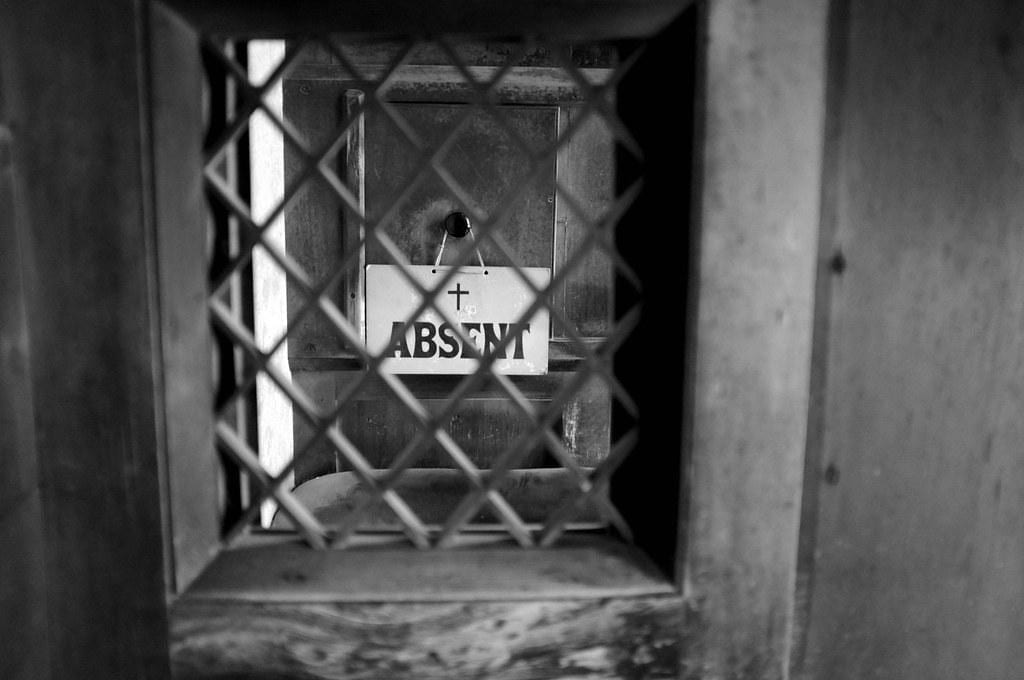
Photo Credit: WallyCassidy Flickr via Compfight cc
Christians get nervous when their leaders express certain doubts or recant their profession of faith. This is especially true when it happens in the public eye.
Like Rob Bell — you remember him, right?
Anyway, this happened again recently when Joshua Harris, former pastor and best-selling author of the cult classic, I Kissed Dating Goodbye, took to Instagram to inform his followers that by every standard of measurement he possessed, he was no longer a Christian.
Then came Hillsong worship leader Marty Sampson, who claimed that he was “genuinely losing” his faith. Although Sampson later clarified that he hasn’t exactly renounced Christianity, he did assure readers of the Christian Post that his faith is on “incredibly shaky ground.”
Ok, fair enough. Thanks for letting us know.
The thing is, people freak out when this stuff happens. Especially evangelical Christians, who live in a world where doubt is given a very small seat at the end of the table — that is, if it’s even allowed a place at all. At worst, doubt is often considered anathema among evangelicals. They won’t admit this fact in public, of course, but it’s pretty much true. In the evangelical world, faith = certainty.
The problem, of course, is that this equation sets people up for all kinds of trouble. It’s the kind you see when Christian leaders recant or otherwise deconstruct their faith in the public eye.
What usually happens when Christian leaders “fall away”
From a sociological and psychological standpoint, it’s interesting to observe the general reaction among Christians when their leaders recant their faith and “fall away.” I think it demonstrates many things, including but not limited to:
-Our desperately felt need for certainty
-Our dependence on authority
-Our fear of change
-Our tribal mentality
-Our reluctance to accept diverse experience
When a popular Christian leader denounces his or her former faith in some way, shape, or form, there will inevitably be those who either 1) regard that person as a champion of genuine faith, or 2) regard them as an apostate to be denounced by all “genuine” Christians.
All such presumptions are an exercise in futility, however, because at the end of the day, no one really knows what all has transpired in that person’s life to bring them to where they are.
Yes, that goes for the Gospel Coalition too. Sorry, guys.
What should happen when Christian leaders “fall away”
Nevertheless, there are some underlying assumptions that need to be explored during these times. Indeed, Christians should ask themselves a few specific questions when their leaders recant their faith. For instance: Why does their new position bother you so much? And, do you truly care about their well-being or merely how their decision makes you feel?
Let’s be honest here. We’ve all seen the fallout that occurs when a popular Christian leader leaves the faith. We’ve seen the pretentious well-wishing from former devotees, the arrogant quotations of Scripture (“he went out from us because he was never one of us”), and the superficial promises to pray for that person and their family. We’ve seen the farewell tweets and the letters of excommunication.
The truth is, it’s pretty much all a game. It’s a religious game played by religious people to cover up the way they feel inside and to protect themselves from any honest self-inquiry.
Don’t believe me? Than ask yourself, if you dare: Why do you feel such an overwhelming need for certainty? Why must you always be right, and on the side of those who are right?
Why do you depend so much on authority that someone else’s departure from the faith is so personally devastating to you?
Why are you afraid of change? What is it about accepting change in other people that disquiets you so deeply?
I could go on, but you probably get the point. In conclusion, I’ll just say this:
If it’s that important to you what so-and-so thinks about the existence of God or about the apparent contradictions of scripture, go ahead and mull it over. But take care to ask the right questions and try to be honest about your conclusions. Ultimately, you can only answer for yourself.

About Joshua Lawson
Josh Lawson is a pastor, writer, and small business owner. He lives in southern Ohio with his wife and kids and their cat Gryffin, which is short for Gryffindor. He loves strong coffee and good books. If you'd like, you can support his work at www.patreon.com/JoshuaLawson. You can read more about the author here.
Previous Post

August 8, 2019
Contrary to progressive opinion, guns are not America's problem
Next Post
August 28, 2019 Is modern atheism a mirror image of religious fundamentalism?
Browse Our Archives
Select a Category atheism Church culture war Deconstruction faith Inner Life Introduction Nonviolence Opioid Crisis spiritual care theology therapy Uncategorized war
Select a Month June 2020 May 2020 March 2020 February 2020 January 2020 December 2019 November 2019 October 2019 September 2019 August 2019 July 2019
Follow Us!
TAKE THE
Religious Wisdom Quiz
Where did Elijah confront the prophets of Baal?
Select your answer to see how you score.
Mount Sinai Mount Zion Mount Horeb Mount Carmel
Related posts from The Empty Pew
What do Second Amendment sanctuary counties say about...

Why Christians are turning to yoga instead of...

Do you need help navigating the waters of...

To change the world, the Church must tell...
TRENDING AT PATHEOS Progressive Christian

Why Christians Have a Sacred Duty to Vote:...
The Bible offers strong support for the sacred duty to vote. Here...

What Being a Modern-Day Apostle Means to Me
In my last column, I discussed the ins and outs of modern-day...

Did Ancient China Once Worship the God of...
Across human history, a common thread weaves through the origins of the...

Love Your Neighbor – Including Earth-Kin: Lev. 19,...
God’s command to love your neighbor means acting in an ethical and...

Lead a Church Study of “Jesus and Lao...
Guest writer Jack Thomas (The Irreverent Reverend) reflects on leading his church...

Principles for Understanding the Apostolic Ministry Today
Whenever people discover that my formal ministry title is "apostle," as in...
view all Progressive Christian blogs
Ad-Free & Subscriber Log-In Subscription Support
- About Us
- 2026 Calendar
- Videos
- Podcasts
- Library of World Religions
- Faith In Media Tracker
- Advertise With Us
- Write for Us
- Privacy Policy
- Terms of Service
- Do Not Sell My Data
- Contact Us
- Radiant Digital
- Manage Newsletter Subscriptions
- Unsubscribe From Notifications
- Sitemap
Copyright 2008-2026, Patheos. All rights reserved.
Subscription Support Ad-Free & Subscriber Log-In
Follow Patheos