
BuddhistCatholicContemplativeEvangelicalGeneral ChristianHinduJewishLatter-day SaintMuslimNew VisionsProgressive Christian
Beliefs
- Buddhist
- Catholic
- Contemplative
- Evangelical
- General Christian
- Hindu
- Jewish
- Latter-day Saint
- More Voices
- Muslim
- New Visions
- Pagan
- Progressive Christian
Topics
- Religion News
- Food and Religion
- Sports and Religion
- Religious Art
- Religious Music and Entertainment
- Religious Events
- History and Religion
- Style and Religion
- Politics and Religion
- Women in Religion
- Recreation Outdoors and Religion
- Business Finance and Religion
- Careers Workplace and Religion
- Education and Religion
- Family Parenting and Religion
- Health Fitness and Religion
- Home and Religion
- Relationships and Religion
- Technology and Religion
- Travel and Religion
Columnists
- Buddhist Columnists
- Business Finance and Religion Columnists
- Careers Workplace and Religion Columnists
- Catholic Columnists
- Contemplative Columnists
- Education and Religion Columnists
- Evangelists Columnists
- Family Parenting and Religion Columnists
- General Christian Columnists
- Health Fitness and Religion Columnists
- Hindu Columnists
- History and Religion Columnists
- Home and Religion Columnists
- Jewish Columnists
- More Voices Columnists
- Latter Day Columnists
- Muslim Columnists
- New Visions Columnists
- Nonreligious Columnists
- Pagan Columnists
- Politics and Religion Columnists
- Progressive Columnists
- Recreation Outdoors and Religion Columnists
- Relationships and Religion Columnists
- Religion News Columnists
- Religious Art Columnists
- Religious Events Columnists
- Religious Music and Entertainment Columnists
- Sports and Religion Columnists
- Style and Religion Columnists
- Technology and Religion Columnists
- Travel and Religion Columnists
- Women in Religion Columnists
Resource Library
- 2026 Calendar
- Library of World Religions
- The 100 Most Holy Places on Earth
- Patheos Answers
- Podcasts
- Videos
- Faith Leaders Database
- Anglican Episcopalian
- Bahai
- Baptist
- Buddhism
- Christianity
- Confucianism
- Eastern Orthodoxy
- Hinduism
- Holiness and Pentecostal
- ISKCON
- Islam
- Judaism
- Lutheran
- Methodist
- The Church of Jesus Christ of Latter-day Saints
- New Age
- Paganism
- Presbytarian and Reformed
- Protestantism
- Religion Behind the Scenes
- Roman Catholic
- Scientology
- Shia Islam
- Sikhism
- Sufism
- Sunni Islam
- Taoism
- Zen
- See all religions
Research Tools
 Ad-Free & Subscriber Log-In Subscription Support
Ad-Free & Subscriber Log-In Subscription Support
Follow Patheos 

- Trending:
- Forgiveness
- |
- Marriage
- |
- Consciousness
- |
- Death Penalty
- |
- Election
- |
- Halloween
 Jonathan Wilson-Hartgrove
- Home
- Progressive Christian
- #RacialJusticeEpiphany: Listening in the Dark
#RacialJusticeEpiphany: Listening in the Dark
Last updated on: January 17, 2015 at 4:36 pm by Jonathan Wilson-Hartgrove
#RacialJusticeEpiphany: Listening in the Dark 2015-01-17T16:36:36-07:00 Jonathan Wilson-Hartgrove
Patheos Explore the world's faith through different perspectives on religion and spirituality! Patheos has the views of the prevalent religions and spiritualities of the world.
This weekend, 47 years after Martin King’s death, America will pause to remember his life and witness. At celebrations in churches, community centers and town squares across the country, many will wax eloquent, remembering Dr. King’s Dream.
Amidst the accolades, it’s also important to remember what people were saying about Dr. King 50 years ago.
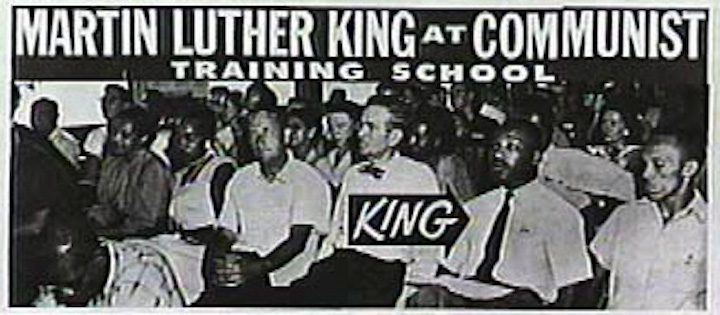 Take, for example, the propaganda, funded by the Governor of Georgia and distributed widely by a national conservative newspaper, The Independent American, in 1965. “Martin Luther King at Communist Training School” was an attempt to discredit King’s work to help America achieve its ideals by painting him as a red anti-American.
In 1967, after his famous speech at Riverside Church in which he came out against the war in Vietnam, King was criticized by both white liberals and civil rights leaders for speaking out of turn. Civil rights for African-Ameircans was his territory. Most agreed he should stay out of foreign affairs.
In his personal mail that same year, Dr. King received an anonymous letter, approved by FBI Director J. Edgar Hoover, detailing his personal failings and purported political mistakes. The letter concluded, “As far as I am concerned—and quite a few like me—the best thing that could happen for the Negro people is for you to ‘drop dead.’”
Truth is, many in America didn’t want to hear Dr. King 50 years ago. The Word of the Lord, when it comes to us, isn’t always comforting.
In the Old Testament text for this second Sunday of Epiphany, we find the story about a young Samuel, who was living in the temple at the time with his mentor Eli. When Samuel hears a voice calling his name, he runs to Eli’s bedside. But Eli tells him it wasn’t him. Go back to bed. When the same thing happens again, we can imagine the boy’s fear. A mysterious voice in the dark, calling his name—who could it be? The third time, his mentor gives him some sounds advice: next time, say, “Speak Lord, for your servant is listening.”
Like all the prophets before him, Dr. King showed us that the Word of the Lord can be confusing, unsettling, even scary. The trouble with listening in the dark, of course, is that you cannot see for yourself. But especially for white Christians in America, this is precisely the situation we are in.
A prophetic call for justice is ringing out across the land. It is calling us by name, even, beckoning us to hear.
But for so many of us, we haven’t seen the injustice that #BlackLivesMatter activists are pointing to. Yes, we saw the video of Eric Garner. But we haven’t seen our sons and uncles shaken down repeatedly on the streets. We haven’t seen the fear in our loved one’s eyes when a police officer stops to ask them a question. We haven’t seen neighborhoods where people live under occupation, raided by SWAT teams as in a war zone.
Eli’s advice is especially important for those of us who have not seen. We must stop and say, “Speak Lord, for your servant is listening.”
It’s been almost ten years now since I wrote Free to Be Bound, a book in which I invited white evangelicals especially to listen to the wisdom of the prophetic black church in America. Over the past decade, I’ve continued to listen, trying to hear the Lord’s voice in a community that has suffered the generational trauma of racial injustice. Here are a few things I’ve heard:
1) All faith is political. White evangelicals often worry that focusing too much on justice issues will distract from the heart of the gospel. But black Christians in America have always understood that the promise of salvation applies in this world and the next. The question is not whether we’ll be political, but how.
2) Jesus stands with the powerless. The politics of Jesus are not issue-based or party-based. This world’s system cannot hold the fullness of God’s truth. But Jesus’ political agenda has been clear from the first century to the 21st for those who’ve not been corrupted by power: Jesus stands with the suffering, the excluded, the marginalized and the forgotten. We can only participate in his this-worldly agenda by joining them.
3) No justice, no reconciliation. For white Christians, it is easy to read about Jesus destroying the dividing wall of hostility and assume that historic wrongs should be forgiven for the sake of Christian unity. After all, what’s a little slavery between friends? The problem is that the promise of the gospel as no power to people who’ve seen it denied, over and again. Restorative justice is always about repairing the harm that’s been created by past injustices in order to build trust for a future together. Apart from seeing this work, most black Christians aren’t very excited about reconciliation.
4) Christian love means sharing power. When you’re used to being in control, it’s hard to imagine what it feels like to live with a double-consiousness, always thinking both about how things seem to you and how they must seem to white people. It’s taken a lot of listening for me to hear what’s not being said in so many conversations. But this much is clear: if white people want to reconcile with our black sisters and brothers, we’ve got to talk about how we’re going to share the power we’ve assumed—both in the church and in society. As hundreds of congregations come together across racial lines to celebrate Dr. King this weekend, this might be a good conversation starter: what are white congregations willing to give up in order to see racial justice in America?
Previous Post

January 11, 2015
#RacialJusticeEpiphany: Shine the Light on Inequality
Next Post
January 25, 2015 #RacialJusticeEpiphany: Radical Grace in a History of Race
Browse Our Archives
Select a Category Features Front Porch Nurturing Communities Testimonies
Select a Month April 2015 March 2015 February 2015 January 2015 December 2014 September 2014 August 2014 July 2014 June 2014 May 2014 April 2014 March 2014 February 2014 January 2014 December 2013 November 2013 October 2013 September 2013 August 2013 July 2013 June 2013 May 2013 April 2013 March 2013 February 2013 January 2013 December 2012 November 2012 October 2012 September 2012 August 2012 July 2012 June 2012 May 2012 April 2012 March 2012 February 2012 January 2012
Follow Us!
TAKE THE
Religious Wisdom Quiz
What river did John baptize Jesus in?
Select your answer to see how you score.
Nile River Red Sea Jordan River Tigris River
Related posts from Jonathan Wilson-Hartgrove
Arrests Resume As Moral Movement Continues
A Palm Sunday Invitation to Holy Ground

A White Southerner in the Freedom Movement
If Past Is Prologue, Pay Attention to the...
TRENDING AT PATHEOS Progressive Christian

What Being a Modern-Day Apostle Means to Me
In my last column, I discussed the ins and outs of modern-day...

Did Ancient China Once Worship the God of...
Across human history, a common thread weaves through the origins of the...

Love Your Neighbor – Including Earth-Kin: Lev. 19,...
God’s command to love your neighbor means acting in an ethical and...

Lead a Church Study of “Jesus and Lao...
Guest writer Jack Thomas (The Irreverent Reverend) reflects on leading his church...

Pastoral Wisdom for Responding to Sermon Pushback
Getting sermon pushback on your social justice sermon? Learn practical, Proverbs-based strategies...

Principles for Understanding the Apostolic Ministry Today
Whenever people discover that my formal ministry title is "apostle," as in...
view all Progressive Christian blogs
Ad-Free & Subscriber Log-In Subscription Support
- About Us
- 2026 Calendar
- Videos
- Podcasts
- Library of World Religions
- Faith In Media Tracker
- Advertise With Us
- Write for Us
- Privacy Policy
- Terms of Service
- Do Not Sell My Data
- Contact Us
- Radiant Digital
- Manage Newsletter Subscriptions
- Unsubscribe From Notifications
- Sitemap
Copyright 2008-2026, Patheos. All rights reserved.
Subscription Support Ad-Free & Subscriber Log-In
Follow Patheos