
BuddhistCatholicContemplativeEvangelicalGeneral ChristianHinduJewishLatter-day SaintMuslimNew VisionsProgressive Christian
Beliefs
- Buddhist
- Catholic
- Contemplative
- Evangelical
- General Christian
- Hindu
- Jewish
- Latter-day Saint
- More Voices
- Muslim
- New Visions
- Pagan
- Progressive Christian
Topics
- Religion News
- Food and Religion
- Sports and Religion
- Religious Art
- Religious Music and Entertainment
- Religious Events
- History and Religion
- Style and Religion
- Politics and Religion
- Women in Religion
- Recreation Outdoors and Religion
- Business Finance and Religion
- Careers Workplace and Religion
- Education and Religion
- Family Parenting and Religion
- Health Fitness and Religion
- Home and Religion
- Relationships and Religion
- Technology and Religion
- Travel and Religion
Columnists
- Buddhist Columnists
- Business Finance and Religion Columnists
- Careers Workplace and Religion Columnists
- Catholic Columnists
- Contemplative Columnists
- Education and Religion Columnists
- Evangelists Columnists
- Family Parenting and Religion Columnists
- General Christian Columnists
- Health Fitness and Religion Columnists
- Hindu Columnists
- History and Religion Columnists
- Home and Religion Columnists
- Jewish Columnists
- More Voices Columnists
- Latter Day Columnists
- Muslim Columnists
- New Visions Columnists
- Nonreligious Columnists
- Pagan Columnists
- Politics and Religion Columnists
- Progressive Columnists
- Recreation Outdoors and Religion Columnists
- Relationships and Religion Columnists
- Religion News Columnists
- Religious Art Columnists
- Religious Events Columnists
- Religious Music and Entertainment Columnists
- Sports and Religion Columnists
- Style and Religion Columnists
- Technology and Religion Columnists
- Travel and Religion Columnists
- Women in Religion Columnists
Resource Library
- 2026 Calendar
- Library of World Religions
- The 100 Most Holy Places on Earth
- Patheos Answers
- Podcasts
- Videos
- Faith Leaders Database
- Anglican Episcopalian
- Bahai
- Baptist
- Buddhism
- Christianity
- Confucianism
- Eastern Orthodoxy
- Hinduism
- Holiness and Pentecostal
- ISKCON
- Islam
- Judaism
- Lutheran
- Methodist
- The Church of Jesus Christ of Latter-day Saints
- New Age
- Paganism
- Presbytarian and Reformed
- Protestantism
- Religion Behind the Scenes
- Roman Catholic
- Scientology
- Shia Islam
- Sikhism
- Sufism
- Sunni Islam
- Taoism
- Zen
- See all religions
Research Tools
 Ad-Free & Subscriber Log-In Subscription Support
Ad-Free & Subscriber Log-In Subscription Support
Follow Patheos 

- Trending:
- Forgiveness
- |
- Marriage
- |
- Consciousness
- |
- Death Penalty
- |
- Election
- |
- Halloween
 Jonathan Wilson-Hartgrove
- Home
- Progressive Christian
- Prayer for Moral Week of Action: Day 2, Education
Prayer for Moral Week of Action: Day 2, Education
Last updated on: August 23, 2014 at 10:07 am by Jonathan Wilson-Hartgrove
Prayer for Moral Week of Action: Day 2, Education 2014-08-23T10:07:53-06:00 Jonathan Wilson-Hartgrove
Patheos Explore the world's faith through different perspectives on religion and spirituality! Patheos has the views of the prevalent religions and spiritualities of the world.
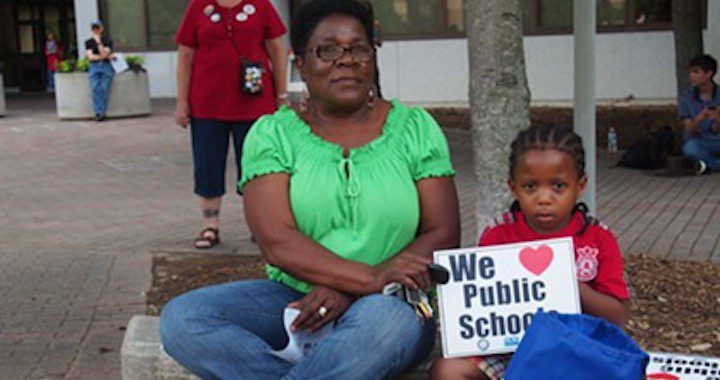 Since late spring of 2013, Rev. William J. Barber II and the HKonJ Coalition in North Carolina have led the Forward Together Moral Movement to expose extremists’ plans to re-make government in America from the state house up. Over 1,000 people have been arrested for civil disobedience over the past 16 months.
Announcing a Moral Week of Action, the Forward Together Moral Movement spread to 11 other states yesterday.
Read news coverage of yesterdays events from North Carolina, Tennessee, Alabama, and Ohio.
For the next five days, faith leaders in the Moral Movement will offer a prayer and meditation for each day of action. Today’s meditation is offered by Rev. Nancy Petty from Pullen Memorial Baptist Church in Raleigh, North Carolina.
By Rev. Nancy E. Petty
Great, loving God, on this day, we pray for the students and educators of every public school. As people of faith and as concerned citizens, we pray for the wisdom and courage to stand up for a just and equitable education for every single child in our state and in the world. May our feet keep marching, O God, until our elected leaders recognize and value our children and teachers. We pray this in the name of our great teacher, Jesus. Amen.
Ms. Price was my kindergarten teacher. Ms. Price was not only my kindergarten teacher, she was also my Sunday school teacher. My memories of her are of a stern and caring older woman who expected much from us 5 and 6-year-olds in terms of behavior and learning (learning was serious business). And while she often used questionable discipline techniques (such as having us stand at the black board with our nose in a circle when we had misbehaved), I knew, and all of us in that 1967 kindergarten class of Sandy Plains Baptist Church knew that she loved us deeply, wanted us to learn, and would have done anything to protect us. She was the first person, and as it would happen, the first teacher in my life who nurtured a place of belonging and understanding for me.
Beginning with Ms. Price, teachers would become the single greatest influence in my life, offering over many years a place of understanding, acceptance and encouragement—shaping me as a student, as a learner and as a person. Beyond high school, teachers would continue to be the single greatest influence in my life, offering to me a safe place of understanding. My college and seminary teachers and professors opened my mind in ways that I didn’t know existed and offered me blessing after blessing with their words of affirmation and encouragement. Through the teaching/learning process they nurtured an imagination within me that taught me that life offers possibility. So when I think about how teachers have shaped my life, I think of Maya Angelou’s words, “I come as one, but I represent thousands.” Maybe not thousands, but for certain every teacher and every educator whose class I’ve sat in.
Today, our state is in a crisis when it comes to public education and supporting those who teach our children. Elizabeth Queen, an MDiv student at Duke Divinity School, compiled a document for the North Carolina Council of Churches titled “A Call to Action for People of Faith and Public Education.” She writes: “In the United States, the value of education is a given for most people. Research and overwhelming public opinion both attest to the importance of the classroom as a laboratory for learning and skill development. Education is a doorway to resources that improve both the lives of students and their communities by providing them with social and cognitive skills that equip them for successful participation in society.”
Despite this, Queen goes on to say “North Carolina’s education policies often do not support [the] basic needs of students and educators. Chris Hill, Director of the North Carolina Justice Center’s Education and Law Project, noted that there are several threats to public education in North Carolina that widen the achievement gap between student groups and undermine the adequate and equitable education of all the state’s students.” It seems that in NC the value of education may not be a given for many children.
What are these threats that Hill names? First, the re-segregation of schools and the privatization of public education through private school vouchers, tax credits, and the explosive growth of charter schools. Second, the promotion of online education as a replacement for rather than a supplement to classroom education, excluding students in low-income areas who do not have access to personal computers and the Internet. This change in format also removes the important socialization aspect of education, which is vital for building skills that help our children succeed socially and professionally as adult citizens. A third threat that Hill identifies is the lack of revenue to fund public schools. He writes that, “over the past several years North Carolina’s investment in education has dwindled to shocking lows, allocating fewer and fewer state dollars to adequate classrooms and facilities, school supplies, teacher support, and other vital resources for student achievement. As of 2013, spending on education had fallen below our state’s 40-year average of percentage of total budget.
In North Carolina, our public school students, teachers, school administrators and staff are facing a climate of diminished support. Why it is that every single adult who attended public school can tell you a story of a teacher or school counselor or school staff person who changed their life, but when it comes to supporting and paying our teachers and valuing their work, our society responds woefully and inadequately. Why? And why is this issue – education and how we support those who teach our children – an issue of faith?
Elizabeth Queen answers that question. She writes, “Scripture is not only filled with praise for wisdom and learning from the prophets to the disciples, but it is also overflowing with admonitions for God’s people to act with justice and equity because the God we serve is just. In addition to promoting wisdom, which is inherently valuable, education also serves as a powerful engine for overcoming poverty and promoting a healthy democracy that serves its citizens well. An educational system that leaves out the most vulnerable members of our community is simply unacceptable. Scripture is clear on this. God shows no partiality amongst God’s children based on income, race, geography, or any other characteristic, and people of faith must advocate for a just public education system that shows no partiality as well.”
Job would be the last place that one would think to turn to for a passage about the value of wisdom and learning. But right there stuck in the middle of all of Job’s suffering is this passage about wisdom and learning. “Where shall wisdom be found? And where is the place of understanding? It cannot be gotten for gold, and silver cannot be weighed out as its price. It cannot be valued in the gold of Ophir, in precious onyx or sapphire. Gold and glass cannot equal it, nor can it be exchanged for jewels of fine gold. No mention shall be made of coral or of crystal; the price of wisdom/learning is above pearls…”
Nothing is more valuable than learning. No one is more valuable to a society than its educators and its educated citizens—people who have been taught how to think for themselves. Nobody—not one child—deserves to be left behind because they don’t have access to a high quality education or to that one teacher who will challenge them, who will say to them “you are a good writer” or “wow, you read that beautifully” or “you have the best penmanship ever.”
Every single one of God’s children deserves access to a Ms. Price or a Ms. Welch or Ms. Reamie Squires or a Mr. McSwain or a Ms. Grace Taylor who will teach them about English and history and math and science and the arts AND who will give them a place of blessing—a place of confidence—a place of hope—that place of understanding. As people of faith we have a moral responsibility to support and strengthen our public schools. And that is why what is happening around public education is our business as a faith community.
As we partner together, we pray for wisdom and courage to make a positive difference in the lives of those in our public schools. We pray for courage to explore new ways of supporting the people and institutions that teach our children and youth. And may we continue to commit ourselves to call on our elected leaders to recognize and value all of our students and educators. Amen.
Previous Post

August 12, 2014
Love Is the Final Fight
Next Post
August 24, 2014 Prayer for Day 3 of Moral Week of Action
Browse Our Archives
Select a Category Features Front Porch Nurturing Communities Testimonies
Select a Month April 2015 March 2015 February 2015 January 2015 December 2014 September 2014 August 2014 July 2014 June 2014 May 2014 April 2014 March 2014 February 2014 January 2014 December 2013 November 2013 October 2013 September 2013 August 2013 July 2013 June 2013 May 2013 April 2013 March 2013 February 2013 January 2013 December 2012 November 2012 October 2012 September 2012 August 2012 July 2012 June 2012 May 2012 April 2012 March 2012 February 2012 January 2012
Follow Us!
TAKE THE
Religious Wisdom Quiz
What was the primary form of greeting in Biblical times?
Select your answer to see how you score.
Bow Wave Kiss Handshake
Related posts from Jonathan Wilson-Hartgrove
Arrests Resume As Moral Movement Continues
A Palm Sunday Invitation to Holy Ground

A White Southerner in the Freedom Movement
If Past Is Prologue, Pay Attention to the...
TRENDING AT PATHEOS Progressive Christian

Why Christians Have a Sacred Duty to Vote:...
The Bible offers strong support for the sacred duty to vote. Here...

What Being a Modern-Day Apostle Means to Me
In my last column, I discussed the ins and outs of modern-day...

Did Ancient China Once Worship the God of...
Across human history, a common thread weaves through the origins of the...

Love Your Neighbor – Including Earth-Kin: Lev. 19,...
God’s command to love your neighbor means acting in an ethical and...

Lead a Church Study of “Jesus and Lao...
Guest writer Jack Thomas (The Irreverent Reverend) reflects on leading his church...

Principles for Understanding the Apostolic Ministry Today
Whenever people discover that my formal ministry title is "apostle," as in...
view all Progressive Christian blogs
Ad-Free & Subscriber Log-In Subscription Support
- About Us
- 2026 Calendar
- Videos
- Podcasts
- Library of World Religions
- Faith In Media Tracker
- Advertise With Us
- Write for Us
- Privacy Policy
- Terms of Service
- Do Not Sell My Data
- Contact Us
- Radiant Digital
- Manage Newsletter Subscriptions
- Unsubscribe From Notifications
- Sitemap
Copyright 2008-2026, Patheos. All rights reserved.
Subscription Support Ad-Free & Subscriber Log-In
Follow Patheos