
BuddhistCatholicContemplativeEvangelicalGeneral ChristianHinduJewishLatter-day SaintMuslimNew VisionsProgressive Christian
Beliefs
- Buddhist
- Catholic
- Contemplative
- Evangelical
- General Christian
- Hindu
- Jewish
- Latter-day Saint
- More Voices
- Muslim
- New Visions
- Pagan
- Progressive Christian
Topics
- Religion News
- Food and Religion
- Sports and Religion
- Religious Art
- Religious Music and Entertainment
- Religious Events
- History and Religion
- Style and Religion
- Politics and Religion
- Women in Religion
- Recreation Outdoors and Religion
- Business Finance and Religion
- Careers Workplace and Religion
- Education and Religion
- Family Parenting and Religion
- Health Fitness and Religion
- Home and Religion
- Relationships and Religion
- Technology and Religion
- Travel and Religion
Columnists
- Buddhist Columnists
- Business Finance and Religion Columnists
- Careers Workplace and Religion Columnists
- Catholic Columnists
- Contemplative Columnists
- Education and Religion Columnists
- Evangelists Columnists
- Family Parenting and Religion Columnists
- General Christian Columnists
- Health Fitness and Religion Columnists
- Hindu Columnists
- History and Religion Columnists
- Home and Religion Columnists
- Jewish Columnists
- More Voices Columnists
- Latter Day Columnists
- Muslim Columnists
- New Visions Columnists
- Nonreligious Columnists
- Pagan Columnists
- Politics and Religion Columnists
- Progressive Columnists
- Recreation Outdoors and Religion Columnists
- Relationships and Religion Columnists
- Religion News Columnists
- Religious Art Columnists
- Religious Events Columnists
- Religious Music and Entertainment Columnists
- Sports and Religion Columnists
- Style and Religion Columnists
- Technology and Religion Columnists
- Travel and Religion Columnists
- Women in Religion Columnists
Resource Library
- 2026 Calendar
- Library of World Religions
- The 100 Most Holy Places on Earth
- Patheos Answers
- Podcasts
- Videos
- Faith Leaders Database
- Anglican Episcopalian
- Bahai
- Baptist
- Buddhism
- Christianity
- Confucianism
- Eastern Orthodoxy
- Hinduism
- Holiness and Pentecostal
- ISKCON
- Islam
- Judaism
- Lutheran
- Methodist
- The Church of Jesus Christ of Latter-day Saints
- New Age
- Paganism
- Presbytarian and Reformed
- Protestantism
- Religion Behind the Scenes
- Roman Catholic
- Scientology
- Shia Islam
- Sikhism
- Sufism
- Sunni Islam
- Taoism
- Zen
- See all religions
Research Tools
 Ad-Free & Subscriber Log-In Subscription Support
Ad-Free & Subscriber Log-In Subscription Support
Follow Patheos 

- Trending:
- Forgiveness
- |
- Marriage
- |
- Consciousness
- |
- Death Penalty
- |
- Election
- |
- Halloween
 Jonathan Wilson-Hartgrove
- Home
- Progressive Christian
- Our Children’s March: What 1963 Can Teach US About the “Border Crisis”
Our Children’s March: What 1963 Can Teach US About the “Border Crisis”
Last updated on: July 27, 2014 at 6:41 am by Jonathan Wilson-Hartgrove
Our Children’s March: What 1963 Can Teach US About the “Border Crisis” 2014-07-27T06:41:15-06:00 Jonathan Wilson-Hartgrove
Patheos Explore the world's faith through different perspectives on religion and spirituality! Patheos has the views of the prevalent religions and spiritualities of the world.
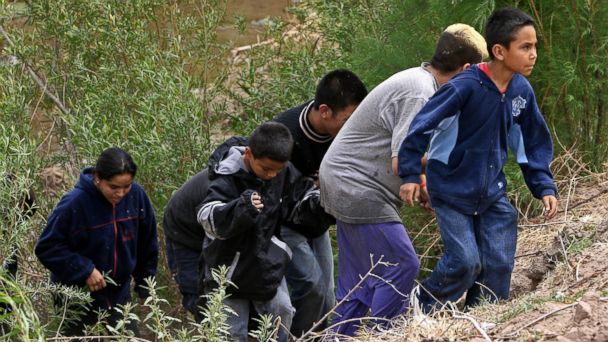 As images of kids at the US/Mexico border continue to feed the 24-hour news cycle, I’m reminded of Birmingham in May of 1963 and the pictures that gripped the nation that spring.
What we’re calling the “border crisis” is today’s Children’s March in the struggle for immigrant justice. The real question is not how to “address the crisis” but rather what the faces of these children demand of us as a country?
In the history of America’s Southern freedom struggle, the Birmingham campaign of 1963 was central. From the Montgomery Bus Boycott of 1955-56, black Americans had learned that collective nonviolent action had the power to challenge white power in the South. This discovery lead to conversations and coalitions which gave rise to the sit-in movement of 1960. Especially in Nashville, TN, sit-ins were employed as a direct action tactic in a nonviolent campaign to not only overthrow Jim Crow but also win over white Southerners to a vision of “beloved community.” Mayor Ben West’s public confession that he didn’t think segregation to be morally defensible was a concrete sign that nonviolence could not only defeat segregation. It could create a peaceable community.
But the struggle had to happen in every community. So the nonviolent soldiers who’d been trained in Nashville spread out across the South, joined by others under the umbrella of the Student Nonviolent Coordinating Committee. In Albany, Georgia, Charlie Sherrod led a city-wide campaign to unite the black community and mobilize them around direct action against segregation. SNCC and its partner, Martin Luther King’s Southern Christian Leadership Conference, learned important lessons in Albany about the need to plan a campaign carefully and escalate noncooperation to the point that a city’s power structure recognizes the immediate need for change.
This was the collective wisdom the freedom struggle took to Birmingham in 1963. But Bull Conor and the segregationist forces of “Bomb-ingham” proved a tough challenge for the nonviolent movement. Try as they may, they couldn’t crack Birmingham. In seemingly endless meetings, leaders plotted how to escalate the campaign. Despite protests from fellow clergy, King went to jail on Easter weekend, penning his now famous appeal to the white Christians who thought change should come more slowly. But still, Birmingham didn’t budge. (Indeed, it would be 50 years before white clergy responded to King’s letter.)
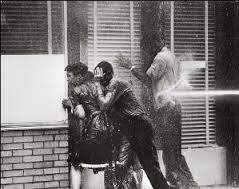 Then Jim Bevel, one of the nonviolent soldiers who’d been trained in Nashville in 1959-60, brought some kids to King and the other leaders. “These kids want to march,” Bevel said. When they did, Conor’s forces sprayed them with fire houses and chased them with police dogs.
America was shocked by images of children beaten, abused and sent to jail for simply insisting that they too were human beings.
In 1963, the Children’s March woke America to the injustice of Jim Crow segregation. Though it would take a March on Washington and another year of organizing, historians draw a direct line from the Birmingham campaign of ’63 to the Civil Rights Act of ’64.
Looking back, we can see that the Children’s March was central because it forced the nation to ask deep moral questions about what segregation implied for the health of our nation. If, in the name of law, children could be sprayed with fire hoses, could this really be the land of the free and the home of the brave?
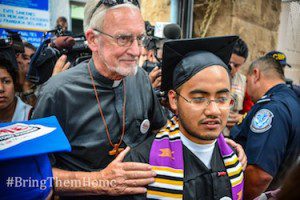
Today, nearly 60,000 children are in detention centers on the US border, locked up as criminals because of free trade agreements and immigration laws that mark them as “illegal.” For some time now, immigrant youth who are inspired by the love of a God who is undocumented and informed by the history of nonviolent struggle in the US have fought deportations, infiltrated detention centers, and boldly self-deported to re-enter the US as asylum seekers.
Just as we can’t understand the Children’s March without reading King’s “Letter from a Birmingham Jail,” we can’t understand today’s “border crisis” without hearing the appeal of The Dream 9, who led the #bringthemhome campaign a year ago. Whether they knew it or not, the Dream 9 started 2014’s Children’s March. Now it falls to each of us to discern how we can become a country that doesn’t warehouse children in detention centers but helps them grow up into the fullness of what God made them to be.
Previous Post

July 20, 2014
Malaysia Flight 17: The Wreckage of Broken Promises
Next Post
August 5, 2014 Julia Dinsmore: Singing Freedom's Song
Browse Our Archives
Select a Category Features Front Porch Nurturing Communities Testimonies
Select a Month April 2015 March 2015 February 2015 January 2015 December 2014 September 2014 August 2014 July 2014 June 2014 May 2014 April 2014 March 2014 February 2014 January 2014 December 2013 November 2013 October 2013 September 2013 August 2013 July 2013 June 2013 May 2013 April 2013 March 2013 February 2013 January 2013 December 2012 November 2012 October 2012 September 2012 August 2012 July 2012 June 2012 May 2012 April 2012 March 2012 February 2012 January 2012
Follow Us!
TAKE THE
Religious Wisdom Quiz
What did God speak to Job out of?
Select your answer to see how you score.
A whirlwind A burning bush A pillar of fire A cloud
Related posts from Jonathan Wilson-Hartgrove
A Conspiracy of Silence? Listen to Our Grassroots...

TRENDING AT PATHEOS Progressive Christian

Why Christians Have a Sacred Duty to Vote:...
The Bible offers strong support for the sacred duty to vote. Here...

What Being a Modern-Day Apostle Means to Me
In my last column, I discussed the ins and outs of modern-day...

Did Ancient China Once Worship the God of...
Across human history, a common thread weaves through the origins of the...

Love Your Neighbor – Including Earth-Kin: Lev. 19,...
God’s command to love your neighbor means acting in an ethical and...

Lead a Church Study of “Jesus and Lao...
Guest writer Jack Thomas (The Irreverent Reverend) reflects on leading his church...

Principles for Understanding the Apostolic Ministry Today
Whenever people discover that my formal ministry title is "apostle," as in...
view all Progressive Christian blogs
Ad-Free & Subscriber Log-In Subscription Support
- About Us
- 2026 Calendar
- Videos
- Podcasts
- Library of World Religions
- Faith In Media Tracker
- Advertise With Us
- Write for Us
- Privacy Policy
- Terms of Service
- Do Not Sell My Data
- Contact Us
- Radiant Digital
- Manage Newsletter Subscriptions
- Unsubscribe From Notifications
- Sitemap
Copyright 2008-2026, Patheos. All rights reserved.
Subscription Support Ad-Free & Subscriber Log-In
Follow Patheos