
BuddhistCatholicContemplativeEvangelicalGeneral ChristianHinduJewishLatter-day SaintMuslimNew VisionsProgressive Christian
Beliefs
- Buddhist
- Catholic
- Contemplative
- Evangelical
- General Christian
- Hindu
- Jewish
- Latter-day Saint
- More Voices
- Muslim
- New Visions
- Pagan
- Progressive Christian
Topics
- Religion News
- Food and Religion
- Sports and Religion
- Religious Art
- Religious Music and Entertainment
- Religious Events
- History and Religion
- Style and Religion
- Politics and Religion
- Women in Religion
- Recreation Outdoors and Religion
- Business Finance and Religion
- Careers Workplace and Religion
- Education and Religion
- Family Parenting and Religion
- Health Fitness and Religion
- Home and Religion
- Relationships and Religion
- Technology and Religion
- Travel and Religion
Columnists
- Buddhist Columnists
- Business Finance and Religion Columnists
- Careers Workplace and Religion Columnists
- Catholic Columnists
- Contemplative Columnists
- Education and Religion Columnists
- Evangelists Columnists
- Family Parenting and Religion Columnists
- General Christian Columnists
- Health Fitness and Religion Columnists
- Hindu Columnists
- History and Religion Columnists
- Home and Religion Columnists
- Jewish Columnists
- More Voices Columnists
- Latter Day Columnists
- Muslim Columnists
- New Visions Columnists
- Nonreligious Columnists
- Pagan Columnists
- Politics and Religion Columnists
- Progressive Columnists
- Recreation Outdoors and Religion Columnists
- Relationships and Religion Columnists
- Religion News Columnists
- Religious Art Columnists
- Religious Events Columnists
- Religious Music and Entertainment Columnists
- Sports and Religion Columnists
- Style and Religion Columnists
- Technology and Religion Columnists
- Travel and Religion Columnists
- Women in Religion Columnists
Resource Library
- 2026 Calendar
- Library of World Religions
- The 100 Most Holy Places on Earth
- Patheos Answers
- Podcasts
- Videos
- Faith Leaders Database
- Anglican Episcopalian
- Bahai
- Baptist
- Buddhism
- Christianity
- Confucianism
- Eastern Orthodoxy
- Hinduism
- Holiness and Pentecostal
- ISKCON
- Islam
- Judaism
- Lutheran
- Methodist
- The Church of Jesus Christ of Latter-day Saints
- New Age
- Paganism
- Presbytarian and Reformed
- Protestantism
- Religion Behind the Scenes
- Roman Catholic
- Scientology
- Shia Islam
- Sikhism
- Sufism
- Sunni Islam
- Taoism
- Zen
- See all religions
Research Tools
 Ad-Free & Subscriber Log-In Subscription Support
Ad-Free & Subscriber Log-In Subscription Support
Follow Patheos 

- Trending:
- Forgiveness
- |
- Marriage
- |
- Consciousness
- |
- Death Penalty
- |
- Election
- |
- Halloween
 Jonathan Wilson-Hartgrove
- Home
- Progressive Christian
- An Open Letter to Durham Police Chief Jose Lopez
An Open Letter to Durham Police Chief Jose Lopez
Last updated on: January 10, 2014 at 10:01 am by Jonathan Wilson-Hartgrove
An Open Letter to Durham Police Chief Jose Lopez 2014-01-10T10:01:57-07:00 Jonathan Wilson-Hartgrove
Patheos Explore the world's faith through different perspectives on religion and spirituality! Patheos has the views of the prevalent religions and spiritualities of the world.
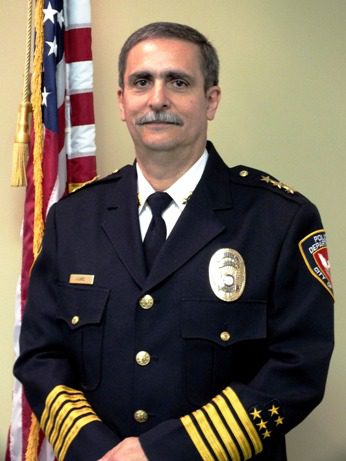
Durham Police Chief, Jose Lopez
Dear Chief Lopez,
On October 31, 2012, I met with you to discuss concerns of the citizens of Durham’s Walltown neighborhood about policing in our neighborhood. I came at your request because the Walltown Neighborhood Ministries, which I serve as Chair, had invited you the day before to attend a public forum in our neighborhood on December 5th, 2012, to address these concerns. I was impressed by the speed of your reply. I had great hopes that we could work together to make Walltown and Durham safer for everyone.
I remember distinctly from our meeting that you said you were firmly committed to eliminating any sign of racial profiling in your department. You told a story about an experience of profiling you had in college. You informed me about the department’s community outreach programs and said you were eager to work with anyone in the community who wants to make our neighborhoods safer.
But I also recall that you refused to attend our meeting in Walltown or to send a representative from your department. When 300 people gathered at the St. Johns Missionary Baptist Church on December 5th, 2012, you were not there. People were eager to hear how you planned to address our concerns, but you were silent.
Others in Durham heard this story. We received calls from residents of Old East Durham and North Durham, Southside and Braggtown. These Durham neighbors noted that they shared our sense that their neighborhoods were being policed as enemy territory, that black and brown youth were being singled out and harassed, and that, at the same time, legitimate needs for police services were not being addressed in a timely manner.
Because we shared a concern about policing in our neighborhoods, we formed a coalition to address these concerns. Because it was clear that our neighborhoods had been targeted by drug enforcement efforts, we called our coalition FADE—“Fostering Alternatives for Drug Enforcement.” We, like you, know the terrible consequences of drug use for individuals and communities. But we also have experienced the terrible consequences of the so-called “war on drugs.” We do not want to live and raise our children in militarized zones. And we know we do not have to. We asked to work with you and your department to bring to Durham nationally recognized best-practices for addressing drug addiction as a community health issue.
But you closed ranks, Chief Lopez, and refused to work with us. You thought it was your job to defend the Durham Police Department rather than lead it.
It is important to note that all of our efforts preceded the high-profile, officer-involved deaths of 2013. Along with our partners from the NAACP, Southern Coalition for Social Justice, SpiritHouse, Durham Congregations in Action, and Walltown Neighborhood Ministries, FADE tried diligently to have this conversation about policing before the deaths of Jose Ocampo, Derek Walker, and Jesus Heurta. Only because of the great resistance we experienced were we compelled to go to City Council with our concerns. I was saddened that it took an order from the Mayor to get you to the public forum we had been asking for.
Still, I hoped that the Human Relations Commission would serve as that public forum for the conversation we’ve wanted to have about how our neighborhoods can be safe places for everyone. But again, you chose to defend your department and deny the realities which have been presented through personal testimony and detailed statistical analysis. Rather than devote time to addressing these concerns and seriously consider the alternatives that FADE has proposed, your department produced an 84-page rebuttal.
The data your department has reported shows clearly that Durham’s stop and search rates are more racialized than any department’s in the state. Still, you ask us for particular cases of people who have experienced racial profiling. Any complaint made with the department, you insist, will be thoroughly investigated by Internal Affairs and subject to review by the Civilian Review Board.
As a white man of relative privilege in my community, I cannot ask my neighbors to trust this process. I cannot ask them to trust it because I no longer trust it myself.
On April 12, 2012, I filed a racial profiling complaint against Officer M.W. Brown of the DPD. After borrowing my family’s van to go to a fast food restaurant, a neighbor and his handicapped friend, who lived with my family at the time, were stopped around the corner from our house for an alleged traffic violation. Both young men are African-American. Receiving a call from them, I walked to the site of the stop and observed. When the young men refused consent to search the vehicle, they were detained while drug dogs were called to the scene. I stood in the cold that night with them as we waited. No drugs were found, but no apology was offered. Officer Brown insisted that this was standard procedure for drug enforcement in Durham and that you, Chief Lopez, would fully support his actions.
As it turns out, he was right: your department’s review of this incident found that it was in keeping with DPD policy and procedures. What’s more, your lieutenant informed me that any review of this investigation by the Civilian Review Board would only be a review to determine whether the investigation had been conducted according to your policies and procedures.
But what happened that night was wrong. When my African-American son is licensed to drive in seven years, I don’t want him to be subject to that kind of treatment in our neighborhood. Going through the formal complaint process helped me to understand that the problem with policing in our neighborhood is not a personnel issue but rather a policy issue. This is why I came to ask you about a public conversation on policing policy. This is why FADE has made specific policy recommendations.
And this is why I will not ask my neighbors to trust the DPD in the meantime. In your 26-page rebuttal of FADE’s policy recommendations to the HRC, DPD spent two pages refuting a narrative of my experience which I published in my book Strangers at My Door. Without any medical knowledge concerning my handicapped friend, you published a denial of his handicap. Despite acknowledging the fact that he and his friends were stopped, interrogated, asked to wait while a drug unit was deployed, then searched again before being released, you insisted that the stop lasted less than 22 minutes. Then, as justification for your aggressive policing, you asserted that our neighborhood is a “known drug area.”
But this, Chief Lopez, is precisely the assumption we have been trying to address—that our neighborhoods are “known drug areas” inhabited by “known criminals.” If and when you treat people as untrustworthy, it stands to reason that they will not respect and trust you. But this does not make our neighborhoods safer. It breeds fear and fosters suspicion on all sides.
All of Durham saw this, of course, on December 19, 2013. DPD’s policy of exercising excessive force against those it has already identified as “known dangers” resulted in the tear gassing of a crowd that included families and children. Only this time, DPD’s aggressive policing didn’t happen on the streets of Walltown after dark. It happened downtown on national TV.
Chief Lopez, we have a problem in Durham. As I have said from the very beginning, many of us in the community want to help you address this problem. We know you didn’t create the problem. It existed before you got here and it will continue if the City Manager decides that public outrage demands your dismissal.
But we have to address the problem. Because the problem is written into police policy, we can’t address it without the DPD working with the community in a public, transparent process.
When we met over a year ago, I remember one other thing you said. “I’m just trying to be Sherriff Taylor, keeping the peace in Mayberry.” Chief Lopez, you grew up in New York City. I grew up in Mayberry. And I can tell you for certain that Durham isn’t Mayberry. No degree of nostalgia or PR work is going to make us look like Mayberry. But Durham doesn’t want to be Mayberry. We want to be a diverse, beloved community of people who work hard to live together despite our differences.
I am certain that Durham can and will move forward together toward that vision. I hope and pray we can do it with you and not without you.
Sincerely,
Jonathan Wilson-Hartgrove
Durham’s Human Relations Commission will hear presentations from FADE coalition members over the next three weeks, January 14th, 22nd, and 28th. Learn more and invite your friends and neighbors via FADE’s Facebook Page.
Fostering Alternatives for Drug Enforcement
Previous Post

December 23, 2013
The Road Home: A Christmas Story
Next Post
February 19, 2014 The Freedom Movement Today
Browse Our Archives
Select a Category Features Front Porch Nurturing Communities Testimonies
Select a Month April 2015 March 2015 February 2015 January 2015 December 2014 September 2014 August 2014 July 2014 June 2014 May 2014 April 2014 March 2014 February 2014 January 2014 December 2013 November 2013 October 2013 September 2013 August 2013 July 2013 June 2013 May 2013 April 2013 March 2013 February 2013 January 2013 December 2012 November 2012 October 2012 September 2012 August 2012 July 2012 June 2012 May 2012 April 2012 March 2012 February 2012 January 2012
Follow Us!
TAKE THE
Religious Wisdom Quiz
Who said, "Before I formed you in the womb I knew you"?
Select your answer to see how you score.
Paul God Isaiah David
Related posts from Jonathan Wilson-Hartgrove

Arrests Resume As Moral Movement Continues

Sound the Shofar! Women Lead #MoralWeekofAction
Struggle for Racial Justice is Local

Pentecost Power: The Spirit Moving Through Moral Mondays
TRENDING AT PATHEOS Progressive Christian

What Being a Modern-Day Apostle Means to Me
In my last column, I discussed the ins and outs of modern-day...

Did Ancient China Once Worship the God of...
Across human history, a common thread weaves through the origins of the...

Love Your Neighbor – Including Earth-Kin: Lev. 19,...
God’s command to love your neighbor means acting in an ethical and...

Lead a Church Study of “Jesus and Lao...
Guest writer Jack Thomas (The Irreverent Reverend) reflects on leading his church...

Pastoral Wisdom for Responding to Sermon Pushback
Getting sermon pushback on your social justice sermon? Learn practical, Proverbs-based strategies...

Principles for Understanding the Apostolic Ministry Today
Whenever people discover that my formal ministry title is "apostle," as in...
view all Progressive Christian blogs
Ad-Free & Subscriber Log-In Subscription Support
- About Us
- 2026 Calendar
- Videos
- Podcasts
- Library of World Religions
- Faith In Media Tracker
- Advertise With Us
- Write for Us
- Privacy Policy
- Terms of Service
- Do Not Sell My Data
- Contact Us
- Radiant Digital
- Manage Newsletter Subscriptions
- Unsubscribe From Notifications
- Sitemap
Copyright 2008-2026, Patheos. All rights reserved.
Subscription Support Ad-Free & Subscriber Log-In
Follow Patheos