
BuddhistCatholicContemplativeEvangelicalGeneral ChristianHinduJewishLatter-day SaintMuslimNew VisionsProgressive Christian
Beliefs
- Buddhist
- Catholic
- Contemplative
- Evangelical
- General Christian
- Hindu
- Jewish
- Latter-day Saint
- More Voices
- Muslim
- New Visions
- Pagan
- Progressive Christian
Topics
- Religion News
- Food and Religion
- Sports and Religion
- Religious Art
- Religious Music and Entertainment
- Religious Events
- History and Religion
- Style and Religion
- Politics and Religion
- Women in Religion
- Recreation Outdoors and Religion
- Business Finance and Religion
- Careers Workplace and Religion
- Education and Religion
- Family Parenting and Religion
- Health Fitness and Religion
- Home and Religion
- Relationships and Religion
- Technology and Religion
- Travel and Religion
Columnists
- Buddhist Columnists
- Business Finance and Religion Columnists
- Careers Workplace and Religion Columnists
- Catholic Columnists
- Contemplative Columnists
- Education and Religion Columnists
- Evangelists Columnists
- Family Parenting and Religion Columnists
- General Christian Columnists
- Health Fitness and Religion Columnists
- Hindu Columnists
- History and Religion Columnists
- Home and Religion Columnists
- Jewish Columnists
- More Voices Columnists
- Latter Day Columnists
- Muslim Columnists
- New Visions Columnists
- Nonreligious Columnists
- Pagan Columnists
- Politics and Religion Columnists
- Progressive Columnists
- Recreation Outdoors and Religion Columnists
- Relationships and Religion Columnists
- Religion News Columnists
- Religious Art Columnists
- Religious Events Columnists
- Religious Music and Entertainment Columnists
- Sports and Religion Columnists
- Style and Religion Columnists
- Technology and Religion Columnists
- Travel and Religion Columnists
- Women in Religion Columnists
Resource Library
- 2026 Calendar
- Library of World Religions
- The 100 Most Holy Places on Earth
- Patheos Answers
- Podcasts
- Videos
- Faith Leaders Database
- Anglican Episcopalian
- Bahai
- Baptist
- Buddhism
- Christianity
- Confucianism
- Eastern Orthodoxy
- Hinduism
- Holiness and Pentecostal
- ISKCON
- Islam
- Judaism
- Lutheran
- Methodist
- The Church of Jesus Christ of Latter-day Saints
- New Age
- Paganism
- Presbytarian and Reformed
- Protestantism
- Religion Behind the Scenes
- Roman Catholic
- Scientology
- Shia Islam
- Sikhism
- Sufism
- Sunni Islam
- Taoism
- Zen
- See all religions
Research Tools
 Ad-Free & Subscriber Log-In Subscription Support
Ad-Free & Subscriber Log-In Subscription Support
Follow Patheos 

- Trending:
- Forgiveness
- |
- Marriage
- |
- Consciousness
- |
- Death Penalty
- |
- Election
- |
- Halloween
 Jonathan Wilson-Hartgrove
- Home
- Progressive Christian
- Why We Write: A Conversation With Fred Bahnson
Why We Write: A Conversation With Fred Bahnson
Last updated on: December 11, 2013 at 2:27 pm by Jonathan Wilson-Hartgrove
Why We Write: A Conversation With Fred Bahnson 2013-12-11T14:27:52-07:00 Jonathan Wilson-Hartgrove
Patheos Explore the world's faith through different perspectives on religion and spirituality! Patheos has the views of the prevalent religions and spiritualities of the world.
 Last year, when I agreed to teach a workshop on writing and social change, folks over at Duke asked me to write a short piece on how I make sense of my vocation as a writer. This got me thinking about words—their power and their limits in society and in a life. Whether you’re a writer or not, it turns out words are the tools you end up using, at least some of the time. As Witgenstein said, “Words make worlds.” But can words really change the world–not just the world we imagine, but the world that is? If so, what sort of words? And how might we best shape them to achieve our desired effect? (Do we really understand what change we hope to effect?)
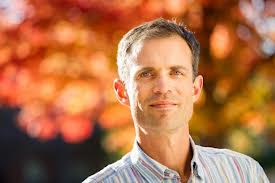
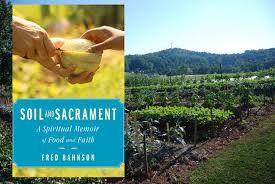
Last week, I had the chance to join my friend Fred Bahnson and a wonderful group of writers at a workshop hosted by the Wake Forest University School of Divinity. It was also a workshop on writing and social change. Fred is the author of an achingly beautiful book, Soil and Sacrament, that hopes, among other things, to help people connect with both heaven above and the soil below. I didn’t get to ask Fred all the questions I had during the workshop, so I asked if we could take up our conversation here. Thanks for joining me, Fred. Here’s where I’d like to start: if you’re writing to change the world, what do you want your words to do to your reader? What was your prayer when you sent your manuscript to Simon & Schuster?
Fred: Thanks, Jonathan, for the invitation to continue this conversation. Well, I do hope my writing changes the world in some way for the better. But in terms of the writing process, I can’t think about that while writing. I find that if I think too hard about my intended audience or what I hope they get from a piece of writing or what societal change might result, then the writing gets overly abstract or argumentative. I have to start with a story or image that I find intriguing, and then write my way into it. When the article or book is finished, I have to trust that it will move people in some way. And the parts that move them are often different than the ones that moved me or that sustained my interest in the writing process.
My hope for the words I give the reader is that they will first find them beautiful and compelling and true. If social change results from a piece of writing, it’s because people found a compelling vision in that work, and they want to see that vision enacted in the world. Our job as writers is to stay true to the vision. We must craft it as faithfully as we can, and not worry overmuch about the result or its lack.
My prayer when I sent my mss. to Simon & Schuster was something like “Lord, thank you that this is over.” Writing that book was a lot of fun, but it was also pretty exhausting.
 Jonathan: Fair enough. You know, I’ve been reading William Stafford, a poet we both love, on writing. He says that the longer he taught writing, the more he came to feel that his praise was unhelpful to his students. Praise only taught them what they needed to do to please him as their instructor. But they needed to find their own vision, their own voice, their own reason for writing. I hear you saying something similar. Maybe the first rule of writing to change the world must be to give up our ambition. We write because we’re called to pay attention, to name, to describe. Our responsibility is to do that well and let the consequences fall where they may.
But I hear something else in what you’re saying–something you are suggesting is basic to good writing. Namely, that it begins with a concrete engagement with the world. I think most people who write with conviction–people who write for a “cause”–need to hear this. (I am one of them.) You don’t compel people to give themselves to something by telling them how important it is. That’s not how most of us came to care about the issues that matter to us. I care about prison reform because I lived with Roy his first five years out of prison. Because I lived with him, I started visiting prisons. Because I know people whose lives have been crushed by a broken system, I care. If I quote for you the statistics that show how broken this system is, you’ll ask me, “Whose study are you quoting?” But if I tell you about Roy or Al or Frederica or Manuel, you’ll know their story. If I tell it well, you may come to care too.
But don’t you think it’s fair to say that some stories evoke social change more than others? I mean, what’s the difference between a Jane Austen and a Charles Dickens? We do decide, each of us, what we pay attention to, which stories we tell. What effect do these decisions have on the world around us?
Join the conversation by offering your response in the comments below. Check back tomorrow for Fred’s response…
Previous Post

December 2, 2013
Waiting for the Jesus Who Is Not Ours
Browse Our Archives
Select a Category Features Front Porch Nurturing Communities Testimonies
Select a Month April 2015 March 2015 February 2015 January 2015 December 2014 September 2014 August 2014 July 2014 June 2014 May 2014 April 2014 March 2014 February 2014 January 2014 December 2013 November 2013 October 2013 September 2013 August 2013 July 2013 June 2013 May 2013 April 2013 March 2013 February 2013 January 2013 December 2012 November 2012 October 2012 September 2012 August 2012 July 2012 June 2012 May 2012 April 2012 March 2012 February 2012 January 2012
Follow Us!
TAKE THE
Religious Wisdom Quiz
What Persian king helped rebuild the Temple by searching royal records?
Select your answer to see how you score.
Xerxes Cyrus Darius Artaxerxes
Related posts from Jonathan Wilson-Hartgrove

The Heart of a Teacher, the Soul of...

School Board Member on Why She Got Arrested
The Future of Faith: An Interview With Diana...

TRENDING AT PATHEOS Progressive Christian

What Being a Modern-Day Apostle Means to Me
In my last column, I discussed the ins and outs of modern-day...

Did Ancient China Once Worship the God of...
Across human history, a common thread weaves through the origins of the...

Love Your Neighbor – Including Earth-Kin: Lev. 19,...
God’s command to love your neighbor means acting in an ethical and...

Lead a Church Study of “Jesus and Lao...
Guest writer Jack Thomas (The Irreverent Reverend) reflects on leading his church...

Pastoral Wisdom for Responding to Sermon Pushback
Getting sermon pushback on your social justice sermon? Learn practical, Proverbs-based strategies...

Principles for Understanding the Apostolic Ministry Today
Whenever people discover that my formal ministry title is "apostle," as in...
view all Progressive Christian blogs
Ad-Free & Subscriber Log-In Subscription Support
- About Us
- 2026 Calendar
- Videos
- Podcasts
- Library of World Religions
- Faith In Media Tracker
- Advertise With Us
- Write for Us
- Privacy Policy
- Terms of Service
- Do Not Sell My Data
- Contact Us
- Radiant Digital
- Manage Newsletter Subscriptions
- Unsubscribe From Notifications
- Sitemap
Copyright 2008-2026, Patheos. All rights reserved.
Subscription Support Ad-Free & Subscriber Log-In
Follow Patheos