
BuddhistCatholicContemplativeEvangelicalGeneral ChristianHinduJewishLatter-day SaintMuslimNew VisionsProgressive Christian
Beliefs
- Buddhist
- Catholic
- Contemplative
- Evangelical
- General Christian
- Hindu
- Jewish
- Latter-day Saint
- More Voices
- Muslim
- New Visions
- Pagan
- Progressive Christian
Topics
- Religion News
- Food and Religion
- Sports and Religion
- Religious Art
- Religious Music and Entertainment
- Religious Events
- History and Religion
- Style and Religion
- Politics and Religion
- Women in Religion
- Recreation Outdoors and Religion
- Business Finance and Religion
- Careers Workplace and Religion
- Education and Religion
- Family Parenting and Religion
- Health Fitness and Religion
- Home and Religion
- Relationships and Religion
- Technology and Religion
- Travel and Religion
Columnists
- Buddhist Columnists
- Business Finance and Religion Columnists
- Careers Workplace and Religion Columnists
- Catholic Columnists
- Contemplative Columnists
- Education and Religion Columnists
- Evangelists Columnists
- Family Parenting and Religion Columnists
- General Christian Columnists
- Health Fitness and Religion Columnists
- Hindu Columnists
- History and Religion Columnists
- Home and Religion Columnists
- Jewish Columnists
- More Voices Columnists
- Latter Day Columnists
- Muslim Columnists
- New Visions Columnists
- Nonreligious Columnists
- Pagan Columnists
- Politics and Religion Columnists
- Progressive Columnists
- Recreation Outdoors and Religion Columnists
- Relationships and Religion Columnists
- Religion News Columnists
- Religious Art Columnists
- Religious Events Columnists
- Religious Music and Entertainment Columnists
- Sports and Religion Columnists
- Style and Religion Columnists
- Technology and Religion Columnists
- Travel and Religion Columnists
- Women in Religion Columnists
Resource Library
- 2026 Calendar
- Library of World Religions
- The 100 Most Holy Places on Earth
- Patheos Answers
- Podcasts
- Videos
- Faith Leaders Database
- Anglican Episcopalian
- Bahai
- Baptist
- Buddhism
- Christianity
- Confucianism
- Eastern Orthodoxy
- Hinduism
- Holiness and Pentecostal
- ISKCON
- Islam
- Judaism
- Lutheran
- Methodist
- The Church of Jesus Christ of Latter-day Saints
- New Age
- Paganism
- Presbytarian and Reformed
- Protestantism
- Religion Behind the Scenes
- Roman Catholic
- Scientology
- Shia Islam
- Sikhism
- Sufism
- Sunni Islam
- Taoism
- Zen
- See all religions
Research Tools
 Ad-Free & Subscriber Log-In Subscription Support
Ad-Free & Subscriber Log-In Subscription Support
Follow Patheos 

- Trending:
- Forgiveness
- |
- Marriage
- |
- Consciousness
- |
- Death Penalty
- |
- Election
- |
- Halloween
 Jonathan Wilson-Hartgrove
- Home
- Progressive Christian
- Evangelicalism’s Justice Conversation
Evangelicalism’s Justice Conversation
Last updated on: February 8, 2013 at 10:11 pm by Jonathan Wilson-Hartgrove
Evangelicalism’s Justice Conversation 2013-02-08T22:11:36-07:00 Jonathan Wilson-Hartgrove
Patheos Explore the world's faith through different perspectives on religion and spirituality! Patheos has the views of the prevalent religions and spiritualities of the world.
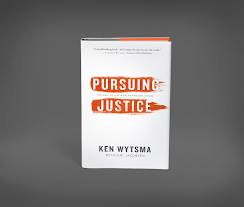 For over forty years, a minority movement in American evangelicalism stood strong and shouted loud that Jesus and justice cannot be separated–that justice is, in fact, at the center of Scripture and the very heart of God. The prophets of this movement never tired of reminding their more politically conservative brethren that over 2,000 verses in Scripture reference the poor. Jim Wallis, John Alexander, Ron Sider, Tony Campolo, John Perkins, and Tom Skinner preached those texts in pulpits and college chapels, at camp meetings and conferences across America. (David R. Swartz has recently chronicled this movement in a scholarly but accessible survey, The Moral Minority.) They built institutions around their message: Sojourners, CCDA, and Eastern University among them.
These justice advocates did not convince American evangelicalism that they were right on every policy point and justice issue. (They didn’t always agree with one another.) But like their forebears who had defined themselves “evangelical” as opposed to “fundamentalist,” the evangelical justice crowd outlasted their resistance. Justice won a place at the center of evangelical faith.
So next weekend, when Eastern University hosts The Justice Conference in Philadelphia, simulcasting at locations around the country, every evangelical missions organization and publication aimed at reaching folks under 40 will be present or paying attention. Even those who stay away from the conversation will be shaped by it.
Because justice has won. We cannot talk about a Jesus movement in America today without talking about justice.
But that hardly means the conversation is over. Because recognizing that justice is at the heart of God is not the same thing as understanding what it means to put it into practice. Saying that Jesus and justice are inseparable is a far cry from pursuing justice with all our heart, soul, mind and strength.
This is why I’m grateful for Ken Wytsma, founder of The Justice Conference, who has also just published his first book: Pursuing Justice: The Call to Live and Die for Bigger Things. Ken is committed to keeping evangelicalism’s justice conversation moving forward. And he’s humble enough to know he doesn’t have all the answers.
But I think it’s significant that both a book launch and a gathering meant to deepen the conversation are happening during Black History Month. Because, as grateful as I am for the prophets who’ve spent the last forty years convincing white evangelicals to care about justice, their message was never news to the black church tradition. From their earliest days of gathering at camp meetings and in brush arbors, black Christians in America have known that Jesus was on the side of freedom and that his Movement was toward justice.
If we are going to have any chance of learning to do justice, as Micah says the Lord requires, we who have inherited America’s original sin of racism must apprentice ourselves to the black church and drink deep from its wells of wisdom. It is not enough, I am convinced, for us to realize that the Bible has been talking about justice all along. It’s not enough to say the word. For terrible things have been done in the name of justice. And they will continue to be, even by well meaning people who are zealous to overcome their history of ignorance.
No, white evangelicals are not well suited to lead the justice conversation that we now need most. We would do better, it seems, to begin with repentance–to search our souls for the hidden wounds that racism has inflicted upon us. We would do well to listen to the stories of David Walker and Harriet Tubman, of Frederick Douglass and Sojourner Truth, of Ida B. Wells and A. Philip Randolph, of Septima Clark, Fannie Lou Hamer, Fred Shuttlesworth, and Martin Luther King. We would do well to learn from the example (and from the mistakes) of allies like William Lloyd Garrison and Angelina Grimke, Lillian Smith and Clarence Jordan, Dorothy Day and Ed King. For some Christians in America, Jesus and justice were never separable. What do their traditions have in common that ours has lacked?
I am a product of American evangelicalism, a student of our movement, and a grateful participant in this family of faith. The ways we talk about personal conversion make sense to me: we can only open ourselves to grace at that point when we realize we cannot fix ourselves. But white evangelicals have often been blind to the ways that social transformation also demands repentance.
Leaving justice out, we’ve missed a lot.
Maybe this new conversation about justice is an opportunity for us to learn from those we’ve too long ignored.
Previous Post

February 1, 2013
No Crime to Be Poor
Next Post
February 13, 2013 The Fast We've Chosen: Begging with Our Friends
Browse Our Archives
Select a Category Features Front Porch Nurturing Communities Testimonies
Select a Month April 2015 March 2015 February 2015 January 2015 December 2014 September 2014 August 2014 July 2014 June 2014 May 2014 April 2014 March 2014 February 2014 January 2014 December 2013 November 2013 October 2013 September 2013 August 2013 July 2013 June 2013 May 2013 April 2013 March 2013 February 2013 January 2013 December 2012 November 2012 October 2012 September 2012 August 2012 July 2012 June 2012 May 2012 April 2012 March 2012 February 2012 January 2012
Follow Us!
TAKE THE
Religious Wisdom Quiz
How many daughters did Job have after his restoration?
Select your answer to see how you score.
Seven Three Five Two
Related posts from Jonathan Wilson-Hartgrove

Arrests Resume As Moral Movement Continues
A Palm Sunday Invitation to Holy Ground

A White Southerner in the Freedom Movement
If Past Is Prologue, Pay Attention to the...
TRENDING AT PATHEOS Progressive Christian

What Being a Modern-Day Apostle Means to Me
In my last column, I discussed the ins and outs of modern-day...

Did Ancient China Once Worship the God of...
Across human history, a common thread weaves through the origins of the...

Love Your Neighbor – Including Earth-Kin: Lev. 19,...
God’s command to love your neighbor means acting in an ethical and...

Lead a Church Study of “Jesus and Lao...
Guest writer Jack Thomas (The Irreverent Reverend) reflects on leading his church...

Pastoral Wisdom for Responding to Sermon Pushback
Getting sermon pushback on your social justice sermon? Learn practical, Proverbs-based strategies...

Principles for Understanding the Apostolic Ministry Today
Whenever people discover that my formal ministry title is "apostle," as in...
view all Progressive Christian blogs
Ad-Free & Subscriber Log-In Subscription Support
- About Us
- 2026 Calendar
- Videos
- Podcasts
- Library of World Religions
- Faith In Media Tracker
- Advertise With Us
- Write for Us
- Privacy Policy
- Terms of Service
- Do Not Sell My Data
- Contact Us
- Radiant Digital
- Manage Newsletter Subscriptions
- Unsubscribe From Notifications
- Sitemap
Copyright 2008-2026, Patheos. All rights reserved.
Subscription Support Ad-Free & Subscriber Log-In
Follow Patheos