
BuddhistCatholicContemplativeEvangelicalGeneral ChristianHinduJewishLatter-day SaintMuslimNew VisionsProgressive Christian
Beliefs
- Buddhist
- Catholic
- Contemplative
- Evangelical
- General Christian
- Hindu
- Jewish
- Latter-day Saint
- More Voices
- Muslim
- New Visions
- Pagan
- Progressive Christian
Topics
- Religion News
- Food and Religion
- Sports and Religion
- Religious Art
- Religious Music and Entertainment
- Religious Events
- History and Religion
- Style and Religion
- Politics and Religion
- Women in Religion
- Recreation Outdoors and Religion
- Business Finance and Religion
- Careers Workplace and Religion
- Education and Religion
- Family Parenting and Religion
- Health Fitness and Religion
- Home and Religion
- Relationships and Religion
- Technology and Religion
- Travel and Religion
Columnists
- Buddhist Columnists
- Business Finance and Religion Columnists
- Careers Workplace and Religion Columnists
- Catholic Columnists
- Contemplative Columnists
- Education and Religion Columnists
- Evangelists Columnists
- Family Parenting and Religion Columnists
- General Christian Columnists
- Health Fitness and Religion Columnists
- Hindu Columnists
- History and Religion Columnists
- Home and Religion Columnists
- Jewish Columnists
- More Voices Columnists
- Latter Day Columnists
- Muslim Columnists
- New Visions Columnists
- Nonreligious Columnists
- Pagan Columnists
- Politics and Religion Columnists
- Progressive Columnists
- Recreation Outdoors and Religion Columnists
- Relationships and Religion Columnists
- Religion News Columnists
- Religious Art Columnists
- Religious Events Columnists
- Religious Music and Entertainment Columnists
- Sports and Religion Columnists
- Style and Religion Columnists
- Technology and Religion Columnists
- Travel and Religion Columnists
- Women in Religion Columnists
Resource Library
- 2026 Calendar
- Library of World Religions
- The 100 Most Holy Places on Earth
- Patheos Answers
- Podcasts
- Videos
- Faith Leaders Database
- Anglican Episcopalian
- Bahai
- Baptist
- Buddhism
- Christianity
- Confucianism
- Eastern Orthodoxy
- Hinduism
- Holiness and Pentecostal
- ISKCON
- Islam
- Judaism
- Lutheran
- Methodist
- The Church of Jesus Christ of Latter-day Saints
- New Age
- Paganism
- Presbytarian and Reformed
- Protestantism
- Religion Behind the Scenes
- Roman Catholic
- Scientology
- Shia Islam
- Sikhism
- Sufism
- Sunni Islam
- Taoism
- Zen
- See all religions
Research Tools
 Ad-Free & Subscriber Log-In Subscription Support
Ad-Free & Subscriber Log-In Subscription Support
Follow Patheos 

- Trending:
- Forgiveness
- |
- Marriage
- |
- Consciousness
- |
- Death Penalty
- |
- Election
- |
- Halloween
 Jonathan Wilson-Hartgrove
- Home
- Progressive Christian
- The Gift of Stability
The Gift of Stability
Last updated on: June 18, 2012 at 10:00 am by Jonathan Wilson-Hartgrove
The Gift of Stability 2012-06-17T02:58:08-06:00 Jonathan Wilson-Hartgrove
Patheos Explore the world's faith through different perspectives on religion and spirituality! Patheos has the views of the prevalent religions and spiritualities of the world.
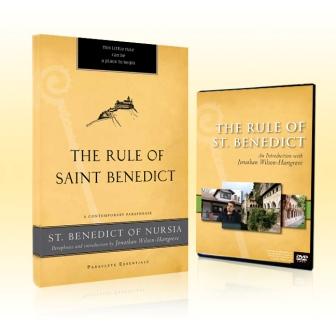
Click on the image above and use promo code JWH40 for 40% off all Paraclete Press products.
When a sister or brother comes to join the monastic community, Benedict says they must make a three-fold promise—to stability, obedience, and conversatio morum. The Latin phrase is hard to translate. It means, literally, “the monastic way of life.” That way is the whole of the Rule, the full reality of what it means to submit ourselves to God and other people in a particular place. But in the Latin conversatio you can also see the root of our English word “conversion.” This is a way of life that’s meant to change us.
Contemporary Benedictines talk about this promise as a three-legged stool. Without any one of the legs, the whole thing falls over. The way of life needs stability in a place as well as obedience to the particular leadership. Without these other two anchors in the world, the monastic way of life floats as a sort of ideal. But obedience cannot stand without stability and the way of life. Obedience is listening—to God and to others—but it is listening in a particular context, in a particular way. Likewise, stability needs the commitment to listen and the rule of life. We cannot stay without a God who roots us, a people to share life with, and a way that we’ve agreed to walk together.
Each aspect of this three-fold promise is equally important. Even still, in our particular context, one aspect may speak more directly to our need than another. For the past few years, I’ve been advocating a recovery of the wisdom of stability as we find our way in a hyper mobile culture. Here’s a short video, summarizing the gift of Benedictine stability for our time.
My good friend Isaac Villegas and I also had a friendly debate recently in the pages of Sojourners Magazine about the virtues and the dangers of “stability.” I like what Isaac says:
Perhaps that’s what the Christian life should look like in our time and place: to let the Holy Spirit draw us into tombs, into the places where the forces of death seem to have dominion. As we dwell in these sites of desolation, we learn to hope and pray that the same God who raised Jesus from the dead would move in our midst, that we would bear witness to the power of resurrection. Like Syncletica, we can turn tombs into nests that welcome Christ’s resurrection: nests, built for a season, as way stations for refugees and pilgrims who are being set free from the bondage of evil, from the chains of injustice.
You can read the whole exchange at Sojourners website.
What gifts might stability offer you in your place? What dangers do you see in trying to practice the wisdom of stability?
Previous Post

June 16, 2012
God's Economy in a Local Church
Next Post
June 21, 2012 Saint Benedict on Leadership
Browse Our Archives
Select a Category Features Front Porch Nurturing Communities Testimonies
Select a Month April 2015 March 2015 February 2015 January 2015 December 2014 September 2014 August 2014 July 2014 June 2014 May 2014 April 2014 March 2014 February 2014 January 2014 December 2013 November 2013 October 2013 September 2013 August 2013 July 2013 June 2013 May 2013 April 2013 March 2013 February 2013 January 2013 December 2012 November 2012 October 2012 September 2012 August 2012 July 2012 June 2012 May 2012 April 2012 March 2012 February 2012 January 2012
Follow Us!
TAKE THE
Religious Wisdom Quiz
What does "Gethsemane" mean?
Select your answer to see how you score.
Spring Garden Olive tree Oil press
Related posts from Jonathan Wilson-Hartgrove

The Strange Glory of a Fully Human Life
Nurturing Communities of God's Love

TRENDING AT PATHEOS Progressive Christian

Why Christians Have a Sacred Duty to Vote:...
The Bible offers strong support for the sacred duty to vote. Here...

What Being a Modern-Day Apostle Means to Me
In my last column, I discussed the ins and outs of modern-day...

Did Ancient China Once Worship the God of...
Across human history, a common thread weaves through the origins of the...

Love Your Neighbor – Including Earth-Kin: Lev. 19,...
God’s command to love your neighbor means acting in an ethical and...

Lead a Church Study of “Jesus and Lao...
Guest writer Jack Thomas (The Irreverent Reverend) reflects on leading his church...

Principles for Understanding the Apostolic Ministry Today
Whenever people discover that my formal ministry title is "apostle," as in...
view all Progressive Christian blogs
Ad-Free & Subscriber Log-In Subscription Support
- About Us
- 2026 Calendar
- Videos
- Podcasts
- Library of World Religions
- Faith In Media Tracker
- Advertise With Us
- Write for Us
- Privacy Policy
- Terms of Service
- Do Not Sell My Data
- Contact Us
- Radiant Digital
- Manage Newsletter Subscriptions
- Unsubscribe From Notifications
- Sitemap
Copyright 2008-2026, Patheos. All rights reserved.
Subscription Support Ad-Free & Subscriber Log-In
Follow Patheos