
BuddhistCatholicContemplativeEvangelicalGeneral ChristianHinduJewishLatter-day SaintMuslimNew VisionsProgressive Christian
Beliefs
- Buddhist
- Catholic
- Contemplative
- Evangelical
- General Christian
- Hindu
- Jewish
- Latter-day Saint
- More Voices
- Muslim
- New Visions
- Pagan
- Progressive Christian
Topics
- Religion News
- Food and Religion
- Sports and Religion
- Religious Art
- Religious Music and Entertainment
- Religious Events
- History and Religion
- Style and Religion
- Politics and Religion
- Women in Religion
- Recreation Outdoors and Religion
- Business Finance and Religion
- Careers Workplace and Religion
- Education and Religion
- Family Parenting and Religion
- Health Fitness and Religion
- Home and Religion
- Relationships and Religion
- Technology and Religion
- Travel and Religion
Columnists
- Buddhist Columnists
- Business Finance and Religion Columnists
- Careers Workplace and Religion Columnists
- Catholic Columnists
- Contemplative Columnists
- Education and Religion Columnists
- Evangelists Columnists
- Family Parenting and Religion Columnists
- General Christian Columnists
- Health Fitness and Religion Columnists
- Hindu Columnists
- History and Religion Columnists
- Home and Religion Columnists
- Jewish Columnists
- More Voices Columnists
- Latter Day Columnists
- Muslim Columnists
- New Visions Columnists
- Nonreligious Columnists
- Pagan Columnists
- Politics and Religion Columnists
- Progressive Columnists
- Recreation Outdoors and Religion Columnists
- Relationships and Religion Columnists
- Religion News Columnists
- Religious Art Columnists
- Religious Events Columnists
- Religious Music and Entertainment Columnists
- Sports and Religion Columnists
- Style and Religion Columnists
- Technology and Religion Columnists
- Travel and Religion Columnists
- Women in Religion Columnists
Resource Library
- 2026 Calendar
- Library of World Religions
- The 100 Most Holy Places on Earth
- Patheos Answers
- Podcasts
- Videos
- Faith Leaders Database
- Anglican Episcopalian
- Bahai
- Baptist
- Buddhism
- Christianity
- Confucianism
- Eastern Orthodoxy
- Hinduism
- Holiness and Pentecostal
- ISKCON
- Islam
- Judaism
- Lutheran
- Methodist
- The Church of Jesus Christ of Latter-day Saints
- New Age
- Paganism
- Presbytarian and Reformed
- Protestantism
- Religion Behind the Scenes
- Roman Catholic
- Scientology
- Shia Islam
- Sikhism
- Sufism
- Sunni Islam
- Taoism
- Zen
- See all religions
Research Tools
 Ad-Free & Subscriber Log-In Subscription Support
Ad-Free & Subscriber Log-In Subscription Support
Follow Patheos 

- Trending:
- Forgiveness
- |
- Marriage
- |
- Consciousness
- |
- Death Penalty
- |
- Election
- |
- Halloween
 Jonathan Wilson-Hartgrove
- Home
- Progressive Christian
- The Gift and Interruption of Reconciliation
The Gift and Interruption of Reconciliation
Last updated on: May 30, 2012 at 3:27 am by Jonathan Wilson-Hartgrove
The Gift and Interruption of Reconciliation 2012-05-30T03:27:40-06:00 Jonathan Wilson-Hartgrove
Patheos Explore the world's faith through different perspectives on religion and spirituality! Patheos has the views of the prevalent religions and spiritualities of the world.
I am teaching this week at the Duke Center for Reconciliation’s Summer Institute, a gathering I’ve delighted to be a part of since it began four years ago. We began the morning today with an intro to reconciliation in the epistles by New Testament scholar Richard Hays, followed by a testimony about the power of Paul’s vision of the gospel by civil rights veteran and Christian Community Development pioneer John Perkins. During our time of worship, I offered this meditation on Genesis 33:1-17:
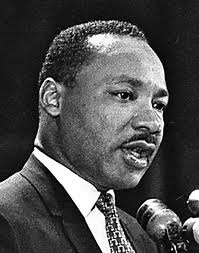 When Martin Luther King came to Montgomery, Alabama to pastor the Dexter Avenue Baptist Church, he did not come to lead the Civil Rights Movement. The son and the grandson of preachers, King had been something of a prodigy, going to college early, excelling in seminary, completing his doctoral studies at Boston University in his mid-twenties. A young black scholar with an impressive academic record, King needed a job. The best one he was offered was pastor of Dexter Avenue. So he went.
But King had not been there long when Rosa Parks refused to give up her seat on a bus. A meeting was called and an organization was established—the Montgomery Improvement Association. It needed a president, and King got the job. He hardly knew what he was getting into.
A few months into the boycott, when it became evident that the fight would not be over any time soon, King was discouraged. The regular death threats were taking a toll on his family. He had no time to pastor his congregation. He decided to put in his letter of resignation. And then one night, after he’d been awakened by one of those terrible voices on the other end of the phone line, King could not sleep. He made a pot of coffee, sat down at his kitchen table, and buried his head in his hands. Martin King was wrestling with God. “I can’t do this,” he said. “It’s too much.”
But there in his kitchen, in the middle of the night, King heard the voice of Jesus speak to him. And it said, “Still to fight on, still to fight. No, I’ll never leave you; I’ll never leave you alone.” It was an inexplicable gift—a blessing from beyond. King found a strength that he hadn’t known before. He got up the next morning an ambassador of reconciliation.
Nearly a year later, when the Supreme Court ordered the integration of public transportation in Montgomery, King stood to address the crowd at a victory rally. He was, of course, as elated as the crowd. He took time to celebrate that the unimaginable had in fact happened in Montgomery. But then he got serious. He looked sternly at the crowd and said, “But this is not the end. Desegregation is not the end…. The end is redemption. The end is reconciliation. The end,” said the prophet whose life had been claimed by Jesus, “is the beloved community.”
Whatever else we say about the ministry of reconciliation, we must begin by saying this: it is a gift that comes to us in the midst of the midnight struggle with God. For King it was rooted in his experience at the kitchen table. For Jacob long before him, it was the long night of struggle by the Jabbok River, wrestling with the God who finally called him Israel. For all of us, reconciliation begins with an interruption. It begins with God. We’re claimed by something greater than ourselves, and we are saved.
But this encounter with the living God is never separable from our relationships with other people. Jacob’s story is instructive. Immediately following his wrestling match with God in Genesis 32 is his meeting with his brother, Esau, in chapter 33. Before he’s caught up on the lost sleep—before he’s had time to wash off the river mud—Jacob looks up to see his brother on the horizon. This is the brother he’d swindled, the brother who swore he’d kill Jacob if he ever got his hands on him. This brother is coming, flanked by four hundred men, their swords no doubt swinging at their sides.
Jacob is afraid. He repositions his family and flocks, putting the people he loves most at the rear. He sends the servants and the livestock out front as a shield. Then he goes to face the music. He steps forward to meet the brother who is his enemy.
We ought not miss the drama of the text just because we know the end of the story. This brother who’s running at Jacob grabs hold of him, he gets his hands around his neck… and then—only then—does he kiss him. In a moment of pure and unexpected grace, Jacob realizes he is alive—saved.
But what now? Again, reconciliation is always a gift—a gift from God, a gift from our enemies. But when we are interrupted, when grace comes unexpected, when we’re embraced by our enemy and see the face of God, what do we do? This is the on-going challenge of the ministry of reconciliation. Because reconciliation is always about more than a moment. It’s always about more than being saved. It’s about learning to live in the presence of people who used to be our enemies. It’s about learning to die daily so a new kind of relationship can be born into the world.
Esau invites Jacob to travel with him to Seir, to come and figure out what it means for them to be family together in the same place. Jacob says he will. He says, “Go on ahead, I’ll meet you there.” But he doesn’t. Jacob goes to Sukkoth, pitches his tents, and makes a safe place for his family. After the gift, there is also a choice—to follow the gift toward the unknown or to retreat to a place of supposed safety? Sukkoth or Seir?
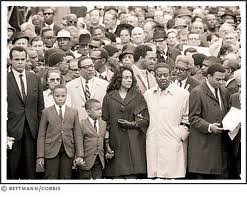 Today is the 44th anniversary of the Poor People’s Campaign arriving in Washington, D.C. When Dr. King stood in Montgomery to say, “This is not the end,” he meant it. Desegregation of public transportation in Montgomery was not the end. His life had been claimed by the ministry of reconciliation. He would not retreat to Sukkoth, for he’d heard the voice of Jesus saying, “Still to fight on.”
After the Civil Rights Act and the Voting Rights Act of the mid-60’s, King kept pressing on. He knew that he had to speak out against the war in Vietnam. “I can no longer decry the violence of our ghettoes,” he cried out, “until I speak out against the greatest purveyor of violence in our time.” And after he’d lost the favor of many for his position against the war, he began to organize the Poor People’s Campaign—a plan to Occupy Washington forty years before anyone was talking about Occupy. All of this because injustice anywhere was a threat to justice everywhere. All this because the end toward which King’s life was pointed was the end of beloved community.
Just weeks before he was gunned down in Memphis, King made a quick trip to New York to address a gathering of rabbis. He went to answer questions about the proposed Poor People’s Campaign and to ask for their support. He was introduced by the great Abraham Joshua Heschel, who presented King as a descendent of Jacob—a son of Israel—who stood in the great line of prophets who called Israel to be its truest self, to live in the way of the gift.
To live and die in this way, King knew, was to see in the face of the enemy a potential friend. He knew what Jacob glimpsed for a moment—that this vision is “like seeing the face of God.” And so King showed us that if reconciliation always begins with the gift of an interruption, it consists in becoming the sort of interruption that insists on the possibility of a new reality.
It is a vocation that costs us nothing less than everything.
And it is in the end, as in the beginning, pure gift.
Previous Post

May 26, 2012
How A Garden Grows
Next Post
June 1, 2012 Bearing a Word Within
Browse Our Archives
Select a Category Features Front Porch Nurturing Communities Testimonies
Select a Month April 2015 March 2015 February 2015 January 2015 December 2014 September 2014 August 2014 July 2014 June 2014 May 2014 April 2014 March 2014 February 2014 January 2014 December 2013 November 2013 October 2013 September 2013 August 2013 July 2013 June 2013 May 2013 April 2013 March 2013 February 2013 January 2013 December 2012 November 2012 October 2012 September 2012 August 2012 July 2012 June 2012 May 2012 April 2012 March 2012 February 2012 January 2012
Follow Us!
TAKE THE
Religious Wisdom Quiz
Who said: "Therefore, since we have a great high priest who has ascended into heaven, Jesus the Son of God, let us hold firmly to the faith"?
Select your answer to see how you score.
John James Peter Paul
Related posts from Jonathan Wilson-Hartgrove

Duck Dynasty: Join the Real Rebels
Remebering Dr. King: Turning Dreams into Deeds Then...
TRENDING AT PATHEOS Progressive Christian

Why Christians Have a Sacred Duty to Vote:...
The Bible offers strong support for the sacred duty to vote. Here...

What Being a Modern-Day Apostle Means to Me
In my last column, I discussed the ins and outs of modern-day...

Did Ancient China Once Worship the God of...
Across human history, a common thread weaves through the origins of the...

Love Your Neighbor – Including Earth-Kin: Lev. 19,...
God’s command to love your neighbor means acting in an ethical and...

Lead a Church Study of “Jesus and Lao...
Guest writer Jack Thomas (The Irreverent Reverend) reflects on leading his church...

Principles for Understanding the Apostolic Ministry Today
Whenever people discover that my formal ministry title is "apostle," as in...
view all Progressive Christian blogs
Ad-Free & Subscriber Log-In Subscription Support
- About Us
- 2026 Calendar
- Videos
- Podcasts
- Library of World Religions
- Faith In Media Tracker
- Advertise With Us
- Write for Us
- Privacy Policy
- Terms of Service
- Do Not Sell My Data
- Contact Us
- Radiant Digital
- Manage Newsletter Subscriptions
- Unsubscribe From Notifications
- Sitemap
Copyright 2008-2026, Patheos. All rights reserved.
Subscription Support Ad-Free & Subscriber Log-In
Follow Patheos