
BuddhistCatholicContemplativeEvangelicalGeneral ChristianHinduJewishLatter-day SaintMuslimNew VisionsProgressive Christian
Beliefs
- Buddhist
- Catholic
- Contemplative
- Evangelical
- General Christian
- Hindu
- Jewish
- Latter-day Saint
- More Voices
- Muslim
- New Visions
- Pagan
- Progressive Christian
Topics
- Religion News
- Food and Religion
- Sports and Religion
- Religious Art
- Religious Music and Entertainment
- Religious Events
- History and Religion
- Style and Religion
- Politics and Religion
- Women in Religion
- Recreation Outdoors and Religion
- Business Finance and Religion
- Careers Workplace and Religion
- Education and Religion
- Family Parenting and Religion
- Health Fitness and Religion
- Home and Religion
- Relationships and Religion
- Technology and Religion
- Travel and Religion
Columnists
- Buddhist Columnists
- Business Finance and Religion Columnists
- Careers Workplace and Religion Columnists
- Catholic Columnists
- Contemplative Columnists
- Education and Religion Columnists
- Evangelists Columnists
- Family Parenting and Religion Columnists
- General Christian Columnists
- Health Fitness and Religion Columnists
- Hindu Columnists
- History and Religion Columnists
- Home and Religion Columnists
- Jewish Columnists
- More Voices Columnists
- Latter Day Columnists
- Muslim Columnists
- New Visions Columnists
- Nonreligious Columnists
- Pagan Columnists
- Politics and Religion Columnists
- Progressive Columnists
- Recreation Outdoors and Religion Columnists
- Relationships and Religion Columnists
- Religion News Columnists
- Religious Art Columnists
- Religious Events Columnists
- Religious Music and Entertainment Columnists
- Sports and Religion Columnists
- Style and Religion Columnists
- Technology and Religion Columnists
- Travel and Religion Columnists
- Women in Religion Columnists
Resource Library
- 2026 Calendar
- Library of World Religions
- The 100 Most Holy Places on Earth
- Patheos Answers
- Podcasts
- Videos
- Faith Leaders Database
- Anglican Episcopalian
- Bahai
- Baptist
- Buddhism
- Christianity
- Confucianism
- Eastern Orthodoxy
- Hinduism
- Holiness and Pentecostal
- ISKCON
- Islam
- Judaism
- Lutheran
- Methodist
- The Church of Jesus Christ of Latter-day Saints
- New Age
- Paganism
- Presbytarian and Reformed
- Protestantism
- Religion Behind the Scenes
- Roman Catholic
- Scientology
- Shia Islam
- Sikhism
- Sufism
- Sunni Islam
- Taoism
- Zen
- See all religions
Research Tools
 Ad-Free & Subscriber Log-In Subscription Support
Ad-Free & Subscriber Log-In Subscription Support
Follow Patheos 

- Trending:
- Forgiveness
- |
- Marriage
- |
- Consciousness
- |
- Death Penalty
- |
- Election
- |
- Halloween
 Jonathan Wilson-Hartgrove
- Home
- Progressive Christian
- William Barber: A Victory for Racial Justice in North Carolina
William Barber: A Victory for Racial Justice in North Carolina
Last updated on: April 21, 2012 at 1:48 am by Jonathan Wilson-Hartgrove
William Barber: A Victory for Racial Justice in North Carolina 2012-04-21T01:48:48-06:00 Jonathan Wilson-Hartgrove
Patheos Explore the world's faith through different perspectives on religion and spirituality! Patheos has the views of the prevalent religions and spiritualities of the world.
As a national conversation about racial justice continues around the Trayvon Martin case, an historic decision was handed down in a North Carolina court today. In the first appeal under North Carolina’s Racial Justice Act, Judge Gregory A. Weeks of Cumberland County Superior Court commuted Marcus Robinson’s death sentence to life, citing evidence of “intentional discrimination” in jury selection at his capital trial. Lauren Winner, who teaches in School for Conversion’s Project TURN prison classes, has written a nice summary of this significant decision for Sojourners Magazine, noting the theological significance of this “turning point” during Eastertide. I’m glad to share this reflection from NC NAACP President William Barber, who has offered a prophetic defense of the Racial Justice Act since it was first proposed in our state.
By Rev. Dr. William Barber
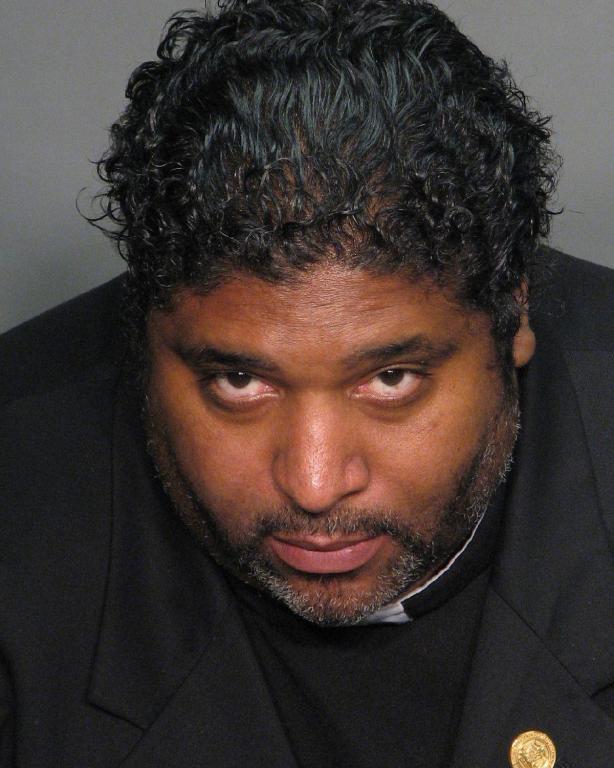
William Barber, President of NC NAACP
First, allow me, on behalf of the National, State, and Local units of the NAACP to express our deepest sympathy to the family of Eric Tornbloom. Many NAACP members, their families, and friends, have been victims of similar violence. I know how deeply his loss is felt, and I ask that we take a moment to pray for him and his family.
It is fitting that, on Sunday, April 22nd, we mark the 25th anniversary of the Supreme Court decision in McCleskey v. Kemp. That decision ruled a defendant cannot rely upon statistical evidence of systemic racial bias to prove his death sentence was unconstitutional, no matter how strong that evidence may be. Those of us who have tried to breathe life into the words “Equal Protection Under the Law” have marked April 22nd as one of the low points in our long quest for equality and justice.
But today, almost 25 years later, because of the persistent, diligent, grassroots struggle of literally hundreds of thousands of people of good will in North Carolina who fought for, passed, and then worked to implement North Carolina’s historic Racial Justice Act, we now have the first finding of racial discrimination in the prosecution of a defendant on Death Row. This decision will automatically change Mr. Marcus Robinson’s sentence to life without parole. According to the law, and verified by an analysis made by the Institute of Government in Chapel Hill, this is a final judgment.
We take this moment to remind prosecutors and their staffs that the Racial Justice Act mentions the idea of a training program to help weed out racial bias as they exercise their broad discretion in capital cases. We encourage the Association of District Attorneys to take advantage of such training to drain some of the unconscious and conscious racial bias out of our courthouses.
This major decision in the long struggle against racism in southern courthouses prompts me to comment on the connections between the McClesky decision a quarter century ago and this first decision under our historic Racial Justice Act. When justice appears to value some victims less than others, it does not deserve the name ‘justice.’ Those of us who have been paying attention know this problem did not begin with the admitted denial by the McClesky v. Kemp decision 25 years ago. Over a century ago, the NAACP was founded to bring to the nation’s attention the use of vigilante lynchings of black men who were rumored to have committed crimes against whites. As the NAACP began to win the struggle for national public opinion against lynching, southern states quickly moved the lynching tree inside their all-white courthouses and changed the name to capital punishment. Official lynchings became the norm in southern courthouses against any black man accused of raping a white woman, although it was practically unheard of to bring a capital case against a white man accused of raping a black woman.
History books and professors, the media, and the New South apologists kept this well-known fact under the sheets until after World War II. To Kill a Mockingbird, the book and the movie, helped to challenge this denial in the early 1960’s. The obscene racial disparities that were accepted across the South in the application of the death penalty became a major embarrassment during the Cold War, as case after case of unofficial capital punishment, such as Emmitt Till in 1955, as well as official capital punishment were brought to light by the NAACP and other civil rights groups. In 1972 the Supreme Court effectively stopped the death penalty for all crimes, but only a few years later, what became known as the Nixon court reinstated the costly and race-based practice in 1976.
In 1987, Jack Boger, now the Dean of the UNC School of Law, brought the case of Warren McClesky to the Supreme Court, arguing that racial considerations played a part in his client’s receiving the death penalty. The Court wrote that such considerations were so embedded in our courthouses they were an “inevitable part” of our system of justice, and therefore statistical evidence of systemic racial bias could not be used to overturn a death sentence. Who cares, the Court told Mr. McClesky and his young advocate, Jack Boger, whether defendants convicted of murdering white victims were over four times more likely to be sentenced to death than defendants who were charged with murdering a black person? Who cares if study after study showed the best predictor of who lives and who dies in Southern courts was not the content or context of the crime but the color of the victim’s skin.
Obviously, the answer to this riddle is not to execute more defendants who have been convicted of killing black people. The answer is to focus on the cowardly fallacy that underlay the McCleskey decision — the belief that there is nothing we can do about the endemic racism in the Southern criminal justice system because it is an “inevitable part” of it. We believe that racism need not be inevitable, and that truth will win out. Today, almost 25 years after the Supreme Court implied racial considerations were an inevitable part of Southern justice, another Court, following carefully the guidelines set for us by the Racial Justice Act, said No. It is not an inevitable part. We will face the racial considerations in our system, and we can face the truth in the South. This decision reveals the lie of the inevitability premise.
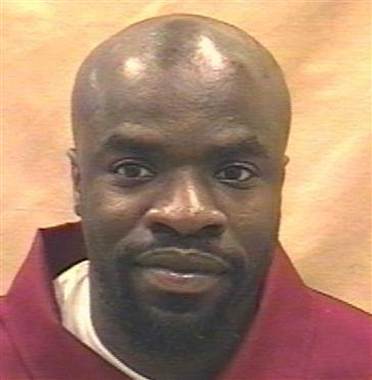
Marcus Robinson, whose death sentence was commuted to life in an NC Court today
In the past few years at least five black men were released or barely missed death row because brave media reporters, hard-working, underpaid lawyers, and the NAACP have proven that N.C. prosecutors had tried or convicted the wrong man. Today another black man has successfully presented evidence that showed his sentence was polluted by racial considerations. Each of these revelations strike the public consciousness like the hammer of justice. Each revelation helps more of us face the hard truth about our criminal justice system.
Each of these revelations lead to a broader, deeper commitment to the truth that the simplest way, the surest way, the safest way, to be sure the ‘inevitable” racial considerations the Supreme Court mentioned 25 years ago play no part in the decision of who lives and who dies is to repeal capital punishment. The NAACP has studied this question for 103 years. The question helped start our organization. It is a question we have never wavered about. It is part of our 14 Point People’s Agenda here in North Carolina: “Repeal the Death Penalty.” So, we say again, in light of today’s historic decision: “Save money. Save our souls. Save and reform our criminal justice system. Repeal the Death Penalty.”
Previous Post

April 19, 2012
Celebrating Jim Douglass' Witness
Next Post
April 22, 2012 Confession without Shame
Browse Our Archives
Select a Category Features Front Porch Nurturing Communities Testimonies
Select a Month April 2015 March 2015 February 2015 January 2015 December 2014 September 2014 August 2014 July 2014 June 2014 May 2014 April 2014 March 2014 February 2014 January 2014 December 2013 November 2013 October 2013 September 2013 August 2013 July 2013 June 2013 May 2013 April 2013 March 2013 February 2013 January 2013 December 2012 November 2012 October 2012 September 2012 August 2012 July 2012 June 2012 May 2012 April 2012 March 2012 February 2012 January 2012
Follow Us!
TAKE THE
Religious Wisdom Quiz
What two things does Paul say about those who preach a different gospel?
Select your answer to see how you score.
They have fallen from grace Let them be under God's condemnation They are false teachers They will face judgment
Related posts from Jonathan Wilson-Hartgrove

Vote Your Dreams, Not Your Fears: #MoralWeekofAction Concludes...


A New Birth of Freedom? Four Ways to...

Struggle for Racial Justice is Local
TRENDING AT PATHEOS Progressive Christian

What Being a Modern-Day Apostle Means to Me
In my last column, I discussed the ins and outs of modern-day...

Did Ancient China Once Worship the God of...
Across human history, a common thread weaves through the origins of the...

Love Your Neighbor – Including Earth-Kin: Lev. 19,...
God’s command to love your neighbor means acting in an ethical and...

Lead a Church Study of “Jesus and Lao...
Guest writer Jack Thomas (The Irreverent Reverend) reflects on leading his church...

Pastoral Wisdom for Responding to Sermon Pushback
Getting sermon pushback on your social justice sermon? Learn practical, Proverbs-based strategies...

Principles for Understanding the Apostolic Ministry Today
Whenever people discover that my formal ministry title is "apostle," as in...
view all Progressive Christian blogs
Ad-Free & Subscriber Log-In Subscription Support
- About Us
- 2026 Calendar
- Videos
- Podcasts
- Library of World Religions
- Faith In Media Tracker
- Advertise With Us
- Write for Us
- Privacy Policy
- Terms of Service
- Do Not Sell My Data
- Contact Us
- Radiant Digital
- Manage Newsletter Subscriptions
- Unsubscribe From Notifications
- Sitemap
Copyright 2008-2026, Patheos. All rights reserved.
Subscription Support Ad-Free & Subscriber Log-In
Follow Patheos