
BuddhistCatholicContemplativeEvangelicalGeneral ChristianHinduJewishLatter-day SaintMuslimNew VisionsProgressive Christian
Beliefs
- Buddhist
- Catholic
- Contemplative
- Evangelical
- General Christian
- Hindu
- Jewish
- Latter-day Saint
- More Voices
- Muslim
- New Visions
- Pagan
- Progressive Christian
Topics
- Religion News
- Food and Religion
- Sports and Religion
- Religious Art
- Religious Music and Entertainment
- Religious Events
- History and Religion
- Style and Religion
- Politics and Religion
- Women in Religion
- Recreation Outdoors and Religion
- Business Finance and Religion
- Careers Workplace and Religion
- Education and Religion
- Family Parenting and Religion
- Health Fitness and Religion
- Home and Religion
- Relationships and Religion
- Technology and Religion
- Travel and Religion
Columnists
- Buddhist Columnists
- Business Finance and Religion Columnists
- Careers Workplace and Religion Columnists
- Catholic Columnists
- Contemplative Columnists
- Education and Religion Columnists
- Evangelists Columnists
- Family Parenting and Religion Columnists
- General Christian Columnists
- Health Fitness and Religion Columnists
- Hindu Columnists
- History and Religion Columnists
- Home and Religion Columnists
- Jewish Columnists
- More Voices Columnists
- Latter Day Columnists
- Muslim Columnists
- New Visions Columnists
- Nonreligious Columnists
- Pagan Columnists
- Politics and Religion Columnists
- Progressive Columnists
- Recreation Outdoors and Religion Columnists
- Relationships and Religion Columnists
- Religion News Columnists
- Religious Art Columnists
- Religious Events Columnists
- Religious Music and Entertainment Columnists
- Sports and Religion Columnists
- Style and Religion Columnists
- Technology and Religion Columnists
- Travel and Religion Columnists
- Women in Religion Columnists
Resource Library
- 2026 Calendar
- Library of World Religions
- The 100 Most Holy Places on Earth
- Patheos Answers
- Podcasts
- Videos
- Faith Leaders Database
- Anglican Episcopalian
- Bahai
- Baptist
- Buddhism
- Christianity
- Confucianism
- Eastern Orthodoxy
- Hinduism
- Holiness and Pentecostal
- ISKCON
- Islam
- Judaism
- Lutheran
- Methodist
- The Church of Jesus Christ of Latter-day Saints
- New Age
- Paganism
- Presbytarian and Reformed
- Protestantism
- Religion Behind the Scenes
- Roman Catholic
- Scientology
- Shia Islam
- Sikhism
- Sufism
- Sunni Islam
- Taoism
- Zen
- See all religions
Research Tools
 Ad-Free & Subscriber Log-In Subscription Support
Ad-Free & Subscriber Log-In Subscription Support
Follow Patheos 

- Trending:
- Forgiveness
- |
- Marriage
- |
- Consciousness
- |
- Death Penalty
- |
- Election
- |
- Halloween
 Jonathan Wilson-Hartgrove
- Home
- Progressive Christian
- Andy Raine: “Lord, Teach Us How to Pray”
Andy Raine: “Lord, Teach Us How to Pray”
Last updated on: March 9, 2012 at 4:53 pm by Jonathan Wilson-Hartgrove
Andy Raine: “Lord, Teach Us How to Pray” 2012-03-09T16:53:41-07:00 Jonathan Wilson-Hartgrove
Patheos Explore the world's faith through different perspectives on religion and spirituality! Patheos has the views of the prevalent religions and spiritualities of the world.
Here at The Everyday Awakening, I’ve taken the release of Common Prayer Pocket Edition as a chance to both connect with folks who are part of a contemporary renewal of ancient prayer practices and re-connect with some of the wise guides who’ve taught me the most about prayer. (Hope you’ve already had a chance to read my interviews with Phyllis Tickle and Steve Harper. Hope, too, that you’ll send us a picture of Common Prayer ‘On the Go’ this week and get a free copy of the new Pocket Edition.)
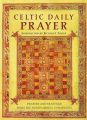 This week, I was glad to get to reconnect with Andy Raine, a compiler of the fabulous Celtic Daily Prayer and tireless advisor to our Common Prayer team over the past several years. We talked about prayer and the Spirit and where we see hope today. As always, I came away from the conversation refreshed.
JWH: You helped the Northumbria Community to gather resources for common prayer–a liturgy that was eventually published as Celtic Daily Prayer*. It’s a beautiful prayer book, and one that gives me a deep sense of connection to your place in Northumberland, even though I’ve never been there myself. Could you tell us about your community’s journey of learning to pray together? What have been some of the stages along the way?*
AR: The earliest distinctives we had in common were three things: first, an emphasis on Isaiah 58 and rebuilding; second, the word ‘community’; and, finally, a calling to north-Northumberland, with the sense that its ancient spirituality and monastic history held keys for us in our present and future. For me the calling was to Holy Island [Lindisfarne] in particular, and I quickly realized this was to be a life-long calling, that I had found my ‘place of resurrection’. The formation of what became Northumbria Community was for me a by-product of that.
Years into this journey as we were preparing for the Easter Workshop which was our main gathering, John Skinner said to me, “It’s time we had our own Office to pray. We can try it out this Easter.” So in one evening the two of us pulled together the basic morning, midday and evening prayers. That even including writing the tune for the opening of morning prayer, “One thing I have asked of the Lord…” We only thought of these liturgies as a provisional example to try over a few days, but everyone wanted to keep them and continue praying them daily.
Many, many years later they have only grown richer. They follow a simple pattern of opening sentences, declaration of faith, canticle and blessing. Midday prayer also has the Our Father. Morning and Evening include 3 scriptures, read reflection, one of 31 meditations revisited each month and prayers for others. Patrick’s breastplate clothes us each day with Christ’s presence at the start of the day, and “May the peace of the Lord Christ…” was the song a friend called Peter had written here on Holy Island when he first came to a personal faith-experience. The meditations were similarly chosen from songs, prayers and writings which were part of our shared history. Remembering these distinctives with regular repetition helped to form us, drew us closer to God and made us very aware of the growing numbers of others scattered everywhere who shared in this same prayer. The various editions of our office as they were published became the overflowing of our treasured prayers, values and memory, and drew some of those who used them to commit to our way for living in their dispersed locations. We were teaching people from diverse backgrounds to value using said prayers, alongside persevering in silence, contemplative prayer, intercessory listening prayer or extemporary spoken prayers.
Because we are a dispersed community, we talk a lot about being ‘alone together’. Times sharing office with other people are very precious and might be what many would prefer, but for most the office is usually said or sung alone. There can still be the sense nonetheless of being part of a larger company of praying people. Also, those with a leaning towards choosing solitary prayer, pursuing a hermit’s way, are not made to feel pressure to be constantly with others. We have tasted enough of that to embrace it as a valid option.
JWH: What distinctive gifts does the Celtic tradition offer the contemporary common prayer movement? How has Celtic spirituality shaped your own prayer life?
I think the Celtic tradition has a certain faithfulness to our Jewish roots with a kind of gutsy bodily awareness and refusal to live with pretense. It has maintained an elemental resonance with the forces of nature, a natural awareness of everything around and the presence of God through everything. There is an instinctive offering of all our being and actions to be blessed, and an inevitable interweaving of life and prayer. There is an implicit understanding that we, the world and all its creatures are God’s. He made us, pronounced what He made good, and sin, fall and stubbornness can never entirely remove His image. He calls out to us, “Where are you hiding?” Creation and redemption are both expressions of the same passionate love.
My own journey into discovering these things began with coming to the Island and recognizing it as a “prayed-in” place, still marked by the prayers of earlier generations. In many ways I live in the shadow of Aidan who traveled from here, meeting people where they were at, challenging believers to love God more and live more generously, asking others what was stopping them from believing Jesus and being baptized. Above all, he listened.
JWH: What is your sense of the role that fixed-hour prayer is playing in contemporary movements of the Spirit? Where do you see signs of hope?
I feel that one of the exciting things about a cycle of fixed prayers is the way it frees us from a prison of our own subjectivity. We affirm the same things over and over. One of the prayers we use says, “Lord, You have always given peace for the coming day, and though of anxious heart, today I believe.” We don’t just pray on the days when it’s easy to believe or we feel like pouring our heart out. And at times when we mostly need silence, the fixed prayers give our silence a structure, a frame in between which the silence is free to deepen. The prayers can be like punctuation through our days. Like the tides and seasons they pull us into a rhythm which is life-giving.
It is better to aim for an achievable goal of prayers easily linked to the daily disciplines of our life than to desire many occasions for lengthy offices and prayings that start with great energy but quickly become overwhelmed and discouraged. The Celtic tradition has left us examples of prayers for getting dressed, for laying a fire, for going on journeys and so on.
In the monastery the call of the bell would cause the community to stop all other work and say office, sometimes gathering to do so, and at other times pausing to pray in the middle of their tasks. There a substantial part of each day was taken up with prayer. But the Celtic missionary monastics did not plant congregations at all. There would be only occasional monastic settlements planted out as fresh hubs, but it was assumed that most people would somehow manage–by trial and experiment!–to develop a rhythm of prayer appropriate to their circumstances. They would live their prayers and pray their lives!
Having a rhythm that works for you was more important than everyone praying at exactly the same hour. The focus was not on doing it right, but on developing an intimate awareness of God and a real relationship with Him. The saying of office is like the repeated use of the psalms which were the hymn-book of the worshippers in Solomon’s temple, and in the tent of David where there was no veil on God’s presence. By using a shift-system, continuous 24-hour worship was maintained there in Jerusalem for over 30 years! As we participate in our various offices and prayer-cycles the same is happening. We are employing the monastic discipline of seeking God for His own sake. And as over each continent and island the dawn leads on another day, the voice of prayer then is never silent, nor dies the strain of praise away….
I think the growth in numbers of people saying office is part of the same initiative of the Spirit of God that is also provoking some to 24-7 prayer vigils and others to richly creative 24-hour praise events also as outpourings of love.
JWH: Phyllis Tickle, whom I interviewed a couple of weeks ago, suggested that fixed hour prayer is a pre-Constantinian Christian practice that might sustain us–might revive us, even–in a post-Constantinian era. Do you see this happening in Europe? As an outsider to American Christianity, what is your sense of how the Spirit is moving in and outside of the “institutional” church?
I have to say that a post-Constantinian era sounds very healthy to me! There is a great simplifying going on. All over we meet men and women who, like children always have, are opening themselves up to experiences beyond themselves–experiences that we might call “numinous.” We have a God who promises, “you shall seek Me, and you shall find Me when you seek Me with all your heart,” so we can rely on Him keeping His word. People will not be told what to believe any longer; they look for those who are so steeped in prayer they can help others understand their significant experiences.
In the UK we see many Christian people with little or no involvement any longer in the churches. Many more maintain their attendance more out of loyalty than any obvious benefit. As fresh folk come to faith they no longer assume that becoming part of some church congregation is the natural consequence. What we have is a resurgence of people beginning to live their prayer and pray their life in a way that makes church-going largely irrelevant, a similar scenario to what happened in the UK centuries ago with the coming of Christianity to the English people in one generation through Irish monks from Scotland and their disciples. Interesting!
We are not devaluing thriving church-hubs where these develop, nor advocating the increased numbers of unchurched believers. We are saying that this is the pattern now in the UK, that this trend is also evident in the US (though some years behind), just as the decline of the churches in Europe is some years ahead of that in the UK. But relationships of honesty and accountability, the springing up of various intentional communities, the saying of Office by churched individuals and unchurched believers–these also seem healthy and crucial developments at this stage in our collective history. At times of decline, crisis or great change in the church as institution or congregation, the monastic expressions of Christ’s body have often been a source of strength,perspective, stability and vitality.
I believe that as in Isaiah 58 this is a key time for rebuilding–the rebuilding of individual broken lives at a time of unparallelled hunger and openness, the establishing of justice and compassion in our lives and communities, the recovery of monastic disciplines and lifegiving rhythms of prayer. We need to say as Jesus’s disciples did to Him, “Lord, teach us how to pray,” for it may be our task to teach and encourage others. Having said that, the actual praying is more important than the mechanism or even the words. Ronald Rolheiser, in his book Forgotten among the Lilies tells this story:
There is a story told about a Jewish farmer who, through carelessness, did not get home before sunset one Sabbath and was forced to spend the day in the field, waiting for sunset the next day before being able to return home.
Upon his return home he was met by a rather perturbed rabbi who chided him for his carelessness. Finally the rabbi asked him: ‘What did you do out there all day in the field? Did you at least pray?’
The farmer answered: ‘Rabbi, I am not a clever man. I don’t know how to pray properly. What I did was simply to recite the alphabet all day and let God form the words for Himself.’
When we come to celebrate we bring the alphabet of our lives. If our hearts and minds are full of warmth, love, enthusiasm, song and dance, then these are the letters we bring. If they are full of tiredness, despair, blandness, pain and boredom, then those are our letters. Bring them. Spend them. Celebrate them. It is God’s task to make the words!
Previous Post

March 7, 2012
Common Prayer 'On the Go'
Next Post
March 9, 2012 A Nonviolent Response to Joseph Kony
Browse Our Archives
Select a Category Features Front Porch Nurturing Communities Testimonies
Select a Month April 2015 March 2015 February 2015 January 2015 December 2014 September 2014 August 2014 July 2014 June 2014 May 2014 April 2014 March 2014 February 2014 January 2014 December 2013 November 2013 October 2013 September 2013 August 2013 July 2013 June 2013 May 2013 April 2013 March 2013 February 2013 January 2013 December 2012 November 2012 October 2012 September 2012 August 2012 July 2012 June 2012 May 2012 April 2012 March 2012 February 2012 January 2012
Follow Us!
TAKE THE
Religious Wisdom Quiz
A gentle answer turns away wrath, but harsh words stir up what?
Select your answer to see how you score.
Trouble Anger Strife Hatred
Related posts from Jonathan Wilson-Hartgrove
John Alexander: Soul Friend I Never Knew
A Liturgy for Ordinary Radicals
TRENDING AT PATHEOS Progressive Christian

Why Christians Have a Sacred Duty to Vote:...
The Bible offers strong support for the sacred duty to vote. Here...

What Being a Modern-Day Apostle Means to Me
In my last column, I discussed the ins and outs of modern-day...

Did Ancient China Once Worship the God of...
Across human history, a common thread weaves through the origins of the...

Love Your Neighbor – Including Earth-Kin: Lev. 19,...
God’s command to love your neighbor means acting in an ethical and...

Lead a Church Study of “Jesus and Lao...
Guest writer Jack Thomas (The Irreverent Reverend) reflects on leading his church...

Principles for Understanding the Apostolic Ministry Today
Whenever people discover that my formal ministry title is "apostle," as in...
view all Progressive Christian blogs
Ad-Free & Subscriber Log-In Subscription Support
- About Us
- 2026 Calendar
- Videos
- Podcasts
- Library of World Religions
- Faith In Media Tracker
- Advertise With Us
- Write for Us
- Privacy Policy
- Terms of Service
- Do Not Sell My Data
- Contact Us
- Radiant Digital
- Manage Newsletter Subscriptions
- Unsubscribe From Notifications
- Sitemap
Copyright 2008-2026, Patheos. All rights reserved.
Subscription Support Ad-Free & Subscriber Log-In
Follow Patheos