
BuddhistCatholicContemplativeEvangelicalGeneral ChristianHinduJewishLatter-day SaintMuslimNew VisionsProgressive Christian
Beliefs
- Buddhist
- Catholic
- Contemplative
- Evangelical
- General Christian
- Hindu
- Jewish
- Latter-day Saint
- More Voices
- Muslim
- New Visions
- Pagan
- Progressive Christian
Topics
- Religion News
- Food and Religion
- Sports and Religion
- Religious Art
- Religious Music and Entertainment
- Religious Events
- History and Religion
- Style and Religion
- Politics and Religion
- Women in Religion
- Recreation Outdoors and Religion
- Business Finance and Religion
- Careers Workplace and Religion
- Education and Religion
- Family Parenting and Religion
- Health Fitness and Religion
- Home and Religion
- Relationships and Religion
- Technology and Religion
- Travel and Religion
Columnists
- Buddhist Columnists
- Business Finance and Religion Columnists
- Careers Workplace and Religion Columnists
- Catholic Columnists
- Contemplative Columnists
- Education and Religion Columnists
- Evangelists Columnists
- Family Parenting and Religion Columnists
- General Christian Columnists
- Health Fitness and Religion Columnists
- Hindu Columnists
- History and Religion Columnists
- Home and Religion Columnists
- Jewish Columnists
- More Voices Columnists
- Latter Day Columnists
- Muslim Columnists
- New Visions Columnists
- Nonreligious Columnists
- Pagan Columnists
- Politics and Religion Columnists
- Progressive Columnists
- Recreation Outdoors and Religion Columnists
- Relationships and Religion Columnists
- Religion News Columnists
- Religious Art Columnists
- Religious Events Columnists
- Religious Music and Entertainment Columnists
- Sports and Religion Columnists
- Style and Religion Columnists
- Technology and Religion Columnists
- Travel and Religion Columnists
- Women in Religion Columnists
Resource Library
- 2026 Calendar
- Library of World Religions
- The 100 Most Holy Places on Earth
- Patheos Answers
- Podcasts
- Videos
- Faith Leaders Database
- Anglican Episcopalian
- Bahai
- Baptist
- Buddhism
- Christianity
- Confucianism
- Eastern Orthodoxy
- Hinduism
- Holiness and Pentecostal
- ISKCON
- Islam
- Judaism
- Lutheran
- Methodist
- The Church of Jesus Christ of Latter-day Saints
- New Age
- Paganism
- Presbytarian and Reformed
- Protestantism
- Religion Behind the Scenes
- Roman Catholic
- Scientology
- Shia Islam
- Sikhism
- Sufism
- Sunni Islam
- Taoism
- Zen
- See all religions
Research Tools
 Ad-Free & Subscriber Log-In Subscription Support
Ad-Free & Subscriber Log-In Subscription Support
Follow Patheos 

- Trending:
- Forgiveness
- |
- Marriage
- |
- Consciousness
- |
- Death Penalty
- |
- Election
- |
- Halloween
 Jonathan Wilson-Hartgrove
- Home
- Progressive Christian
- After Nine Years: Nonviolence in Iraq
After Nine Years: Nonviolence in Iraq
Last updated on: March 19, 2012 at 12:15 pm by Jonathan Wilson-Hartgrove
After Nine Years: Nonviolence in Iraq 2012-03-19T12:15:50-06:00 Jonathan Wilson-Hartgrove
Patheos Explore the world's faith through different perspectives on religion and spirituality! Patheos has the views of the prevalent religions and spiritualities of the world.
Today marks 9 years since the US invasion of Iraq began. I wrote last week about how I was born again to nonviolence in Baghdad and Rutba. Yet, as much hope as I saw in those small acts of radical love, I’ve wrestled in prayer over these past nine years as I’ve watched the spiral of violence in Iraq continue–and, in many ways, worsen. What are we to do when nonviolence doesn’t seem to make a difference? What do we say to people who just want their lives back?
One of the most moving responses I got to last week’s post about a nonviolent response to Joseph Kony was a letter from an aid worker who has lived with his family in Iraq for the past several years. He was encouraged by the conversation about nonviolent alternatives and an imagination for peace in the way of Jesus. But he told me a story about putting his son to bed that night and trying to calm his fears. He told me he was crying as he wrote his email to me. He wanted to believe in the power of nonviolent love, but he also wondered how to answer his son when he asked, “Dad, would you shoot somebody for me?”
To quote his words…
I want to be non-violent. I want to believe that the moment of Islamic fundamentalists break into my home to kill my family the Creator and his creativity in me can find a non-violent way out. But it seems believing it is possible and preemptively choosing to never intervene by force on behalf of my wife and kids are two different things: ethically and theologically.
It’s a good challenge, and I’m grateful for it. I wanted to take this anniversary as an opportunity to venture a response.
Dear Brother in Iraq,
Thank you for writing. And thanks for the invitation to wrestle with you. You’ve highlighted the very point where a commitment to nonviolence hits us in the gut.
I think it’s important to notice that the hard thing is not refusing violence for self-defense, but rather refusing it for the defense of the vulnerable and weak–the four year old whom you love with every ounce of your being. It can sound noble to be willing to die for a great cause. But what do you do when they come for your kid? This is, of course, why so many people react so strongly against Joseph Kony. He’s been abducting kids for decades.
This is why the Christian argument for a “just war” has always been rooted in the command to “love your neighbor as yourself.” Martin Luther (who put almost everything starkly) said a Christian should be both willing to die nonviolently if he were attacked personally and willing to kill if sent to fight in a just war or to act as executioner for the state. In his scenario, you need more than your gut to tell you when violence is justified. (This is the just war principle of legitimate authority.) But his point is the same: sometimes the most loving thing is to protect the weak by killing their enemy.
I believe in taking the just war tradition seriously. John Yoder’s work taught me that it is a tradition that emerged to restrain violence, not to justify it. But as morally compelling as Luther’s point is, it doesn’t seem to me that it matches up with the witness of Jesus. Some will always argue that Jesus resorted to violence in defense of the weak when he drove the money changers out of the temple. But street theater is a pretty puny show of force if that’s what you’re after. From the death of the Holy Innocents at his birth to the widespread oppression of his fellow Jews, Jesus responds to institutional violence with love of enemy and consistently teaches his followers to do the same.
Ever since Constantine, Christians have had to ask, “What might Jesus have done if he had been in power?” But this question seems to ignore that Jesus chose to live and die alongside the weak and vulnerable. He does not say to your son, “I will defend you.” He says, “I am here with you. Don’t worry. God is King of the Universe. All will be well.”
The more I wrestle with trying to live gospel nonviolence, the more I believe that it’s a way to proclaim with our lives that Jesus is Lord and God is King. Because it is true, I know it also has power to change things in this world. Gandhi and King, among many others, showed us that in the 20th century. But we can’t guarantee that nonviolence is going to make things work out alright.
It might get you killed (as it did Gandhi, King, and Jesus).
What’s worse, it might get your kids killed.
But we worship a God who knows the horror of watching his Son die. We know that the logic of the universe is death and resurrection. And we have the gift of stories–generations of people who’ve lived this Jesus Way, showing us its peculiar logic in both normal and extreme situations.
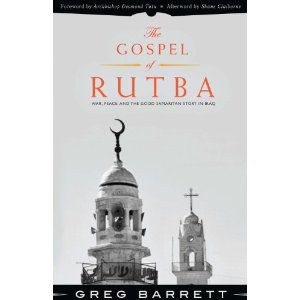
More than anything, I think it’s the memory of these living witnesses that keep our imaginations alive. Your context in Iraq reminded me of my friend Peggy who faced the threat of death for herself and her friends at the hands of extremists there in Iraq. If I could offer one word of hope, it’s this short telling of her and her husband’s story.
The peace of our Lord,
Jonathan
Previous Post

March 15, 2012
An Unholy Wall in the Holy Land
Next Post
March 22, 2012 Grace Happens
Browse Our Archives
Select a Category Features Front Porch Nurturing Communities Testimonies
Select a Month April 2015 March 2015 February 2015 January 2015 December 2014 September 2014 August 2014 July 2014 June 2014 May 2014 April 2014 March 2014 February 2014 January 2014 December 2013 November 2013 October 2013 September 2013 August 2013 July 2013 June 2013 May 2013 April 2013 March 2013 February 2013 January 2013 December 2012 November 2012 October 2012 September 2012 August 2012 July 2012 June 2012 May 2012 April 2012 March 2012 February 2012 January 2012
Follow Us!
TAKE THE
Religious Wisdom Quiz
What was the purpose of the cities of refuge?
Select your answer to see how you score.
To house the sick To store food for famine To train future priests To protect those accused of manslaughter
Related posts from Jonathan Wilson-Hartgrove


Sharing Stories at the Wild Goose Festival

The Gift and Interruption of Reconciliation
TRENDING AT PATHEOS Progressive Christian

What Being a Modern-Day Apostle Means to Me
In my last column, I discussed the ins and outs of modern-day...

Did Ancient China Once Worship the God of...
Across human history, a common thread weaves through the origins of the...

Love Your Neighbor – Including Earth-Kin: Lev. 19,...
God’s command to love your neighbor means acting in an ethical and...

Lead a Church Study of “Jesus and Lao...
Guest writer Jack Thomas (The Irreverent Reverend) reflects on leading his church...

Pastoral Wisdom for Responding to Sermon Pushback
Getting sermon pushback on your social justice sermon? Learn practical, Proverbs-based strategies...

Principles for Understanding the Apostolic Ministry Today
Whenever people discover that my formal ministry title is "apostle," as in...
view all Progressive Christian blogs
Ad-Free & Subscriber Log-In Subscription Support
- About Us
- 2026 Calendar
- Videos
- Podcasts
- Library of World Religions
- Faith In Media Tracker
- Advertise With Us
- Write for Us
- Privacy Policy
- Terms of Service
- Do Not Sell My Data
- Contact Us
- Radiant Digital
- Manage Newsletter Subscriptions
- Unsubscribe From Notifications
- Sitemap
Copyright 2008-2026, Patheos. All rights reserved.
Subscription Support Ad-Free & Subscriber Log-In
Follow Patheos