
BuddhistCatholicContemplativeEvangelicalGeneral ChristianHinduJewishLatter-day SaintMuslimNew VisionsProgressive Christian
Beliefs
- Buddhist
- Catholic
- Contemplative
- Evangelical
- General Christian
- Hindu
- Jewish
- Latter-day Saint
- More Voices
- Muslim
- New Visions
- Pagan
- Progressive Christian
Topics
- Religion News
- Food and Religion
- Sports and Religion
- Religious Art
- Religious Music and Entertainment
- Religious Events
- History and Religion
- Style and Religion
- Politics and Religion
- Women in Religion
- Recreation Outdoors and Religion
- Business Finance and Religion
- Careers Workplace and Religion
- Education and Religion
- Family Parenting and Religion
- Health Fitness and Religion
- Home and Religion
- Relationships and Religion
- Technology and Religion
- Travel and Religion
Columnists
- Buddhist Columnists
- Business Finance and Religion Columnists
- Careers Workplace and Religion Columnists
- Catholic Columnists
- Contemplative Columnists
- Education and Religion Columnists
- Evangelists Columnists
- Family Parenting and Religion Columnists
- General Christian Columnists
- Health Fitness and Religion Columnists
- Hindu Columnists
- History and Religion Columnists
- Home and Religion Columnists
- Jewish Columnists
- More Voices Columnists
- Latter Day Columnists
- Muslim Columnists
- New Visions Columnists
- Nonreligious Columnists
- Pagan Columnists
- Politics and Religion Columnists
- Progressive Columnists
- Recreation Outdoors and Religion Columnists
- Relationships and Religion Columnists
- Religion News Columnists
- Religious Art Columnists
- Religious Events Columnists
- Religious Music and Entertainment Columnists
- Sports and Religion Columnists
- Style and Religion Columnists
- Technology and Religion Columnists
- Travel and Religion Columnists
- Women in Religion Columnists
Resource Library
- 2026 Calendar
- Library of World Religions
- The 100 Most Holy Places on Earth
- Patheos Answers
- Podcasts
- Videos
- Faith Leaders Database
- Anglican Episcopalian
- Bahai
- Baptist
- Buddhism
- Christianity
- Confucianism
- Eastern Orthodoxy
- Hinduism
- Holiness and Pentecostal
- ISKCON
- Islam
- Judaism
- Lutheran
- Methodist
- The Church of Jesus Christ of Latter-day Saints
- New Age
- Paganism
- Presbytarian and Reformed
- Protestantism
- Religion Behind the Scenes
- Roman Catholic
- Scientology
- Shia Islam
- Sikhism
- Sufism
- Sunni Islam
- Taoism
- Zen
- See all religions
Research Tools
 Ad-Free & Subscriber Log-In Subscription Support
Ad-Free & Subscriber Log-In Subscription Support
Follow Patheos 

- Trending:
- Forgiveness
- |
- Marriage
- |
- Consciousness
- |
- Death Penalty
- |
- Election
- |
- Halloween
 Jonathan Wilson-Hartgrove
- Home
- Progressive Christian
- Glimmers of Holy
Glimmers of Holy
Last updated on: February 4, 2012 at 1:33 am by Jonathan Wilson-Hartgrove
Glimmers of Holy 2012-02-04T01:33:51-07:00 Jonathan Wilson-Hartgrove
Patheos Explore the world's faith through different perspectives on religion and spirituality! Patheos has the views of the prevalent religions and spiritualities of the world.
A big part of joining the everyday awakening that’s happening all around us is training our eyes to see it. But this isn’t easy work. It takes time. And help from others. There’s a level of skill to it, too–what the writer Flannery O’Connor called “the ability to stare.”
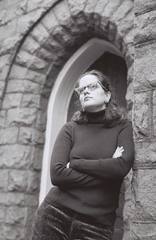
For the past few years, I’ve had the chance to watch women in our Project TURN prison courses learn the craft of paying attention from Lauren Winner. Watching these women study with Lauren, I can say this: she’s good. Her quirky taste in eye glasses aside, she knows how to see deep-down things. What’s more, she knows how to help others find the truth in their own lives through writing.
The 4th century church father Gregory of Nyssa wrote that “if you wash away the mud that has been put on your heart, the Godlike beauty will again shine out in you.” One of the ways our souls get washed is through learning to tell the truth about who we are and who we want to be. There’s nothing like watching words begin to heal a soul.
I see that healing power in the classes that Lauren helps to teach at our local prison. And I feel it on the pages of her new memoir, Still: Notes on a Mid-Faith Crisis. When I read the manuscript a few months ago, I wanted to send it right away to two friends who were struggling to hold onto faith and find God in the midst of the mess they were living through. I sent in this endorsement:
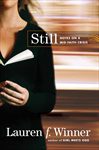 “Halfway through Still I realized that a lot of spiritual books–most, maybe–are written during a mid-faith crisis. Too few admit it. But Winner grabs God’s hiddeness by the shoulders and will not let go. She knows the grace that can only be learned when we stand with Moses, staring into the raging waters, and hear a voice say, ‘The LORD will fight for you; you need only to stand still.'”
So, here’s to standing still and staring long enough to see what’s already in front of us–the true and living God who loves us and wants us and will not let us go. I’m grateful to the folks at HarperCollins for letting me share this excerpt from Still with you.
From Still: Notes on a Mid-Faith Crisis
By Lauren Winner
Jane Smiley’s novel Horse Heaven was published in 2000, about three years after I left the Judaism in which I had grown up and was baptized in the Anglican church. Smiley is quite possibly my favorite living American novelist—I read her novella “The Age of Grief ” at least once annually—and I snatched up Horse Heaven as soon as it hit the stands. It’s a sprawling comic novel about horse racing, a subculture I have little interest in, and it is not my favorite of the Smiley oeuvre: I prefer her quiet, finely grained family stories—Ordinary Love and Good Will, Barn Blind, At Paradise Gate. But one small section of Horse Heaven spoke to me with a force I had mostly felt only when reading liturgy or poetry or epitaphs. Here, Smiley is writing about a horse trainer named Buddy Crawford. He gets born again and he’s all fired up and then one night he is praying and he sits down on the bed and he looks “up to the full moon, in whose region he imagines Jesus to be,” and then he begins to talk to his Lord and Savior. “Okay. Here’s the deal,” Buddy Crawford says. “I thought I was saved. That was what was advertised. I would accept you as my personal savior, and there you were. And, you know, I felt it, too. I felt saved and everything. . . But I find out all the time that I’ve got to keep getting saved. Am I saved? Am I not saved? What do I do now? . . . Are you talking to me? Are you not talking to me? Am I good? Am I a sinner? Still a sinner?” And then he bursts into tears.
His wife comes into the room, gets undressed, and asks Buddy what has made him cry. “When the Lord came into me,” Buddy tells her, “it was such a good feeling, I thought, Well, I can do anything because of this feeling, but then here was all this stuff to do and to think about, and I don’t remember the feeling all that well.”
It seemed to me that I was reading my own tea leaves when I read those Jane Smiley words. I had not yet had any such experience, any shaking failure of memory, any overpowering uncertainty about whether anything I thought I believed about God was actually true. I was still secure in the grip of certainties, many of them: that Jesus was real, that he was God, that he had come to me in a dream; that God was intimately involved with the particulars of my life; that my days would and should revolve around the institution where people went to meet and get to know and worship this Jesus, that is, the church; that God had saved me; that God was saving me still.
But lying there reading Jane Smiley’s fiction on the hand-me-down futon in my small grad-school garret in Manhattan’s Morningside Heights—I recall that I was drinking cherry-flavored sparkling water as I read, that the water was room temperature but the bubbles felt cold on my throat—I knew that one day, I would sit by Buddy Crawford’s side.
This is a book about what happens when you come to your Buddy Crawford moment, and then what happens after that.
I have never used Crawford’s language of the Lord coming into me. If you asked me how I came to Christianity, I would tell you about my childhood—about growing up with a Jewish father and a lapsed Baptist mother who had agreed to raise my sister and me as Jews; about how I loved Judaism, the synagogue, the Jewish meditation group I attended every month. I would tell you about baking challah and singing songs by Debbie Friedman and how I loved each letter of the Hebrew alphabet. And then I would tell you that when I was in college, unexpected things happened: I had this dream about Jesus rescuing me from a kidnapping; and I obsessively read Jan Karon’s Mitford novels, whose protagonist is an Episcopal priest and whose many characters are always quoting the Bible, sensing Jesus’ nearness, trusting him; and I bought a Book of Common Prayer and started using it to guide my conversations with God; and then finally, I graduated from college and moved to England, and there I was baptized. I would tell you how unexpected this was, how I never expected Christianity—but also how absorbed I became in this new faith, how wholehearted my embrace of it. I was just about the most enthusiastic new Christian you had ever met—in church all the time, reading about church things when I was not at church, wanting nothing more than prayer, Communion, hymns.
The kidnapping dream and the prayer book and the baptism made a path; they were my glory road, and I thought that road would carry me forever. I didn’t anticipate that, some years in, it would carry me to a blank wall, and at that wall a series of questions: do I just stand here staring at this wall? Do I go over? Under? Do I turn around and retrace my steps?
The enthusiasms of my conversion have worn off. For whole stretches since the dream, since the baptism, my belief has faltered, my sense of God’s closeness has grown strained, my efforts at living in accord with what I take to be the call of the gospel have come undone.
And yet in those same moments of strained belief, of not knowing where or if God is, it has also seemed that the Christian story keeps explaining who and where I am, better than any other story I know. On the days when I think I have a fighting chance at redemption, at change, I understand it to be these words and these rituals and these people who will change me. Some days I am not sure if my faith is riddled with doubt or whether, graciously, my doubt is riddled with faith. And yet I continue to live in a world the way a religious person lives in the world; I keep living in a world that I know to be enchanted, and not left alone. I doubt; I am uncertain; I am restless, prone to wander. And yet glimmers of holy keep interrupting my gaze.
Adapted from STILL: NOTES ON A MID-FAITH CRISIS by Lauren F. Winner. Copyright © 2012 by Lauren F. Winner. Used with permission of HarperOne, an imprint of HarperCollinsPublishers.
Previous Post

February 2, 2012
Dorothy Day: "Don't Call Me a Saint"
Next Post
February 7, 2012 Dear Brother in Chains
Browse Our Archives
Select a Category Features Front Porch Nurturing Communities Testimonies
Select a Month April 2015 March 2015 February 2015 January 2015 December 2014 September 2014 August 2014 July 2014 June 2014 May 2014 April 2014 March 2014 February 2014 January 2014 December 2013 November 2013 October 2013 September 2013 August 2013 July 2013 June 2013 May 2013 April 2013 March 2013 February 2013 January 2013 December 2012 November 2012 October 2012 September 2012 August 2012 July 2012 June 2012 May 2012 April 2012 March 2012 February 2012 January 2012
Follow Us!
TAKE THE
Religious Wisdom Quiz
What did the disciples do when Jesus asked them to stay awake in the garden?
Select your answer to see how you score.
They left They sang They fell asleep They prayed
Related posts from Jonathan Wilson-Hartgrove
Arrests Resume As Moral Movement Continues
A Palm Sunday Invitation to Holy Ground

A White Southerner in the Freedom Movement

If Past Is Prologue, Pay Attention to the...
TRENDING AT PATHEOS Progressive Christian

Why Christians Have a Sacred Duty to Vote:...
The Bible offers strong support for the sacred duty to vote. Here...

What Being a Modern-Day Apostle Means to Me
In my last column, I discussed the ins and outs of modern-day...

Did Ancient China Once Worship the God of...
Across human history, a common thread weaves through the origins of the...

Love Your Neighbor – Including Earth-Kin: Lev. 19,...
God’s command to love your neighbor means acting in an ethical and...

Lead a Church Study of “Jesus and Lao...
Guest writer Jack Thomas (The Irreverent Reverend) reflects on leading his church...

Principles for Understanding the Apostolic Ministry Today
Whenever people discover that my formal ministry title is "apostle," as in...
view all Progressive Christian blogs
Ad-Free & Subscriber Log-In Subscription Support
- About Us
- 2026 Calendar
- Videos
- Podcasts
- Library of World Religions
- Faith In Media Tracker
- Advertise With Us
- Write for Us
- Privacy Policy
- Terms of Service
- Do Not Sell My Data
- Contact Us
- Radiant Digital
- Manage Newsletter Subscriptions
- Unsubscribe From Notifications
- Sitemap
Copyright 2008-2026, Patheos. All rights reserved.
Subscription Support Ad-Free & Subscriber Log-In
Follow Patheos