
BuddhistCatholicContemplativeEvangelicalGeneral ChristianHinduJewishLatter-day SaintMuslimNew VisionsProgressive Christian
Beliefs
- Buddhist
- Catholic
- Contemplative
- Evangelical
- General Christian
- Hindu
- Jewish
- Latter-day Saint
- More Voices
- Muslim
- New Visions
- Pagan
- Progressive Christian
Topics
- Religion News
- Food and Religion
- Sports and Religion
- Religious Art
- Religious Music and Entertainment
- Religious Events
- History and Religion
- Style and Religion
- Politics and Religion
- Women in Religion
- Recreation Outdoors and Religion
- Business Finance and Religion
- Careers Workplace and Religion
- Education and Religion
- Family Parenting and Religion
- Health Fitness and Religion
- Home and Religion
- Relationships and Religion
- Technology and Religion
- Travel and Religion
Columnists
- Buddhist Columnists
- Business Finance and Religion Columnists
- Careers Workplace and Religion Columnists
- Catholic Columnists
- Contemplative Columnists
- Education and Religion Columnists
- Evangelists Columnists
- Family Parenting and Religion Columnists
- General Christian Columnists
- Health Fitness and Religion Columnists
- Hindu Columnists
- History and Religion Columnists
- Home and Religion Columnists
- Jewish Columnists
- More Voices Columnists
- Latter Day Columnists
- Muslim Columnists
- New Visions Columnists
- Nonreligious Columnists
- Pagan Columnists
- Politics and Religion Columnists
- Progressive Columnists
- Recreation Outdoors and Religion Columnists
- Relationships and Religion Columnists
- Religion News Columnists
- Religious Art Columnists
- Religious Events Columnists
- Religious Music and Entertainment Columnists
- Sports and Religion Columnists
- Style and Religion Columnists
- Technology and Religion Columnists
- Travel and Religion Columnists
- Women in Religion Columnists
Resource Library
- 2026 Calendar
- Library of World Religions
- The 100 Most Holy Places on Earth
- Patheos Answers
- Podcasts
- Videos
- Faith Leaders Database
- Anglican Episcopalian
- Bahai
- Baptist
- Buddhism
- Christianity
- Confucianism
- Eastern Orthodoxy
- Hinduism
- Holiness and Pentecostal
- ISKCON
- Islam
- Judaism
- Lutheran
- Methodist
- The Church of Jesus Christ of Latter-day Saints
- New Age
- Paganism
- Presbytarian and Reformed
- Protestantism
- Religion Behind the Scenes
- Roman Catholic
- Scientology
- Shia Islam
- Sikhism
- Sufism
- Sunni Islam
- Taoism
- Zen
- See all religions
Research Tools
 Ad-Free & Subscriber Log-In Subscription Support
Ad-Free & Subscriber Log-In Subscription Support
Follow Patheos 

- Trending:
- Forgiveness
- |
- Marriage
- |
- Consciousness
- |
- Death Penalty
- |
- Election
- |
- Halloween
 Jonathan Storment
- Home
- Evangelical
- All Creatures of Our God and King: Karama
All Creatures of Our God and King: Karama
Last updated on: May 15, 2018 at 9:33 am by Eva Petross
All Creatures of Our God and King: Karama 2018-05-15T09:33:35-05:00 Eva Petross
Patheos Explore the world's faith through different perspectives on religion and spirituality! Patheos has the views of the prevalent religions and spiritualities of the world.
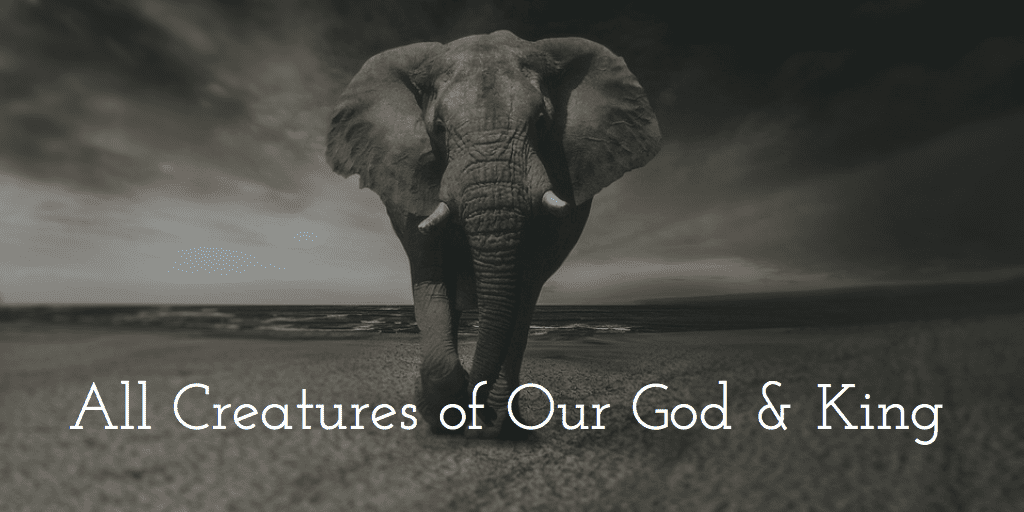
A few years ago we had a karama, a blessing ceremony for our newly built home. It is a time when you invite friends and neighbors over to share a meal and join with you in celebrating God’s generosity. I remember stepping outside early that morning to call the girls to breakfast and noticing them squatting on the far side of the compound. As I walked closer I saw that they were with two men – friends of ours – who were bending over the tied sheep and goat we were to eat together later that day. I stopped behind the girls and watched as one of the men spoke over the sheep lying silently at his feet, his hand resting between the sheep’s ears. He gently made the sign of the cross on the sheep’s forelock with the blade of his knife and then, firmly pulling back the sheep’s head, he slit its throat in one clean movement.
I felt my own mix of horror and fascination as my tiny children calmly observed the ground in front of them dampening with bright red blood as the sheep’s life slowly ebbed away. A big part of me wanted to snatch them up and tuck them safely in the new house in front of their bowl of now-cold oatmeal, far away from the violence of what they were witnessing. But I let them stay.
Over the years we’ve let the girls observe and minimally take part any time an animal has been slaughtered on our compound. Sometimes they are sad about the death of the poor brown goat, or uncomfortably giggly at the demise of the Christmas ducks. But it’s important to me that they are always there. Because I want them to see with their own eyes where their food has come from.
I want them to know that something had to die in order for them to eat it.
As American children, it could be far too easy for my daughters to grow up never having to reflect on the origins of the cold pieces of pink stuff that comes from behind refrigerated glass. To think that meat is only something you buy wrapped in cellophane with a grade quality and expiration date. They could pretty easily live in a place where their only exposure to animals is to the furry cute kind that exist in our homes for our own amusement – because the other kind are all tucked safely out of sight, the horror of farm factories completely disconnected from our sterile economies of consumption and prolific waste.
But on this side of the world, you can never escape the fact that something gave up its life for you to eat, even if you kinda want to. Because before you can eat it, you have to catch it first and to struggle to contain the life it very obviously still has. And then you have to kill it. You have to pluck out it’s feathers, or cut off its fur. You have to rinse out its insides, and in the process often see remnants of what sustained the life of this creature now giving you its own – whole crickets, cropped grass, kernels of sorghum.
Or even if you are just going to buy a slab of meat from the local outdoor butcher, you can’t ignore the bones and organs and hooves and horns that are neatly arranged for sale also, obvious parts of something recently alive and whole. Or more poignantly, the cows and goats tied to the tree a few feet away, waiting their turn for the Muslim cleric to come and ensure that they are slaughtered according to the dictates of hallal – quickly and with a prayer.
Where I live, pagan animists, devout Muslims, and refugees who are incredibly new in their Christian faith all seem to understand a foundational Christian idea so much better than many Americans who have been Christians all their lives: life is born out of death. Death is a part of life – even its very catalyst.
And so I let my kids watch animals die that they will soon eat because I have found that it is impossible to witness that process without feeling thankful. You are forced to see the life that exists in something else. And then to accept with gratitude the gift of life that is being passed on to you. You can’t escape the awareness that you will continue to live because something else has died.
But that can be an uncomfortable thought though, can’t it? And if there is anything we like, it is to be comfortable. So we tuck the idea and the process away altogether. Rather than wrestle with the literal and metaphorical messiness that comes with eating meat, or alternately, working to curb our voracious appetite to consume conveniently and excessively, we do neither. Instead we cling to incompatible extremes of objectification in order to have our cake and eat it too.
We do it in so many ways. We slap women’s naked bodies up on billboards and then rush to cover them and their babies up in nursing tents; we idolize black athletes and musicians and then shrug when black kids are murdered by the people that are supposed to protect them. And we adopt animals into our homes and include them in family portraits that hang on our living room walls while simultaneously supporting industries that treat animals like non-living things in order to feed our societal gluttony.
Someone recently said to me, “You can tell how developed a nation is by the way they treat their animals.” The comment, spoken by a Western expat living in Africa, made me vaguely uncomfortable at the time. She was talking about pets, a fairly urban Western idea to begin with. And to be fair, she has a point. Not everyone on this side of the world takes good care of their dog.
But what most people on this side of the world will do is only kill what they can eat. And when they kill it, they will do it with dignity and appreciation for the role that animal has played in their community, usually by saying some kind of simple prayer. Not a scrap of that animal will go to waste. What is not finished will be shared with neighbors. And anything deemed inedible will be given to other animals or made into something useful.
So if that statement is true, and you can in fact judge a society based on their treatment of animals, then places like rural North Africa might really be far more developed than anyone ever realized. And the United States may be much worse off than we ever dreamed.
Life comes from death. We cannot choose to ignore death and expect to fully embrace life. As people who believe that our salvation has come via the death of another, we perhaps should know this better than anyone. And as we embody death in our own lives day in and day out, may our lives be marked with generosity, kindness and overwhelming gratitude for the life we have been given.
Previous Post

May 8, 2018
All Creatures of Our God and King: The Image of God
Browse Our Archives
Select a Category Uncategorized
Select a Month July 2018 June 2018 May 2018 April 2018 March 2018 February 2018 January 2018 December 2017 November 2017 October 2017 September 2017 August 2017 July 2017 June 2017 May 2017 April 2017 March 2017 February 2017 January 2017 December 2016 November 2016 October 2016 September 2016 August 2016 July 2016 June 2016 May 2016 April 2016
Follow Us!
TAKE THE
Religious Wisdom Quiz
Who said, "Let there be light"?
Select your answer to see how you score.
God Elijah Moses Paul
Related posts from Jonathan Storment

Leaving Highland: Goodbye Abilene

Leaving Highland: Generationally Generous
Leaving Highland: Sunday Morning Public Nudity
TRENDING AT PATHEOS Evangelical

The REST of Your Life: A Creative Wrestles...
This week I had a conversation with a good friend from church....

How the author of the world's best hymn...
I've been working with John Newton for a while now. This makes...

Long before this Lectio Divina, Psalm 130 - the song - started...

What About the Trees? Another Living Parable
After I finished writing the last article about falling leaves as a...

Why Classical Education Is a Conversation, Not a...
Come and Read: Joy in Classical Education When I was a little...

Cornell University has received a great deal of negative publicity and intense...
view all Evangelical blogs
Ad-Free & Subscriber Log-In Subscription Support
- About Us
- 2026 Calendar
- Videos
- Podcasts
- Library of World Religions
- Faith In Media Tracker
- Advertise With Us
- Write for Us
- Privacy Policy
- Terms of Service
- Do Not Sell My Data
- Contact Us
- Radiant Digital
- Manage Newsletter Subscriptions
- Unsubscribe From Notifications
- Sitemap
Copyright 2008-2026, Patheos. All rights reserved.
Subscription Support Ad-Free & Subscriber Log-In
Follow Patheos