
BuddhistCatholicContemplativeEvangelicalGeneral ChristianHinduJewishLatter-day SaintMuslimNew VisionsProgressive Christian
Beliefs
- Buddhist
- Catholic
- Contemplative
- Evangelical
- General Christian
- Hindu
- Jewish
- Latter-day Saint
- More Voices
- Muslim
- New Visions
- Pagan
- Progressive Christian
Topics
- Religion News
- Food and Religion
- Sports and Religion
- Religious Art
- Religious Music and Entertainment
- Religious Events
- History and Religion
- Style and Religion
- Politics and Religion
- Women in Religion
- Recreation Outdoors and Religion
- Business Finance and Religion
- Careers Workplace and Religion
- Education and Religion
- Family Parenting and Religion
- Health Fitness and Religion
- Home and Religion
- Relationships and Religion
- Technology and Religion
- Travel and Religion
Columnists
- Buddhist Columnists
- Business Finance and Religion Columnists
- Careers Workplace and Religion Columnists
- Catholic Columnists
- Contemplative Columnists
- Education and Religion Columnists
- Evangelists Columnists
- Family Parenting and Religion Columnists
- General Christian Columnists
- Health Fitness and Religion Columnists
- Hindu Columnists
- History and Religion Columnists
- Home and Religion Columnists
- Jewish Columnists
- More Voices Columnists
- Latter Day Columnists
- Muslim Columnists
- New Visions Columnists
- Nonreligious Columnists
- Pagan Columnists
- Politics and Religion Columnists
- Progressive Columnists
- Recreation Outdoors and Religion Columnists
- Relationships and Religion Columnists
- Religion News Columnists
- Religious Art Columnists
- Religious Events Columnists
- Religious Music and Entertainment Columnists
- Sports and Religion Columnists
- Style and Religion Columnists
- Technology and Religion Columnists
- Travel and Religion Columnists
- Women in Religion Columnists
Resource Library
- 2026 Calendar
- Library of World Religions
- The 100 Most Holy Places on Earth
- Patheos Answers
- Podcasts
- Videos
- Faith Leaders Database
- Anglican Episcopalian
- Bahai
- Baptist
- Buddhism
- Christianity
- Confucianism
- Eastern Orthodoxy
- Hinduism
- Holiness and Pentecostal
- ISKCON
- Islam
- Judaism
- Lutheran
- Methodist
- The Church of Jesus Christ of Latter-day Saints
- New Age
- Paganism
- Presbytarian and Reformed
- Protestantism
- Religion Behind the Scenes
- Roman Catholic
- Scientology
- Shia Islam
- Sikhism
- Sufism
- Sunni Islam
- Taoism
- Zen
- See all religions
Research Tools
 Ad-Free & Subscriber Log-In Subscription Support
Ad-Free & Subscriber Log-In Subscription Support
Follow Patheos 

- Trending:
- Forgiveness
- |
- Marriage
- |
- Consciousness
- |
- Death Penalty
- |
- Election
- |
- Halloween
 Jonathan Storment
- Home
- Evangelical
- Leaving Church: The Rise of Hate
Leaving Church: The Rise of Hate
Last updated on: May 5, 2017 at 5:23 am by Jonathan Storment
Leaving Church: The Rise of Hate 2017-05-05T05:23:02-05:00 Jonathan Storment
Patheos Explore the world's faith through different perspectives on religion and spirituality! Patheos has the views of the prevalent religions and spiritualities of the world.
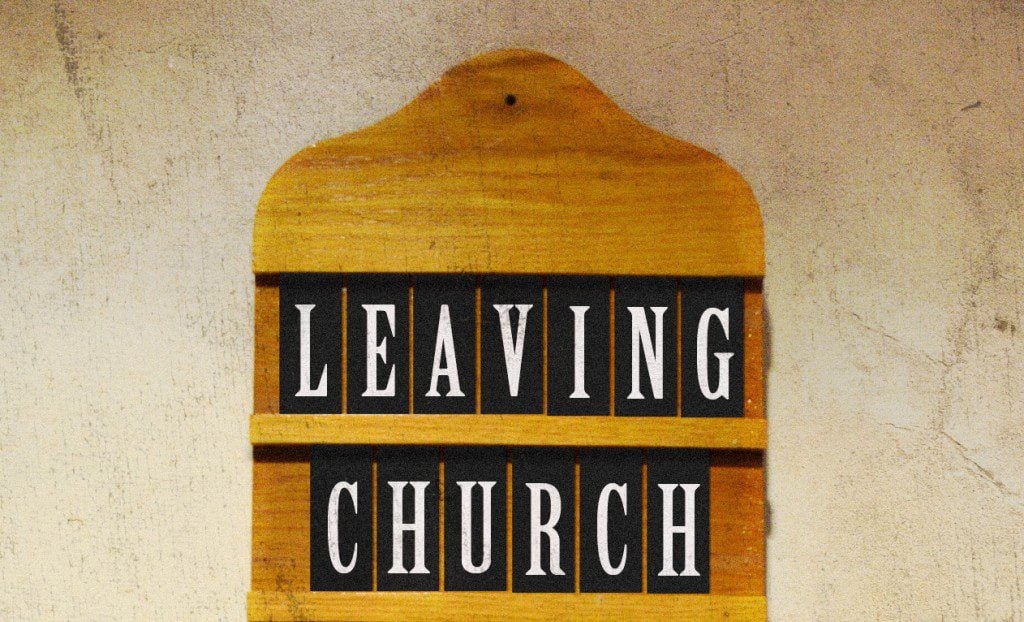 So this is my next to last blog in the short series on responding to the fascinating Atlantic article from last month called “America’s Empty Church Problem” It’s a fascinating article that is both surprising and profound. Surprising, because it’s written to and by people who have often assumed that America having empty churches isn’t the problem, it is the solution.
And profound because I think we’re now just coming to the point in an increasingly Post-Christian America where we can see the implications of so many people leaving the faith that they had inherited.
A New Kind of Tolerance?
So for the longest time, we’ve told ourselves a story in America about how religious, church going people are intolerant and bigoted. And while we’ve probably all got anecdotes about people who have certainly fit that bill, that narrative it turns out, is both too simplistic and wrong.
Here’s how the Atlantic article puts it:
[The idea that Secluarism would make people more tolerant] was naive. Secularism is indeed correlated with greater tolerance of gay marriage and pot legalization. But it’s also making America’s partisan clashes more brutal. And it has contributed to the rise of both Donald Trump and the so-called alt-right movement, whose members see themselves as proponents of white nationalism. As Americans have left organized religion, they haven’t stopped viewing politics as a struggle between “us” and “them.” Many have come to define us and them in even more primal and irreconcilable ways…
For decades, liberals have called the Christian right intolerant. When conservatives disengage from organized religion, however, they don’t become more tolerant. They become intolerant in different ways. Research shows that evangelicals who don’t regularly attend church are less hostile to gay people than those who do. But they’re more hostile to African Americans, Latinos, and Muslims. In 2008, the University of Iowa’s Benjamin Knoll noted that among Catholics, mainline Protestants, and born-again Protestants, the less you attended church, the more anti-immigration you were.
The article goes on to say that stepping back from Christianity and realizing it’s implications is important to help us see the way that churches have functioned through the years with church-going people’s prejudices (of which we all have).
Everyone has someone that they have some kind of bias against, but the people who are very committed members of a church “are more likely than those who are casually involved to let its message of universal love erode their prejudices.”
It’s hard to practice a faith that says God really does love every single person, and has made us all in His image, and then turn around and treat another person without dignity and respect.
I’ve seen this hundreds of times in ministry. I’ve prayed with people who admitted and confessed to a struggle to love a certain group of people, or an individual person more times than I can count. And personally it’s why I was able to recognize my own racism, confront it, and confess it.
Despite, the article says, the fact that Sunday morning is still the most segregated hour of the week, there is something that is happening in that hour that we are going to miss. We are, at our best, learning that we ought not to be segregated, and the fact that we are means that we are somehow not whole and missing out on who God is calling us to be.
And that’s something that we miss when we start leaving church.
A Post-Christian Tribalism
Seriously, we’re beginning to lose that. I’ve written before the problem that I see coming in a decade or two in the West. We have these deeply Christian ideas e.g. “All people should be treated with equality and dignity” but we’ve forgotten where we’ve gotten them.
We just assume their some kind of common sense that everyone knows and we rarely question them.
But we soon will.
And frankly, I welcome it. I’m not lamenting some Christian loss of power in a culture war, I welcome the conversations that are coming because I believe that it can help the Church better stand for the right things and stand out better.
I believe that the way of Jesus isn’t for everyone. It’s both hard and wonderful and requires us to be different than those around us.
For the longest time people in the West have really had a Christian imagination. Our pathos and ethics were shaped by the Carpenter for Nazareth, and because it was so familiar to us we have forgotten that it is so un-natural.
Take for example, any kind of social compassion you see advocated for these days. i.e. ” I believe people should care about the poor, or refugees, or the marginalized” and ask yourself why we care about this?
The profoundly brilliant philosopher Nietzsche once famously said that Christian ethics do not work without Christian metaphysics, and I think he’s right. The Incarnation, the Cross and Easter are at the center of why we Jesus-followers believe these things.
And the reason I appreciate Nietzsche’s work so much is because he at least hated Christianity for the thing it actually was.
Nietzsche’s big point was that all of our social compassion and care for the least of these is not only rooted in Jewish/Christian ethics but that it ultimately makes society weaker and weaker. It is a “slave morality” that prevents great people and cultures from rising to the top because they are being held back by the weakest among us.
Now I get the pushback here. Do you have to be a church going Christian to care about helping the poor?
No. Obviously not. In fact, there’s a thousand anecdotes we could share about people who care about mercy and caring for the least of these who aren’t.
But here’s my point.
This is because we, Western society have collectively had our imaginations baptized by the Christian story of the God who became a person. The Western conviction of Human Rights and our modern conception of racism being evil is hard to justify philosophically outside of it.
This is why, the Atlantic article rightly points out that the rise of the both this new kind of Conservative in America is very, very different. In the Alt-Right’s famous essay “An Establishment Conservative’s Guide to the Alt-Right.” there are five references to “tribe,” seven to “race,” 13 to “the west” and “western” and only one to “Christianity.”
The Atlantic article says “That’s no coincidence. The alt-right is ultra-conservatism for a more secular age. Its leaders like Christendom, an old-fashioned word for the West. But they’re suspicious of Christianity itself, because it crosses boundaries of blood and soil….[The new critics of Christianity are mostly critical of it] for it’s universality.”
That may seem outlandish to you, and I certainly can understand why. For those of us who grew up breathing in the subtle air that “everyone’s lives matter equally” it seems like an absolute and universal truth that was always common sense and always will be.
But I think what we’re beginning to see now is only going to continue to decay into more and more tribalism and less and less of what we call tolerance.
Primarily because people keep leaving Church.
Previous Post
April 25, 2017
Leaving Church: Before You Go...
Next Post
May 9, 2017 Leaving Church: The Institution of Casseroles
Browse Our Archives
Select a Category Uncategorized
Select a Month July 2018 June 2018 May 2018 April 2018 March 2018 February 2018 January 2018 December 2017 November 2017 October 2017 September 2017 August 2017 July 2017 June 2017 May 2017 April 2017 March 2017 February 2017 January 2017 December 2016 November 2016 October 2016 September 2016 August 2016 July 2016 June 2016 May 2016 April 2016
Follow Us!
TAKE THE
Religious Wisdom Quiz
Who built the ark?
Select your answer to see how you score.
David Moses Noah Solomon
Related posts from Jonathan Storment

Stranger God: To Whom Honor is Due

Stranger God: Wearing Evil and Touching Lepers


The Butterfly Effect: The Legacy of Hugh Hefner
TRENDING AT PATHEOS Evangelical

The REST of Your Life: A Creative Wrestles...
This week I had a conversation with a good friend from church....

How the author of the world's best hymn...
I've been working with John Newton for a while now. This makes...

Long before this Lectio Divina, Psalm 130 - the song - started...

What About the Trees? Another Living Parable
After I finished writing the last article about falling leaves as a...

Why Classical Education Is a Conversation, Not a...
Come and Read: Joy in Classical Education When I was a little...

Cornell University has received a great deal of negative publicity and intense...
view all Evangelical blogs
Ad-Free & Subscriber Log-In Subscription Support
- About Us
- 2026 Calendar
- Videos
- Podcasts
- Library of World Religions
- Faith In Media Tracker
- Advertise With Us
- Write for Us
- Privacy Policy
- Terms of Service
- Do Not Sell My Data
- Contact Us
- Radiant Digital
- Manage Newsletter Subscriptions
- Unsubscribe From Notifications
- Sitemap
Copyright 2008-2026, Patheos. All rights reserved.
Subscription Support Ad-Free & Subscriber Log-In
Follow Patheos