
BuddhistCatholicContemplativeEvangelicalGeneral ChristianHinduJewishLatter-day SaintMuslimNew VisionsProgressive Christian
Beliefs
- Buddhist
- Catholic
- Contemplative
- Evangelical
- General Christian
- Hindu
- Jewish
- Latter-day Saint
- More Voices
- Muslim
- New Visions
- Pagan
- Progressive Christian
Topics
- Religion News
- Food and Religion
- Sports and Religion
- Religious Art
- Religious Music and Entertainment
- Religious Events
- History and Religion
- Style and Religion
- Politics and Religion
- Women in Religion
- Recreation Outdoors and Religion
- Business Finance and Religion
- Careers Workplace and Religion
- Education and Religion
- Family Parenting and Religion
- Health Fitness and Religion
- Home and Religion
- Relationships and Religion
- Technology and Religion
- Travel and Religion
Columnists
- Buddhist Columnists
- Business Finance and Religion Columnists
- Careers Workplace and Religion Columnists
- Catholic Columnists
- Contemplative Columnists
- Education and Religion Columnists
- Evangelists Columnists
- Family Parenting and Religion Columnists
- General Christian Columnists
- Health Fitness and Religion Columnists
- Hindu Columnists
- History and Religion Columnists
- Home and Religion Columnists
- Jewish Columnists
- More Voices Columnists
- Latter Day Columnists
- Muslim Columnists
- New Visions Columnists
- Nonreligious Columnists
- Pagan Columnists
- Politics and Religion Columnists
- Progressive Columnists
- Recreation Outdoors and Religion Columnists
- Relationships and Religion Columnists
- Religion News Columnists
- Religious Art Columnists
- Religious Events Columnists
- Religious Music and Entertainment Columnists
- Sports and Religion Columnists
- Style and Religion Columnists
- Technology and Religion Columnists
- Travel and Religion Columnists
- Women in Religion Columnists
Resource Library
- 2026 Calendar
- Library of World Religions
- The 100 Most Holy Places on Earth
- Patheos Answers
- Podcasts
- Videos
- Faith Leaders Database
- Anglican Episcopalian
- Bahai
- Baptist
- Buddhism
- Christianity
- Confucianism
- Eastern Orthodoxy
- Hinduism
- Holiness and Pentecostal
- ISKCON
- Islam
- Judaism
- Lutheran
- Methodist
- The Church of Jesus Christ of Latter-day Saints
- New Age
- Paganism
- Presbytarian and Reformed
- Protestantism
- Religion Behind the Scenes
- Roman Catholic
- Scientology
- Shia Islam
- Sikhism
- Sufism
- Sunni Islam
- Taoism
- Zen
- See all religions
Research Tools
 Ad-Free & Subscriber Log-In Subscription Support
Ad-Free & Subscriber Log-In Subscription Support
Follow Patheos 

- Trending:
- Forgiveness
- |
- Marriage
- |
- Consciousness
- |
- Death Penalty
- |
- Election
- |
- Halloween
 Jonathan Storment
- Home
- Evangelical
- Be Excellent to One Another: Bill & Ted Go To Church
Be Excellent to One Another: Bill & Ted Go To Church
Last updated on: May 23, 2017 at 5:01 am by Jonathan Storment
Be Excellent to One Another: Bill & Ted Go To Church 2017-05-22T12:01:28-05:00 Jonathan Storment
Patheos Explore the world's faith through different perspectives on religion and spirituality! Patheos has the views of the prevalent religions and spiritualities of the world.
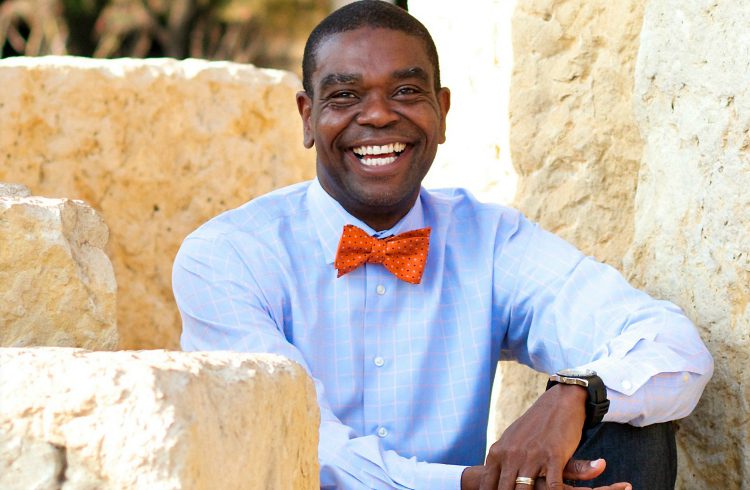
This week’s post is by my friend Sean Palmer. Sean is the new Teaching Pastor at Ecclesia in Houston, He’s a member of Missio Alliance and writes regularly at his own site as well. Sean also co-hosts an excellent podcast “Not so Black and White”
Meet Sean:
A Rabbi sat down with his disciples and asked, “How can you tell when night has ended and the day has begun?” The first student replied, “It is when, at a distance, you can tell a sheep from a goat.” “No,” the Rabbi replied.The second: “It is when, at a distance, you can tell a date tree from a palm tree.” Again the Rabbi replied, “No.” Bewildered, they asked the Rabbi, “How can we tell when night has ended and the day has begun?”
The Rabbi answered, “It is when, at a distance, you can look into the face of another and see a brother or sister. Until then, it is night.”
Waking Up
Last year I was introduced to the music of The Brilliance. At the same time I met their bassist and singer, David Gungor. I spent all of Lent listening repeatedly to The Brilliance’s song Brother — written by the band and our mutual friend, Ian Cron. The lyrics are simple and beautiful.
When I look into the face
Of my enemy I see my brother I see my brother
Forgiveness is the garment Of our courage The power to make the peace We long to know Open up our eyes To see the wounds that bind All of humankind May our shutter hearts Greet the dawn of life With charity and love
If anything has been lost at the moral center of Christian faith it is the mandatory, but difficult practice of loving our enemies. Given the popularized versions of contemporary Christianity an impartial observer might easily note much of what Christians are called to ethically, but I suspect few would imagine that basic love for others is among them, especially when the other is truly Other.
All the same, to look upon those who disagree with you, malign and mistreat, and marginalize you is part and parcel of what it means to walk with Jesus. And the reason for all this is fairly simple.
The Apostle Paul puts it this way:
But now that faith has come, we are no longer subject to a disciplinarian, for in Christ Jesus you are all children of God through faith. As many of you as were baptized into Christ have clothed yourselves with Christ. There is no longer Jew or Greek, there is no longer slave or free, there is no longer male and female; for all of you are one in Christ Jesus. And if you belong to Christ, then you are Abraham’s offspring, heirs according to the promise. – Galatians 3:26–29
We gloss over all this because, let’s face it, the burning issues between Jews and Greeks aren’t dominating the headlines. There’s no Jew vs Greek Debate Countdown Clock on the bottom corner of your favorite cable news show.
Truth is, we kinda think the whole thing is silly, people arguing about circumcision and food laws. It all seems like frivolity.
But when we push passed the historical distance, at the very least Paul reveals that the gospel is more than assuaging individual guilt about sin. There is another level. A level at which knowing Jesus presses us to see others differently. It’s not just a slight difference either. It’s profound. Not only are we to no longer live to by the standard and even biological distinctions of our world, but as “children of God,” that is, as brothers and sisters.
Church as Family
There’s a lot at play when we treat each other as siblings, but one unavoidable implication is that we can’t avoid each other — at least not avoid each other without that very avoidance testifying to the world that the family is thoroughly dysfunctional.
In the simplest possible terms, Christians belong to one another.
Paul says it this way later in Galatians, “Bear one another’s burdens, and in this way you will fulfill the law of Christ.” – Galatians 6:2
Now, most of us don’t have the need to hunt and peck the English language to make sure the words we’re using are the right words, but every now and then, I do. You know what’s funny? Because English speakers are lazy about language we don’t like when two words have close to the same meaning if there’s not a meaningful difference in those words.
One of the places we’ve done this is with the terms “one another” and “each other.” Bill and Ted once urged the world to “Be excellent to each other,” but that’s not what they meant. What they really meant is “be excellent to one another.”
According to Grammar Girl, the phrase “each other” is known as a reciprocal pronoun because it shows a bidirectional action. Bill and Ted are being excellent to each other, that means Bill is being excellent to Ted, and Ted is being excellent to Bill. They’re practicing what you might call excellence reciprocity.
“One another” is different.
Bill and Ted aren’t talking about being excellent just to Bill and Ted; they want each person in the world to be excellent to every other person. And this matters because what Paul is urging us toward is being excellent toward every other person by bearing their burdens.
I wonder what it would look like if Christians took this seriously. We would go to church differently, we would vote differently (imagine if Christians were known for going into the voting booth thinking, “My vote is an opportunity to bear another’s burden. It’s not what I need, it’s about what other people need.”)
You don’t have to be among a large group of people to know that there are families who are overwhelmed, couples sandwiched between carrying for aging parents and launching their adult children into the world properly. There are grandparents pulling more than a grand load.
I was sharing with some friends earlier this week my slight irritation with people who live close to me, listen to our church’s sermon podcast, but don’t worship with us. For a while I’ve tried to put my finger on the source of my displeasure and whether or not it’s justified. I think I’ve stumbled on the reason: We are a church. There are real people here.
We have relatives who die. We get bad diagnosis. People go without work when they really need to money. We are worried about our children, the big ones and the little ones. We are still grieving from deaths that took our breath away. And if being a church means anything — at least to me as the gray hairs start to overtake the black ones — it’s that we should be excellent to one another, we can bear one another’s burdens.
But that’s not limited to church our local communities. It’s so very easy — and I’m as guilty as anyone — of not bearing my brother’s and sister’s burdens. Sometimes, I add to them.
So this week, give this a try, find someone and bear their burdens.
Previous Post
May 16, 2017
Leaving Church: Jesus Leaves Churches Too
Next Post

May 30, 2017 A Beautiful Gospel: Singing Your Way to Wonder
Browse Our Archives
Select a Category Uncategorized
Select a Month July 2018 June 2018 May 2018 April 2018 March 2018 February 2018 January 2018 December 2017 November 2017 October 2017 September 2017 August 2017 July 2017 June 2017 May 2017 April 2017 March 2017 February 2017 January 2017 December 2016 November 2016 October 2016 September 2016 August 2016 July 2016 June 2016 May 2016 April 2016
Follow Us!
TAKE THE
Religious Wisdom Quiz
What happened when Jesus broke five loaves and two fish for a crowd?
Select your answer to see how you score.
Only five were fed There were leftovers A rainstorm started People went hungry
Related posts from Jonathan Storment

Leaving Highland: Generationally Generous

Stranger God: To Whom Honor is Due

Stranger God: Wearing Evil and Touching Lepers
TRENDING AT PATHEOS Evangelical

The REST of Your Life: A Creative Wrestles...
This week I had a conversation with a good friend from church....

How the author of the world's best hymn...
I've been working with John Newton for a while now. This makes...

Long before this Lectio Divina, Psalm 130 - the song - started...

What About the Trees? Another Living Parable
After I finished writing the last article about falling leaves as a...

Why Classical Education Is a Conversation, Not a...
Come and Read: Joy in Classical Education When I was a little...

Cornell University has received a great deal of negative publicity and intense...
view all Evangelical blogs
Ad-Free & Subscriber Log-In Subscription Support
- About Us
- 2026 Calendar
- Videos
- Podcasts
- Library of World Religions
- Faith In Media Tracker
- Advertise With Us
- Write for Us
- Privacy Policy
- Terms of Service
- Do Not Sell My Data
- Contact Us
- Radiant Digital
- Manage Newsletter Subscriptions
- Unsubscribe From Notifications
- Sitemap
Copyright 2008-2026, Patheos. All rights reserved.
Subscription Support Ad-Free & Subscriber Log-In
Follow Patheos