
BuddhistCatholicContemplativeEvangelicalGeneral ChristianHinduJewishLatter-day SaintMuslimNew VisionsProgressive Christian
Beliefs
- Buddhist
- Catholic
- Contemplative
- Evangelical
- General Christian
- Hindu
- Jewish
- Latter-day Saint
- More Voices
- Muslim
- New Visions
- Pagan
- Progressive Christian
Topics
- Religion News
- Food and Religion
- Sports and Religion
- Religious Art
- Religious Music and Entertainment
- Religious Events
- History and Religion
- Style and Religion
- Politics and Religion
- Women in Religion
- Recreation Outdoors and Religion
- Business Finance and Religion
- Careers Workplace and Religion
- Education and Religion
- Family Parenting and Religion
- Health Fitness and Religion
- Home and Religion
- Relationships and Religion
- Technology and Religion
- Travel and Religion
Columnists
- Buddhist Columnists
- Business Finance and Religion Columnists
- Careers Workplace and Religion Columnists
- Catholic Columnists
- Contemplative Columnists
- Education and Religion Columnists
- Evangelists Columnists
- Family Parenting and Religion Columnists
- General Christian Columnists
- Health Fitness and Religion Columnists
- Hindu Columnists
- History and Religion Columnists
- Home and Religion Columnists
- Jewish Columnists
- More Voices Columnists
- Latter Day Columnists
- Muslim Columnists
- New Visions Columnists
- Nonreligious Columnists
- Pagan Columnists
- Politics and Religion Columnists
- Progressive Columnists
- Recreation Outdoors and Religion Columnists
- Relationships and Religion Columnists
- Religion News Columnists
- Religious Art Columnists
- Religious Events Columnists
- Religious Music and Entertainment Columnists
- Sports and Religion Columnists
- Style and Religion Columnists
- Technology and Religion Columnists
- Travel and Religion Columnists
- Women in Religion Columnists
Resource Library
- 2026 Calendar
- Library of World Religions
- The 100 Most Holy Places on Earth
- Patheos Answers
- Podcasts
- Videos
- Faith Leaders Database
- Anglican Episcopalian
- Bahai
- Baptist
- Buddhism
- Christianity
- Confucianism
- Eastern Orthodoxy
- Hinduism
- Holiness and Pentecostal
- ISKCON
- Islam
- Judaism
- Lutheran
- Methodist
- The Church of Jesus Christ of Latter-day Saints
- New Age
- Paganism
- Presbytarian and Reformed
- Protestantism
- Religion Behind the Scenes
- Roman Catholic
- Scientology
- Shia Islam
- Sikhism
- Sufism
- Sunni Islam
- Taoism
- Zen
- See all religions
Research Tools
 Ad-Free & Subscriber Log-In Subscription Support
Ad-Free & Subscriber Log-In Subscription Support
Follow Patheos 

- Trending:
- Forgiveness
- |
- Marriage
- |
- Consciousness
- |
- Death Penalty
- |
- Election
- |
- Halloween
 Jonathan Storment
- Home
- Evangelical
- Leaving Church: Bowling Alone
Leaving Church: Bowling Alone
Last updated on: April 18, 2017 at 5:01 am by Jonathan Storment
Leaving Church: Bowling Alone 2017-04-17T14:49:09-05:00 Jonathan Storment
Patheos Explore the world's faith through different perspectives on religion and spirituality! Patheos has the views of the prevalent religions and spiritualities of the world.
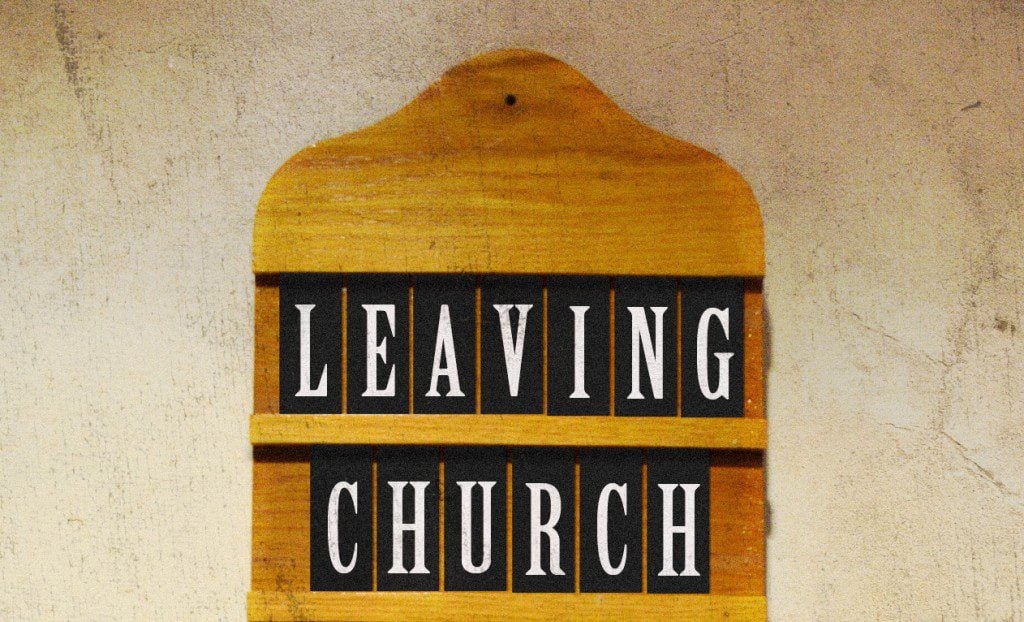 I’d like to start a short series over the next few weeks responding to a great article in last month’s edition of The Atlantic.
The article is called America’s Empty Church Problem and it’s both profound and surprising. It’s surprising because it’s in The Atlantic. It’s not written by Christianity Today or some pastor lamenting that their church is slowly dying.
It’s written for (and by) people, who often assume that empty churches aren’t a problem, they are the solution.
So what would make The Atlantic say differently?
Society Breakdown And Bowling Leagues
This blog is titled after “Bowling Alone: America’s Declining Social Capital” a watershed book written by the Harvard Professor Robert Putnam almost 20 years ago.
In his book, Putnam makes several observations about the slow drifting apart that has occurred over the past few decades. These are all related to deeper forces like radical individualism, consumerism, materialism and new technology. Because of this, Putnam points out, that almost every civic organization from the Lions Clubs to the Freemasons are showing steep decline of membership and participation.
But why does that matter?
To illustrate his point, Putnam uses the metaphor (with the actual research) that people haven’t stopped bowling. In fact, in 2000 we were still bowling as much as ever, but participation in leagues were drastically down.
I’ve bowled in leagues before. I’m not much of a bowler and I took more than a little grief from my teammates about that, but my wife and I joined because a neighbor invited us. We got to know other people who lived in my neighborhood, we swapped stories, made t-shirts, and came in close to last.
And a few years later, when a friend from the league had a teenager daughter die tragically, I drove back to my old hometown to do her funeral. I was the only preacher that they knew, and because of our relationship they allowed me to walk with them through that heartbreak.
Today, my old bowling friends still keep in touch, they ask me to pray for them, and I ask them for help with my car.
It was an investment in a shared activity that developed relationships that otherwise wouldn’t have existed, relationships that would prove to be important later in life.
And none of that would’ve happened if we would’ve decided to bowl alone.
Which brings me to Church.
Pretending to Go to Church
In his fantastic book, Hillbilly Elegy, J.D. Vance talks about some of the features of the White Working Class (my background). We have two gods 1). America and 2) the Lord Jesus Christ
And we don’t, generally speaking, go to church.
We love Jesus and we support the troops but we don’t make time for a community of faith.
In fact, if you live in the Bible Belt, you’re more likely to lie about attending church than you are to actually attend church.
Despite the fact that religious attendance is proven to give people longer more satisfying lives, deeper friendships, stronger marriages and families and to help develop stronger character and ties to the community. People still don’t go.
This is true in my own city. We have churches of every different shape and style. We’re in the center of the Bible Belt, and something like 75% of our city doesn’t go to church.
And to be sure, I get why. The stories about church abuse are legion, the people are often annoying, sometimes we gossip, sometimes we hurt each other in the name of God in ways that are hard to bounce back from.
I’ve heard all those stories (and personally experienced plenty of my own), and yet I see every week a hundred great things that happen in church.
Just this past month, a young woman came up to me after a service and told me that she was visiting with a friend. Her friend had asked her to come talk to me because her boyfriend was being physically abusive.
Just over her shoulder I saw a church elder and called him over to help. Within the course of 15 minutes we had her a hotel room for the night and helped get her in a shelter for abused women.
The next weekend, a few of our (rather large) guys went to her house and helped her move her stuff and effectively break it off with her abusive boyfriend.
Every week in church there are dozens of stories like that. They aren’t going to make the front page of Buzzfeed and they won’t be on your evening news, but they happen all the time.
And yet, the very people who could use those kinds of stories, the very people who could be a part of making those kinds of stories happen, are slowly stopping to attend a gathering of people.
Last year, J.D. Vance elaborated on some of his ideas from Hillbilly Elegy in the New York Times:
Though many working-class whites have lost any ties to church, they haven’t necessarily abandoned their faith. More than one in three identify as evangelical, and well over 75 percent claim some Christian affiliation. But that faith has become deinstitutionalized. They may watch megachurch broadcasts or join prayer circles on Facebook, but they largely avoid the pews on Sunday. Consequently, many absorb the vernacular and teachings of modern Christianity, but miss out on the advantages of church itself.
That sounds like an allergy to organized religion, but if the social science findings are true, it’s not. It’s an allergy to an organized community of anything.
John Wayne (I’m a pastor in West Texas, I’m contractually obligated to quote the Duke regularly) once said, “I love God, I just don’t like it when we try to put Him under a roof.”
I get that sentiment, God is everywhere and the whole earth is full with God’s glory.
The problem is that under that roof are God’s people, people we are called to encourage and care for.
You can call it what you like, Institutionalized, Organized, Habit. But what it really is carving out time to make space for other people in the name of God.
And that’s what we are walking away from in order to bowl alone.
It’s not God that we are abandoning when we leave church.
It is each other.
Previous Post
April 15, 2017
Holy Saturday
Next Post
April 25, 2017 Leaving Church: Before You Go...
Browse Our Archives
Select a Category Uncategorized
Select a Month July 2018 June 2018 May 2018 April 2018 March 2018 February 2018 January 2018 December 2017 November 2017 October 2017 September 2017 August 2017 July 2017 June 2017 May 2017 April 2017 March 2017 February 2017 January 2017 December 2016 November 2016 October 2016 September 2016 August 2016 July 2016 June 2016 May 2016 April 2016
Follow Us!
TAKE THE
Religious Wisdom Quiz
What does Jude say certain individuals have secretly slipped in to do?
Select your answer to see how you score.
Persecute believers Steal from the church Change the grace of God into a license for immorality Deny the resurrection
Related posts from Jonathan Storment

Leaving Highland: Generationally Generous

Christians Make the Best Atheists
Charlottesville, the Church, and Our Self-Deceit

Why You Need to Volunteer At Church
TRENDING AT PATHEOS Evangelical

The REST of Your Life: A Creative Wrestles...
This week I had a conversation with a good friend from church....

How the author of the world's best hymn...
I've been working with John Newton for a while now. This makes...

Long before this Lectio Divina, Psalm 130 - the song - started...

What About the Trees? Another Living Parable
After I finished writing the last article about falling leaves as a...

Why Classical Education Is a Conversation, Not a...
Come and Read: Joy in Classical Education When I was a little...

Cornell University has received a great deal of negative publicity and intense...
view all Evangelical blogs
Ad-Free & Subscriber Log-In Subscription Support
- About Us
- 2026 Calendar
- Videos
- Podcasts
- Library of World Religions
- Faith In Media Tracker
- Advertise With Us
- Write for Us
- Privacy Policy
- Terms of Service
- Do Not Sell My Data
- Contact Us
- Radiant Digital
- Manage Newsletter Subscriptions
- Unsubscribe From Notifications
- Sitemap
Copyright 2008-2026, Patheos. All rights reserved.
Subscription Support Ad-Free & Subscriber Log-In
Follow Patheos