
BuddhistCatholicContemplativeEvangelicalGeneral ChristianHinduJewishLatter-day SaintMuslimNew VisionsProgressive Christian
Beliefs
- Buddhist
- Catholic
- Contemplative
- Evangelical
- General Christian
- Hindu
- Jewish
- Latter-day Saint
- More Voices
- Muslim
- New Visions
- Pagan
- Progressive Christian
Topics
- Religion News
- Food and Religion
- Sports and Religion
- Religious Art
- Religious Music and Entertainment
- Religious Events
- History and Religion
- Style and Religion
- Politics and Religion
- Women in Religion
- Recreation Outdoors and Religion
- Business Finance and Religion
- Careers Workplace and Religion
- Education and Religion
- Family Parenting and Religion
- Health Fitness and Religion
- Home and Religion
- Relationships and Religion
- Technology and Religion
- Travel and Religion
Columnists
- Buddhist Columnists
- Business Finance and Religion Columnists
- Careers Workplace and Religion Columnists
- Catholic Columnists
- Contemplative Columnists
- Education and Religion Columnists
- Evangelists Columnists
- Family Parenting and Religion Columnists
- General Christian Columnists
- Health Fitness and Religion Columnists
- Hindu Columnists
- History and Religion Columnists
- Home and Religion Columnists
- Jewish Columnists
- More Voices Columnists
- Latter Day Columnists
- Muslim Columnists
- New Visions Columnists
- Nonreligious Columnists
- Pagan Columnists
- Politics and Religion Columnists
- Progressive Columnists
- Recreation Outdoors and Religion Columnists
- Relationships and Religion Columnists
- Religion News Columnists
- Religious Art Columnists
- Religious Events Columnists
- Religious Music and Entertainment Columnists
- Sports and Religion Columnists
- Style and Religion Columnists
- Technology and Religion Columnists
- Travel and Religion Columnists
- Women in Religion Columnists
Resource Library
- 2026 Calendar
- Library of World Religions
- The 100 Most Holy Places on Earth
- Patheos Answers
- Podcasts
- Videos
- Faith Leaders Database
- Anglican Episcopalian
- Bahai
- Baptist
- Buddhism
- Christianity
- Confucianism
- Eastern Orthodoxy
- Hinduism
- Holiness and Pentecostal
- ISKCON
- Islam
- Judaism
- Lutheran
- Methodist
- The Church of Jesus Christ of Latter-day Saints
- New Age
- Paganism
- Presbytarian and Reformed
- Protestantism
- Religion Behind the Scenes
- Roman Catholic
- Scientology
- Shia Islam
- Sikhism
- Sufism
- Sunni Islam
- Taoism
- Zen
- See all religions
Research Tools
 Ad-Free & Subscriber Log-In Subscription Support
Ad-Free & Subscriber Log-In Subscription Support
Follow Patheos 

- Trending:
- Forgiveness
- |
- Marriage
- |
- Consciousness
- |
- Death Penalty
- |
- Election
- |
- Halloween
 Jonathan Storment
- Home
- Evangelical
- Tribe: Freedom’s Not All It’s Cracked Up To Be
Tribe: Freedom’s Not All It’s Cracked Up To Be
Last updated on: September 27, 2016 at 5:05 am by Jonathan Storment
Tribe: Freedom’s Not All It’s Cracked Up To Be 2016-09-25T22:13:48-05:00 Jonathan Storment
Patheos Explore the world's faith through different perspectives on religion and spirituality! Patheos has the views of the prevalent religions and spiritualities of the world.
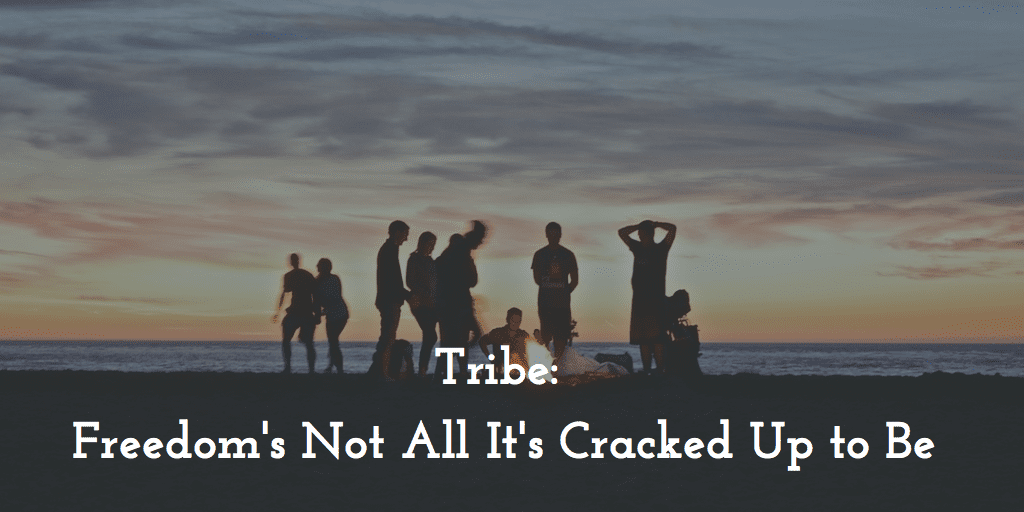 The best scene in any movie to me, is hands down, the ending of It’s a Wonderful Life. I know it’s sappy and sentimental and overdone, but I still watch the movie every year, and mainly for the last five minutes.
To me it’s a vision of what it would look like to live a sacrificial life for the community around you, and what happens when that community does the same. When I watch it, I ache for that kind of life.
The problem comes when I try to live that kind of life.
So the past few days, I’ve been interacting with Sebastian Junger’s great new book Tribes.
I first heard about this book when the New York Times columnist David Brooks wrote an article based on it called “The Great Affluence Fallacy”
Brooks said Junger’s book gave him this haunting idea that maybe our entire culture is built on some fundamental error about what makes people happy and fulfilled.
People in developed civilization are 8x more likely to suffer depression than people living in poor nations. Tribal culture was communal, people did everything together, and along with that there was a real loss of freedom, but as I wrote yesterday, when colonialist moved to America they faced an epidemic of people from privileged backgrounds running away from the technologically sophisticated colony to live among and as a Native American.
When faced with the choice between living comfortably or living communally people chose the latter.
After reading Tribe, David Brooks writes in his column:
If colonial culture was relatively atomized, imagine American culture of today. As we’ve gotten richer, we’ve used wealth to buy space: bigger homes, bigger yards, separate bedrooms, private cars, autonomous lifestyles. Each individual choice makes sense, but the overall atomizing trajectory sometimes seems to backfire…Every generation faces the challenge of how to reconcile freedom and community — “On the Road” versus “It’s a Wonderful Life.” But I’m not sure any generation has faced it as acutely as millennials.
In the great American tradition, millennials would like to have their cake and eat it, too. A few years ago, Macklemore and Ryan Lewis came out with a song called “Can’t Hold Us,” which contained the couplet: “We came here to live life like nobody was watching/I got my city right behind me, if I fall, they got me.” In the first line they want complete autonomy; in the second, complete community.
But, of course, you can’t really have both in pure form.
In my experience, Brooks is spot on.
I’m a millennial, I want to have deep connections and community…when I want them.
I want to have friends that I can rely on, as long as they don’t need to rely too much on me.
I want the best of both worlds but find myself winding up with a tepid combination of both. A life with lots of acquaintances but almost no true friends, a life of crowds but not really community.
So back to It’s a Wonderful Life.
Brooks uses this analogy in tension with Jack Keourac’s “On the Road” A memoir of rugged individualism. Keourac’s story was the prototype of all the road/journey/freedom stories that have saturated the cultural fabric of the West. It’s a story about the wind in your hair and laying down responsibilities to society so that you can find yourself and lose the weight of other people’s expectations.
Both of these stories are embedded in our cultural imagination, but which one is the best way to live? Brooks ends hopefully:
Maybe we’re on the cusp of some great cracking. Instead of just paying lip service to community while living for autonomy, I get the sense a lot of people are actually about to make the break and immerse themselves in demanding local community movements. It wouldn’t surprise me if the big change in the coming decades were this: an end to the apotheosis of freedom…
But for that to happen, we have to realize that freedom’s not all it’s cracked up to be.
Next Up: Longing for War
Previous Post
September 23, 2016
Church Work: Leading By Vision
Next Post

September 29, 2016 Welcome to the World "Judah Danger Storment"
Browse Our Archives
Select a Category Uncategorized
Select a Month July 2018 June 2018 May 2018 April 2018 March 2018 February 2018 January 2018 December 2017 November 2017 October 2017 September 2017 August 2017 July 2017 June 2017 May 2017 April 2017 March 2017 February 2017 January 2017 December 2016 November 2016 October 2016 September 2016 August 2016 July 2016 June 2016 May 2016 April 2016
Follow Us!
TAKE THE
Religious Wisdom Quiz
Which book follows Psalms in the Bible?
Select your answer to see how you score.
Job Song of Solomon Proverbs Ecclesiastes
Related posts from Jonathan Storment

Leaving Highland: Goodbye Abilene

Leaving Highland: Generationally Generous
Leaving Highland: Sunday Morning Public Nudity
TRENDING AT PATHEOS Evangelical

The REST of Your Life: A Creative Wrestles...
This week I had a conversation with a good friend from church....

How the author of the world's best hymn...
I've been working with John Newton for a while now. This makes...

Long before this Lectio Divina, Psalm 130 - the song - started...

What About the Trees? Another Living Parable
After I finished writing the last article about falling leaves as a...

Why Classical Education Is a Conversation, Not a...
Come and Read: Joy in Classical Education When I was a little...

Cornell University has received a great deal of negative publicity and intense...
view all Evangelical blogs
Ad-Free & Subscriber Log-In Subscription Support
- About Us
- 2026 Calendar
- Videos
- Podcasts
- Library of World Religions
- Faith In Media Tracker
- Advertise With Us
- Write for Us
- Privacy Policy
- Terms of Service
- Do Not Sell My Data
- Contact Us
- Radiant Digital
- Manage Newsletter Subscriptions
- Unsubscribe From Notifications
- Sitemap
Copyright 2008-2026, Patheos. All rights reserved.
Subscription Support Ad-Free & Subscriber Log-In
Follow Patheos