
BuddhistCatholicContemplativeEvangelicalGeneral ChristianHinduJewishLatter-day SaintMuslimNew VisionsProgressive Christian
Beliefs
- Buddhist
- Catholic
- Contemplative
- Evangelical
- General Christian
- Hindu
- Jewish
- Latter-day Saint
- More Voices
- Muslim
- New Visions
- Pagan
- Progressive Christian
Topics
- Religion News
- Food and Religion
- Sports and Religion
- Religious Art
- Religious Music and Entertainment
- Religious Events
- History and Religion
- Style and Religion
- Politics and Religion
- Women in Religion
- Recreation Outdoors and Religion
- Business Finance and Religion
- Careers Workplace and Religion
- Education and Religion
- Family Parenting and Religion
- Health Fitness and Religion
- Home and Religion
- Relationships and Religion
- Technology and Religion
- Travel and Religion
Columnists
- Buddhist Columnists
- Business Finance and Religion Columnists
- Careers Workplace and Religion Columnists
- Catholic Columnists
- Contemplative Columnists
- Education and Religion Columnists
- Evangelists Columnists
- Family Parenting and Religion Columnists
- General Christian Columnists
- Health Fitness and Religion Columnists
- Hindu Columnists
- History and Religion Columnists
- Home and Religion Columnists
- Jewish Columnists
- More Voices Columnists
- Latter Day Columnists
- Muslim Columnists
- New Visions Columnists
- Nonreligious Columnists
- Pagan Columnists
- Politics and Religion Columnists
- Progressive Columnists
- Recreation Outdoors and Religion Columnists
- Relationships and Religion Columnists
- Religion News Columnists
- Religious Art Columnists
- Religious Events Columnists
- Religious Music and Entertainment Columnists
- Sports and Religion Columnists
- Style and Religion Columnists
- Technology and Religion Columnists
- Travel and Religion Columnists
- Women in Religion Columnists
Resource Library
- 2026 Calendar
- Library of World Religions
- The 100 Most Holy Places on Earth
- Patheos Answers
- Podcasts
- Videos
- Faith Leaders Database
- Anglican Episcopalian
- Bahai
- Baptist
- Buddhism
- Christianity
- Confucianism
- Eastern Orthodoxy
- Hinduism
- Holiness and Pentecostal
- ISKCON
- Islam
- Judaism
- Lutheran
- Methodist
- The Church of Jesus Christ of Latter-day Saints
- New Age
- Paganism
- Presbytarian and Reformed
- Protestantism
- Religion Behind the Scenes
- Roman Catholic
- Scientology
- Shia Islam
- Sikhism
- Sufism
- Sunni Islam
- Taoism
- Zen
- See all religions
Research Tools
 Ad-Free & Subscriber Log-In Subscription Support
Ad-Free & Subscriber Log-In Subscription Support
Follow Patheos 

- Trending:
- Forgiveness
- |
- Marriage
- |
- Consciousness
- |
- Death Penalty
- |
- Election
- |
- Halloween
 Jonathan Storment
- Home
- Evangelical
- Church Work: Being a Grown-Up in Ministry
Church Work: Being a Grown-Up in Ministry
Last updated on: September 16, 2016 at 5:01 am by Jonathan Storment
Church Work: Being a Grown-Up in Ministry 2016-05-29T18:29:09-05:00 Jonathan Storment
Patheos Explore the world's faith through different perspectives on religion and spirituality! Patheos has the views of the prevalent religions and spiritualities of the world.
“When I was a child I thought as a I child, but when I became a man I put away childish things.” -Paul
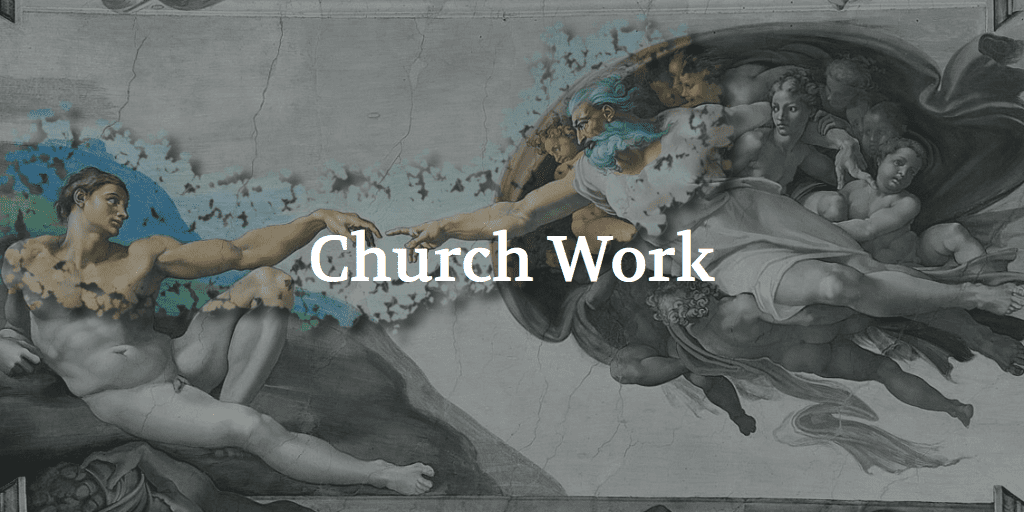 When I first started working at a church, I was pretty set on wearing jeans to the office. And I didn’t want anyone to ever use the word “professional” to describe me. Turns out I had nothing to worry about.
And I understand the reasoning for not wanting to be a “professional” in ministry, but too often what we really mean is not being mature. So I’ve asked my friend Steven Hovater to talk about what it looks like to serve a church “professionally.”
Steven lives in Tullahoma Tennessee with his wife Kelly and three rowdy daughters. He values community, discipleship, and the creative work of God, so these things tend to show up in his preaching at the Church of Christ at Cedar Lane
Here’s Steven:
I get it. You didn’t go into ministry for the regular hours, tidy dress code, and opportunities to be an amateur accountant. You don’t see your primary work as being done at a desk, and you hate going to meetings.
Further, I get that there are good reasons for not wanting to let the secular world dictate what ministry looks like. There are good reasons that ministry should look differently than jobs molded by the pragmatic production cultures of twentieth century America. Those cultures don’t have a place for wasting time by lavishing care on widows and orphans. Nor do they honor prophets who speak truth, even when it brings the house down, nor time for stewing over a text, or listening to a problem that will remain unsolved. We cannot allow ministry to become about acquiring respect on the terms of the world.
We’re not simply “employees”, and the church is never simply our “employer”. Ministers should always come to work dressed in a little camel hair, with a packed lunch of locusts. We should always be at least weird enough to remind the church that the normal world is broken. I get that, and so I want you to know that I’m with you in your struggle against The Man. Fight on, Brother/Sister. Fight on.
But…
We still need to have a little talk about what it means to be a professional in ministry. We don’t talk about it enough. Maybe it’s because of our desire to avoid being too secular for reasons like those outlined above. Or maybe we have bought into a set of old assumptions.
For instance, in some corners of the church, ministers still try to maintain the impenetrable holy facades and suicidal workloads from a set of unquestioned professional expectations inherited from the last century.
For whatever reason, we often fail to engage in balanced discussions of our professional expectations. And yet, failing to describe our professional expectations and ethics never prevents those expectations from existing. Instead, it leaves those expectations to grow wild in all their conflict-generating splendor. Or, having successfully hidden ourselves in unquestionable priestly garments, we fail to meet reasonable, baseline obligations. When we do that, we foster frustrations that can eventually undo our partnerships with God’s people.
Worse, we may abuse the church’s willingness to support us, thus wasting decades of holy time and thousands of consecrated dollars doing bad work in the name of God. A healthy professionalism honors our calling from God and our partnership with the church by translating the concept of being good stewards into concrete expectations and behaviors.
And so, the big question is: “What marks a healthy professionalism among ministers?” This deserves a much broader discussion, but let me suggest four commitments that can begin to form the core:
1. The commitment to doing your job with excellence, and improving over time. God has gifted you with raw talents and skills that can be used in your ministry. You are absolutely ethically responsible for making use of those gifts as well as you can. Beyond that, it is important to continually refine your capacities so that you’re not only giving God your best right now, but making sure that your entire body of work will demonstrate intentional growth.
Part of ministry is encouraging people to be intentional about growing. Model that. Don’t just be a steward of the gift you already have, but what that gift could turn into.
2. A commitment to impartial service, regardless of what people can or cannot do for you, how much power they have, or how much you like them. I’m not saying you have to be the one that addresses every pastoral crises—the work has to be spread around and shouldn’t all depend on you. But, if you want to be a professional in ministry, your pastoral ministry has to be broader than your social group, influential leaders, and people who make it easy for you.
This is an incredibly important professional ethic because it places a check on why you do the things you do, making your work more intentional and less dependent on your whims.
3. A commitment to a healthy work ethic that takes seriously your obligation to be a good steward of your ministry, as well as of your own health and family. By now we all know the dangers of burnout, even though some continue to recklessly ignore them. However, what I see among many peers in my generation is far, far on the other side of the spectrum, and a mix of bad work habits and laziness keeps them from doing consistent hard work.
Don’t ignore your own need for rest: keep Sabbath. Don’t rob your family by taking what they need from you and giving it to the Church. But don’t rob the Church either, wasting time and calling it work. Work hard, and learn to work well.
4. A commitment to doing the little things that come with your job which are unimportant to you but not to others. I want to be careful here—all work is not created equal, and you can spend so much energy doing busy-work tasks that you leave important things undone. You can’t let people pull your priorities out of alignment. But understand: doing little things communicates big values.
Showing up on time tells people that you respect them. Responding to people shows that you’re listening to them. Keeping your receipts and meeting your budget tells the accountants you respect their work and take stewardship seriously. Blowing those things off sends the opposite messages.
I’m reasonably confident that at least half of what I’ve written is completely misguided, that there are a dozen commitments that might be more important than the ones I’ve listed, and that the whole premise of this article is theologically dangerous. But Storment asked me to write to rookies, and I’m reasonably confident of one last thing:
If I could have heard (and I mean really heard) something like this fifteen years ago, my work in the church would have been healthier.
I hope it’s helpful to you.
Previous Post

September 15, 2016
Blog Update for Going Forward
Next Post

September 20, 2016 Tribe: This Isn't Working Anymore
Browse Our Archives
Select a Category Uncategorized
Select a Month July 2018 June 2018 May 2018 April 2018 March 2018 February 2018 January 2018 December 2017 November 2017 October 2017 September 2017 August 2017 July 2017 June 2017 May 2017 April 2017 March 2017 February 2017 January 2017 December 2016 November 2016 October 2016 September 2016 August 2016 July 2016 June 2016 May 2016 April 2016
Follow Us!
TAKE THE
Religious Wisdom Quiz
Which short letter warns about false teachers and references Enoch?
Select your answer to see how you score.
Philemon 2 Peter Jude Timothy
Related posts from Jonathan Storment

Leaving Highland: Goodbye Abilene

Leaving Highland: Generationally Generous
Leaving Highland: Sunday Morning Public Nudity
TRENDING AT PATHEOS Evangelical

The REST of Your Life: A Creative Wrestles...
This week I had a conversation with a good friend from church....

How the author of the world's best hymn...
I've been working with John Newton for a while now. This makes...

Long before this Lectio Divina, Psalm 130 - the song - started...

What About the Trees? Another Living Parable
After I finished writing the last article about falling leaves as a...

Why Classical Education Is a Conversation, Not a...
Come and Read: Joy in Classical Education When I was a little...

Cornell University has received a great deal of negative publicity and intense...
view all Evangelical blogs
Ad-Free & Subscriber Log-In Subscription Support
- About Us
- 2026 Calendar
- Videos
- Podcasts
- Library of World Religions
- Faith In Media Tracker
- Advertise With Us
- Write for Us
- Privacy Policy
- Terms of Service
- Do Not Sell My Data
- Contact Us
- Radiant Digital
- Manage Newsletter Subscriptions
- Unsubscribe From Notifications
- Sitemap
Copyright 2008-2026, Patheos. All rights reserved.
Subscription Support Ad-Free & Subscriber Log-In
Follow Patheos