
BuddhistCatholicContemplativeEvangelicalGeneral ChristianHinduJewishLatter-day SaintMuslimNew VisionsProgressive Christian
Beliefs
- Buddhist
- Catholic
- Contemplative
- Evangelical
- General Christian
- Hindu
- Jewish
- Latter-day Saint
- More Voices
- Muslim
- New Visions
- Pagan
- Progressive Christian
Topics
- Religion News
- Food and Religion
- Sports and Religion
- Religious Art
- Religious Music and Entertainment
- Religious Events
- History and Religion
- Style and Religion
- Politics and Religion
- Women in Religion
- Recreation Outdoors and Religion
- Business Finance and Religion
- Careers Workplace and Religion
- Education and Religion
- Family Parenting and Religion
- Health Fitness and Religion
- Home and Religion
- Relationships and Religion
- Technology and Religion
- Travel and Religion
Columnists
- Buddhist Columnists
- Business Finance and Religion Columnists
- Careers Workplace and Religion Columnists
- Catholic Columnists
- Contemplative Columnists
- Education and Religion Columnists
- Evangelists Columnists
- Family Parenting and Religion Columnists
- General Christian Columnists
- Health Fitness and Religion Columnists
- Hindu Columnists
- History and Religion Columnists
- Home and Religion Columnists
- Jewish Columnists
- More Voices Columnists
- Latter Day Columnists
- Muslim Columnists
- New Visions Columnists
- Nonreligious Columnists
- Pagan Columnists
- Politics and Religion Columnists
- Progressive Columnists
- Recreation Outdoors and Religion Columnists
- Relationships and Religion Columnists
- Religion News Columnists
- Religious Art Columnists
- Religious Events Columnists
- Religious Music and Entertainment Columnists
- Sports and Religion Columnists
- Style and Religion Columnists
- Technology and Religion Columnists
- Travel and Religion Columnists
- Women in Religion Columnists
Resource Library
- 2026 Calendar
- Library of World Religions
- The 100 Most Holy Places on Earth
- Patheos Answers
- Podcasts
- Videos
- Faith Leaders Database
- Anglican Episcopalian
- Bahai
- Baptist
- Buddhism
- Christianity
- Confucianism
- Eastern Orthodoxy
- Hinduism
- Holiness and Pentecostal
- ISKCON
- Islam
- Judaism
- Lutheran
- Methodist
- The Church of Jesus Christ of Latter-day Saints
- New Age
- Paganism
- Presbytarian and Reformed
- Protestantism
- Religion Behind the Scenes
- Roman Catholic
- Scientology
- Shia Islam
- Sikhism
- Sufism
- Sunni Islam
- Taoism
- Zen
- See all religions
Research Tools
 Ad-Free & Subscriber Log-In Subscription Support
Ad-Free & Subscriber Log-In Subscription Support
Follow Patheos 

- Trending:
- Forgiveness
- |
- Marriage
- |
- Consciousness
- |
- Death Penalty
- |
- Election
- |
- Halloween
 Jonathan Storment
- Home
- Evangelical
- King of Kings: The Great Affair
King of Kings: The Great Affair
Last updated on: June 7, 2016 at 5:01 am by Jonathan Storment
King of Kings: The Great Affair 2016-06-06T22:22:23-05:00 Jonathan Storment
Patheos Explore the world's faith through different perspectives on religion and spirituality! Patheos has the views of the prevalent religions and spiritualities of the world.
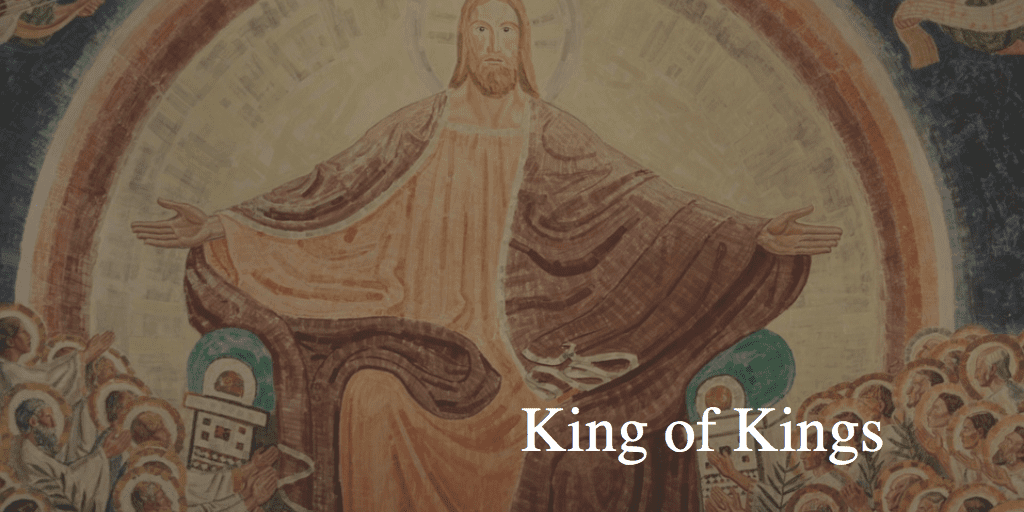
Maybe you saw this article by Michael Gerson last week in The Washington Post. It’s about Donald Trump’s upcoming meeting with 500 Evangelical Christian leaders later this month, and the promises that Trump is making to nominate conservative Supreme Court Justices in exchange for their support and turning a blind eye to the fact that he’s, well you know, Donald Trump.
Gerson clearly has no sympathy toward this meeting even happening, and makes some pretty astute theological observations about what is happening here.
Here’s how he put it in the Post:
This is a particularly clear presentation of a long-term temptation (as old as the third temptation of Christ). The emperor, or king, or president offers to further the mission of the church. The church, in turn, provides legitimacy to power.
Gerson’s observation is the point I was making last week in this post. The people of God don’t just exist to legitimize the power structures of the day, but are called to stand outside them to be able to offer critique and a vision of alternative society.
But what I found particularly interesting about the Gerson’s article was the title: “Evangelicals Must Not Bear the Mark of Trump”
This is, of course, a not too subtle allusion to the Apocalyptic literature of Revelation. And I think Gerson is right to use it here.
Let me explain.
When I was first starting full time ministry, my wife and I were mentoring a handful of young adults just a few years younger than us. We met a couple of times a week to pray and talk through life together, it was one of those things that you take for granted but realize later what a holy moment you are being prepared for.
After about a year of ministry, we got a call from one of these young adults. They had just found out that their father had been cheating on their mother…a lot. He had thrown away a marriage of 25+ years for a few passing moments.
Paul says the wages of sin are death, and it was in the next few hours that I got a glimpse into what that meant.
I remember vividly sitting in a room with this little betrayed family, hearing the kind of moans that can only come by the worst kinds of hurt. I remember the confusion and pain and anger that came over the next days and weeks. And I remember thinking about how much more sense Scripture was making in light of all this.
Sin as Adultery
The way that Bible primarily talks about sin is quite different than the way most Christians in the West talk about it.
We use metaphors like gulfs and bridges, but the Bible doesn’t talk about sin in terms of location as much as it talks about sin in terms of covenant. That is, sin, for the people of God, is like adultery.
In fact, some of the most provocative language in the entire Bible is from the prophets trying to make sure we know just how seriously God sees this, and how offensive our adultery really is.
Which brings me to the book of Revelation, one of the most damning things that Jesus says to the churches in Revelation was that they had forgotten their first love.
Think about those churches receiving this letter with a word from the LORD. I imagine that from the outside looking in, they were successful, faithful churches. Maybe they were growing and had just the right vision statement and mission. Maybe they were doing and saying all the right things, but had just forgotten who they were doing it for.
So it’s no surprise when Revelation begins to wind down (chapter 17) that John’s vision starts to come back to this theme. Only this time it’s not the churches John is talking about. It’s the nations.
Actually, he’s talking about the Whore of Babylon. Using just as provocative language as Ezekiel, John is going to call this nation…this idea…a prostitute who is searching out those who might be seduced.
And this metaphor is interesting for several reasons.
One is because the nature of a prostitute is a parody of a much deeper reality. Don’t want real intimacy but want to be close? Go to a prostitute. Want to feel loved and significant, even while you know it’s extremely shallow? Go to a prostitute.
But the other reason it’s interesting is that this entire book is written to the churches. The people who follow the Lamb. And John is telling them that the Whore of Babylon is on the prowl, trying to seduce them away from the first love.
And in many cases she is being quite successful.
The Wine of Babylon
So it’s an election year. And along with that comes a lot of highly charged emotions and goals for Jesus people all across the country. We have all these hopes and dreams for the country we live in and we have an opportunity to speak our mind and vote our conscience. That is one of the great things about America in particular, what we think actually matters.
However, over the course of the past few years, Americans have gotten increasingly uncivil with one other. We are angry, and sometimes hostile, often with other people who are also followers of Jesus.
In the words of John, “the people of the earth have been intoxicated by her wine…”
It’s no secret that the younger generations are walking away from churches, or that the #1 reason is because they see churches as overtly political.
The political narrative has so captured many Christians imagination that it is impossible to have conversations that our news stations have not already framed for us.
What’s interesting about Revelation 17 (and in fact, so much of Revelation) is that the Whore is not just some promiscuous person in Babylon. The Whore is Babylon.
Actually It’s Rome, and Rome was the greatest nation the world had known up until that time. And that was part of the problem. It’s really easy to fall in love with the kingdoms that we can see over the One we can’t. And it doesn’t mean that these kingdoms don’t have a lot of great things to offer. After all, no one has an affair with someone they aren’t attracted to. But it can’t be our first love.
So here are a couple of questions for Jesus people this year: Do we find ourselves getting mad at social issues that we have very little control over? Do we find ourselves passionately aligned against other Jesus followers about political issues in ways that place the issue as ultimate and our mutual confession of Jesus as Lord as penultimate?
Too often we try to get out of the American political system what it can’t give us.
We try to get the Kingdom of God…The world the way God intended it, with justice and mercy for all. We try to bring the Shalom of Heaven, the Reign of God through the reign of political figures.
Eugene Peterson says about Revelation is a book in which the Gospel is political, but in a way in which no one would ever expect.
Revelation obviously isn’t saying (and I’m not either) that your left or right politics are wrong, it’s not saying you shouldn’t care about the issues that you care about. It’s saying never confuse your dreams for the kingdoms of earth with the unshakable, unstoppable Kingdom of God.
Revelation says that an affair.
So It’s time to stop dating around.
It’s time to remember our first love.
Image from Buffer with author modifications
Previous Post
June 3, 2016
Church Work: Friday is Family Day
Next Post

June 8, 2016 The Elephant in the Church
Browse Our Archives
Select a Category Uncategorized
Select a Month July 2018 June 2018 May 2018 April 2018 March 2018 February 2018 January 2018 December 2017 November 2017 October 2017 September 2017 August 2017 July 2017 June 2017 May 2017 April 2017 March 2017 February 2017 January 2017 December 2016 November 2016 October 2016 September 2016 August 2016 July 2016 June 2016 May 2016 April 2016
Follow Us!
TAKE THE
Religious Wisdom Quiz
Who saw a vision of wheels within wheels by the Kebar River?
Select your answer to see how you score.
Jonah Daniel Ezekiel Micah
Related posts from Jonathan Storment

Leaving Highland: Generationally Generous

Stranger God: To Whom Honor is Due

Stranger God: Wearing Evil and Touching Lepers

TRENDING AT PATHEOS Evangelical

The REST of Your Life: A Creative Wrestles...
This week I had a conversation with a good friend from church....

How the author of the world's best hymn...
I've been working with John Newton for a while now. This makes...

Long before this Lectio Divina, Psalm 130 - the song - started...

What About the Trees? Another Living Parable
After I finished writing the last article about falling leaves as a...

Why Classical Education Is a Conversation, Not a...
Come and Read: Joy in Classical Education When I was a little...

Cornell University has received a great deal of negative publicity and intense...
view all Evangelical blogs
Ad-Free & Subscriber Log-In Subscription Support
- About Us
- 2026 Calendar
- Videos
- Podcasts
- Library of World Religions
- Faith In Media Tracker
- Advertise With Us
- Write for Us
- Privacy Policy
- Terms of Service
- Do Not Sell My Data
- Contact Us
- Radiant Digital
- Manage Newsletter Subscriptions
- Unsubscribe From Notifications
- Sitemap
Copyright 2008-2026, Patheos. All rights reserved.
Subscription Support Ad-Free & Subscriber Log-In
Follow Patheos