
BuddhistCatholicContemplativeEvangelicalGeneral ChristianHinduJewishLatter-day SaintMuslimNew VisionsProgressive Christian
Beliefs
- Buddhist
- Catholic
- Contemplative
- Evangelical
- General Christian
- Hindu
- Jewish
- Latter-day Saint
- More Voices
- Muslim
- New Visions
- Pagan
- Progressive Christian
Topics
- Religion News
- Food and Religion
- Sports and Religion
- Religious Art
- Religious Music and Entertainment
- Religious Events
- History and Religion
- Style and Religion
- Politics and Religion
- Women in Religion
- Recreation Outdoors and Religion
- Business Finance and Religion
- Careers Workplace and Religion
- Education and Religion
- Family Parenting and Religion
- Health Fitness and Religion
- Home and Religion
- Relationships and Religion
- Technology and Religion
- Travel and Religion
Columnists
- Buddhist Columnists
- Business Finance and Religion Columnists
- Careers Workplace and Religion Columnists
- Catholic Columnists
- Contemplative Columnists
- Education and Religion Columnists
- Evangelists Columnists
- Family Parenting and Religion Columnists
- General Christian Columnists
- Health Fitness and Religion Columnists
- Hindu Columnists
- History and Religion Columnists
- Home and Religion Columnists
- Jewish Columnists
- More Voices Columnists
- Latter Day Columnists
- Muslim Columnists
- New Visions Columnists
- Nonreligious Columnists
- Pagan Columnists
- Politics and Religion Columnists
- Progressive Columnists
- Recreation Outdoors and Religion Columnists
- Relationships and Religion Columnists
- Religion News Columnists
- Religious Art Columnists
- Religious Events Columnists
- Religious Music and Entertainment Columnists
- Sports and Religion Columnists
- Style and Religion Columnists
- Technology and Religion Columnists
- Travel and Religion Columnists
- Women in Religion Columnists
Resource Library
- 2026 Calendar
- Library of World Religions
- The 100 Most Holy Places on Earth
- Patheos Answers
- Podcasts
- Videos
- Faith Leaders Database
- Anglican Episcopalian
- Bahai
- Baptist
- Buddhism
- Christianity
- Confucianism
- Eastern Orthodoxy
- Hinduism
- Holiness and Pentecostal
- ISKCON
- Islam
- Judaism
- Lutheran
- Methodist
- The Church of Jesus Christ of Latter-day Saints
- New Age
- Paganism
- Presbytarian and Reformed
- Protestantism
- Religion Behind the Scenes
- Roman Catholic
- Scientology
- Shia Islam
- Sikhism
- Sufism
- Sunni Islam
- Taoism
- Zen
- See all religions
Research Tools
 Ad-Free & Subscriber Log-In Subscription Support
Follow Patheos 

- Trending:
- Advent
- |
- Forgiveness
- |
- Thanksgiving
- |
- Election
- |
- Seasonal Holidays
- |
- Marriage

- Home
- Pagan
- What Makes A Good Ritualist?
What Makes A Good Ritualist?
Last updated on: March 8, 2026 at 3:00 am by John Beckett
What Makes A Good Ritualist? 2026-03-06T20:09:49-06:00 John Beckett
Patheos Explore the world's faith through different perspectives on religion and spirituality! Patheos has the views of the prevalent religions and spiritualities of the world.
This past week I talked with Serena Saint-Sinclair for her Beneath the Bloom podcast (the episode will be out in early April – I’ll share it as soon as it’s available). At one point we got to talking about rituals and ritualists, and then after it was over Serena e-mailed me and asked “what makes a good ritualist?”
I gave her a quick answer, but I also let her know that answering fully would probably take a blog post. As ritual is important to most of us as Pagans (and as humans), I think it’s worth diving deeper into the subject.
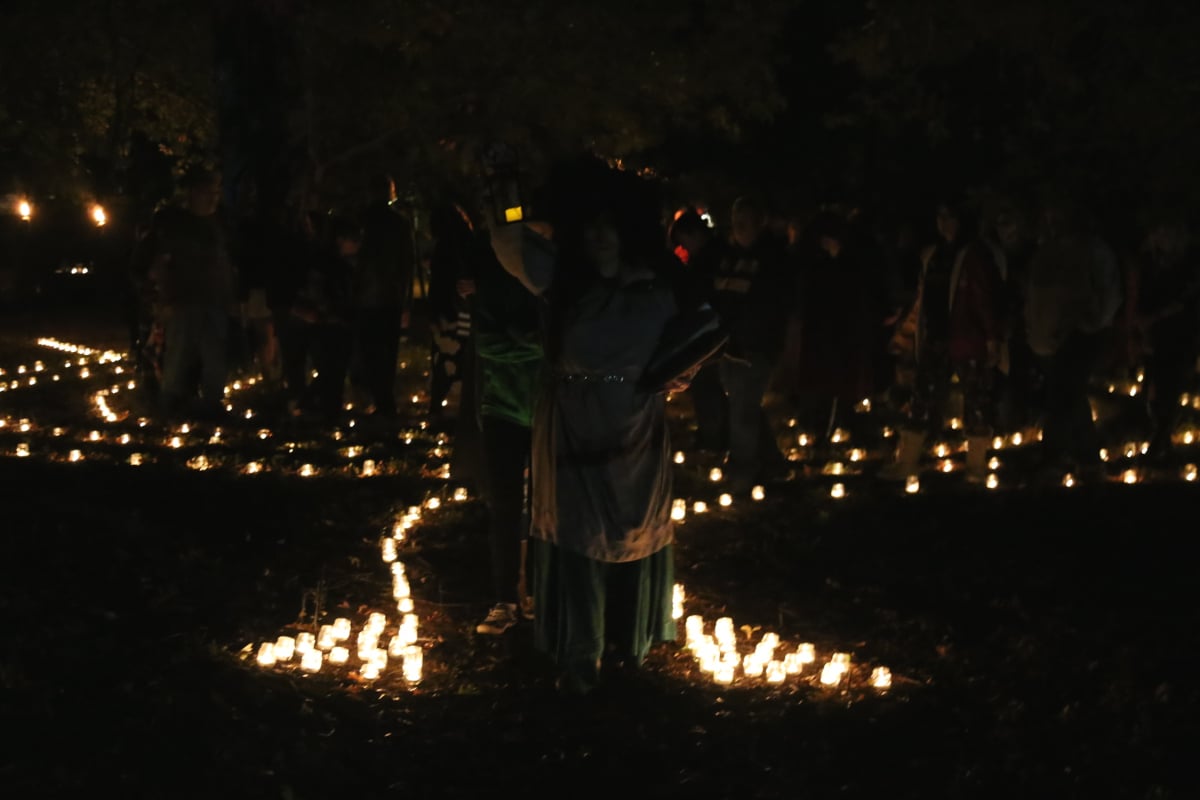
Cynthia Talbot leading the procession through the Spiral Labyrinth in 2019, a ritual she and I created and led together.
Ritual? Ceremony? Ritualist?
We need to start with some basic definitions. Some people prefer “ritual” and some prefer “ceremony” – we need to not get hung up with dictionary definitions.
Rituals and ceremonies are the formal and symbolic activities we do to create change and/or commemorate an event, and in doing so form and maintain relationships and identities. Our high day rituals bring us together as a community and remind us what it means to be Pagans.
In common usage “ritual” has a stronger and often darker connotation – sometimes literally. Ceremonies are day things – rituals are done at night. We say wedding ceremony but exorcism ritual. In practice, though, the two words are largely interchangeable.
A ritualist is a person who composes, plans, and leads ritual. In some traditions, they’re the High Priestess or the Chief Druid. In others, they’re the person responsible for coordinating the upcoming event. They may be the person front and center leading the liturgy, or they may just be the planner and organizer who takes a small part and shares the bulk of the ritual work with others.
I’ve always been intrigued by ritual
One of the many things I missed growing up in a small fundamentalist church was the lack of ritual. The few rituals they had were watered down to avoid appearing “too Catholic.” I was fortunate to join a college fraternity with a very good initiation ritual. It’s inspired by Freemasonry – beyond that I can say no more.
As a Pagan, I’ve put a lot of work into creating and presenting rituals. I’ve been honored to lead rituals at conventions and gatherings around the country. I’ve participated in some excellent rituals led by others – I’ve tried to learn from them. And I’ve participated in some truly bad rituals – I’ve learned from those as well.
Based on all that, here’s what I think it takes to make a good ritualist.
A good ritualist loves ritual
When an actor gives an uninspired performance, we say they’re “phoning it in.” The part didn’t really matter to them, so they did the bare minimum.
We sometimes see the same thing with ritual. And not just with the presentation but also with the composition and planning. You don’t have to compose something completely new for every event. Nor should you – one of the meanings of “ritual” is “convention” or “habit.” Using common elements in every ritual leads to familiarity and a sense of cohesion. But using the same quarter calls every time because you like them is one thing – doing the same main working over and over again gets old.
And also, you can see who’s put in the preparation to get things right and who threw a script in a binder and is working through it for the first time.
You don’t have to have the near-obsession I have with ritual to be a good ritualist. You do have to care about what you’re doing. It has to be important to you.
A desire to facilitate religious experiences
Many of us grew up in churches where religion was a passive thing. You come in and sit down, listen to some music, maybe join in a reading or a common prayer (or maybe not even that), listen to a sermon, and then go home. The architecture of many contemporary non-denominational churches emphasizes being part of an audience, not part of a congregation.
Good religion – especially good Pagan religion – is an experiential thing. We don’t just hear someone talking about our Gods. We talk to them and listen for them and we feel their presence. We don’t just sit quietly (or worse, stand in place the whole time) we move our bodies. Paganism is a sensual religion – it’s something we experience with all our senses.
A good ritualist helps people have religious experiences. We can’t command the Gods and spirits and we can’t make people see and feel what they aren’t willing to see and feel. But we can create an atmosphere that makes it more likely people can have a spiritual experience. We can plan and lead participative elements that help people do and feel instead of just sitting and listening.
A good ritualist isn’t interested in making themselves look and sound important. A good ritualist is interested in facilitating religious and spiritual experiences in others.
A desire to form and maintain relationships
We can get so caught up the “what” and the “how” that we forget the “why.”
Ultimately, ritual is about relationships: between the participants and their Gods and ancestors, the spirits of the land where they are, and their virtues, values, and traditions. And it’s about the relationships between the participants. Each occurrence, each presentation of a ritual is at least subtly different. Everyone in attendance will share an experience that no one else will ever have, even if they participate in the same liturgy over and over again.
Good ritualists know how to form, maintain, and strengthen relationships on multiple levels.
An understanding of ritual themes and elements
So far we’ve talked about love and desire – two very important things. But a good ritualist doesn’t just want to do a good job, they know how to do a good job.
Does your tradition have a standard liturgy? Know it inside and out. What are the necessary elements? What do they do? How do they combine to become one complete ritual and not just a bunch of elements thrown together?
What are the themes of your holy days? A Beltane ritual is different from a Samhain ritual, and both are different from a Winter Solstice ritual. A ritual honoring Brighid may have many or even all of the same elements as a ritual honoring the Morrigan, but they will look and feel different.
Good ritualists are familiar with the myths their rituals commemorate and/or re-enact. The best ritualists know the stories in depth, because they’ve read them, studied them, discussed them, meditated on them, and contemplated them over and over again.
An understanding of what works and what doesn’t
It’s one thing to understand why we call the spirits of the elements and directions to begin a ritual. It’s another thing to know which quarter calls will be effective in ritually re-creating the universe and which ones are pleasant rhymes but nothing more. Which decorations create an otherworldly atmosphere and which ones remind you of a Halloween party?
A good ritualist knows the principles of magic. They know how to raise and direct energy… and they know that the techniques that work for 13 may not work for 30 and definitely won’t work for 100.
A commitment to presentation
Temples were our first theaters. Priestcraft and stagecraft share many similarities.
I’m glad to see this piece by UU minister Rev. Victoria Weinstein is still up after 17 years. It’s titled Serving Dionysus and it’s about the holiness of the theater. Rev. Weinstein says “a faithful Catholic will attend Mass to receive the Eucharist no matter how inept or unenergetic the parish priest. Patrons of the performing arts, however, tolerate no such sloppiness.”
You can put most Pagans safely in the “patrons of the performing arts” section.
I’m not a natural public speaker. I have some talent for writing, but when it comes to speaking everything you hear is the result of years of deliberate practice. I got started because my desire to lead ritual was greater than my fear of public speaking.
In 2020 – when most of us were doing our rituals online – I wrote Speaking Effectively In Ritual. I encourage you to read the whole thing, but the key points are:
- Better to read well than to memorize poorly
- Don’t just read – perform
- Speak slowly and loudly
- Practice the ritual
The best ritualists aren’t just good writers and directors. They’re also good presenters.
A willingness to do the necessary work
A good ritual is a lot of work. Research, composition, stage directions, logistics, rehearsal, setup, presentation, and the important conversations that come after it’s all over. And then taking down everything you set up. That’s on top of all the skill-building discussed above. You can’t just show up, read your lines, and go home.
The best ritualists do the necessary work, because they know it’s worth it.
The best ritualists I know
This isn’t a ranking. I’m sure I’m overlooking a few people I know and a bunch of people I wish I knew. But when someone asks “who are the best ritualists you know?” this my answer.
Ivo Dominguez, Jr. I haven’t been to a lot of Ivo’s rituals, but the ones I have attended have been amazing. They’re big and powerful. They have a clear purpose, an effective plan, and an attention to detail unlike anything I’ve seen elsewhere, including my own rituals.
Ivo would tell you that if his rituals are great, its because he has many skilled and effective co-leaders. That wouldn’t be false modesty – he does. But most of those co-leaders learned from him, and he set the standard they meet.
Kristoffer Hughes. I’ve seen Kris take a basic seasonal celebration and make it something deeply meaningful for everyone. I’ve seen him invoke Cerridwen in a hotel ballroom and looked around as everyone experienced her presence. I’ve seen him take a part in a standard Druid ritual – a part I’ve done myself on other occasions – and transport people between the worlds.
Kris is a professional actor and it shows. But more importantly, he’s intimately familiar with the myths and the persons he’s presenting. When he leads ritual he isn’t acting. He’s using his acting skills to serve a sacred purpose.
Jason Mankey. Most of Jason’s rituals I’ve seen have been at conventions and gatherings where he had no temple, no decorations, no props, and no co-leaders. It was just Jason and an outline, that may or may not have been written down. And people still walked away feeling like they had experienced something sacred and magical, because Jason knows how to do witchcraft.
I’m still trying to figure out how to adapt his methods to my style of rituals.
Cynthia Talbot. When Katrina Rasbold wrote “The New Vanguard: 10 Pagan Voices Shaping Our Future” for Green Egg Magazine, I saw a few people complain that the list was all authors and that it ignored people doing good and necessary work at the local level. That’s mainly because Katrina and others have no way of knowing who’s doing good and necessary work at a local level that isn’t their own.
Cynthia Talbot does good and necessary work in Denton, Texas, and occasionally beyond. She isn’t well-known because she doesn’t write books or post on Instagram or TikTok. But she’s one of the best ritualists I know, and I’ve been honored to work with her for the past 18 years. Her rituals are grounded in the love of the Gods and the understanding that effective witchcraft means getting your hands dirty.
She does a pretty good job with UU Sunday Services too.
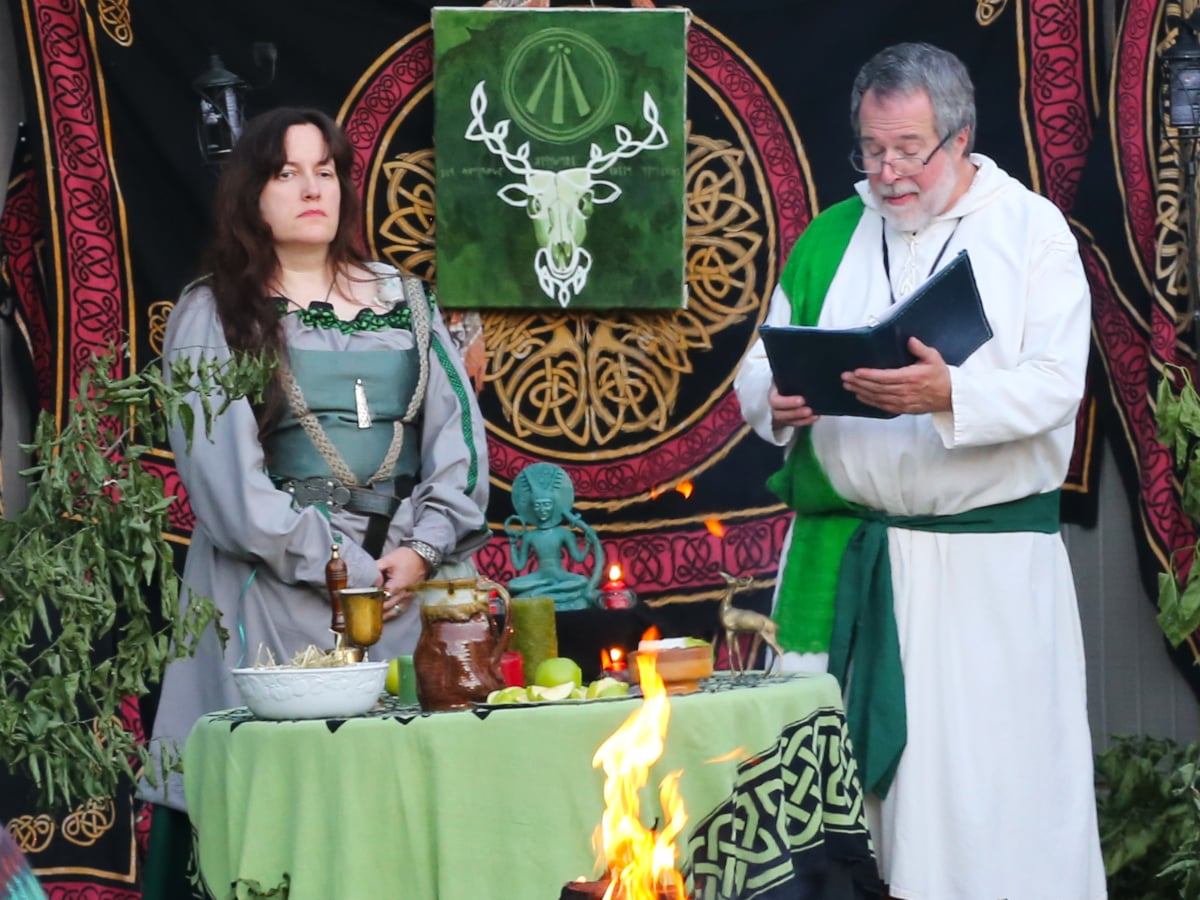
Cyn and I leading Beltane 2017. We were younger then.
For further reading
A Ritual of Resistance and Alliance (July 2025)
We’re Pagans – We Do Ritual (March 2024)
The Evolution of My Pagan Ritual Liturgy (May 2020)
8 Essential Elements of Good Pagan Ritual (October 2019)
“I Didn’t Expect It To Be So Real” – The Power of Good Public Rituals (May 2019)
Previous Post

March 1, 2026
Proto: How One Ancient Language Went Global
Next Post

March 15, 2026 Sometimes You Just Have To Trust Yourself
Recent Comments
"The filter idea also makes me wonder how much of what we carry into this ..."
A Modern Pagan Case For Reincarnation
"Thank you for this thoughtful piece. What resonates with me is the idea that consciousness ..."
A Modern Pagan Case For Reincarnation
"If you have access to Facebook you might find my analysis of the Trump movement ..."
Paganism In An Era Of Christian ..."
"Halloween is so popular because of about 5% pagan influence, and 95% because horror and ..."
Why Halloween Is So Popular – ..."
Browse Our Archives
Select a Category Books Community CUUPS Druidry Foundations and Context Gods and Goddesses Magic Myth Nature Ritual Spiritual Practice Theology Travel Uncategorized Videos
Select a Month November 2026 October 2026 September 2026 August 2026 July 2026 June 2026 May 2026 April 2026 March 2026 February 2026 January 2026 December 2025 November 2025 October 2025 September 2025 August 2025 July 2025 June 2025 May 2025 April 2025 March 2025 February 2025 January 2025 December 2024 November 2024 October 2024 September 2024 August 2024 July 2024 June 2024 May 2024 April 2024 March 2024 February 2024 January 2024 December 2023 November 2023 October 2023 September 2023 August 2023 July 2023 June 2023 May 2023 April 2023 March 2023 February 2023 January 2023 December 2022 November 2022 October 2022 September 2022 August 2022 July 2022 June 2022 May 2022 April 2022 March 2022 February 2022 January 2022 December 2021 November 2021 October 2021 September 2021 August 2021 July 2021 June 2021 May 2021 April 2021 March 2021 February 2021 January 2021 December 2020 November 2020 October 2020 September 2020 August 2020 July 2020 June 2020 May 2020 April 2020 March 2020 February 2020 January 2020 December 2019 November 2019 October 2019 September 2019 August 2019 July 2019 June 2019 May 2019 April 2019 March 2019 February 2019 January 2019 December 2018 November 2018 October 2018 September 2018 August 2018 July 2018 June 2018 May 2018 April 2018 March 2018 February 2018 January 2018 December 2017 November 2017 October 2017 September 2017 August 2017 July 2017 June 2017 May 2017 April 2017 March 2017 February 2017 January 2017 December 2016 November 2016 October 2016 September 2016 August 2016 July 2016 June 2016 May 2016 April 2016 March 2016 February 2016 January 2016 December 2015 November 2015 October 2015 September 2015 August 2015 July 2015 June 2015 May 2015 April 2015 March 2015 February 2015 January 2015 December 2014 November 2014 October 2014 September 2014 August 2014 July 2014 June 2014 May 2014 April 2014 March 2014 February 2014 January 2014 December 2013 November 2013 October 2013 September 2013 August 2013 July 2013 June 2013 May 2013 April 2013 March 2013 February 2013 January 2013 December 2012 November 2012 October 2012 September 2012 August 2012 July 2012 June 2012 May 2012 April 2012 March 2012 February 2012 January 2012 December 2011 November 2011 October 2011 September 2011 August 2011 July 2011 June 2011 May 2011 April 2011 March 2011 February 2011 January 2011 December 2010 November 2010 October 2010 September 2010 August 2010 July 2010 June 2010 May 2010 April 2010 March 2010 February 2010 January 2010 December 2009 November 2009 October 2009 September 2009 August 2009 July 2009 June 2009 May 2009 April 2009 March 2009 February 2009 January 2009 December 2008 November 2008 October 2008 September 2008 August 2008 July 2008 June 2008
Follow Us!
TAKE THE
Religious Wisdom Quiz
I worked with a trowel in one hand and a weapon in the other, ready to build and fight. Who am I?
Select your answer to see how you score.
The Priests The builders The servants The Tribe of Judah
Related posts from John Beckett

Pagans And The Rise Of The Religious Left

Why Halloween Is So Popular – And So...
The Pillar of the Boatmen: the Ancient Monument...
TRENDING AT PATHEOS Pagan

How to Have Financial Transparency in Marriage
Despite the fact that financial issues and money problems are the number...
The Healing Power of Forgiveness in Marriage
Learning how to give and accept apologies are essential ingredients of a...

The West's Christian Moral Inheritance: A Legacy Denied
Whether we like it or not, our environment matters, shaping us both...

How Does Tôḏâ Connect Florida & Thanksgiving?
The big news this weekend has been about the continued flooding on...

Were Early Christians Drinking Psychedelic Wine?
The Secret Sacrament the Church Took Away The early Christian church was...

As we in the United States approach the national Thanksgiving holiday...
view all Pagan blogs
What Are Your Thoughts?leave a comment
Ad-Free & Subscriber Log-In Subscription Support
- About Us
- 2026 Calendar
- Videos
- Podcasts
- Library of World Religions
- Faith In Media Tracker
- Advertise With Us
- Write for Us
- Privacy Policy
- Terms of Service
- Do Not Sell My Data
- Contact Us
- Radiant Digital
- Manage Newsletter Subscriptions
- Unsubscribe From Notifications
- Sitemap
Copyright 2008-2026, Patheos. All rights reserved.
Subscription Support Ad-Free & Subscriber Log-In
Follow Patheos