
BuddhistCatholicContemplativeEvangelicalGeneral ChristianHinduJewishLatter-day SaintMuslimNew VisionsProgressive Christian
Beliefs
- Buddhist
- Catholic
- Contemplative
- Evangelical
- General Christian
- Hindu
- Jewish
- Latter-day Saint
- More Voices
- Muslim
- New Visions
- Pagan
- Progressive Christian
Topics
- Religion News
- Food and Religion
- Sports and Religion
- Religious Art
- Religious Music and Entertainment
- Religious Events
- History and Religion
- Style and Religion
- Politics and Religion
- Women in Religion
- Recreation Outdoors and Religion
- Business Finance and Religion
- Careers Workplace and Religion
- Education and Religion
- Family Parenting and Religion
- Health Fitness and Religion
- Home and Religion
- Relationships and Religion
- Technology and Religion
- Travel and Religion
Columnists
- Buddhist Columnists
- Business Finance and Religion Columnists
- Careers Workplace and Religion Columnists
- Catholic Columnists
- Contemplative Columnists
- Education and Religion Columnists
- Evangelists Columnists
- Family Parenting and Religion Columnists
- General Christian Columnists
- Health Fitness and Religion Columnists
- Hindu Columnists
- History and Religion Columnists
- Home and Religion Columnists
- Jewish Columnists
- More Voices Columnists
- Latter Day Columnists
- Muslim Columnists
- New Visions Columnists
- Nonreligious Columnists
- Pagan Columnists
- Politics and Religion Columnists
- Progressive Columnists
- Recreation Outdoors and Religion Columnists
- Relationships and Religion Columnists
- Religion News Columnists
- Religious Art Columnists
- Religious Events Columnists
- Religious Music and Entertainment Columnists
- Sports and Religion Columnists
- Style and Religion Columnists
- Technology and Religion Columnists
- Travel and Religion Columnists
- Women in Religion Columnists
Resource Library
- 2026 Calendar
- Library of World Religions
- The 100 Most Holy Places on Earth
- Patheos Answers
- Podcasts
- Videos
- Faith Leaders Database
- Anglican Episcopalian
- Bahai
- Baptist
- Buddhism
- Christianity
- Confucianism
- Eastern Orthodoxy
- Hinduism
- Holiness and Pentecostal
- ISKCON
- Islam
- Judaism
- Lutheran
- Methodist
- The Church of Jesus Christ of Latter-day Saints
- New Age
- Paganism
- Presbytarian and Reformed
- Protestantism
- Religion Behind the Scenes
- Roman Catholic
- Scientology
- Shia Islam
- Sikhism
- Sufism
- Sunni Islam
- Taoism
- Zen
- See all religions
Research Tools
 Ad-Free & Subscriber Log-In Subscription Support
Ad-Free & Subscriber Log-In Subscription Support
Follow Patheos 

- Trending:
- Forgiveness
- |
- Marriage
- |
- Consciousness
- |
- Death Penalty
- |
- Election
- |
- Halloween

- Home
- Pagan
- Religious Experience – How We Know What We Know
Religious Experience – How We Know What We Know
Last updated on: July 10, 2024 at 3:00 am by John Beckett
Religious Experience – How We Know What We Know 2024-07-08T18:05:21-06:00 John Beckett
Patheos Explore the world's faith through different perspectives on religion and spirituality! Patheos has the views of the prevalent religions and spiritualities of the world.
After I reviewed Evangelical blogger Anthony Costello’s new short book The Return of Paganism, Anthony responded on his own blog. His response was polite and mostly fair. While I’ve made some comments in an attempt to clarify some of my positions, I haven’t written a full rebuttal, and I’m not likely to do so. We’re already to the point where we have insufficient common ground for an on-going dialogue.
I do want to use one of his responses as a jumping off point for something I think is relevant for all of us – Pagan, Christian, or those on any religious or spiritual path. That’s the role of religious experience in epistemology – how we know what we know.
In his book, Anthony quotes from Handbook of Contemporary Paganism, an academic book from 2009 (that’s priced like an academic book, unfortunately). He relays a story recorded by anthropologist Susan Greenwood of Jo Crow, who participated in an ecstatic event called the “Wild Hunt Challenge” in England. Here is Jo Crow’s story:
Wolf came inside me. It was terrifying. He was right in my face, standing on his hind legs staring at me face to face . . . I smelt his breath; his fangs were dripping. He was going to devour me. He said, “You have to let me in. You let me in once before.” On another occasion, in a dream I had mated with wolf on a village green. It was an ecstatic and wonderful experience. He showed me this dream and, although I was quivering with terror, I allowed him in. He came behind me and went into me at the base of my neck. I became filled with wolf and went on the Hunt. I ran with the Wild Hunt and I went on the rampage. I was taken by the Hunt.
When I came off the downs, one guy could see that I was not out of wolf and tried to bring me back. He joined his forehead to mine to try to call me back but wolf came out of me and almost bit his head off. Eventually I went to bed and I still had wolf in me and every time I looked in a mirror I saw wolf. I still had wolf inside me and came back down later. Sometimes he comes as a companion but does not sit inside me. Wolf helps me to walk in two worlds.
After relaying the story, Anthony said:
I will let the reader discern for themselves whether they think experiences of this sort are: a) a rational way of knowing whether something is true, and b) whether or not it is even good to pursue such experiences, especially given what we know about the cognitive structures of the mind, and the fragile nature of our mental health.
The questions Anthony asks are fair. But the context in which they’re presented leads toward a presumed answer.
I’m going to come back to Anthony’s questions. But first, we need to examine the wider topic of religious experiences and what we do with them.
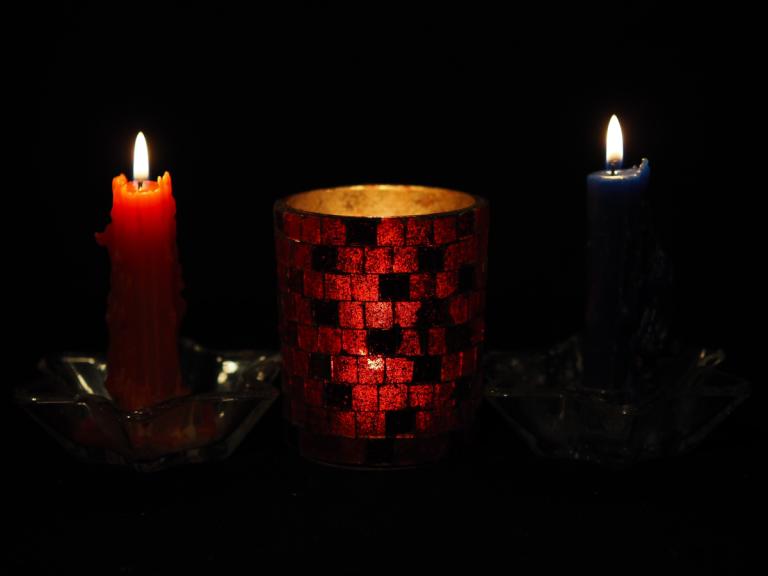
All religions began with religious experience
All religions began somewhere. Some – those called “revealed” religions – have a specific origin point. An angel spoke to Muhammed and Islam began. The Buddha sat under the Bodhi Tree until he received enlightenment and Buddhism began. Wicca has no single moment of birth but it clearly began with the work of Gerald Gardner.
Christianity isn’t quite so clear, but it still has an origin. Some say it began with the teachings of Jesus. Others say it began with the death and resurrection of Jesus. I sometimes say Christianity began with the mystical experience of Saul of Tarsus on the road to Damascus. Whether these events are historical or mythical is unimportant to us here, even if many Christians consider them of ultimate importance. What’s important to us in this post is that Christianity has an origin. All of these varied and diverse religions began with someone’s experience of something greater than themselves.
Other religions are “organic” religions. They’re the product of thousands of years of life among a particular group of people. Virtually all indigenous religions are organic. So is Hinduism, which is the modern expression of the indigenous religions of India. These religions are so old and have so many sources it is impossible to say exactly where they began. They’re the product of many people having many religious experiences over many years.
Some people object to comparing the foundational events of major world religions to someone they’ve never heard of experiencing Wolf in a facilitated event in the contemporary West. I get it – foundational events are sacred stories. But at their core, these events are very, very similar. Someone had a spiritual experience of something that overwhelmed them, and was very meaningful to them. The difference is in what came afterwards.
These things happen more often than most of us recognize. Most of them go nowhere. Some of them are life-changing for the people who have them.
And a few change the world.
Experiences are meaningless until we interpret them
“I heard this.” “I saw that.” “I felt something I’ve never felt before.” This is what a report of a religious experience looks like. It’s the record of a series of sensory inputs.
When I’ve had these experiences, or when I’ve tried to help others make sense of their experiences, the first thing I want to do is to get the raw facts down on paper, before the memories start to fade.
Perhaps that really was the Morrigan talking to me. Perhaps it was another human conversation I could barely hear. Perhaps it was my own imagination. What is objectively true is that I heard something, felt something, experienced something.
Then I had to figure out what it meant.
That’s where the real work begins.
Interpretation requires context
A Pagan, a Christian, and an atheist can have the same experience at the same time and they will interpret them in different ways, because they have different fundamental assumptions about the world and the way it works.
And being “rational” doesn’t mean we default to the atheist’s viewpoint.
Are there many Gods, one God, or no Gods? Do spirits come and go, are they limited to one or two places, or are there no such things as spirits? It’s important that we understand our own foundational assumptions, that we make sure they’re reasonable and helpful, and that they’re what we believe is most likely true and not just what we’ve always been told is true.
Here’s the question at hand: is religious experience one way of knowing (not the only way and perhaps not even the best way, but one way) or is it simply someone’s imagination running wild?
The Protestant, Evangelical, and especially Calvinist Christianity that grew out of the Reformation devalued first-hand religious experience and placed the written word at the top of epistemology. It assumes that your experience is unlikely to be real and may be dangerous, especially if it contradicts a sacred text… which, of course, is simply the written record of someone else’s experiences.
But for most people throughout most of the world throughout most of history, first-hand experience has been appreciated and even treasured.
For some of us, it still is.
Discernment is always necessary
Which is not to say that anything goes. Interpreting our experiences always requires discernment.
We need knowledge about our own tradition, to understand what symbols and metaphors are trying to communicate, and to help us locate our experience in the context of others. We need knowledge of the human brain, to distinguish imagination from actual experience.
And then we have to do the hard work of pattern matching to figure out exactly who is speaking to us and what they’re trying to say.
It’s not easy. It’s best done in the company of other like-minded people. Those who were there can fill in where your memory may be unreliable, or when you flat-out miss something important. Those who’ve had similar experiences can tell you “yes, that sounds about right” or when necessary “I think you’re going down the wrong path.” They can’t definitively say your interpretations are right or wrong, but they can tell you what others in similar situations have done.
I was present when a Seeress was taken over by Loki. What I heard and saw as an observer very closely matched my own experiences with other deities, and my second-hand experiences when others have had them. The fact that all these experiences match gives me confidence they’re real.
Over the years, my own experiences and the experiences of others have proven to be meaningful and helpful, over and over again. So when I hear and see something that “sounds about right” I pay attention.
Back to Anthony’s questions
I want to go back to the questions Anthony Costello asked and address them directly.
He asked is this “a rational way of knowing whether something is true”? That depends on what you mean by “rational.”
If by “rational” you mean that it fits into a materialist worldview, then the answer is no. But in a materialist worldview, Saul of Tarsus’ experience of Jesus is equally invalid, as are the experiences of other foundational figures of the early Church.
But in an animist worldview where spirits are real and they can and do communicate with us, then the answer is absolutely yes. This is very rational, because it accurately and meaningfully matches cause and effect.
It doesn’t tell us the whole truth. I can’t tell you everything about the Morrigan because I’ve experienced her in ecstatic communion. Maybe I missed something. Maybe I made a mistake in my interpretation.
But these experiences give us a piece of the truth, and that’s something we can build on.
Ecstatic experience is not safe
Anthony’s second question asks “whether or not it is even good to pursue such experiences, especially given what we know about the cognitive structures of the mind, and the fragile nature of our mental health.”
Is it good? Yes, absolutely. The benefits are tremendous, and for religions as a whole (though not necessarily for all practitioners) they are essential – otherwise the religions become spiritually stagnant.
Is it safe? Absolutely not.
The Christian tradition is filled with examples of people who had ecstatic experiences and the difficulties – both spiritual and physical – those experiences caused. Saint Teresa of Avila is one of many.

“I saw in his hand a long spear of gold, and at the point there seemed to be a little fire. He appeared to me to be thrusting it at times into my heart, and to pierce my very entrails; when he drew it out, he seemed to draw them out also, and to leave me all on fire with a great love of God. The pain was so great, that it made me moan; and yet so surpassing was the sweetness of this excessive pain, that I could not wish to be rid of it.” Ecstasy of Saint Teresa by Gian Lorenzo Bernini (1647–52). Sculpture in the Cornaro chapel in Santa Maria della Vittoria in Rome. Original photo by Livioandronico2013, used under Creative Commons license via Wikimedia Commons.

Shamanic practitioners (by which I mean spirit workers in indigenous traditions, not suburban Westerners who took Michael Harner’s courses) often speak of being “unmade and remade” – usually with physical injuries and illnesses.
I’ve been OK with ecstatic experiences, but that’s not because I’m special or favored or because I’m doing it right and other people are doing it wrong. I’m simply not allowed to go too far. I’m required to keep one foot firmly in this world, so I can speak reasonably of things our materialist mainstream society considers unreasonable. But I’ve gone deep enough I know this much:
The line between ecstasy and insanity is exceedingly thin.
Do anything else if you can. But if you have to do this, nothing else will suffice.
How we know what we know
Ecstatic experience is one way of knowing, especially knowing about the Gods.
We have an experience, we interpret it, and we try to figure out what it means. We talk to others who’ve had similar experiences, we compare notes, and we see what we can learn from each other.
We compare our experience to the lore – to the stories and traditions of our ancestors. We understand that lore is the record of someone else’s experiences that have stood the test of time. They are treasures, but they are not infallible and they are certainly not intended to be read literally.
We understand that we are part of a living tradition – our Gods speak to us just as they spoke to our ancestors.
And then we take what we learn and put it into practice. Does it make our lives more meaningful – even though it may make them harder? Does it help us deal with the Big Questions of Life? Does it fit into our metaphysics – our model of the world? In short, does it work?
If it doesn’t, we drop it and we try something else.
But if it does, we keep doing it.
And slowly, step by step, we’re building a modern Pagan polytheist tradition that will do for us what the religions of our ancestors did for them.
And that’s a very good thing.
Previous Post

July 7, 2024
Courage
Next Post

July 14, 2024 The Necessity of Chaos and the Divinity of Set
Recent Comments
"Concern about the attitude of Islam toward Pagans is not limited to the Trump Administration. ..."
"Thank you for your much needed review of the Lucas Miles polemic. A key point ..."
I Read Pagan Threat So You ..."
"A number of these are also available streaming through the Kanopy digital service, carried by ..."
The Vampire Films of Jean Rollin
"Happy October!"
The Vampire Films of Jean Rollin
Browse Our Archives
Select a Category Books Community CUUPS Druidry Foundations and Context Gods and Goddesses Magic Myth Nature Ritual Spiritual Practice Theology Travel Uncategorized Videos
Select a Month October 2026 September 2026 August 2026 July 2026 June 2026 May 2026 April 2026 March 2026 February 2026 January 2026 December 2025 November 2025 October 2025 September 2025 August 2025 July 2025 June 2025 May 2025 April 2025 March 2025 February 2025 January 2025 December 2024 November 2024 October 2024 September 2024 August 2024 July 2024 June 2024 May 2024 April 2024 March 2024 February 2024 January 2024 December 2023 November 2023 October 2023 September 2023 August 2023 July 2023 June 2023 May 2023 April 2023 March 2023 February 2023 January 2023 December 2022 November 2022 October 2022 September 2022 August 2022 July 2022 June 2022 May 2022 April 2022 March 2022 February 2022 January 2022 December 2021 November 2021 October 2021 September 2021 August 2021 July 2021 June 2021 May 2021 April 2021 March 2021 February 2021 January 2021 December 2020 November 2020 October 2020 September 2020 August 2020 July 2020 June 2020 May 2020 April 2020 March 2020 February 2020 January 2020 December 2019 November 2019 October 2019 September 2019 August 2019 July 2019 June 2019 May 2019 April 2019 March 2019 February 2019 January 2019 December 2018 November 2018 October 2018 September 2018 August 2018 July 2018 June 2018 May 2018 April 2018 March 2018 February 2018 January 2018 December 2017 November 2017 October 2017 September 2017 August 2017 July 2017 June 2017 May 2017 April 2017 March 2017 February 2017 January 2017 December 2016 November 2016 October 2016 September 2016 August 2016 July 2016 June 2016 May 2016 April 2016 March 2016 February 2016 January 2016 December 2015 November 2015 October 2015 September 2015 August 2015 July 2015 June 2015 May 2015 April 2015 March 2015 February 2015 January 2015 December 2014 November 2014 October 2014 September 2014 August 2014 July 2014 June 2014 May 2014 April 2014 March 2014 February 2014 January 2014 December 2013 November 2013 October 2013 September 2013 August 2013 July 2013 June 2013 May 2013 April 2013 March 2013 February 2013 January 2013 December 2012 November 2012 October 2012 September 2012 August 2012 July 2012 June 2012 May 2012 April 2012 March 2012 February 2012 January 2012 December 2011 November 2011 October 2011 September 2011 August 2011 July 2011 June 2011 May 2011 April 2011 March 2011 February 2011 January 2011 December 2010 November 2010 October 2010 September 2010 August 2010 July 2010 June 2010 May 2010 April 2010 March 2010 February 2010 January 2010 December 2009 November 2009 October 2009 September 2009 August 2009 July 2009 June 2009 May 2009 April 2009 March 2009 February 2009 January 2009 December 2008 November 2008 October 2008 September 2008 August 2008 July 2008 June 2008
Follow Us!
TAKE THE
Religious Wisdom Quiz
How many years between David's reign and the Babylonian exile?
Select your answer to see how you score.
500 years 450 years 400 years 300 years
Related posts from John Beckett




What We Lose When “Ask AI” Becomes A...
TRENDING AT PATHEOS Pagan

The Sermon on the Mount, Part I: Matthew...
The Sermon on the Mount, Part I (Matthew 4:12-5:12) St. Matthew moves...

What's up from Crossway: Reviewing some of their latest A few weeks...

Janie Learns the Way of the Cross: A...
Teaching children about Jesus' Passion can be challenging. Many parents and educators...

Looking For Good Catholic Writing - October 2026
He alone extends the heavens, and he walks upon the waves of...

In "Irreplaceable," our book on vocation and technology, Trevor Sutton and I...

I was strolling through the top floor of the brand new Parthenon...
view all Pagan blogs
What Are Your Thoughts?leave a comment
Ad-Free & Subscriber Log-In Subscription Support
- About Us
- 2026 Calendar
- Videos
- Podcasts
- Library of World Religions
- Faith In Media Tracker
- Advertise With Us
- Write for Us
- Privacy Policy
- Terms of Service
- Do Not Sell My Data
- Contact Us
- Radiant Digital
- Manage Newsletter Subscriptions
- Unsubscribe From Notifications
- Sitemap
Copyright 2008-2026, Patheos. All rights reserved.
Subscription Support Ad-Free & Subscriber Log-In
Follow Patheos