
BuddhistCatholicContemplativeEvangelicalGeneral ChristianHinduJewishLatter-day SaintMuslimNew VisionsProgressive Christian
Beliefs
- Buddhist
- Catholic
- Contemplative
- Evangelical
- General Christian
- Hindu
- Jewish
- Latter-day Saint
- More Voices
- Muslim
- New Visions
- Pagan
- Progressive Christian
Topics
- Religion News
- Food and Religion
- Sports and Religion
- Religious Art
- Religious Music and Entertainment
- Religious Events
- History and Religion
- Style and Religion
- Politics and Religion
- Women in Religion
- Recreation Outdoors and Religion
- Business Finance and Religion
- Careers Workplace and Religion
- Education and Religion
- Family Parenting and Religion
- Health Fitness and Religion
- Home and Religion
- Relationships and Religion
- Technology and Religion
- Travel and Religion
Columnists
- Buddhist Columnists
- Business Finance and Religion Columnists
- Careers Workplace and Religion Columnists
- Catholic Columnists
- Contemplative Columnists
- Education and Religion Columnists
- Evangelists Columnists
- Family Parenting and Religion Columnists
- General Christian Columnists
- Health Fitness and Religion Columnists
- Hindu Columnists
- History and Religion Columnists
- Home and Religion Columnists
- Jewish Columnists
- More Voices Columnists
- Latter Day Columnists
- Muslim Columnists
- New Visions Columnists
- Nonreligious Columnists
- Pagan Columnists
- Politics and Religion Columnists
- Progressive Columnists
- Recreation Outdoors and Religion Columnists
- Relationships and Religion Columnists
- Religion News Columnists
- Religious Art Columnists
- Religious Events Columnists
- Religious Music and Entertainment Columnists
- Sports and Religion Columnists
- Style and Religion Columnists
- Technology and Religion Columnists
- Travel and Religion Columnists
- Women in Religion Columnists
Resource Library
- 2026 Calendar
- Library of World Religions
- The 100 Most Holy Places on Earth
- Patheos Answers
- Podcasts
- Videos
- Faith Leaders Database
- Anglican Episcopalian
- Bahai
- Baptist
- Buddhism
- Christianity
- Confucianism
- Eastern Orthodoxy
- Hinduism
- Holiness and Pentecostal
- ISKCON
- Islam
- Judaism
- Lutheran
- Methodist
- The Church of Jesus Christ of Latter-day Saints
- New Age
- Paganism
- Presbytarian and Reformed
- Protestantism
- Religion Behind the Scenes
- Roman Catholic
- Scientology
- Shia Islam
- Sikhism
- Sufism
- Sunni Islam
- Taoism
- Zen
- See all religions
Research Tools
 Ad-Free & Subscriber Log-In Subscription Support
Follow Patheos 

- Trending:
- Advent
- |
- Forgiveness
- |
- Thanksgiving
- |
- Election
- |
- Seasonal Holidays
- |
- Marriage

- Home
- Pagan
- History and Religion
- An Epistemology of the Many Gods
An Epistemology of the Many Gods
Last updated on: December 11, 2023 at 3:00 am by John Beckett
An Epistemology of the Many Gods 2023-12-10T16:01:52-06:00 John Beckett
Patheos Explore the world's faith through different perspectives on religion and spirituality! Patheos has the views of the prevalent religions and spiritualities of the world.
Last week I came across a fundamentalist Christian leader who said that if the Bible isn’t inerrant and infallible (historically true and not just mythologically true, among other things) then Christians “know basically nothing” about their God.
What an unhelpful line of thinking.
On one hand, what Christians do or don’t believe is not my business. On the other hand, Christianity – especially Protestant Christianity with its doctrine of Sola Scriptura – is still the 800 pound gorilla in Western culture. This line of thinking often bleeds over into other religions and cultures, including our own Paganism and polytheism.
Epistemology is the branch of philosophy that deals with the question of how we know what we know. What is true and what is false, what is more likely and what is less likely, and how we can be confident that what we believe is, if not certainly true, at least reasonable. Epistemology is one of the starting points for building a robust metaphysics, our foundational assumptions about the world and how it works.
So rather than rebutting this particular fundamentalist and getting into theological details that don’t concern us, I’d rather use his words as motivation to engage in Pagan and polytheist epistemology.
How do we know what we know – what we think we know – about the many Gods?

Danu and Cernunnos. They have little or no lore, but that hasn’t stopped some of us from learning about Them.
A conclave of cats
Humans discussing the nature of the Gods is like a conclave of cats discussing the nature of humans. It wouldn’t be totally worthless. Cats are intelligent, and they’ve lived with humans long enough to know a few things about us. But at the end of the day, the proceedings of their conclave would say more about how cats see themselves than about the ultimate nature of humans.
Likewise, we’re intelligent, and we have formed and maintained relationships with many Gods over many years. We know a thing or two about Them. But when it comes to experience and wisdom, the Gods are at least as far beyond us as we are beyond cats. Our theologies say more about how we see ourselves than any absolute truth about the Gods.
With or without holy books, we can know a little about the Gods, but we should never become so arrogant as to think we know all there is to know about Them. Or even all we need to know about Them. That process of discovery, learning, and relationship-building is a work that will be in progress forever. Or, I suppose, until we reach apotheosis, which I’m not expecting to do in this lifetime or in any lifetime I can imagine.
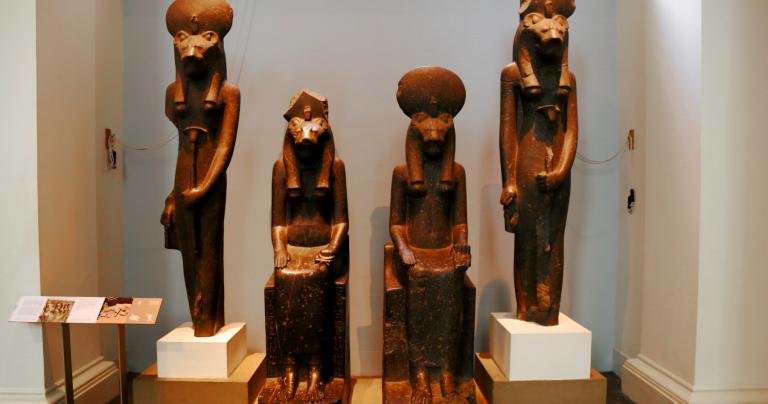
statues of Sekhmet in the British Museum
A demand for certainty at any cost
Some people aren’t willing to accept that they’re cats. They demand certainty around matters that are inherently uncertain – things that aren’t just beyond our knowledge, but beyond our ability to know.
This is particularly important in religions that teach believing the “right” things means eternal bliss and believing the “wrong” things means eternal torment. The impossibility of being absolutely certain about something of such importance was one of the main things that convinced me fundamentalism was false.
Humans have had speech for at least a couple hundred thousand years. We’ve had writing for around 5000 years. From a deep time perspective, writing is still the new technology everybody thinks is cool. We value the written word and trust the written word far more than other sources. Sometimes that’s a good thing – writing is helpful (says the writer). But as anybody who’s ever read a conspiracy theory book or website knows, it’s not always a good thing. No source – written or otherwise – can be accepted without careful examination and criticism.
When your whole religion – including the fate of your soul – is tied up in a book, you will tend to accept what you read uncritically and rationalize any discrepancies away. Christian fundamentalists demand certainty, even at the cost of their intellectual integrity.
Pagans and polytheists aren’t exempt from this. Sometimes we overvalue our written sources because we live in a culture saturated with Protestant thinking. But other times we fall prey to the same demand for certainty all on our own.
We know the Gods from the lore
That said, where we have lore – both written records and oral traditions – it’s the first way by which we know the Gods.
The stories our ancestors told about the Gods are treasures. We should read them plainly but not literally. They are not historical accounts nor are they corrupted history, even though bits of history can often be found in them. They’re myths – stories that tell us who we are, where we came from, and how we should live. We can learn much about the Gods from the stories we have about Them.
But our ancestors were cats too. Their stories tell us something about the Gods, but mainly they tell us how our ancestors understood Them and related to Them.
Even the historical records we have about how ancient people worshipped the Gods must be interpreted in the context of the place and time where they were written. One of the major errors of fundamentalists – in any religion – is mistaking ancient cultural norms for eternal truths. The same Christians who dismiss how the Bible condones slavery as “part of the culture of that time” still cling to similarly archaic ideas about women and LGBTQ people.
We must not make the same mistakes.
Still, the lore we have about the Gods is invaluable. Read it and study it, in the original language where you can (I can’t) and in as current and as faithful a translation as you can find where you can’t.
We know the Gods from our first-hand experiences of Them
Most theistic religions talk about a time when Gods walked with humans. Not all the time, but often enough that encountering a God was a distinct possibility. And now that doesn’t happen anymore… or so the story goes.
A cynic would say the clergy want to control access to the Gods, and so they say such experiences are no longer possible. Sadly, in many cases that cynic would be right. But a good religion is a living religion, and the Gods who spoke to our ancestors will speak to us, if we will listen.
Sometimes this comes in ecstatic experiences, where a God moves into a person and speaks through them. I’ve experienced this a few times – these are some of the deepest, most meaningful, and most real experiences of my life.
We often call these experiences UPG – unverified personal gnosis. In doing so, we acknowledge that even the people who were there at the time can’t be sure that was Cernunnos or the Morrigan or whoever it was speaking through the person. And so the messages are only authoritative for those who choose to accept them. But when multiple people in multiple places have similar experiences with similar messages, it lends credibility to the process. And when time proves the truth and wisdom in them, we learn to trust them.
In doing so our religions and the relationships that comprise them are strengthened.
And in the process, we learn a little more about our Gods.
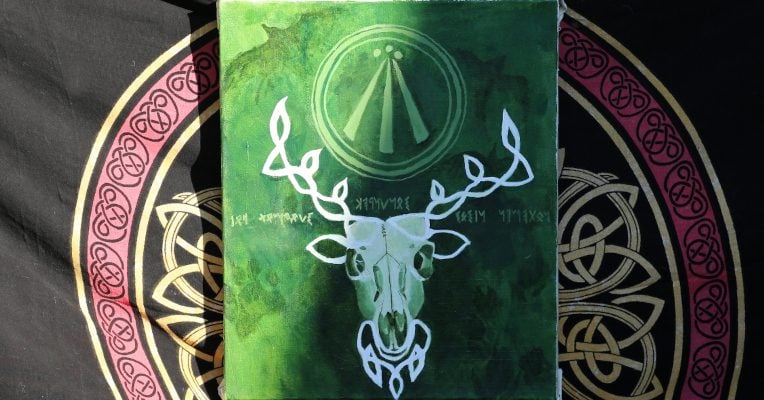
Cernunnos Denton. Painting by Morgan Milburn – photo by John Beckett
We know the Gods from our ordinary experiences of Them
Not everyone has ecstatic experiences. Most people don’t. Yet most if not all of us can have more subtle experiences of our Gods.
We pray and meditate, and we hear a response. Not with our ears, but with our intuition – especially with our bodies. We make offerings, and we find that a gift is returned for a gift. We live according to the virtues of our Gods, and we find ourselves becoming more and more like Them.
I’m a cat too, and there is much about the Gods I do not know. But I am certain of this – the Gods have no use for spectacle, or for those who demand it.
But those who seek the Gods and who follow the Gods will learn something important about the Gods in their ordinary experiences.
We know the Gods from the experiences of others
We don’t have to do this alone. Religion is a group project and it goes better when we do it together. What that looks like in a culture where organized religion is shrinking rapidly in favor of solitary practice remains to be seen. But even if we aren’t gathering together weekly or monthly or seasonally, we can still know things about the Gods from the experiences of others.
I’ve learned a lot about the Morrigan from Morpheus Ravenna and from Morgan Daimler. I’ve learned a lot about Cerridwen from Kristoffer Hughes.
There is no ancient lore about Cernunnos, but some of us put our own stories together and created some contemporary lore for Him.
Loki didn’t speak to me at Mystic South in 2022, but I heard Him speak through a Seeress, and I learned about Him through her.
I’ve learned a lot about Brighid from watching my Brigidine friends respond to the problems in our current world, especially in their work to provide hospitality where it is most needed.
Our own experiences are important. But we can also know the Gods through the experiences of others.
The epistemology of the Gods
I am eternally curious. Whatever the question, I want to know! But my integrity reminds me that ultimately, I’m still a cat contemplating the nature of humans. There is much I cannot know, and more than I can know only partially and tentatively. I’ll take what I can get.
Because what we can get is good enough.
We start with the lore we have, with the full understanding that it is the stories our ancestors told about the Gods, not historical accounts of the Gods. What we learn from our own experiences – great and small – helps recenter the Gods in our contemporary world. What we learn from others adds to our knowledge and serves to calibrate our thinking – it helps keep us from going in unwise and unsupported directions.
This is the epistemology of the many Gods. By building our knowledge of the Gods, we learn how to better relate to Them, how to worship and work with and work for Them, and how to embody Their values and virtues in this world.
History and Religion
Previous Post

December 3, 2023
Dust In The Wind
Next Post

December 14, 2023 The Future of Paganism
Recent Comments
"The filter idea also makes me wonder how much of what we carry into this ..."
A Modern Pagan Case For Reincarnation
"Thank you for this thoughtful piece. What resonates with me is the idea that consciousness ..."
A Modern Pagan Case For Reincarnation
"If you have access to Facebook you might find my analysis of the Trump movement ..."
Paganism In An Era Of Christian ..."
"Halloween is so popular because of about 5% pagan influence, and 95% because horror and ..."
Why Halloween Is So Popular – ..."
Browse Our Archives
Select a Category Books Community CUUPS Druidry Foundations and Context Gods and Goddesses Magic Myth Nature Ritual Spiritual Practice Theology Travel Uncategorized Videos
Select a Month November 2026 October 2026 September 2026 August 2026 July 2026 June 2026 May 2026 April 2026 March 2026 February 2026 January 2026 December 2025 November 2025 October 2025 September 2025 August 2025 July 2025 June 2025 May 2025 April 2025 March 2025 February 2025 January 2025 December 2024 November 2024 October 2024 September 2024 August 2024 July 2024 June 2024 May 2024 April 2024 March 2024 February 2024 January 2024 December 2023 November 2023 October 2023 September 2023 August 2023 July 2023 June 2023 May 2023 April 2023 March 2023 February 2023 January 2023 December 2022 November 2022 October 2022 September 2022 August 2022 July 2022 June 2022 May 2022 April 2022 March 2022 February 2022 January 2022 December 2021 November 2021 October 2021 September 2021 August 2021 July 2021 June 2021 May 2021 April 2021 March 2021 February 2021 January 2021 December 2020 November 2020 October 2020 September 2020 August 2020 July 2020 June 2020 May 2020 April 2020 March 2020 February 2020 January 2020 December 2019 November 2019 October 2019 September 2019 August 2019 July 2019 June 2019 May 2019 April 2019 March 2019 February 2019 January 2019 December 2018 November 2018 October 2018 September 2018 August 2018 July 2018 June 2018 May 2018 April 2018 March 2018 February 2018 January 2018 December 2017 November 2017 October 2017 September 2017 August 2017 July 2017 June 2017 May 2017 April 2017 March 2017 February 2017 January 2017 December 2016 November 2016 October 2016 September 2016 August 2016 July 2016 June 2016 May 2016 April 2016 March 2016 February 2016 January 2016 December 2015 November 2015 October 2015 September 2015 August 2015 July 2015 June 2015 May 2015 April 2015 March 2015 February 2015 January 2015 December 2014 November 2014 October 2014 September 2014 August 2014 July 2014 June 2014 May 2014 April 2014 March 2014 February 2014 January 2014 December 2013 November 2013 October 2013 September 2013 August 2013 July 2013 June 2013 May 2013 April 2013 March 2013 February 2013 January 2013 December 2012 November 2012 October 2012 September 2012 August 2012 July 2012 June 2012 May 2012 April 2012 March 2012 February 2012 January 2012 December 2011 November 2011 October 2011 September 2011 August 2011 July 2011 June 2011 May 2011 April 2011 March 2011 February 2011 January 2011 December 2010 November 2010 October 2010 September 2010 August 2010 July 2010 June 2010 May 2010 April 2010 March 2010 February 2010 January 2010 December 2009 November 2009 October 2009 September 2009 August 2009 July 2009 June 2009 May 2009 April 2009 March 2009 February 2009 January 2009 December 2008 November 2008 October 2008 September 2008 August 2008 July 2008 June 2008
Follow Us!
TAKE THE
Religious Wisdom Quiz
How long did judges rule over Israel?
Select your answer to see how you score.
350 years 300 years 400 years 250 years
Related posts from John Beckett

Pagans And The Rise Of The Religious Left

Why Halloween Is So Popular – And So...

The Pillar of the Boatmen: the Ancient Monument...

TRENDING AT PATHEOS Pagan

Are You a Scrooge or an Ebenezer?
A Call to Remember As the Christmas season rings in, will we...

Noah’s Ark Archaeologists: Gopher Wood or Should We...
Ancient wood, a boat-shaped formation and dates that invite a second look:...

Smart people saying smart things (11.24.26)
Please take time to listen to Perry Bacon, Sarah Posner, Adam Serwer,...

The Contingency of Our Technology
Last week we were hit with a raft of massive technology outages....

In 1939, President Franklin D. Roosevelt moved Thanksgiving from November 30 to...

Reasons for Restraint: Ricardo Gonzalez, Florida and Dec...
The Morning of January 3 I begin with the dead. On the...
view all Pagan blogs
What Are Your Thoughts?leave a comment
Ad-Free & Subscriber Log-In Subscription Support
- About Us
- 2026 Calendar
- Videos
- Podcasts
- Library of World Religions
- Faith In Media Tracker
- Advertise With Us
- Write for Us
- Privacy Policy
- Terms of Service
- Do Not Sell My Data
- Contact Us
- Radiant Digital
- Manage Newsletter Subscriptions
- Unsubscribe From Notifications
- Sitemap
Copyright 2008-2026, Patheos, part of the Radiant Digital network of media brands. All rights reserved.
Subscription Support Ad-Free & Subscriber Log-In
Follow Patheos