
BuddhistCatholicContemplativeEvangelicalGeneral ChristianHinduJewishLatter-day SaintMuslimNew VisionsProgressive Christian
Beliefs
- Buddhist
- Catholic
- Contemplative
- Evangelical
- General Christian
- Hindu
- Jewish
- Latter-day Saint
- More Voices
- Muslim
- New Visions
- Pagan
- Progressive Christian
Topics
- Religion News
- Food and Religion
- Sports and Religion
- Religious Art
- Religious Music and Entertainment
- Religious Events
- History and Religion
- Style and Religion
- Politics and Religion
- Women in Religion
- Recreation Outdoors and Religion
- Business Finance and Religion
- Careers Workplace and Religion
- Education and Religion
- Family Parenting and Religion
- Health Fitness and Religion
- Home and Religion
- Relationships and Religion
- Technology and Religion
- Travel and Religion
Columnists
- Buddhist Columnists
- Business Finance and Religion Columnists
- Careers Workplace and Religion Columnists
- Catholic Columnists
- Contemplative Columnists
- Education and Religion Columnists
- Evangelists Columnists
- Family Parenting and Religion Columnists
- General Christian Columnists
- Health Fitness and Religion Columnists
- Hindu Columnists
- History and Religion Columnists
- Home and Religion Columnists
- Jewish Columnists
- More Voices Columnists
- Latter Day Columnists
- Muslim Columnists
- New Visions Columnists
- Nonreligious Columnists
- Pagan Columnists
- Politics and Religion Columnists
- Progressive Columnists
- Recreation Outdoors and Religion Columnists
- Relationships and Religion Columnists
- Religion News Columnists
- Religious Art Columnists
- Religious Events Columnists
- Religious Music and Entertainment Columnists
- Sports and Religion Columnists
- Style and Religion Columnists
- Technology and Religion Columnists
- Travel and Religion Columnists
- Women in Religion Columnists
Resource Library
- 2026 Calendar
- Library of World Religions
- The 100 Most Holy Places on Earth
- Patheos Answers
- Podcasts
- Videos
- Faith Leaders Database
- Anglican Episcopalian
- Bahai
- Baptist
- Buddhism
- Christianity
- Confucianism
- Eastern Orthodoxy
- Hinduism
- Holiness and Pentecostal
- ISKCON
- Islam
- Judaism
- Lutheran
- Methodist
- The Church of Jesus Christ of Latter-day Saints
- New Age
- Paganism
- Presbytarian and Reformed
- Protestantism
- Religion Behind the Scenes
- Roman Catholic
- Scientology
- Shia Islam
- Sikhism
- Sufism
- Sunni Islam
- Taoism
- Zen
- See all religions
Research Tools
 Ad-Free & Subscriber Log-In Subscription Support
Ad-Free & Subscriber Log-In Subscription Support
Follow Patheos 

- Trending:
- Forgiveness
- |
- Marriage
- |
- Consciousness
- |
- Death Penalty
- |
- Election
- |
- Halloween

- Home
- Pagan
- Are Funerals for the Living or for the Dead?
Are Funerals for the Living or for the Dead?
Last updated on: May 28, 2023 at 3:00 am by John Beckett
Are Funerals for the Living or for the Dead? 2023-05-17T18:37:55-06:00 John Beckett
Patheos Explore the world's faith through different perspectives on religion and spirituality! Patheos has the views of the prevalent religions and spiritualities of the world.
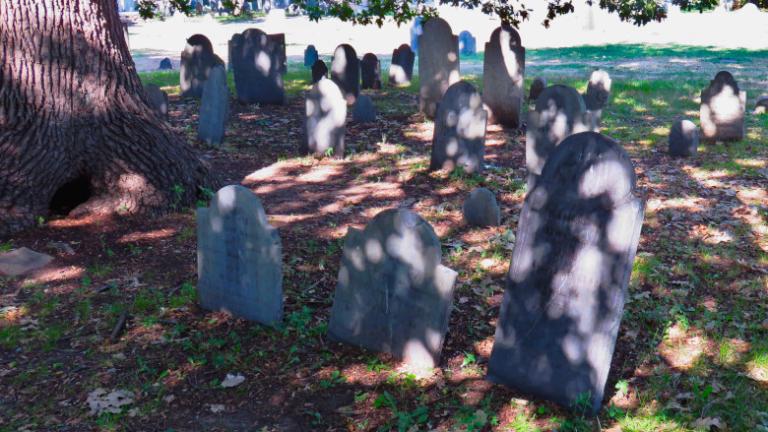
From the dawn of humanity, people have recognized that the death of a loved one is an significant event in the life of a family and of a community; an event that should be solemnized. What our barely-human ancestors did tens and even hundreds of thousands of years ago is not so very different from what we do today.
But are these rites for the living or for the dead?
Or perhaps, for both?
I grew up Baptist and I was taught that funerals are for the living. According to conservative Protestants, when a person dies they’re instantly in heaven or hell and nothing can be done to change that. Prayers for the dead were useless. The purpose of a funeral was to allow the survivors to mourn, to comfort them with visions of heaven – and to threaten any backsliders with the prospects of hell.
Once I started exploring different religions, I learned that other people – including many Christians – believe the dead can benefit from the prayers of the living.
And then I became a Pagan, and I learned that some traditions have elaborate rites to help the dead find their place in the afterlife and to confirm their new status as an ancestor.
I got two different questions on this topic in the last Conversations Under the Oaks. I want to present both questions and then discuss funerals from a Pagan perspective.
Hazel asked:
My father (who was an atheist) recently passed away, and he said he wanted his ashes scattered and that he didn’t care where because he’d be dead (fair!). So I’d like to do something meaningful to me, since the scattering is likely to be just me.
I’m also finding it close to impossible to maintain even my most minimal offerings and prayers right now, and I wonder if there are frameworks of mourning or even just thoughts about it that might help. It feels like my spiritual focus has shifted right now and I’m not sure whether that’s something I should be embracing or if forcing myself through the motions would help me more. I don’t feel exactly abandoned by the Gods but I feel distant.
Someone who wishes to remain anonymous asked:
A few years ago I decided, for reasons that aren’t relevant to the question, that I wanted a direct cremation. In the UK this means that there is no funeral service or wake. The body is taken by a funeral director and cremated when there is a space. The ashes are returned to the next of kin after a few weeks. I made my wishes clear to my family and I’m still comfortable with it.
However, I’ve heard/read various comments suggesting that a dead person’s spirit “needs” a funeral ritual in order to go where it’s supposed to go. Instinctively I feel that my ancestors will help me, and as a devotee of Hekate I don’t think She will let me go too far astray, so I don’t know if funeral rites are just part of an industry or whether they really do serve a spiritual purpose.
Death and what comes after is a mystery
Before we try to figure out what we should do for the dead, we need to know what happens after death. Where do the dead go? What do the dead encounter? Who are they with?
The only honest answer to all these questions is “we don’t know.”
As with all religious questions, our lack of ability to answer definitively need not and should not prevent us from forming tentative answers and then acting in alignment with them, so long as we respect other reasonable answers and so long as we remain open to new evidence, new experiences, and new lines of reasoning.
We have an obligation to respect the wishes of the dead – up to a point
If your grandmother wants a Baptist funeral, find a Baptist preacher and give her a Baptist funeral. If your atheist father wants no funeral, don’t hold a funeral. Some people want to be cremated, others find cremation sacrilegious. To the extent we can, we should honor and respect the wishes of the dead.
We should not do for – or to – them what we know they would not want done. I do not want a Christian funeral. If planning my funeral falls to my Christian relatives, they can find a Druid or a UU minister who can do it properly (and considering who that may fall to, I have every reason to expect they would). I find the Mormon practice of baptizing the dead highly offensive.
So is the practice of misgendering trans people in death, especially those who died because of lack of support for who they really are.
At the same time, the dead cannot dictate how the living feel and how the living need to respond. If you need to cry, then cry. If you need to gather with a bunch of friends and relatives and cry together, do it. What you do for you is categorically different from what you do for the dead.
We need to mourn
Separation and loss are real. Death is painful for those who remain and the American practice of “your three days of bereavement leave are over, now get back to work” is unreasonable and cruel. So is the pathologization of grief. We don’t need antidepressants to “get over” the loss of a loved one. We need time and family and community.
To be clear: I am not opposed to antidepressants – they have their place. But this isn’t one of them.
I’m not a mental health professional, but I am a priest who sometimes leads funerals and other rituals around death. What Hazel describes sounds like normal, ordinary, healthy grief – exactly what mourning rituals are designed to deal with.
My suggestion would be to do some sort of ritual along with scattering the ashes. In keeping with her father’s preferences, that could be entirely naturalistic: returning the body to the Earth from whence it came. Add a song, a poem, or some other way of saying goodbye. If you feel the need to do this alone, do it alone. But if at all possible, invite some friends or relatives over to support you afterwards.
The alternative is to keep it all bottled up, and that’s not a healthy thing.

We need to remember
We need no supernatural beliefs to understand the truth of the statement “that which is remembered lives.” Whatever may have happened to our loved ones, there is no question that they live on in our memories. It is good to remember our beloved dead.
In the days and weeks immediately after death, remembering the good helps soften the blow of the loss. Funerals and memorial services help do this. In the months and years ahead, remembering honors our dead and allows us to keep loving them even though they’ve left this world.
We need to acknowledge the change that death creates
Death does not end our relationships, but it does change them. It transforms them. Someone who was a parent, spouse, sibling, or friend is now an ancestor. We once saw them face to face, now we see them only in photographs and memories. If we remember them they are still present in our lives, but that presence is different.
We need to acknowledge that difference, accept it, and reorder our lives around the new facts. Funerals and memorial services help us to process these changes and begin to learn to live with them.
Crossing over is a natural process
You need not believe that consciousness survives death to understand anything I’ve said so far. Pagans, Christians, atheists, and everyone else should be able to see the naturalistic parts of death and the benefits that funerals – good funerals, anyway – can bring to the living.
But for those of us who believe that we live on as individuals after death, there’s more. And that leads to the question of what funerals can accomplish for the dead.
Death is not the opposite of life. Death is the opposite of birth. Through birth we enter into this world, and through death we leave this world. Where were we before we were born? Do we return to the same place? I think we do.
And just as being born requires nothing on our part, so does dying. It’s a natural process. We go from where we are in this world to where we’re going in the next world. So to answer the final question directly, I do not believe we require funerals or other rites to get to where we need to go.
I expect that when my time comes, someone will come for me. It may be an ancestor. I have a grandfather and a great uncle who show up often in my ancestral devotions – I would not be surprised if they come to guide me to whatever is next. Perhaps Cernunnos will come for me – He’s been around me my whole life. Perhaps it will be the Morrigan. One of Her roles is that of psychopomp, and She holds my death.
And if none of them come? I’ve visited the Otherworld many times in journeying and in ritual. I know the way. It’s not hard to find.

Our rites can help the dead – if they need it
Still, almost every culture has its ghosts and restless dead. Those who die unexpectedly and/or violently may be disoriented and have trouble finding their way onward. Those who are worried about those they leave behind may be reluctant to move on.
Our funeral rites can help put them at ease. They say “yes, you are dead.” They remind them “you were loved and you still are loved.” They reassure them “we will care for your loved ones.”
In some cases, they say “we will see that you get justice” or “we could not stop this tragedy, but we will work to prevent such things in the future.”
Our rites tell the dead that it’s OK for them to move on, and thus make it easier for them to do so.
Some cultures and traditions teach that more is necessary. The Egyptians believed that preserving the body was necessary. Their rites included feeding the dead and providing them with objects and with servants. I’m not about to tell a 6000 year old (or more – likely more) culture that they’re wrong. If you are part of such a tradition, make arrangements for the necessary rites to be performed for you.
Egypt was not an egalitarian culture, and even in ancient times not everyone could be mummified. But Anpu is kind and Ma’at is just, and I trust They will help Their followers to find their way home.
Ancestral rites come later
Some traditions perform rites well after death to establish a person as an ancestral ally. The exact terminology and rites vary from tradition to tradition. My own belief is that the newly dead should be left alone (except for honoring them at Samhain and such) for two to three years, to give them time to adjust to being “over there.” After that, you may be able to ask for their help and establish an active link to them.
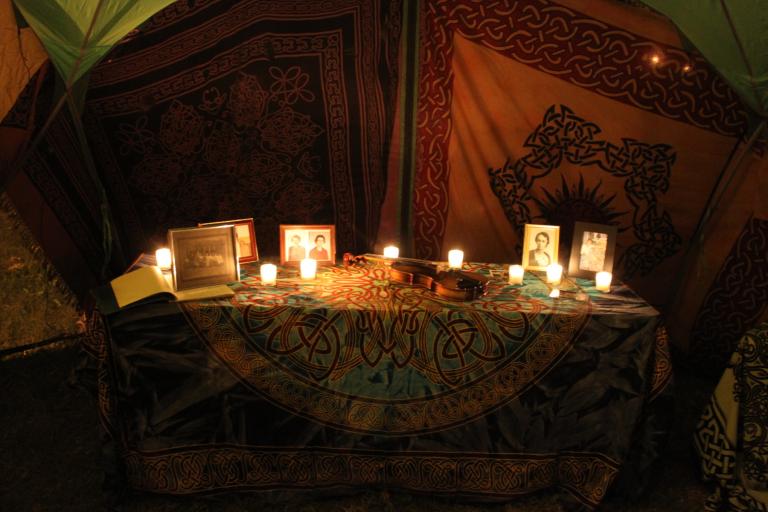
Denton CUUPS ancestor shrine – Samhain 2014
The phrase “funerals are for the living” is a Protestant and humanist idea that has no place in Paganism and polytheism. Funerals are for the community, which includes both the living and the dead. Let’s do what must be done for our dead and for their survivors, and in so doing, build a tradition that will be continued when we ourselves cross over.
For Further Reading
What To Do With My Body After I’m Dead (2019)
Sitting in a Bland Funeral Thinking About What We Should Do For Our Dead (2018)
One Pagan’s Thoughts on What Comes After Death (August 2017)
The Journey Into Spirit (2014)
Previous Post

May 24, 2023
Sometimes There Is a Devil in the Craft
Next Post

May 31, 2023 Magical Ethics: How You Do Anything is How You Do Everything
Recent Comments
"Concern about the attitude of Islam toward Pagans is not limited to the Trump Administration. ..."
"Thank you for your much needed review of the Lucas Miles polemic. A key point ..."
I Read Pagan Threat So You ..."
"A number of these are also available streaming through the Kanopy digital service, carried by ..."
The Vampire Films of Jean Rollin
"Happy October!"
The Vampire Films of Jean Rollin
Browse Our Archives
Select a Category Books Community CUUPS Druidry Foundations and Context Gods and Goddesses Magic Myth Nature Ritual Spiritual Practice Theology Travel Uncategorized Videos
Select a Month October 2026 September 2026 August 2026 July 2026 June 2026 May 2026 April 2026 March 2026 February 2026 January 2026 December 2025 November 2025 October 2025 September 2025 August 2025 July 2025 June 2025 May 2025 April 2025 March 2025 February 2025 January 2025 December 2024 November 2024 October 2024 September 2024 August 2024 July 2024 June 2024 May 2024 April 2024 March 2024 February 2024 January 2024 December 2023 November 2023 October 2023 September 2023 August 2023 July 2023 June 2023 May 2023 April 2023 March 2023 February 2023 January 2023 December 2022 November 2022 October 2022 September 2022 August 2022 July 2022 June 2022 May 2022 April 2022 March 2022 February 2022 January 2022 December 2021 November 2021 October 2021 September 2021 August 2021 July 2021 June 2021 May 2021 April 2021 March 2021 February 2021 January 2021 December 2020 November 2020 October 2020 September 2020 August 2020 July 2020 June 2020 May 2020 April 2020 March 2020 February 2020 January 2020 December 2019 November 2019 October 2019 September 2019 August 2019 July 2019 June 2019 May 2019 April 2019 March 2019 February 2019 January 2019 December 2018 November 2018 October 2018 September 2018 August 2018 July 2018 June 2018 May 2018 April 2018 March 2018 February 2018 January 2018 December 2017 November 2017 October 2017 September 2017 August 2017 July 2017 June 2017 May 2017 April 2017 March 2017 February 2017 January 2017 December 2016 November 2016 October 2016 September 2016 August 2016 July 2016 June 2016 May 2016 April 2016 March 2016 February 2016 January 2016 December 2015 November 2015 October 2015 September 2015 August 2015 July 2015 June 2015 May 2015 April 2015 March 2015 February 2015 January 2015 December 2014 November 2014 October 2014 September 2014 August 2014 July 2014 June 2014 May 2014 April 2014 March 2014 February 2014 January 2014 December 2013 November 2013 October 2013 September 2013 August 2013 July 2013 June 2013 May 2013 April 2013 March 2013 February 2013 January 2013 December 2012 November 2012 October 2012 September 2012 August 2012 July 2012 June 2012 May 2012 April 2012 March 2012 February 2012 January 2012 December 2011 November 2011 October 2011 September 2011 August 2011 July 2011 June 2011 May 2011 April 2011 March 2011 February 2011 January 2011 December 2010 November 2010 October 2010 September 2010 August 2010 July 2010 June 2010 May 2010 April 2010 March 2010 February 2010 January 2010 December 2009 November 2009 October 2009 September 2009 August 2009 July 2009 June 2009 May 2009 April 2009 March 2009 February 2009 January 2009 December 2008 November 2008 October 2008 September 2008 August 2008 July 2008 June 2008
Follow Us!
TAKE THE
Religious Wisdom Quiz
After my test ended, I received double what I lost, except for one category where the number remained the same. What was restored equally?
Select your answer to see how you score.
His children His flocks His servants His wealth
Related posts from John Beckett


The Vampire Films of Jean Rollin


Bo French Doesn’t Understand Texas
TRENDING AT PATHEOS Pagan

How to Make a Decision When You Can't...
Main point: It’s much more valuable to stay close to God so...

Archdiocese Hosts Military Marriage Retreat in Germany
RASTATT, Germany — The transient military lifestyle, with its frequent deployments and...

Nearly every morning, I make the drive to Detroit with my high-school-age...

The Real AI Story Is Adoption Without Trust
Artificial intelligence has crossed a political threshold. It is no longer a...

A new article, written by Jeff Lindsay and Gale L. Pooley,...

Swimfan: Forgotten Aughts Pleasures
This is a recovery effort. In 2002, My Big Fat Greek Wedding...
view all Pagan blogs
What Are Your Thoughts?leave a comment
Ad-Free & Subscriber Log-In Subscription Support
- About Us
- 2026 Calendar
- Videos
- Podcasts
- Library of World Religions
- Faith In Media Tracker
- Advertise With Us
- Write for Us
- Privacy Policy
- Terms of Service
- Do Not Sell My Data
- Contact Us
- Radiant Digital
- Manage Newsletter Subscriptions
- Unsubscribe From Notifications
- Sitemap
Copyright 2008-2026, Patheos. All rights reserved.
Subscription Support Ad-Free & Subscriber Log-In
Follow Patheos