
BuddhistCatholicContemplativeEvangelicalGeneral ChristianHinduJewishLatter-day SaintMuslimNew VisionsProgressive Christian
Beliefs
- Buddhist
- Catholic
- Contemplative
- Evangelical
- General Christian
- Hindu
- Jewish
- Latter-day Saint
- More Voices
- Muslim
- New Visions
- Pagan
- Progressive Christian
Topics
- Religion News
- Food and Religion
- Sports and Religion
- Religious Art
- Religious Music and Entertainment
- Religious Events
- History and Religion
- Style and Religion
- Politics and Religion
- Women in Religion
- Recreation Outdoors and Religion
- Business Finance and Religion
- Careers Workplace and Religion
- Education and Religion
- Family Parenting and Religion
- Health Fitness and Religion
- Home and Religion
- Relationships and Religion
- Technology and Religion
- Travel and Religion
Columnists
- Buddhist Columnists
- Business Finance and Religion Columnists
- Careers Workplace and Religion Columnists
- Catholic Columnists
- Contemplative Columnists
- Education and Religion Columnists
- Evangelists Columnists
- Family Parenting and Religion Columnists
- General Christian Columnists
- Health Fitness and Religion Columnists
- Hindu Columnists
- History and Religion Columnists
- Home and Religion Columnists
- Jewish Columnists
- More Voices Columnists
- Latter Day Columnists
- Muslim Columnists
- New Visions Columnists
- Nonreligious Columnists
- Pagan Columnists
- Politics and Religion Columnists
- Progressive Columnists
- Recreation Outdoors and Religion Columnists
- Relationships and Religion Columnists
- Religion News Columnists
- Religious Art Columnists
- Religious Events Columnists
- Religious Music and Entertainment Columnists
- Sports and Religion Columnists
- Style and Religion Columnists
- Technology and Religion Columnists
- Travel and Religion Columnists
- Women in Religion Columnists
Resource Library
- 2026 Calendar
- Library of World Religions
- The 100 Most Holy Places on Earth
- Patheos Answers
- Podcasts
- Videos
- Faith Leaders Database
- Anglican Episcopalian
- Bahai
- Baptist
- Buddhism
- Christianity
- Confucianism
- Eastern Orthodoxy
- Hinduism
- Holiness and Pentecostal
- ISKCON
- Islam
- Judaism
- Lutheran
- Methodist
- The Church of Jesus Christ of Latter-day Saints
- New Age
- Paganism
- Presbytarian and Reformed
- Protestantism
- Religion Behind the Scenes
- Roman Catholic
- Scientology
- Shia Islam
- Sikhism
- Sufism
- Sunni Islam
- Taoism
- Zen
- See all religions
Research Tools
 Ad-Free & Subscriber Log-In Subscription Support
Follow Patheos 

- Trending:
- Advent
- |
- Forgiveness
- |
- Thanksgiving
- |
- Election
- |
- Seasonal Holidays
- |
- Marriage

- Home
- Pagan
- A Pagan Look at the Origins of the Universe
A Pagan Look at the Origins of the Universe
Last updated on: January 29, 2023 at 7:37 am by John Beckett
A Pagan Look at the Origins of the Universe 2023-01-29T07:37:11-06:00 John Beckett
Patheos Explore the world's faith through different perspectives on religion and spirituality! Patheos has the views of the prevalent religions and spiritualities of the world.
Last week, two people – one Pagan, one Christian – asked me “how did the universe come into being?” I wasn’t able to go into any depth with either answer, and I want to do that here in this post.
I want to start with the only answer we can be certain is correct: we don’t know.
I’ve heard fundamentalists say “if you can’t explain why there’s something rather than nothing, you don’t have a religion.” First of all, why there’s something rather than nothing isn’t a question of religion. It’s a question of metaphysics (literally, “before physics” or “above physics”), which belongs in the realm of philosophy. Religion (from the Latin religare meaning “to bind together” and religio meaning “obligation and reverence”) is concerned with how we form and maintain relationships with our Gods, our ancestors, our fellow humans, and the world around us. You don’t have to know how we got here to figure out how we can best live given that we are here.
Secondly, just because you want a clear and simple explanation doesn’t mean such an explanation exists. To paraphrase early 20th century journalist H.L. Mencken, “for every complicated question, there’s an answer that is simple, neat, and wrong.” And there is perhaps no more complicated question than how “all this” began.
Still, we can explore this question and develop partial answers and tentative answers. They will never be complete answers, certainly not in the lifetime of anyone alive today and probably not ever – I think. But they can be enough to help us understand our place in the universe, even if they don’t entirely satisfy our curiosity.
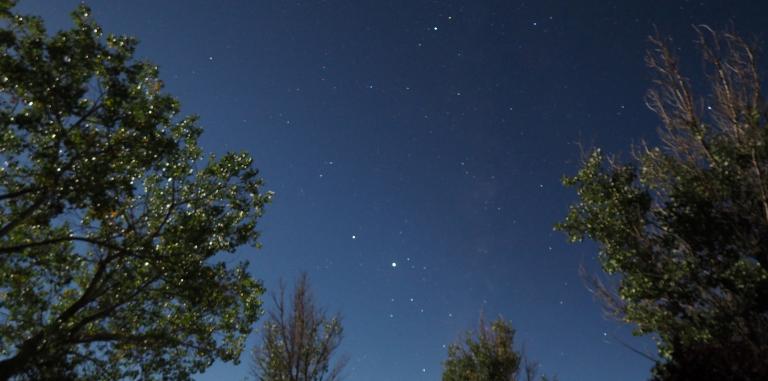
Creation myths are myths, not proto-science
Most (though not all) cultures have creation myths – stories they told to explain where the world came from and their place in it. These are not “primitive” attempts at science. They’re myths – stories to live by.
Our ancient ancestors were biologically identical to us. They had the same brains and the same intelligence as us. The idea that they childishly believed their creation myths were what literally happened is insulting to them. Their myths said “hey, we don’t know what happened, but here’s a story that helps us understand where we belong in all this, and that’s enough.”
Fundamentalists who claim their creation myth is literal truth miss the point. So do those of us who think our ancestors believed their myths were historical accounts. They knew their stories were myths – and that was enough for them.
Science tells us much – but not everything
Modern astrophysics has done an amazing job of observing the visible universe, examining the evidence, deducing the laws of nature, and “running back the film” of the development of the universe. We can be very confident that the Big Bang happened about 14 billion years ago. The problem is that when you get within a tiny fraction of a second of the Big Bang, the laws of physics break down.
Perhaps our science is simply not far enough along yet. Quantum physics, string theory, and the multiverse theory are attempts to fill in that tiny but critically important blank in the history of the cosmos. Here’s a very good piece from Scientific American that concludes with this quote:
Cosmology by its very nature is arrogant. The idea that we can understand something as vast in both space and time as our universe is, on the face of it, preposterous.
Current science can tell us what happened. It can’t tell us how there was anything there to happen. And that leads to speculation.

The Prime Mover is intuitively attractive but not necessarily correct
Our intuitive observations tell us that everything comes from something that preceded it. The Greek philosopher Aristotle (384–322 BCE) said this means there must be an “unmoved mover” – something or someone who began the process of creation.
This idea made its way into Christianity (there’s a lot more Greek philosophy in Christianity than most Christians care to admit), where Christians claim that their God created the universe. However, we should remember that Aristotle was a polytheist, not a monotheist and certainly not a proto-Christian. His ideas were formed and presented in a polytheist world.
The details of Aristotle’s thinking are far too complex for a brief blog post. There are two things that are important for us here. One is that whatever his Prime Mover may be, it is not any being who actively participates in this world. It’s not any of the Many Gods and it is not the Christian God.
The other thing of importance is that the Prime Mover is an intellectual speculation, not an observation or a testable hypothesis. That doesn’t mean it’s wrong – it just means it’s not provable.
Fundamentalists insist the universe must have a creator and they insist that creator is their God. When asked where their God came from, they say “he always was” (and it’s always “he” and never “she” but that’s another rant for another time). That just pushes the problem back a level. If their Creator God has always existed, why can’t the universe have always existed?
On some days I’m a pantheist
Pantheism is the idea that the universe and the divine are one and the same. It’s more than that – the Wikipedia page on pantheism is a good introduction. But for our purposes here, what’s important is the possibility that the universe has always existed and will always exist (that it appears to be continuously expanding raises some concerns about that, but perhaps not).
Pantheism is quite compatible with polytheism. Gods are the mightiest of spirits, but They are spirits similar to other-than-divine spirits (which include humans). They can live and participate in an all-encompassing universe the same as we can.
If this is the case, then the universe exists on its own account – it needs no creator.
Further, if the human soul (the essence of who and what we are) is immortal going forward, perhaps it’s also immortal going backward. Perhaps we too have always existed. If pantheism is true, then I would argue that we must have always existed, because we are a part of the universe. Perhaps birth is what gives us our individuality from the undifferentiated whole. Think – metaphorically, not literally – of stars and planets being “born” from the undifferentiated whole that preceded the Big Bang.
Or perhaps it’s more complicated than that. Simple answers are comfortable, but they’re rarely complete.
But it’s possible that the universe (or maybe the multiverse, if there is such a thing) is all there is, both physically and spiritually. If so, it was not created. It simply is.
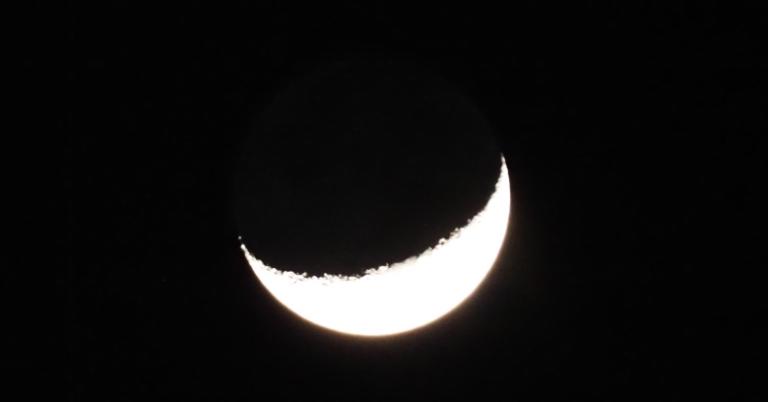
On some days I’m a panentheist
Panentheism is the idea that the divine is in all things, but that it also transcends all things. That sentence greatly oversimplifies about 250 to 350 years (depending on whether you count panentheism as beginning with Spinoza, which I’m not really qualified to judge) of deep philosophical and metaphysical thinking. But it’s the logical conclusion that flows from Aristotle’s Prime Mover.
If panentheism is true, then there is a God (if we can properly use that term here, and I’m not sure we can) from whom all the universe flows. Neoplatonism proposes that this is an on-going eternal process, not a one-time event. That would fit nicely into the multiverse theory.
No culture’s creation myth is literally true. But it is possible there is a Creator who is in all things but also separate from them.
On some days I believe matter flows from consciousness
We experience our consciousness through our brains (we think) and our brains are matter, so many of us assume consciousness flows from matter. But animism teaches that trees, for example, have consciousness – and trees clearly do not have brains. Perhaps consciousness does not flow from matter – perhaps consciousness is primary.
This turns the whole creation model upside down. Perhaps the reason science can’t see what existed before the Big Bang is that they’re looking for a material answer to what is ultimately a question of consciousness. Or a question of spirits. Or both.
Of course, if matter does flow from consciousness, then we’re back to the question of “which consciousness” or “whose consciousness”? And that likely points back to either pantheism or panentheism.
Though it’s equally likely that it points to some other possibility that we’ve never even imagined.

On most days I’m creation-agnostic
I am eternally curious. Part of my mission in life is to learn as much as I possibly can, for the sheer joy of knowing. I would love to know all about the ultimate origin of the universe, whether material or spiritual or both.
But I don’t think I can.
My best guess is that the ultimate origin of the universe is something that is not merely beyond our current science, but beyond our capacity to know as humans with powerful but still limited brains. To quote biologist J.B.S. Haldane, “the universe is not only queerer than we suppose, but queerer than we can suppose.”
Further, this question isn’t particularly relevant to our quest to live a deep, meaningful, and virtuous life. How it all began 14 billion years ago is far less important than what we do here and now with the few years allotted to us. How we relate to an unmoved mover who needs nothing and wants nothing – if a relationship with such a being is even possible – is far less important than how we relate to our Gods, our ancestors, and all the many persons with whom we share this world.
I do wonder about the ultimate origins of the universe. I can’t help but wonder.
But I spend most of my time wondering about other things.
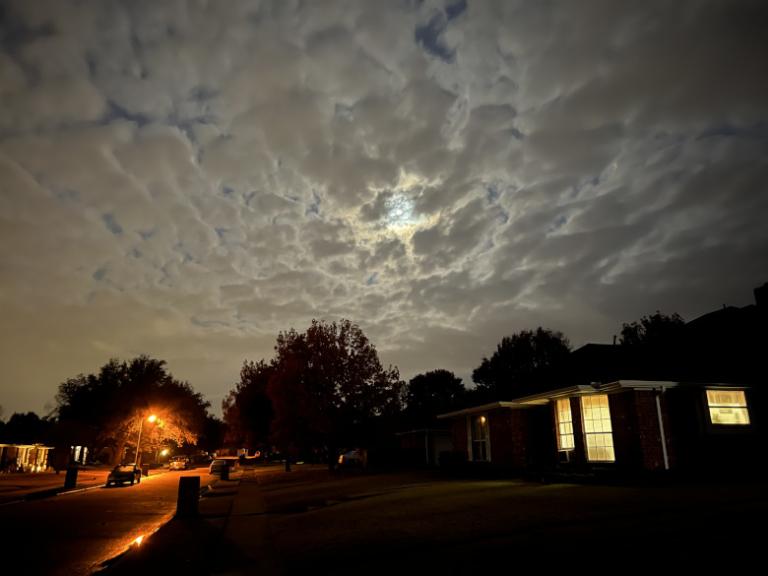
We could do worse than a new creation myth
Our ancient ancestors wondered too, and so they told stories. Some of those stories became myths. Myths are not “made up stories” – they’re stories to live by. They’re stories that help us orient ourselves in the wider world.
What can’t be understood directly can often be understood metaphorically.
I like the myth that says in the beginning, all was one. And then it exploded into stars and planets. On at least one of those planets there was water. And then life began, though we do not know how. And from that first life grew microorganisms, and complex life, and grass, and trees, and fish, and dinosaurs, and a seemingly insignificant group of creatures called mammals. And then a meteor struck the Earth and killed the dinosaurs and made room for what would become primates. And then came Australopithecus and Homo Habilis and Homo Erectus and Neanderthals and Denisovans and finally, a species known as Homo Sapiens.
And here we are, part of this very new species, living lives that are so very short, but experiencing it all and being a part of it all. And as we do, forming and maintaining relationships with Gods and ancestors and spirits and other living creatures and our fellow humans. We are separate, but we are not alone.
And we wonder if someday, we will all be one once again.
Previous Post

January 25, 2023
When Did You Know You Were a Witch?
Next Post

February 1, 2023 We’re Living in an Era of High Magic
Recent Comments
"The filter idea also makes me wonder how much of what we carry into this ..."
A Modern Pagan Case For Reincarnation
"Thank you for this thoughtful piece. What resonates with me is the idea that consciousness ..."
A Modern Pagan Case For Reincarnation
"If you have access to Facebook you might find my analysis of the Trump movement ..."
Paganism In An Era Of Christian ..."
"Halloween is so popular because of about 5% pagan influence, and 95% because horror and ..."
Why Halloween Is So Popular – ..."
Browse Our Archives
Select a Category Books Community CUUPS Druidry Foundations and Context Gods and Goddesses Magic Myth Nature Ritual Spiritual Practice Theology Travel Uncategorized Videos
Select a Month November 2026 October 2026 September 2026 August 2026 July 2026 June 2026 May 2026 April 2026 March 2026 February 2026 January 2026 December 2025 November 2025 October 2025 September 2025 August 2025 July 2025 June 2025 May 2025 April 2025 March 2025 February 2025 January 2025 December 2024 November 2024 October 2024 September 2024 August 2024 July 2024 June 2024 May 2024 April 2024 March 2024 February 2024 January 2024 December 2023 November 2023 October 2023 September 2023 August 2023 July 2023 June 2023 May 2023 April 2023 March 2023 February 2023 January 2023 December 2022 November 2022 October 2022 September 2022 August 2022 July 2022 June 2022 May 2022 April 2022 March 2022 February 2022 January 2022 December 2021 November 2021 October 2021 September 2021 August 2021 July 2021 June 2021 May 2021 April 2021 March 2021 February 2021 January 2021 December 2020 November 2020 October 2020 September 2020 August 2020 July 2020 June 2020 May 2020 April 2020 March 2020 February 2020 January 2020 December 2019 November 2019 October 2019 September 2019 August 2019 July 2019 June 2019 May 2019 April 2019 March 2019 February 2019 January 2019 December 2018 November 2018 October 2018 September 2018 August 2018 July 2018 June 2018 May 2018 April 2018 March 2018 February 2018 January 2018 December 2017 November 2017 October 2017 September 2017 August 2017 July 2017 June 2017 May 2017 April 2017 March 2017 February 2017 January 2017 December 2016 November 2016 October 2016 September 2016 August 2016 July 2016 June 2016 May 2016 April 2016 March 2016 February 2016 January 2016 December 2015 November 2015 October 2015 September 2015 August 2015 July 2015 June 2015 May 2015 April 2015 March 2015 February 2015 January 2015 December 2014 November 2014 October 2014 September 2014 August 2014 July 2014 June 2014 May 2014 April 2014 March 2014 February 2014 January 2014 December 2013 November 2013 October 2013 September 2013 August 2013 July 2013 June 2013 May 2013 April 2013 March 2013 February 2013 January 2013 December 2012 November 2012 October 2012 September 2012 August 2012 July 2012 June 2012 May 2012 April 2012 March 2012 February 2012 January 2012 December 2011 November 2011 October 2011 September 2011 August 2011 July 2011 June 2011 May 2011 April 2011 March 2011 February 2011 January 2011 December 2010 November 2010 October 2010 September 2010 August 2010 July 2010 June 2010 May 2010 April 2010 March 2010 February 2010 January 2010 December 2009 November 2009 October 2009 September 2009 August 2009 July 2009 June 2009 May 2009 April 2009 March 2009 February 2009 January 2009 December 2008 November 2008 October 2008 September 2008 August 2008 July 2008 June 2008
Follow Us!
TAKE THE
Religious Wisdom Quiz
What does "Eli" mean in Hebrew?
Select your answer to see how you score.
The Lord saves Strength in God My God Holy one
Related posts from John Beckett

Pagans And The Rise Of The Religious Left

Why Halloween Is So Popular – And So...

The Pillar of the Boatmen: the Ancient Monument...
TRENDING AT PATHEOS Pagan

The resilience of the Christian faith in the english speaking world of...

An Advent Calendar, and a Tree full of...
I've spent the weekend deeply invested in internet drama about a $150...

How to Have Financial Transparency in Marriage
Despite the fact that financial issues and money problems are the number...
The Healing Power of Forgiveness in Marriage
Learning how to give and accept apologies are essential ingredients of a...

The West's Christian Moral Inheritance: A Legacy Denied
Whether we like it or not, our environment matters, shaping us both...

How Does Tôḏâ Connect Florida & Thanksgiving?
The big news this weekend has been about the continued flooding on...
view all Pagan blogs
What Are Your Thoughts?leave a comment
Ad-Free & Subscriber Log-In Subscription Support
- About Us
- 2026 Calendar
- Videos
- Podcasts
- Library of World Religions
- Faith In Media Tracker
- Advertise With Us
- Write for Us
- Privacy Policy
- Terms of Service
- Do Not Sell My Data
- Contact Us
- Radiant Digital
- Manage Newsletter Subscriptions
- Unsubscribe From Notifications
- Sitemap
Copyright 2008-2026, Patheos. All rights reserved.
Subscription Support Ad-Free & Subscriber Log-In
Follow Patheos