
BuddhistCatholicContemplativeEvangelicalGeneral ChristianHinduJewishLatter-day SaintMuslimNew VisionsProgressive Christian
Beliefs
- Buddhist
- Catholic
- Contemplative
- Evangelical
- General Christian
- Hindu
- Jewish
- Latter-day Saint
- More Voices
- Muslim
- New Visions
- Pagan
- Progressive Christian
Topics
- Religion News
- Food and Religion
- Sports and Religion
- Religious Art
- Religious Music and Entertainment
- Religious Events
- History and Religion
- Style and Religion
- Politics and Religion
- Women in Religion
- Recreation Outdoors and Religion
- Business Finance and Religion
- Careers Workplace and Religion
- Education and Religion
- Family Parenting and Religion
- Health Fitness and Religion
- Home and Religion
- Relationships and Religion
- Technology and Religion
- Travel and Religion
Columnists
- Buddhist Columnists
- Business Finance and Religion Columnists
- Careers Workplace and Religion Columnists
- Catholic Columnists
- Contemplative Columnists
- Education and Religion Columnists
- Evangelists Columnists
- Family Parenting and Religion Columnists
- General Christian Columnists
- Health Fitness and Religion Columnists
- Hindu Columnists
- History and Religion Columnists
- Home and Religion Columnists
- Jewish Columnists
- More Voices Columnists
- Latter Day Columnists
- Muslim Columnists
- New Visions Columnists
- Nonreligious Columnists
- Pagan Columnists
- Politics and Religion Columnists
- Progressive Columnists
- Recreation Outdoors and Religion Columnists
- Relationships and Religion Columnists
- Religion News Columnists
- Religious Art Columnists
- Religious Events Columnists
- Religious Music and Entertainment Columnists
- Sports and Religion Columnists
- Style and Religion Columnists
- Technology and Religion Columnists
- Travel and Religion Columnists
- Women in Religion Columnists
Resource Library
- 2026 Calendar
- Library of World Religions
- The 100 Most Holy Places on Earth
- Patheos Answers
- Podcasts
- Videos
- Faith Leaders Database
- Anglican Episcopalian
- Bahai
- Baptist
- Buddhism
- Christianity
- Confucianism
- Eastern Orthodoxy
- Hinduism
- Holiness and Pentecostal
- ISKCON
- Islam
- Judaism
- Lutheran
- Methodist
- The Church of Jesus Christ of Latter-day Saints
- New Age
- Paganism
- Presbytarian and Reformed
- Protestantism
- Religion Behind the Scenes
- Roman Catholic
- Scientology
- Shia Islam
- Sikhism
- Sufism
- Sunni Islam
- Taoism
- Zen
- See all religions
Research Tools
 Ad-Free & Subscriber Log-In Subscription Support
Ad-Free & Subscriber Log-In Subscription Support
Follow Patheos 

- Trending:
- Forgiveness
- |
- Marriage
- |
- Consciousness
- |
- Death Penalty
- |
- Election
- |
- Halloween

- Home
- Pagan
- Paganism in Space – Beyond “Earth-Centered”
Paganism in Space – Beyond “Earth-Centered”
Last updated on: November 22, 2022 at 8:04 am by John Beckett
Paganism in Space – Beyond “Earth-Centered” 2022-11-22T08:04:48-06:00 John Beckett
Patheos Explore the world's faith through different perspectives on religion and spirituality! Patheos has the views of the prevalent religions and spiritualities of the world.
Over on the Patheos Progressive Christian channel, Keith Giles has a very good piece titled Moving Beyond Earth-Centered Theology. It’s a criticism of Christians whose worldview doesn’t extend beyond the Earth, who insist this planet is special because “the Kingdom of God has to come to earth after Jesus makes all things new.” Here’s a key quote:
As long as we continue to hold on to the primitive notion that our planet is where all of God’s plans must come to fruition, or that what happens on this planet is the only revelation of Christ in the Universe, or that God’s image is merely human, we will miss the bigger picture – literally.
It’s a Christian essay from a Christian perspective, albeit it the kind of Christianity that focuses on following Jesus and not on establishing a theocratic government. But while Pagans and polytheists have different foundational assumptions and thus a different perspective, the core issue it addresses is still relevant to us.
What would encountering sentient life on or from other planets mean for us as Pagans?
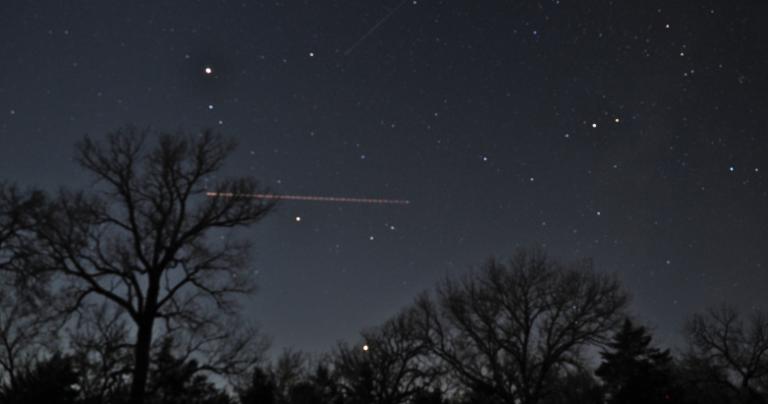
We are the children of the Earth
Carl Sagan was correct when he said “we are made of star stuff.” But more directly, we are the children of the Earth.
We don’t know how life began, but we know that it began once (it’s possible life began earlier, died out, and then began again independently, but there is no indication that it did). Every living thing on Earth is the descendant of that first life. We were not placed on the Earth as some religions teach – we grew out of the Earth. As such, it is good and right that we honor the Earth, not just as the place where we live but as our Mother.
Nature-centered Paganism is about more than just the Earth. It honors the Sun for sustaining life, the Moon for its light at night and for its influences on our world, and the Stars for their wisdom and information. It calls us to form and maintain respectful relationships with all living things, who are not things but persons in their own right.
To call modern Paganism an “Earth-centered religion” is incomplete, but it is still true. The Earth and what happens on the Earth is our greatest concern and should be a major focus of our worship and practice.
Pagans easily switch between the religious and the secular
The problems Keith Giles complains about simply aren’t an issue for most Pagans. We speak plainly about Gods and magic, and then when the conversation turns to science we speak plainly about astronomy and physics. For some, this is an example of what biologist Stephen Jay Gould called non-overlapping magisteria. For others, it’s understanding that “truth” means more than literal, historical truth – something that fundamentalists of all flavors can’t seem to accept.
For me, it’s the humility to accept that there is much we do not know and may never know. Not because we don’t have sufficiently advanced technology but because it’s beyond the capacity of our amazing but finite human brains. It’s also the evidence that animism and not materialism is the best metaphysical foundation for our understanding of the universe.
I believe in Gods and magic because I have experienced them, and because my life is better when I accept the implications of their reality. That materialists insist they cannot exist is a shortcoming of their thinking, a shortcoming I need not copy.
At the same time, when science shows us that something does exist, or that it is highly likely to exist, we have no grounds for dismissing it just because it doesn’t fit into our religious mythology.
And science tells us it is extremely likely we are not the only “intelligent” life in the universe.
Polytheism is well-suited for extra-terrestrial contact
Imagine, if you will, an ancient traveler coming into a new village for the first time. After dealing with introductions and taking care of necessities like “where can I get food?” and “where can I sleep?” the conversation might eventually turn to religion.
“Who are your Gods?”
“How do you experience Them?”
“How do you honor Them?”
Polytheists understand that different Gods call different people to worship and work with Them in different ways. Those other ways aren’t “wrong” or “inferior” – they’re just different.
This is in stark contrast to monotheists who insist that their God is the only God, and their ways are the only “proper” ways.
It’s easy to see this playing out in the future, only with people (who likely will not be hairless apes but who will be people – persons – nonetheless) from another planet instead of from another village.
Who are their Gods? How do they experience Them? How do they honor Them?
Are their Gods our Gods with different names, and perhaps with different faces? Or are They beings unique to another planet and/or that planet’s people? I don’t know, but I’d love to have the opportunity to try to figure it out.
But I do know this: humanity already has a million and one Gods. Adding a few more – or a million more – is no problem for polytheists.
Interplanetary reincarnation
There was a time when the Earth did not exist. There will be a time in the future when the Earth once again does not exist. Christian eschatology was developed before any of that was known – that their theology is out of date is their problem, not mine (and one I’m happy Keith Giles is trying to address).
As a Pagan, I approach this question differently.
I believe the essence of who and what we are – the soul, if you like – is immortal. Clearly, our bodies are not. Many of us – both Pagans and others – believe in some form of reincarnation. Our bodies die, our souls go somewhere else for a while, and then they return to this world and inhabit a different body.
But someday, this world will no longer exist – the Earth will be gone.
Does that mean the end of reincarnation? Will we have to take up permanent residence in the Otherworld? What of our Gods: where do Gods of the Earth go when the Earth is no more?
I don’t have the answer to these questions. I don’t know how anyone could answer them with any confidence. But if you can conceive of reincarnation on this planet, it’s not much of a stretch to conceive of reincarnation on another planet – even if it’s in bodies that bear little resemblance to the bodies we have here and now.
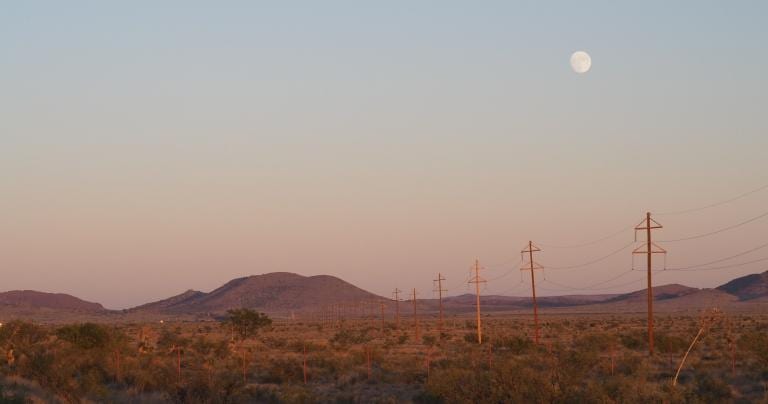
Our metaphysics need to be bigger than the Earth
Many of our modern Pagan religions are focused on reimagining and reconstructing the religions of our Pagan ancestors. This is a good and holy thing. It connects us to our ancestors, and it helps us rediscover and recreate religious and spiritual practices that were meaningful and helpful for centuries before being lost to the domination of Christianity.
At the same time, any good religion has to speak to the needs of the people who practice it where – and when – they are. We are not pre-Roman Celts or pre-Christian Norse or Pharaonic Egyptians. We are 21st century Americans or Norwegians or whatever it is we are. Our beliefs and practices have to be tuned to the world we actually live in.
That’s a world where we understand the Earth is one planet orbiting one star in the corner of one galaxy. The Earth is sacred, but the Earth is not unique.
Our theologies and our metaphysics need to reflect this reality.
But our attention needs to remain on the Earth
At the same time, we remain the Children of the Earth.
And the Earth is in a time of crisis, largely due to human actions.
Technology may someday advance to the point where humans can truly become interstellar, but not on any large scale, at least not anytime soon. That’s OK – we’ve got a few billion years before the Sun turns into a red giant and makes life here impossible. But we are well into the process of making life inhospitable for humans and impossible for many species – species who have as much of a right to not go extinct as we do.
It is no more ethical for Pagans to use the possibility of reincarnation on another planet as an excuse for ignoring environmental desecration as it is for fundamentalist Christians to use their fantasies of a “rapture.”

And so I remain a Nature-centered Pagan. I honor the Sun and the Moon and I celebrate the changing seasons of the Earth. I feel closest to my Gods when I’m in wild places, and the energetic practice of grounding works best when I’m actually touching the ground with my feet and my hands. I do my best to align my mundane actions with my beliefs. I can’t fix climate change on my own, but I can do my part to minimize my impact and to prepare to deal with the changes that are coming.
And if someday we positively and unambiguously encounter life from other planets, it will present absolutely no problems to my Paganism.
It will just get a little bigger.
Previous Post

November 20, 2022
The 5 Real Reasons Your Spells Didn't Work
Next Post

November 27, 2022 Do the Gods Care About Everyone?
Browse Our Archives
Select a Category Books Community CUUPS Druidry Foundations and Context Gods and Goddesses Magic Myth Nature Ritual Spiritual Practice Theology Travel Uncategorized Videos
Select a Month October 2026 September 2026 August 2026 July 2026 June 2026 May 2026 April 2026 March 2026 February 2026 January 2026 December 2025 November 2025 October 2025 September 2025 August 2025 July 2025 June 2025 May 2025 April 2025 March 2025 February 2025 January 2025 December 2024 November 2024 October 2024 September 2024 August 2024 July 2024 June 2024 May 2024 April 2024 March 2024 February 2024 January 2024 December 2023 November 2023 October 2023 September 2023 August 2023 July 2023 June 2023 May 2023 April 2023 March 2023 February 2023 January 2023 December 2022 November 2022 October 2022 September 2022 August 2022 July 2022 June 2022 May 2022 April 2022 March 2022 February 2022 January 2022 December 2021 November 2021 October 2021 September 2021 August 2021 July 2021 June 2021 May 2021 April 2021 March 2021 February 2021 January 2021 December 2020 November 2020 October 2020 September 2020 August 2020 July 2020 June 2020 May 2020 April 2020 March 2020 February 2020 January 2020 December 2019 November 2019 October 2019 September 2019 August 2019 July 2019 June 2019 May 2019 April 2019 March 2019 February 2019 January 2019 December 2018 November 2018 October 2018 September 2018 August 2018 July 2018 June 2018 May 2018 April 2018 March 2018 February 2018 January 2018 December 2017 November 2017 October 2017 September 2017 August 2017 July 2017 June 2017 May 2017 April 2017 March 2017 February 2017 January 2017 December 2016 November 2016 October 2016 September 2016 August 2016 July 2016 June 2016 May 2016 April 2016 March 2016 February 2016 January 2016 December 2015 November 2015 October 2015 September 2015 August 2015 July 2015 June 2015 May 2015 April 2015 March 2015 February 2015 January 2015 December 2014 November 2014 October 2014 September 2014 August 2014 July 2014 June 2014 May 2014 April 2014 March 2014 February 2014 January 2014 December 2013 November 2013 October 2013 September 2013 August 2013 July 2013 June 2013 May 2013 April 2013 March 2013 February 2013 January 2013 December 2012 November 2012 October 2012 September 2012 August 2012 July 2012 June 2012 May 2012 April 2012 March 2012 February 2012 January 2012 December 2011 November 2011 October 2011 September 2011 August 2011 July 2011 June 2011 May 2011 April 2011 March 2011 February 2011 January 2011 December 2010 November 2010 October 2010 September 2010 August 2010 July 2010 June 2010 May 2010 April 2010 March 2010 February 2010 January 2010 December 2009 November 2009 October 2009 September 2009 August 2009 July 2009 June 2009 May 2009 April 2009 March 2009 February 2009 January 2009 December 2008 November 2008 October 2008 September 2008 August 2008 July 2008 June 2008
Follow Us!
TAKE THE
Religious Wisdom Quiz
Why were the plagues significant against Egyptian beliefs?
Select your answer to see how you score.
They were meant to test Pharaoh’s patience They were random acts of nature Pharaoh had offended the Hebrew people Each plague targeted an Egyptian god
Related posts from John Beckett




What We Lose When “Ask AI” Becomes A...
TRENDING AT PATHEOS Pagan

Janie Learns the Way of the Cross: A...
Teaching children about Jesus' Passion can be challenging. Many parents and educators...

Looking For Good Catholic Writing - October 2026
He alone extends the heavens, and he walks upon the waves of...

In "Irreplaceable," our book on vocation and technology, Trevor Sutton and I...

I was strolling through the top floor of the brand new Parthenon...

What Does Gêvâh Mean For Kimberley Guifoyle &...
This week, a lot of the news is focused on Kimberly Guilfoyle....

INNER CIRCLE: Profound Mystery (Of Christ In All...
Ephesians 5:31-32 “For this reason, a man will leave his father and...
view all Pagan blogs
Ad-Free & Subscriber Log-In Subscription Support
- About Us
- 2026 Calendar
- Videos
- Podcasts
- Library of World Religions
- Faith In Media Tracker
- Advertise With Us
- Write for Us
- Privacy Policy
- Terms of Service
- Do Not Sell My Data
- Contact Us
- Radiant Digital
- Manage Newsletter Subscriptions
- Unsubscribe From Notifications
- Sitemap
Copyright 2008-2026, Patheos. All rights reserved.
Subscription Support Ad-Free & Subscriber Log-In
Follow Patheos