
BuddhistCatholicContemplativeEvangelicalGeneral ChristianHinduJewishLatter-day SaintMuslimNew VisionsProgressive Christian
Beliefs
- Buddhist
- Catholic
- Contemplative
- Evangelical
- General Christian
- Hindu
- Jewish
- Latter-day Saint
- More Voices
- Muslim
- New Visions
- Pagan
- Progressive Christian
Topics
- Religion News
- Food and Religion
- Sports and Religion
- Religious Art
- Religious Music and Entertainment
- Religious Events
- History and Religion
- Style and Religion
- Politics and Religion
- Women in Religion
- Recreation Outdoors and Religion
- Business Finance and Religion
- Careers Workplace and Religion
- Education and Religion
- Family Parenting and Religion
- Health Fitness and Religion
- Home and Religion
- Relationships and Religion
- Technology and Religion
- Travel and Religion
Columnists
- Buddhist Columnists
- Business Finance and Religion Columnists
- Careers Workplace and Religion Columnists
- Catholic Columnists
- Contemplative Columnists
- Education and Religion Columnists
- Evangelists Columnists
- Family Parenting and Religion Columnists
- General Christian Columnists
- Health Fitness and Religion Columnists
- Hindu Columnists
- History and Religion Columnists
- Home and Religion Columnists
- Jewish Columnists
- More Voices Columnists
- Latter Day Columnists
- Muslim Columnists
- New Visions Columnists
- Nonreligious Columnists
- Pagan Columnists
- Politics and Religion Columnists
- Progressive Columnists
- Recreation Outdoors and Religion Columnists
- Relationships and Religion Columnists
- Religion News Columnists
- Religious Art Columnists
- Religious Events Columnists
- Religious Music and Entertainment Columnists
- Sports and Religion Columnists
- Style and Religion Columnists
- Technology and Religion Columnists
- Travel and Religion Columnists
- Women in Religion Columnists
Resource Library
- 2026 Calendar
- Library of World Religions
- The 100 Most Holy Places on Earth
- Patheos Answers
- Podcasts
- Videos
- Faith Leaders Database
- Anglican Episcopalian
- Bahai
- Baptist
- Buddhism
- Christianity
- Confucianism
- Eastern Orthodoxy
- Hinduism
- Holiness and Pentecostal
- ISKCON
- Islam
- Judaism
- Lutheran
- Methodist
- The Church of Jesus Christ of Latter-day Saints
- New Age
- Paganism
- Presbytarian and Reformed
- Protestantism
- Religion Behind the Scenes
- Roman Catholic
- Scientology
- Shia Islam
- Sikhism
- Sufism
- Sunni Islam
- Taoism
- Zen
- See all religions
Research Tools
 Ad-Free & Subscriber Log-In Subscription Support
Ad-Free & Subscriber Log-In Subscription Support
Follow Patheos 

- Trending:
- Forgiveness
- |
- Marriage
- |
- Consciousness
- |
- Death Penalty
- |
- Election
- |
- Halloween

- Home
- Pagan
- Do the Gods Care About Everyone?
Do the Gods Care About Everyone?
Last updated on: November 27, 2022 at 3:00 am by John Beckett
Do the Gods Care About Everyone? 2022-11-22T15:28:35-06:00 John Beckett
Patheos Explore the world's faith through different perspectives on religion and spirituality! Patheos has the views of the prevalent religions and spiritualities of the world.
Mat Auryn asked a very good question on Facebook last week:
Do the Gods care about people who aren’t devoted to them or those who may not even know that the Gods exist? Why or why not?
I grew up being taught that the Christian God – who was assumed to be the only God – cared about everyone. Except, of course, those who didn’t believe the right things about him – he was perfectly willing to send those people into eternal torment. But that’s another rant for another time.
We should not bring the assumptions of the religion of our childhood into our new religions, at least not without careful examination.
I’ve been a polytheist for many years now, and I’ve done my fair share of theological studies and reflection. My initial response to Mat’s question was simply “yes, the Gods care about everyone.” The more I thought about it, though, the more I realized just how deep the question is.
So let’s explore it in more detail.

Cernunnos
The Gods are many, not one
The core principle of polytheism is that there are many Gods. Not one God with many faces, but many Gods who are distinct individuals, each with Their own agency and will. So what is true of one God is not necessarily true of all Gods. Further, different Gods have different areas of interest and concern: a Sun God has different priorities than a River God.
So when we speak of “the Gods” we must remember that while some things apply to all the Gods, other things apply to only some of the Gods.
David Salisbury left a comment that illustrates the relevance of this point in this discussion:
there are a bunch of cosmic, primordial Gods that are so far removed from humans, and Earth itself, that we’re not even a twinkle in their eye and even calling on them is typically futile and meaningless.
I would say that calling on these distant Gods is still a good thing (when we worship any God we become a little more like that God), but David is quite right that expecting a response is pointless.
So do all the Gods care about everyone? Do some of the Gods care about everyone? Or do some of the Gods care about some of the people?
Before we can answer that, we need to explore a different question.
What do we mean by “care about”?
The English word “care” can be both a noun and a verb. Both usages have multiple meanings. In this instance, “care” is a verb that means to “feel concern or interest; attach importance to something.”
That’s a pretty broad definition. Are all the Gods interested in me? I would love to say yes, but I don’t know that I can. What I do know is that some Gods feel concern and interest toward me. Or rather, their actions indicate that they have such feelings – we can never be completely certain about the feelings of another person, whether human or divine or otherwise.
Cernunnos has been around me and has demonstrated concern for me for all my life, many years before I knew who and what He is. Danu is very reserved, but She has also demonstrated concern for me. The Morrigan has an interest in me, though speculating about Her feelings is problematic at best. Of this I am certain.
But does Apollo care about me? I’ve never poured the first offering for Him, never called to Him in prayer. I’m not a Hellenist or a Greek-inspired Pagan. Does Apollo even know who I am? I don’t know, and I don’t know how I could know.
But I think He does.
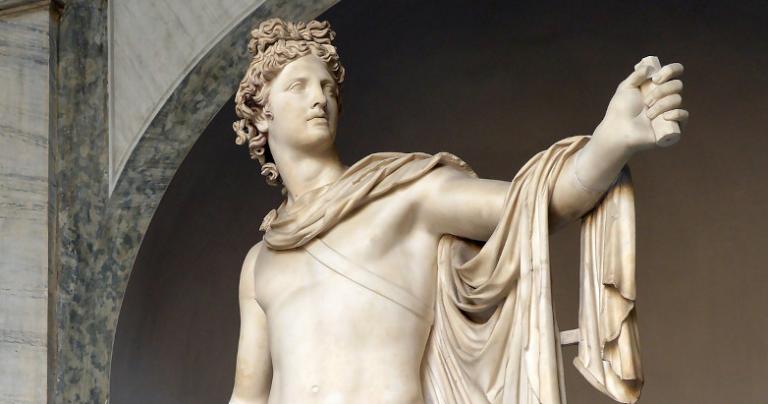
Apollo of the Belvedere. I had to find a picture on the internet, because I don’t have one. Photo by Livioandronico2013 via WikiMedia Commons. Used under Creative Commons license.

The Gods are always virtuous
Gods are the mightiest of spirits. But it’s not their might that makes them Gods – it’s the fact that They’re always virtuous.
I prefer a plain reading of the stories our ancestors told about the Gods, and a plain reading says that sometimes Gods do things that are anything but virtuous. While I am unwilling to dismiss these concerns as “those are just made-up stories” I also understand that these stories are complicated, with many layers of meaning.
Virtues can also be complicated, as anyone who’s ever tried to be both honest and kind at the same time understands.
The virtue of caring is very complicated.
If we say someone cares about us, we believe they are concerned with our well-being – they want the best for us. But we may go further and expect that they want for us what we want for ourselves. Situations of parents and children aside (we assume parents know what’s best for their children, although experience says they often do not), people know what they need better than others do. If you want to help someone, do what they ask you to do and not what you think you should do.
But Gods have knowledge and wisdom humans do not.
So a God may care about us, wish us nothing but the best, and still want something for us that we would not want for ourselves.
And the Gods are concerned about more than just us.
Everyone means everyone, not just humans
Some religions teach that humans alone are worthy of dignity and respect. Pagans understand that we are part of Nature. Not the head and not the center, but one part among many. Our Gods are Gods of Nature – all of Nature. If They care about us – and I’m convinced They do – They also care about every other species on Earth.
How do They balance Their concern for humans with Their concern for rabbits and squirrels, for cows and chickens, for trees and rivers?
A detailed exploration of that question is beyond the scope of this post. What’s important here is to understand that a God or many Gods or all the Gods may care deeply about you and still do things to your detriment, because there are other persons about whom They are also deeply concerned.
So although I cannot prove it – to my satisfaction, much less to the satisfaction of someone who’s skeptical – I believe all the Gods care about all of us. But many times that care manifests itself in ways that are difficult for us to recognize.

Devotion, relationships, and meaning
While I’ve addressed this question in general terms, I think it’s worthwhile to look at it in a more specific context. Mat asked “do the Gods care about people who aren’t devoted to them?”
Do the Gods care about everyone, or do They only care about “their people”?
I’ve made the case that They do care about everyone, because that’s part of being a God. But when we go deeper into the definition of “care” it becomes clear that at the least They pay more attention to some people than to others.
Religion is about relationships: people have Gods and Gods have people. If you have a need, the God to call on is the God you have a relationship with, not the God of this feature or that function.
This is particularly true when you’re asking Big Questions about the meaning of life and what to do with yours. When we worship a God, we become more like Them – we take on some of Their qualities. Over time we become more and more filled with Their virtues, and thus we are better able to embody and promote those virtues in the ordinary world.
I have mixed feelings about the saying “we are the hands of the Gods.” The Gods have agency in this world – They can accomplish what They want on Their own. But many times They choose us to accomplish Their goals. Being part of that divine work is an honor that is filled with meaning. That’s something that someone who isn’t devoted to a God simply can’t have.
The opportunity for relationship is always there
Whether or not Apollo cares about me – or even loves me – is an interesting question to contemplate over a glass of wine (or at this moment, over a glass of iced tea). But what’s important here is that if you want to experience divine caring (and recognize it for what it is) then you need to form and maintain a relationship with a deity.
Pray, meditate, make offerings. Read Their ancient lore, where it exists. Read the experiences of Their contemporary followers. Let all that inform your life, so that you embody Their virtues and help spread them in the ordinary world. No calls are required – just a commitment.
And then you won’t be wondering if a God cares about you – because you’ll know.
Previous Post

November 22, 2022
Paganism in Space – Beyond “Earth-Centered”
Next Post

November 30, 2022 Wednesday
Browse Our Archives
Select a Category Books Community CUUPS Druidry Foundations and Context Gods and Goddesses Magic Myth Nature Ritual Spiritual Practice Theology Travel Uncategorized Videos
Select a Month October 2026 September 2026 August 2026 July 2026 June 2026 May 2026 April 2026 March 2026 February 2026 January 2026 December 2025 November 2025 October 2025 September 2025 August 2025 July 2025 June 2025 May 2025 April 2025 March 2025 February 2025 January 2025 December 2024 November 2024 October 2024 September 2024 August 2024 July 2024 June 2024 May 2024 April 2024 March 2024 February 2024 January 2024 December 2023 November 2023 October 2023 September 2023 August 2023 July 2023 June 2023 May 2023 April 2023 March 2023 February 2023 January 2023 December 2022 November 2022 October 2022 September 2022 August 2022 July 2022 June 2022 May 2022 April 2022 March 2022 February 2022 January 2022 December 2021 November 2021 October 2021 September 2021 August 2021 July 2021 June 2021 May 2021 April 2021 March 2021 February 2021 January 2021 December 2020 November 2020 October 2020 September 2020 August 2020 July 2020 June 2020 May 2020 April 2020 March 2020 February 2020 January 2020 December 2019 November 2019 October 2019 September 2019 August 2019 July 2019 June 2019 May 2019 April 2019 March 2019 February 2019 January 2019 December 2018 November 2018 October 2018 September 2018 August 2018 July 2018 June 2018 May 2018 April 2018 March 2018 February 2018 January 2018 December 2017 November 2017 October 2017 September 2017 August 2017 July 2017 June 2017 May 2017 April 2017 March 2017 February 2017 January 2017 December 2016 November 2016 October 2016 September 2016 August 2016 July 2016 June 2016 May 2016 April 2016 March 2016 February 2016 January 2016 December 2015 November 2015 October 2015 September 2015 August 2015 July 2015 June 2015 May 2015 April 2015 March 2015 February 2015 January 2015 December 2014 November 2014 October 2014 September 2014 August 2014 July 2014 June 2014 May 2014 April 2014 March 2014 February 2014 January 2014 December 2013 November 2013 October 2013 September 2013 August 2013 July 2013 June 2013 May 2013 April 2013 March 2013 February 2013 January 2013 December 2012 November 2012 October 2012 September 2012 August 2012 July 2012 June 2012 May 2012 April 2012 March 2012 February 2012 January 2012 December 2011 November 2011 October 2011 September 2011 August 2011 July 2011 June 2011 May 2011 April 2011 March 2011 February 2011 January 2011 December 2010 November 2010 October 2010 September 2010 August 2010 July 2010 June 2010 May 2010 April 2010 March 2010 February 2010 January 2010 December 2009 November 2009 October 2009 September 2009 August 2009 July 2009 June 2009 May 2009 April 2009 March 2009 February 2009 January 2009 December 2008 November 2008 October 2008 September 2008 August 2008 July 2008 June 2008
Follow Us!
TAKE THE
Religious Wisdom Quiz
Why were the plagues significant against Egyptian beliefs?
Select your answer to see how you score.
They were meant to test Pharaoh’s patience They were random acts of nature Pharaoh had offended the Hebrew people Each plague targeted an Egyptian god
Related posts from John Beckett




What We Lose When “Ask AI” Becomes A...
TRENDING AT PATHEOS Pagan

Janie Learns the Way of the Cross: A...
Teaching children about Jesus' Passion can be challenging. Many parents and educators...

Looking For Good Catholic Writing - October 2026
He alone extends the heavens, and he walks upon the waves of...

In "Irreplaceable," our book on vocation and technology, Trevor Sutton and I...

I was strolling through the top floor of the brand new Parthenon...

What Does Gêvâh Mean For Kimberley Guifoyle &...
This week, a lot of the news is focused on Kimberly Guilfoyle....

INNER CIRCLE: Profound Mystery (Of Christ In All...
Ephesians 5:31-32 “For this reason, a man will leave his father and...
view all Pagan blogs
Ad-Free & Subscriber Log-In Subscription Support
- About Us
- 2026 Calendar
- Videos
- Podcasts
- Library of World Religions
- Faith In Media Tracker
- Advertise With Us
- Write for Us
- Privacy Policy
- Terms of Service
- Do Not Sell My Data
- Contact Us
- Radiant Digital
- Manage Newsletter Subscriptions
- Unsubscribe From Notifications
- Sitemap
Copyright 2008-2026, Patheos. All rights reserved.
Subscription Support Ad-Free & Subscriber Log-In
Follow Patheos