
BuddhistCatholicContemplativeEvangelicalGeneral ChristianHinduJewishLatter-day SaintMuslimNew VisionsProgressive Christian
Beliefs
- Buddhist
- Catholic
- Contemplative
- Evangelical
- General Christian
- Hindu
- Jewish
- Latter-day Saint
- More Voices
- Muslim
- New Visions
- Pagan
- Progressive Christian
Topics
- Religion News
- Food and Religion
- Sports and Religion
- Religious Art
- Religious Music and Entertainment
- Religious Events
- History and Religion
- Style and Religion
- Politics and Religion
- Women in Religion
- Recreation Outdoors and Religion
- Business Finance and Religion
- Careers Workplace and Religion
- Education and Religion
- Family Parenting and Religion
- Health Fitness and Religion
- Home and Religion
- Relationships and Religion
- Technology and Religion
- Travel and Religion
Columnists
- Buddhist Columnists
- Business Finance and Religion Columnists
- Careers Workplace and Religion Columnists
- Catholic Columnists
- Contemplative Columnists
- Education and Religion Columnists
- Evangelists Columnists
- Family Parenting and Religion Columnists
- General Christian Columnists
- Health Fitness and Religion Columnists
- Hindu Columnists
- History and Religion Columnists
- Home and Religion Columnists
- Jewish Columnists
- More Voices Columnists
- Latter Day Columnists
- Muslim Columnists
- New Visions Columnists
- Nonreligious Columnists
- Pagan Columnists
- Politics and Religion Columnists
- Progressive Columnists
- Recreation Outdoors and Religion Columnists
- Relationships and Religion Columnists
- Religion News Columnists
- Religious Art Columnists
- Religious Events Columnists
- Religious Music and Entertainment Columnists
- Sports and Religion Columnists
- Style and Religion Columnists
- Technology and Religion Columnists
- Travel and Religion Columnists
- Women in Religion Columnists
Resource Library
- 2026 Calendar
- Library of World Religions
- The 100 Most Holy Places on Earth
- Patheos Answers
- Podcasts
- Videos
- Faith Leaders Database
- Anglican Episcopalian
- Bahai
- Baptist
- Buddhism
- Christianity
- Confucianism
- Eastern Orthodoxy
- Hinduism
- Holiness and Pentecostal
- ISKCON
- Islam
- Judaism
- Lutheran
- Methodist
- The Church of Jesus Christ of Latter-day Saints
- New Age
- Paganism
- Presbytarian and Reformed
- Protestantism
- Religion Behind the Scenes
- Roman Catholic
- Scientology
- Shia Islam
- Sikhism
- Sufism
- Sunni Islam
- Taoism
- Zen
- See all religions
Research Tools
 Ad-Free & Subscriber Log-In Subscription Support
Ad-Free & Subscriber Log-In Subscription Support
Follow Patheos 

- Trending:
- Forgiveness
- |
- Marriage
- |
- Consciousness
- |
- Death Penalty
- |
- Election
- |
- Halloween

- Home
- Pagan
- Who is Really a Witch?
Who is Really a Witch?
Last updated on: September 11, 2022 at 3:00 am by John Beckett
Who is Really a Witch? 2022-09-05T17:57:30-06:00 John Beckett
Patheos Explore the world's faith through different perspectives on religion and spirituality! Patheos has the views of the prevalent religions and spiritualities of the world.
I need to pause answering questions from Conversations Under the Oaks to address something that’s come up in social media yet again. Because gatekeeping and people watering down powerful traditions have made me angry, yet again.
For those of you who want to jump straight to the conclusion, here it is:
A witch is a person who practices witchcraft, as they understand it.
You need no one’s permission, no one’s blessing, no one’s investiture to call yourself a witch and to claim the title with power and pride. You need not match anyone’s list of “signs you might be a witch.” And you certainly don’t have to begin by figuring out what “type” of witch you are.
Yes, there are exceptions to this rule – there are exceptions to every rule. No, witchcraft isn’t anything you want it to be. It’s a very broad tradition, but it still has boundaries… though boundaries that are best seen as guidelines for more effective practice, not as gates to keep out those some deem unworthy.
What’s most important right now is that if you want to be a witch, you need no one’s approval – formal or informal – to be one and to call yourself one.
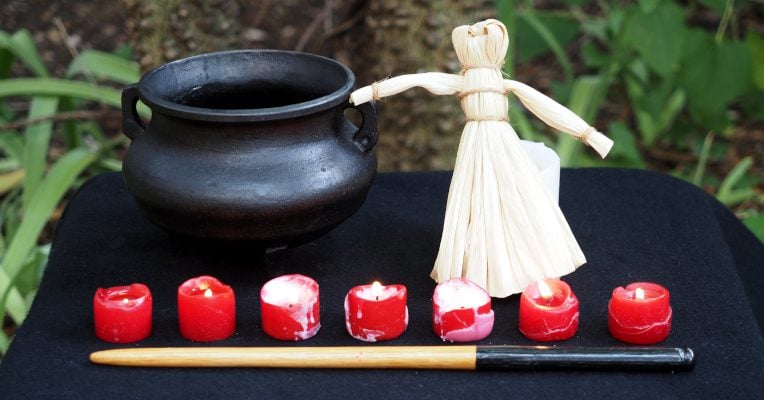
The context of this post: unhelpful social media
This matter comes up periodically. I’ve been writing about it at least since The Aesthetic of Witchcraft and the Return of Real Magic almost five years ago. Here’s what set it off this time – and it wasn’t even WitchTok.
First, this Facebook meme titled “11 signs you were born as a witch.” It lists things like “you hate crowds” and “you like nature.” Modern Witch podcast host and author Devin Hunter said “this basically describes people with ADHD.” My thoughts on memes like this can be summed up in this post titled 187 Signs You’re Trying To Avoid Doing Your Own Spiritual Work. These lists and quizzes can be fun, but real magic and spirituality are far more complicated than this.
Then I came across this episode of the Southern Fried Witch podcast where host Seba O’Kiley addressed Policing the Identity of “Witch”. It’s well worth your time to listen to the whole thing, but Seba summarized it well with this:
While there is some contention out there in the Witch world that the designation of “Witch” is not to be self-awarded, I contend that this is, well, unmitigated hogwash.
Needless to say, I completely agree.
And then there’s this piece on Cosmopolitan titled FYI: There Are Many Types of Witches. It lists 18 types of witches, including solitary witch, crystal witch, and cosmic witch. It’s harmless as it goes (and yes, I know I’m not the target audience for Cosmo) but in any field, specialization is something you do after you learn the basics – after you get really good at them.
These issues come up over and over again, and so those of us who care about such things have to address them over and over again.
Why should you listen to me, anyway?
As I usually state when I’m writing about witchcraft, I do not call myself a witch. I’m a Druid, a priest, a polytheist – adding another title to the list seems unnecessary.
But my practice is very witchcraft-adjacent – the magic I do is indistinguishable from the magic witches do. Many of my friends, co-religionists, and fellow practitioners are witches. I’ve studied witchcraft, both in a hands-on, operative magic way and also in a reflective, religious studies way. I meet my own definition of “witch” and I may claim the title someday. Or I may not.
Here on this blog my witchcraft credentials are less important than the accuracy and helpfulness of what I have to say. As with everything I write, if it makes sense to you and it’s helpful to you, then read it and see where it takes you. And if it doesn’t, go read something else.
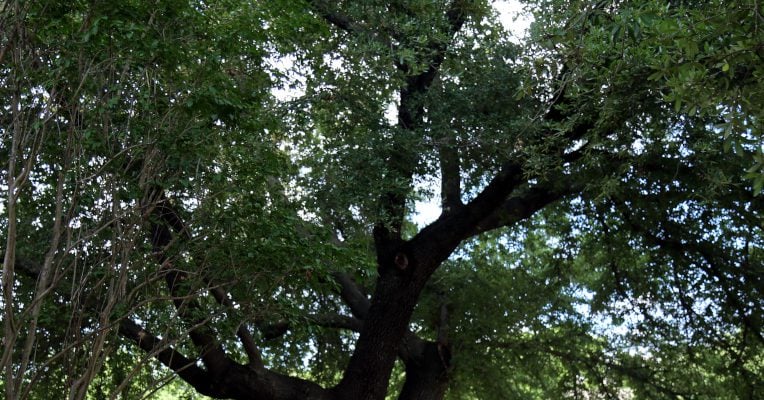
The legacy of witchcraft
Throughout most of history, a witch was something no one claimed to be. The anthropological definition of a witch is a malefic magic user – someone who uses non-ordinary methods to harm others. We blame Christianity for its persecution of witches (most of whom were never witches in any sense of the term) and rightly so. But the pre-Christian Romans prescribed the death penalty for people who worked harmful magic. There are still places in the world where people are killed – sometimes legally – because they’re believed to be witches.
There have always been people with a gift for healing, for seeing the future, for communing with spirits. They were called shamans, wise women, cunningmen, and such – not witches. If things went badly they might be accused of witchcraft – especially if they were caught in the middle of an ethnic or religious conflict. That was never a good thing.
That all changed with Margaret Murray. Her books The Witch-Cult in Western Europe (1921) and The God of the Witches (1931) promoted the idea that the people killed in the medieval witch trials were practicing the remnants of an ancient Goddess religion. Her history was wrong, but her mythology was perfectly timed – it was something people desperately wanted to be true, and so they acted as though it was true. Now a witch was something good, especially for women struggling to gain equality with men.
Witches are people who do witchcraft
Language is not fixed – the meaning of words changes over time as people begin to use them in different ways. That annoys those who don’t want to have to deal with the change, but it doesn’t stop the change from happening. Today “witch” means more than “malefic magic user” – in many cases it means something very different.
But that language change doesn’t erase the legacy of witchcraft. Witchcraft may be healing, but it is also hexing. It may be a closeness to Nature, but it’s also using the elements of Nature for the witch’s own purposes. It may be a familiarity with spirits, but it’s never the officially sanctioned practices of church and state.
Here’s what’s relevant to this post: nothing in the legacy of witchcraft requires the approval of elders, leaders, or anyone else. Witchcraft groups and organizations may have admission requirements (though whether any of them existed prior to the 20th century is highly uncertain), but none of them own the title of “witch.”
Witches have always been people who did witchcraft, however they defined it. And they still are today.
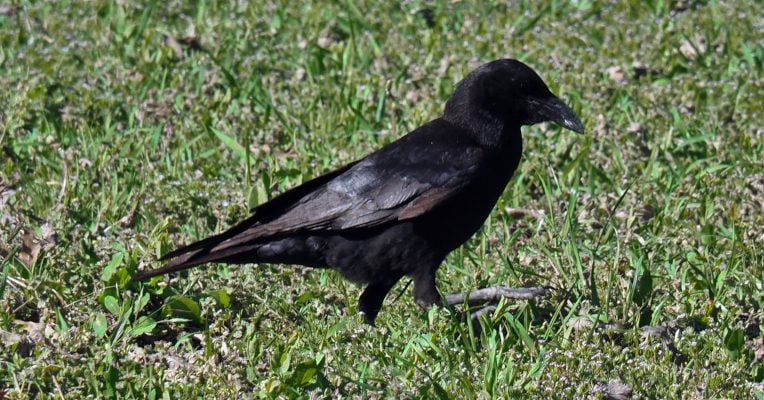
For some, witchcraft is an orientation
Now we need to get into some nuance.
Witches are people who practice witchcraft. Who can practice witchcraft?
The simple answer is “anyone.” Want to be a witch? Start stirring a cauldron and casting spells. Congratulations – now you’re a witch.
Anyone can do it. But working magic comes easier to some than to others. Like the ability to run fast, jump high, or play an instrument well, natural ability for magic is not evenly distributed throughout the population. Study and practice can turn almost all of us into competent magicians. But for some, it comes very easy.
And also, some are called to do it. Some are so fascinated, so intrigued, so interested in magic and witchcraft that they can’t not do it – even those living in places and times where doing so was or is exceedingly dangerous.
In 2018 Heron Michelle wrote a very good piece titled Witchery as an Orientation and Sacred Mission. She begins with what we’ve already discussed here:
I consider Witchcraft to be a vocation with a set of skills and tools that are available to anyone, regardless of their spiritual inclination. All that is required is that you believe that magick is possible. After that, the mechanics can work for anyone.
Then she goes on to say:
When I tried to ignore my inner witching self, hide my interests and abilities, and AVOID my calling, I was a miserable wreck. I was spiritually, intellectually, socially, and emotionally starving. I felt like a fraud.
She is a witch, and not doing witchcraft goes against her nature. Some people are just born this way.
Many paths to the Craft
So when someone says “being a witch isn’t something you do, it’s something you are” I understand. That’s certainly true for some.
The problem is that some beginners read that and assume that the only way to be a witch is to be born a witch – an idea that much of our popular fiction reinforces. And then we get listicles that give us signs that we might be a witch that are so vague they apply to almost anyone.
Which, if you think about it, isn’t wrong, even if it is based on faulty reasoning.
Some people are born with an orientation toward magic and witchcraft. Some develop a strong interest in it, either at an early age or later in life. Some are called to it by Gods or other spirits.
And some choose the path of witchcraft for themselves.
These approaches are all not the same, but they are all are equally valid.

Identities are built by actions
Can I be honest for a minute? Some people who call themselves witches aren’t really interested in practicing witchcraft. They’re looking for an identity, something to tell the world (and themselves) who and what they are. Many of them are young women who adopt the archetype of the witch as a way to empower themselves in a world that is unwelcoming to them, sometimes violently so. If they find strength and comfort – and perhaps, inspiration – in that identity, good for them. It is neither my place nor my intent to tell them they’re not a witch.
It is my place and my intent to tell them – and everyone else – that while there is power in adopting an identity, there is more power in the actions associated with that identity.
Some people just like to play gatekeeper. But another reason these issues keep coming up is that new witches are often uncertain about their practice. Am I doing it right? Have I learned enough? Is my magic strong enough? Am I really a witch?
If that’s you, I want to reassure you that if you’re practicing witchcraft at any level of skill and competency, then yes, you’re a witch.
I also know from experience that reassurances from other people only go so far.
But when you do something over and over again, your skills grow – and so does your confidence. You know you can do it because you’ve already done it. Eventually it stops being a list of things to do and starts being what you do.
And then it becomes who you are.
This is how you build an identity: with consistent action over time. Practice witchcraft for long enough and you won’t need to ask “am I a witch?” You’ll know you are.
Why this is important
I can’t stand people letting their self-importance get in the way of those trying to learn and do something that’s meaningful and important to them. But beyond that, it’s pretty simple: we need more witches.
In the aftermath of the Dobbs decision, Heather Greene wrote How to make a thousand witches with one Supreme Court decision. In it she said “magic has always been, in lore and in life, a tool of the oppressed.”
We must use all the tools at our disposal: political tools, financial tools, educational tools – and magical tools. Not just to restore reproductive rights – important as that is – but to deal with all the aspects of these “interesting times” in which we live. We need people empowered not just to survive but to thrive. Not just to make it through but to make the world a better place.
Witchcraft isn’t the only way to do this. But for some people, it’s the best way – the most effective way.
Practice your witchcraft with the confidence of the witch you are.

Next Post

September 13, 2022 An American’s Thoughts on the Death of Queen Elizabeth
Browse Our Archives
Select a Category Books Community CUUPS Druidry Foundations and Context Gods and Goddesses Magic Myth Nature Ritual Spiritual Practice Theology Travel Uncategorized Videos
Select a Month October 2026 September 2026 August 2026 July 2026 June 2026 May 2026 April 2026 March 2026 February 2026 January 2026 December 2025 November 2025 October 2025 September 2025 August 2025 July 2025 June 2025 May 2025 April 2025 March 2025 February 2025 January 2025 December 2024 November 2024 October 2024 September 2024 August 2024 July 2024 June 2024 May 2024 April 2024 March 2024 February 2024 January 2024 December 2023 November 2023 October 2023 September 2023 August 2023 July 2023 June 2023 May 2023 April 2023 March 2023 February 2023 January 2023 December 2022 November 2022 October 2022 September 2022 August 2022 July 2022 June 2022 May 2022 April 2022 March 2022 February 2022 January 2022 December 2021 November 2021 October 2021 September 2021 August 2021 July 2021 June 2021 May 2021 April 2021 March 2021 February 2021 January 2021 December 2020 November 2020 October 2020 September 2020 August 2020 July 2020 June 2020 May 2020 April 2020 March 2020 February 2020 January 2020 December 2019 November 2019 October 2019 September 2019 August 2019 July 2019 June 2019 May 2019 April 2019 March 2019 February 2019 January 2019 December 2018 November 2018 October 2018 September 2018 August 2018 July 2018 June 2018 May 2018 April 2018 March 2018 February 2018 January 2018 December 2017 November 2017 October 2017 September 2017 August 2017 July 2017 June 2017 May 2017 April 2017 March 2017 February 2017 January 2017 December 2016 November 2016 October 2016 September 2016 August 2016 July 2016 June 2016 May 2016 April 2016 March 2016 February 2016 January 2016 December 2015 November 2015 October 2015 September 2015 August 2015 July 2015 June 2015 May 2015 April 2015 March 2015 February 2015 January 2015 December 2014 November 2014 October 2014 September 2014 August 2014 July 2014 June 2014 May 2014 April 2014 March 2014 February 2014 January 2014 December 2013 November 2013 October 2013 September 2013 August 2013 July 2013 June 2013 May 2013 April 2013 March 2013 February 2013 January 2013 December 2012 November 2012 October 2012 September 2012 August 2012 July 2012 June 2012 May 2012 April 2012 March 2012 February 2012 January 2012 December 2011 November 2011 October 2011 September 2011 August 2011 July 2011 June 2011 May 2011 April 2011 March 2011 February 2011 January 2011 December 2010 November 2010 October 2010 September 2010 August 2010 July 2010 June 2010 May 2010 April 2010 March 2010 February 2010 January 2010 December 2009 November 2009 October 2009 September 2009 August 2009 July 2009 June 2009 May 2009 April 2009 March 2009 February 2009 January 2009 December 2008 November 2008 October 2008 September 2008 August 2008 July 2008 June 2008
Follow Us!
TAKE THE
Religious Wisdom Quiz
I used a tent peg and hammer to kill a fleeing enemy commander while he slept. Who am I?
Select your answer to see how you score.
Jael Deborah Delilah Ruth
Related posts from John Beckett




What We Lose When “Ask AI” Becomes A...
TRENDING AT PATHEOS Pagan

The First Eucharistic Controversy: Christ’s Real Presence
For Catholics, the Eucharist is the source and summit of the Christian...

How to Make a Decision When You Can't...
Main point: It’s much more valuable to stay close to God so...

Archdiocese Hosts Military Marriage Retreat in Germany
RASTATT, Germany — The transient military lifestyle, with its frequent deployments and...

Nearly every morning, I make the drive to Detroit with my high-school-age...

The Real AI Story Is Adoption Without Trust
Artificial intelligence has crossed a political threshold. It is no longer a...

A new article, written by Jeff Lindsay and Gale L. Pooley,...
view all Pagan blogs
Ad-Free & Subscriber Log-In Subscription Support
- About Us
- 2026 Calendar
- Videos
- Podcasts
- Library of World Religions
- Faith In Media Tracker
- Advertise With Us
- Write for Us
- Privacy Policy
- Terms of Service
- Do Not Sell My Data
- Contact Us
- Radiant Digital
- Manage Newsletter Subscriptions
- Unsubscribe From Notifications
- Sitemap
Copyright 2008-2026, Patheos. All rights reserved.
Subscription Support Ad-Free & Subscriber Log-In
Follow Patheos