
BuddhistCatholicContemplativeEvangelicalGeneral ChristianHinduJewishLatter-day SaintMuslimNew VisionsProgressive Christian
Beliefs
- Buddhist
- Catholic
- Contemplative
- Evangelical
- General Christian
- Hindu
- Jewish
- Latter-day Saint
- More Voices
- Muslim
- New Visions
- Pagan
- Progressive Christian
Topics
- Religion News
- Food and Religion
- Sports and Religion
- Religious Art
- Religious Music and Entertainment
- Religious Events
- History and Religion
- Style and Religion
- Politics and Religion
- Women in Religion
- Recreation Outdoors and Religion
- Business Finance and Religion
- Careers Workplace and Religion
- Education and Religion
- Family Parenting and Religion
- Health Fitness and Religion
- Home and Religion
- Relationships and Religion
- Technology and Religion
- Travel and Religion
Columnists
- Buddhist Columnists
- Business Finance and Religion Columnists
- Careers Workplace and Religion Columnists
- Catholic Columnists
- Contemplative Columnists
- Education and Religion Columnists
- Evangelists Columnists
- Family Parenting and Religion Columnists
- General Christian Columnists
- Health Fitness and Religion Columnists
- Hindu Columnists
- History and Religion Columnists
- Home and Religion Columnists
- Jewish Columnists
- More Voices Columnists
- Latter Day Columnists
- Muslim Columnists
- New Visions Columnists
- Nonreligious Columnists
- Pagan Columnists
- Politics and Religion Columnists
- Progressive Columnists
- Recreation Outdoors and Religion Columnists
- Relationships and Religion Columnists
- Religion News Columnists
- Religious Art Columnists
- Religious Events Columnists
- Religious Music and Entertainment Columnists
- Sports and Religion Columnists
- Style and Religion Columnists
- Technology and Religion Columnists
- Travel and Religion Columnists
- Women in Religion Columnists
Resource Library
- 2026 Calendar
- Library of World Religions
- The 100 Most Holy Places on Earth
- Patheos Answers
- Podcasts
- Videos
- Faith Leaders Database
- Anglican Episcopalian
- Bahai
- Baptist
- Buddhism
- Christianity
- Confucianism
- Eastern Orthodoxy
- Hinduism
- Holiness and Pentecostal
- ISKCON
- Islam
- Judaism
- Lutheran
- Methodist
- The Church of Jesus Christ of Latter-day Saints
- New Age
- Paganism
- Presbytarian and Reformed
- Protestantism
- Religion Behind the Scenes
- Roman Catholic
- Scientology
- Shia Islam
- Sikhism
- Sufism
- Sunni Islam
- Taoism
- Zen
- See all religions
Research Tools
 Ad-Free & Subscriber Log-In Subscription Support
Ad-Free & Subscriber Log-In Subscription Support
Follow Patheos 

- Trending:
- Forgiveness
- |
- Marriage
- |
- Consciousness
- |
- Death Penalty
- |
- Election
- |
- Halloween

- Home
- Pagan
- From “A New Age is Dawning” to “Tower Time” – What It Means When People Predict Bad Times
From “A New Age is Dawning” to “Tower Time” – What It Means When People Predict Bad Times
Last updated on: September 8, 2022 at 3:00 am by John Beckett
From “A New Age is Dawning” to “Tower Time” – What It Means When People Predict Bad Times 2022-09-06T14:40:35-06:00 John Beckett
Patheos Explore the world's faith through different perspectives on religion and spirituality! Patheos has the views of the prevalent religions and spiritualities of the world.
Here’s an interesting question with some deep implications:
We’ve been through a period of time where many of us apparently had some foreknowing of difficult times to come. Are you aware of this happening before in Neopagan times (roughly since 1900) and how does it fit into your theology?
I can’t think of a time prior to recent years when modern Pagans were predicting difficult times to come. I’m not a historian, but I’m more than a little familiar with the origins and development of the modern Pagan movement. I’m pretty sure the reason I can’t think of one is that there aren’t any.
Now, there are prophets of doom in every era, in every decade. Most of them are misanthropes and malcontents. Some are mentally ill. I’m not interested in digging up some Pagan version of a street preacher who managed to be a stopped clock that’s right twice a day. In the history of modern Paganism, you just don’t find many (or any) authors, teachers, and other public figures predicting difficult times to come.
Quite the contrary. Many of the key figures of the early modern Pagan movement (which I usually date from the founding of the Golden Dawn in 1887) predicted a new era – a New Age – of peace and enlightenment. Aleister Crowley said humanity was moving from the Aeon of Osiris to the Aeon of Horus, when “freed of the obsession of the doom of the Ego in Death, and of the limitation of the Mind by Reason, the best men again set out with eager eyes upon the Path of the Wise.”
Until very recently, most Pagan and occult leaders expected things to get better – and they expected to be a big part of the reason why.
We need to begin by looking at this from a human perspective.

A Renaissance of ideas and possibilities
While modern Paganism has roots in the beliefs and practices of our ancient ancestors, the return of Paganism as a religion (or religions, to be more precise) began with the Renaissance.
Recent scholarship has begun to show that the Dark Ages weren’t so dark and dreary after all. They were just a time of relative isolation in Europe, when it was hard for ideas to be communicated and preserved. The invention of the printing press and the expansion of trade brought about an expansion of ideas, including rediscovering the art, stories, and religious practices of the ancient Greeks and Romans.
To some they were myths, to some they were quaint ideas, and to some they were inspiring. In the words of Druid and philosophy professor Brendan Myers “people got tired of the austerities of Christian discipline and the misanthropy of the Doctrine of Original Sin.” For a society that was thoroughly Christian (often oppressively so), the rediscovery of Paganism was like a breath of fresh air.
The earliest modern Paganism was about dreams of a better way of living.
The beginnings of the Druid Revival
Ross Nichols’ story that the modern Druid movement was founded in the Apple Tree Tavern in London in 1717 is more apocryphal than historical, but that date is a fair approximation for the beginnings of the Druid revival. There is evidence for people considering themselves to be Druids as early as the late 1600s, and the first documented Druid order was founded in 1792.
It is not coincidental that the Industrial Revolution began about the same time. For all that the Industrial Revolution improved living standards, it also uprooted society and desecrated the environment. In 1804, William Blake (who Nichols included in his list of Chief Druids) wrote about “England’s green and pleasant land” and also about its “dark satanic mills.” Modern Paganism is in part a response to the disruption of the Industrial Revolution.
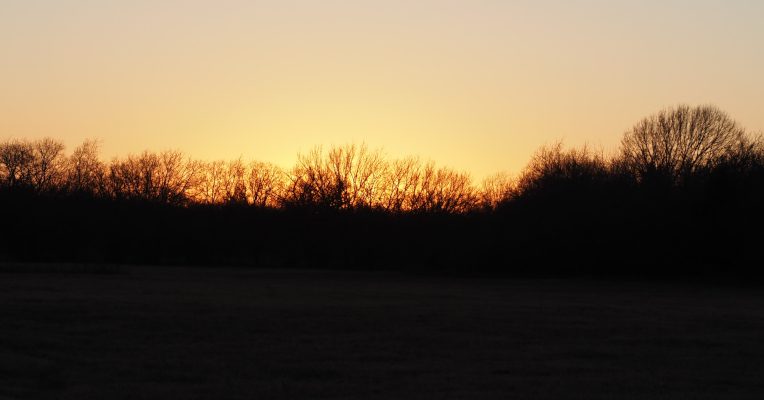
But while there are plenty of examples of 18th and 19th century Druids and Pagans complaining about industrialization and romanticizing pastoral life, I can find no examples where they prophesied about coming bad times. They were complaining about their current times and presented their spiritual path as a better alternative.
An era of near-continuous progress
By the time the Pagan Movement started to shift from “Christians with Pagan leanings” to “actual Pagans” in the late 19th and early 20th centuries, the Myth of Progress was in full swing. We had the telegraph, then the telephone, then radio. We had the beginnings of modern medicine and a tremendous growth in life expectancy. We had the end of slavery and the extension of voting rights to women.
The world was getting better and better and there was no reason to expect that trend wouldn’t continue.
20 million people died in World War I, but it was called “the war to end all wars.” That was a bad prediction, but it reflected the general optimism in the wider culture. By the 1950s Jack Parsons could rant against “the pretense and lying hypocrisy of Christianity” and advocate for “an end to prudery and shame, to guilt and sin, for these are of the only evil under the sun” and do so with the expectation that it would come to pass.
Things were bad (relatively speaking) but they were getting better. People expected they would continue getting better. Were they seeing / intuiting the future or were they just assuming their then-current trends would continue? I don’t know. I do know people who expect things will keep getting better don’t issue prophecies of decline and demise.
No trend lasts forever
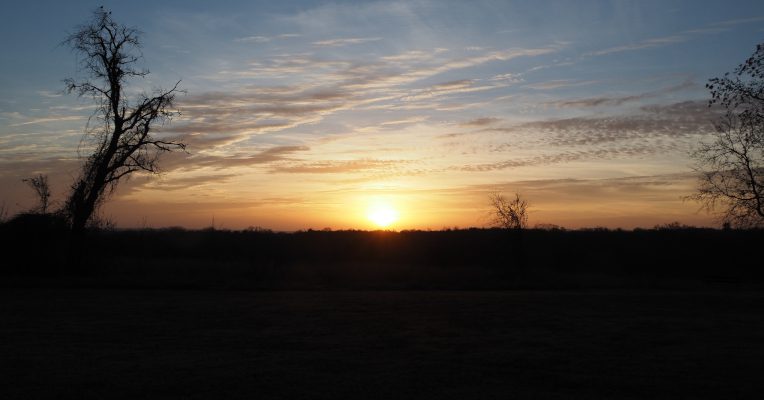
I once heard a UU minister (sadly, I can’t remember who) tell a children’s story with the tag line “good things happen, bad things happen, life goes on.” The story encourages us to live a calm and balanced life and to reject the tendency to get too high in good times or too low in bad times. There is wisdom in that story.
But it doesn’t change the fact that the past 300 years have been a time of remarkable progress, at least in the West.
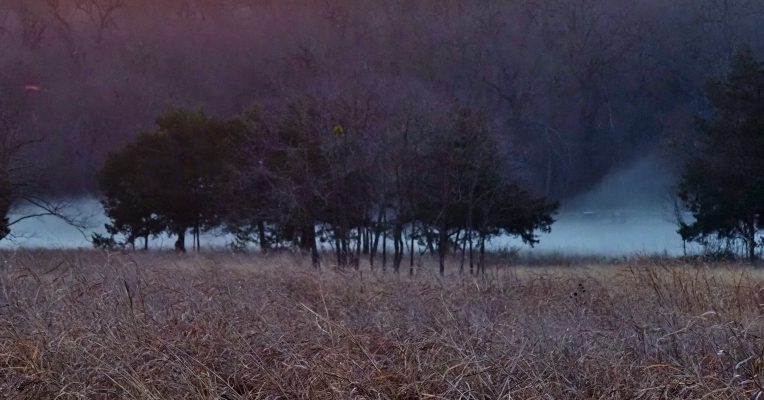
It is unnecessary to list the events over the past 50 years or so that have gotten us to where we are today. By themselves, none of them are enough to signal anything more than the kind of temporary setbacks that are always part of life. Taken together, though, they tell us that this isn’t just a short-term problem. It’s the end of an era, and the beginning of what some of us are calling Tower Time.
I started hearing about it from my Gods – especially the Morrigan – somewhere around 2010. I didn’t know exactly what it meant. I just knew it was important, and there were things I needed to do to get ready – not so much physical preparations as building skills.
And now we know. Or at least, we know what’s happened so far. We don’t know what’s coming next, but we know the general trend. And it’s not good.
The Theology of Tower Time
The question asked how this fits into my theology. If the Gods (or at least, some of Them) warned us in 2010 that Tower Time was coming, why didn’t They tell us what to do in 1970 or 1980 or 1990 that would have helped us take a different path?
Who’s to say They didn’t?
I’m not saying They did. I am saying They’re known for speaking softly and subtly. Sometimes so softly and subtly that those who aren’t paying close attention can’t hear Them.
Last year I wrote The Theology of Tower Time, about what our experiences of the Gods in the context of Tower Time tell us about Them. I listed five things we can say: They are moving, They are concerned with more than just humans, They remain and will remain, and They are always mysterious. And perhaps most importantly, being on Their side has advantages.
Nothing we’ve discussed in this post would cause me to revise any of that.
The perspective of the Gods
I would now add that the Gods are doing what They do – in accordance with Their values and virtues – regardless of the circumstances.
In the early years of the modern Pagan movement, They were reintroducing Themselves to humanity. In our time They’ve become more active in forming and maintaining relationships with individuals and groups. My experience and analysis – and that of many of my co-religionists – tell me They are active in our world and are responding to our crises, but They are responding in Their own ways for Their own reasons. Much as I might wish otherwise, I see no evidence any of Them have chosen a side in our social, economic, and political conflicts.
That’s not to say They’re above it all. It is to say They have a perspective, a vision, and a direction that does not align with any of our political parties and philosophies.
This does not give us permission to “not get involved in politics.” Rather, it reminds us that our first calling is to live virtuously and heroically, regardless of our circumstances – and regardless of who’s in power in which country or region.
Good things happen, bad things happen, life goes on
So, where does all this leave us?
Christianity teaches that time is linear, from creation to apocalypse. Paganism teaches that time is circular – what has happened before will happen again. If you’re looking for the Grand Plan of the Gods, you aren’t going to find it. I’m pretty sure there isn’t one.
Worship your Gods. Honor your ancestors. Respect the land where you live, and the persons – both human and not – who share it with you. Take care of yourself, your family, and your community.
Perhaps there’s more wisdom in that UU minster’s story than I thought…
Previous Post

September 6, 2022
The Role of Art in Paganism
Next Post

September 11, 2022 Who is Really a Witch?
Browse Our Archives
Select a Category Books Community CUUPS Druidry Foundations and Context Gods and Goddesses Magic Myth Nature Ritual Spiritual Practice Theology Travel Uncategorized Videos
Select a Month October 2026 September 2026 August 2026 July 2026 June 2026 May 2026 April 2026 March 2026 February 2026 January 2026 December 2025 November 2025 October 2025 September 2025 August 2025 July 2025 June 2025 May 2025 April 2025 March 2025 February 2025 January 2025 December 2024 November 2024 October 2024 September 2024 August 2024 July 2024 June 2024 May 2024 April 2024 March 2024 February 2024 January 2024 December 2023 November 2023 October 2023 September 2023 August 2023 July 2023 June 2023 May 2023 April 2023 March 2023 February 2023 January 2023 December 2022 November 2022 October 2022 September 2022 August 2022 July 2022 June 2022 May 2022 April 2022 March 2022 February 2022 January 2022 December 2021 November 2021 October 2021 September 2021 August 2021 July 2021 June 2021 May 2021 April 2021 March 2021 February 2021 January 2021 December 2020 November 2020 October 2020 September 2020 August 2020 July 2020 June 2020 May 2020 April 2020 March 2020 February 2020 January 2020 December 2019 November 2019 October 2019 September 2019 August 2019 July 2019 June 2019 May 2019 April 2019 March 2019 February 2019 January 2019 December 2018 November 2018 October 2018 September 2018 August 2018 July 2018 June 2018 May 2018 April 2018 March 2018 February 2018 January 2018 December 2017 November 2017 October 2017 September 2017 August 2017 July 2017 June 2017 May 2017 April 2017 March 2017 February 2017 January 2017 December 2016 November 2016 October 2016 September 2016 August 2016 July 2016 June 2016 May 2016 April 2016 March 2016 February 2016 January 2016 December 2015 November 2015 October 2015 September 2015 August 2015 July 2015 June 2015 May 2015 April 2015 March 2015 February 2015 January 2015 December 2014 November 2014 October 2014 September 2014 August 2014 July 2014 June 2014 May 2014 April 2014 March 2014 February 2014 January 2014 December 2013 November 2013 October 2013 September 2013 August 2013 July 2013 June 2013 May 2013 April 2013 March 2013 February 2013 January 2013 December 2012 November 2012 October 2012 September 2012 August 2012 July 2012 June 2012 May 2012 April 2012 March 2012 February 2012 January 2012 December 2011 November 2011 October 2011 September 2011 August 2011 July 2011 June 2011 May 2011 April 2011 March 2011 February 2011 January 2011 December 2010 November 2010 October 2010 September 2010 August 2010 July 2010 June 2010 May 2010 April 2010 March 2010 February 2010 January 2010 December 2009 November 2009 October 2009 September 2009 August 2009 July 2009 June 2009 May 2009 April 2009 March 2009 February 2009 January 2009 December 2008 November 2008 October 2008 September 2008 August 2008 July 2008 June 2008
Follow Us!
TAKE THE
Religious Wisdom Quiz
Who said, "Even the wind and the waves obey him!"?
Select your answer to see how you score.
John the Baptist The Roman governor Jesus' disciples The Pharisees
Related posts from John Beckett




What We Lose When “Ask AI” Becomes A...
TRENDING AT PATHEOS Pagan

Methodist Central Hall and Westminster Abbey
Situated on the same square is Methodist Central Hall and Westminster Abbey. ...

57th Dove Awards Honor Dolly Parton, Crown New...
On gospel music’s biggest night, the 57th annual GMA Dove Awards honored...

The First Eucharistic Controversy: Christ’s Real Presence
For Catholics, the Eucharist is the source and summit of the Christian...

What a Stop Sign Can Teach Us About...
How to Make a Decision When You Can't Hear God Main point:...

Archdiocese Hosts Military Marriage Retreat in Germany
RASTATT, Germany — The transient military lifestyle, with its frequent deployments and...

Nearly every morning, I make the drive to Detroit with my high-school-age...
view all Pagan blogs
Ad-Free & Subscriber Log-In Subscription Support
- About Us
- 2026 Calendar
- Videos
- Podcasts
- Library of World Religions
- Faith In Media Tracker
- Advertise With Us
- Write for Us
- Privacy Policy
- Terms of Service
- Do Not Sell My Data
- Contact Us
- Radiant Digital
- Manage Newsletter Subscriptions
- Unsubscribe From Notifications
- Sitemap
Copyright 2008-2026, Patheos. All rights reserved.
Subscription Support Ad-Free & Subscriber Log-In
Follow Patheos