
BuddhistCatholicContemplativeEvangelicalGeneral ChristianHinduJewishLatter-day SaintMuslimNew VisionsProgressive Christian
Beliefs
- Buddhist
- Catholic
- Contemplative
- Evangelical
- General Christian
- Hindu
- Jewish
- Latter-day Saint
- More Voices
- Muslim
- New Visions
- Pagan
- Progressive Christian
Topics
- Religion News
- Food and Religion
- Sports and Religion
- Religious Art
- Religious Music and Entertainment
- Religious Events
- History and Religion
- Style and Religion
- Politics and Religion
- Women in Religion
- Recreation Outdoors and Religion
- Business Finance and Religion
- Careers Workplace and Religion
- Education and Religion
- Family Parenting and Religion
- Health Fitness and Religion
- Home and Religion
- Relationships and Religion
- Technology and Religion
- Travel and Religion
Columnists
- Buddhist Columnists
- Business Finance and Religion Columnists
- Careers Workplace and Religion Columnists
- Catholic Columnists
- Contemplative Columnists
- Education and Religion Columnists
- Evangelists Columnists
- Family Parenting and Religion Columnists
- General Christian Columnists
- Health Fitness and Religion Columnists
- Hindu Columnists
- History and Religion Columnists
- Home and Religion Columnists
- Jewish Columnists
- More Voices Columnists
- Latter Day Columnists
- Muslim Columnists
- New Visions Columnists
- Nonreligious Columnists
- Pagan Columnists
- Politics and Religion Columnists
- Progressive Columnists
- Recreation Outdoors and Religion Columnists
- Relationships and Religion Columnists
- Religion News Columnists
- Religious Art Columnists
- Religious Events Columnists
- Religious Music and Entertainment Columnists
- Sports and Religion Columnists
- Style and Religion Columnists
- Technology and Religion Columnists
- Travel and Religion Columnists
- Women in Religion Columnists
Resource Library
- 2026 Calendar
- Library of World Religions
- The 100 Most Holy Places on Earth
- Patheos Answers
- Podcasts
- Videos
- Faith Leaders Database
- Anglican Episcopalian
- Bahai
- Baptist
- Buddhism
- Christianity
- Confucianism
- Eastern Orthodoxy
- Hinduism
- Holiness and Pentecostal
- ISKCON
- Islam
- Judaism
- Lutheran
- Methodist
- The Church of Jesus Christ of Latter-day Saints
- New Age
- Paganism
- Presbytarian and Reformed
- Protestantism
- Religion Behind the Scenes
- Roman Catholic
- Scientology
- Shia Islam
- Sikhism
- Sufism
- Sunni Islam
- Taoism
- Zen
- See all religions
Research Tools
 Ad-Free & Subscriber Log-In Subscription Support
Follow Patheos 

- Trending:
- Advent
- |
- Forgiveness
- |
- Thanksgiving
- |
- Election
- |
- Seasonal Holidays
- |
- Marriage

- Home
- Pagan
- Polytheist Theology: the Names, Functions, and Relationships of the Gods
Polytheist Theology: the Names, Functions, and Relationships of the Gods
Last updated on: September 15, 2022 at 3:00 am by John Beckett
Polytheist Theology: the Names, Functions, and Relationships of the Gods 2022-09-14T19:41:03-06:00 John Beckett
Patheos Explore the world's faith through different perspectives on religion and spirituality! Patheos has the views of the prevalent religions and spiritualities of the world.
It’s time to get back to Conversations Under the Oaks, and I’m very happy that the latest round includes multiple questions on polytheist theology. For one thing, I’m happy that people are thinking about the Gods. We need not fully understand Them to worship Them (we can never fully understand Them – They’re too much more than us), but thinking about Them is another way to draw ourselves closer to Them.
Polytheists invented theology. Much of Greek Neoplatonism was preserved and is available to us. Some Neoplatonism made its way into Christianity – for better and for worse. There is a deep theological tradition in Hinduism. Our Northern and Northwestern European ancestors didn’t leave us a lot of theological literature, but enough remains that we know where to start looking for their Gods – and how to recognize Them when They call to us.
For all that many of us – myself included – would like to develop a systematic polytheist theology, we are often better off starting with small issues. The more narrowly a question is defined, the more likely it is we can come up with a clear and concise answer.
Then when we have enough “small answers” we can look for patterns and trends and start to develop big answers. We can build our polytheist theology from the bottom up rather than from the top down. Eventually we may develop our own systematic theology.
What follows are my answers to some theological questions. They are grounded in what I know of our ancestors’ polytheist beliefs and practices, in my own experiences, and in the experiences and thinking of my co-religionists. They are propositions, not doctrine or dogma. If you find errors or weaknesses in them, I encourage you to articulate your thoughts, either in the comments or on your own blog or other platform. If you’re in general agreement but have further thoughts, please do the same.
Robust and meaningful theology is never the product of any one person. It’s always the product of a group of people who understand that while we can never know everything about the Gods, we can know some things about Them. Dialogue among practitioners and thinkers is one of most effective ways to do this.
And now let’s look at some of our questions. I include questioners’ names when they give me explicit permission, otherwise the questions are anonymous.
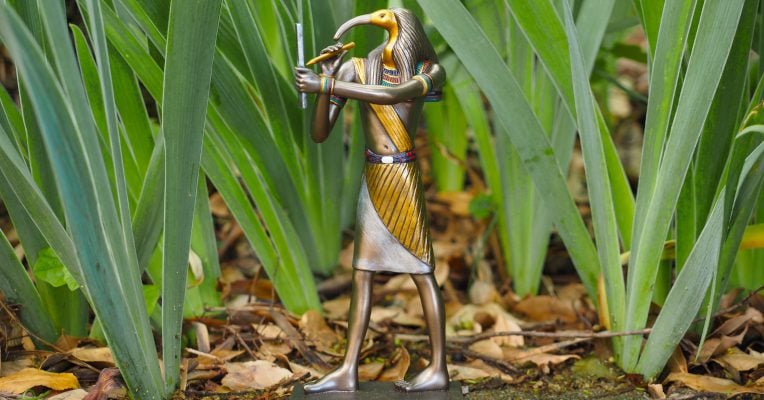
Djehuty – Thoth – a God of writing, learning, and science. Could He be the patron deity of polytheist theology?
Do the Gods have actual names?
Jól Retzloff asks:
Do the gods actually have names? Or are their use-names descriptions? I have my doubts. “Tyr” just means deity; “Freyr” and “Freyja” just mean Lord and Lady.
What is a name? What is the power of a name?
There’s an Egyptian story that says Ra created the universe, but then grew old and detached. Humanity suffered as a result. The people prayed to Isis, for they knew she loved them. Isis tried to persuade Ra to make things right, but he would not. So using her magic – and the saliva of Ra, from when he drooled on the ground in his feebleness – she created a poisonous snake. The snake bit Ra and caused him pain as he had never known.
Ra asked Isis to heal him, and she said “tell me your name, for he who speaks his own name will live.” Ra began to recount his many great deeds and his many epithets, but still the poison tormented him. And so at last Ra gave Isis his true name, which she used to heal him, and to heal the Earth.
Then Ra asked Isis to return his name to him, but Isis refused, saying “one day I may need to heal you again.” And so Isis retained the power that created the universe.
Yes, the Gods have names – true names. No, they’re not the names by which we know Them. Some of those names They told us, but many we gave to Them. Those names are sufficient for us to call to Them and to distinguish one from another – especially when we’re talking about Them amongst ourselves.
And that is enough.
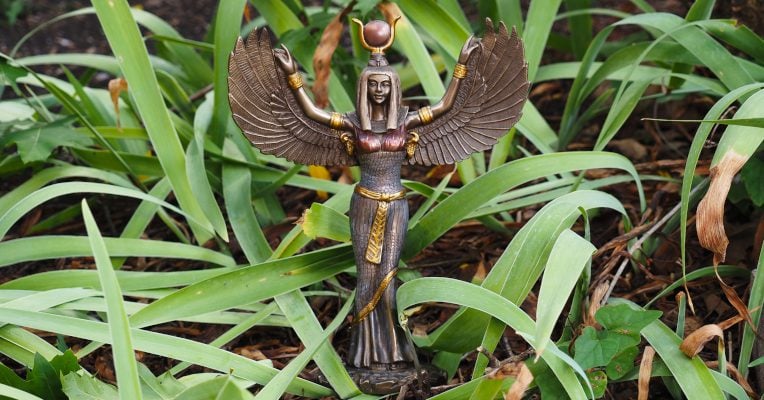
Auset – Isis
Gods of functions, Gods of relationships
Karen Mitchell Carothers asks:
I am curious on your thoughts about the Gods’ modern interests. I’m an engineer and I work in the aerospace industry. I sometimes make offerings for job-related things. I have a close relationship with Brigid and I like to think her blacksmithing aspect can be carried to modern engineering, but I’ve been thinking about what Gods might take a particular interest in the space industry and high tech pursuits.
This is a difficult question for me to answer. In general, I prefer to approach Gods based on relationships rather than on function. While many deities were and are patrons of certain functions and forces – some are the personification of them – the Gods are whole persons. Like Karen, I’m an engineer. But I’m also a Druid, and a writer, and someone who enjoys tacos and wine and chocolate. I’m more than my job – more than any of my jobs.
Likewise, the Gods are more than Their functions. When I have a deep need, I go first to Cernunnos, and to Danu, and to the Morrigan. These are the Gods to whom I’m oathed – I have a formal, permanent relationship with Them. They are more likely to help me because They know me. Because I serve Them, They have an clear interest in my well-being.
Still, like us, many Gods have particular areas of interest and/or responsibility. It’s easy to see Gods of smithcraft (such as Brighid or Hephaestus) as Gods of more modern technology. It’s very easy to see Hermes as a God of the internet. We named the first missions to the moon after Apollo – I don’t think that was random chance. The new one is named for Artemis.
These things have a way of sorting themselves out. People pray to a God for help with something. If They respond, they’re likely to do it again – and to tell others about it. Those who hear about it will repeat the practice. Other times Gods take an interest in something and insert Themselves into a particular realm. Over time, we start to learn who to call on when we need help – and who to thank when things go well.
Meanwhile, keep praying to the Gods you already know.

Danu
The mystery of syncretism
Syncretism is when two or more deities merge and become a new deity. Perhaps the best known example of this is Serapis, the syncretism of Osiris and Apis. He was introduced in the Ptolemaic era of Egypt. His syncretism may have been politically motivated, but He was actively worshipped for 700 years.
And so a questioner asks:
What’s a good way for a polytheist to understand syncretism among Gods? Since they’re independent persons, how do they merge?
I have to admit, the multiplicity of the Gods – which includes syncretism – is a difficult concept for me to intuitively understand. Yet it was a reality in ancient times, and it’s a reality today. I understand it a little better now that I’ve encountered Cernunnos Denton.
Another reader pointed me to this very good essay titled Monolatry, Syncretism, and the Theology of Booze that uses alcoholic drinks to explain syncretism. All alcoholic drinks are a mixture of water, ethanol, and other components. The presence of alcohol is what makes them alcoholic. Beer, wine, and spirits are all essentially a mixture of water and ethanol, but they are very different drinks. Mix them together (such as combining beer and whiskey – a boilermaker) and you get something different still.
Divine syncretism combines the essence of one God with the essence of another God to create a third God who is something like the first two, but still a unique person. And because the Gods are divine, the first two are not diminished by Their contribution to the third.
There is still an element of mystery to syncretism. We don’t know exactly how it works, we just know that it does work because we experience the presence and blessings of the syncretic deity. But the “Theology of Booze” is the best explanation I’ve come across for understanding it intuitively.
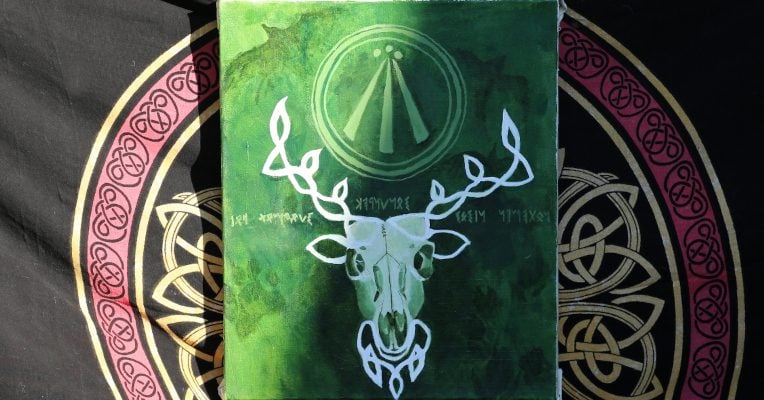
Cernunnos Denton
The Old Gods and the New
This has nothing to do with the religions in Game of Thrones. But someone asked:
Are Gods eternal, outside time, existing but ancient inside our time, or are new Gods born? Have new Gods been born in the last thousand years? Not like an egregore, but a being independent of humans but which humans came to worship?
I see this as two questions. One I can answer with confidence. The other I can answer only with the vaguest of speculations.
New Gods are born at least occasionally. The stories of many different cultures speak of the parentage of certain deities, and of Their descendants. Isis is the daughter of Nut and Geb. She is the mother of Horus. There is no reason to believe that no longer happens, even if we don’t hear about it.
Beyond that, apotheosis is an established phenomenon. This is the process by which a human becomes a God. And since my preferred definition of a God is simply “the mightiest of spirits” it’s reasonable to assume that some spirits who were never human can also become divine.
The first question is more difficult. What does “outside time” mean in a universe where current physics indicates that time did not exist prior to the Big Bang? Have the Gods always existed? Have certain Gods always existed?
I believe that all spirits are immortal – including human spirits. I have past life memories going back to the original Druids, but I have no memories of anything prior to that… much less prior to the evolution of the human species. I think at some point I was born for the first time.
Did Horus exist before Isis and Osiris? Was He waiting fully formed in some cosmic waiting room for his birth? I tend to think no.
Will Horus and Isis and Osiris – and you and me – still exist when this universe comes to an end? I tend to think yes.
Did any of the Gods – as we know Them – exist before the Big Bang? I don’t know, and I don’t know how we can know. This is why I sometimes say I’m both a polytheist and a pantheist.
Some things we know. Some things we don’t know, yet. And other things we can never know, not because we need better thinking or better technology, but because they’re beyond the capacity of our brilliant but limited human brains.
This is enough for now.
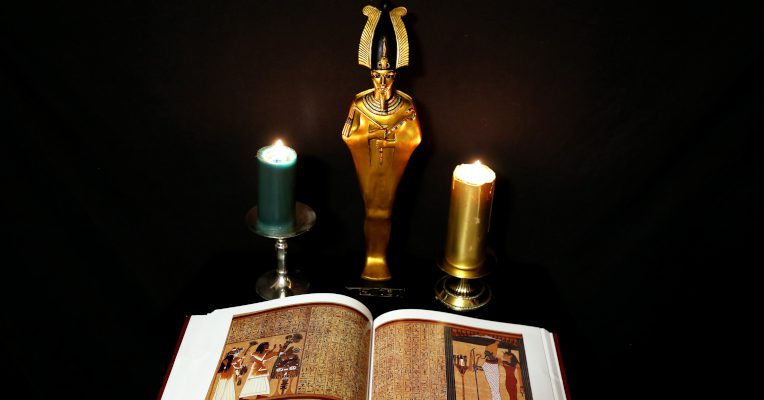
Ausir – Osiris
There are more good questions about the Gods that I’ll address in a future post. Meanwhile, let’s continue the conversation, either here or somewhere else. That’s how we learn and grow and build our contemporary polytheist theology.
Previous Post

September 13, 2022
An American’s Thoughts on the Death of Queen Elizabeth
Next Post

September 18, 2022 Worshipping Deities From Different Cultures
Browse Our Archives
Select a Category Books Community CUUPS Druidry Foundations and Context Gods and Goddesses Magic Myth Nature Ritual Spiritual Practice Theology Travel Uncategorized Videos
Select a Month November 2026 October 2026 September 2026 August 2026 July 2026 June 2026 May 2026 April 2026 March 2026 February 2026 January 2026 December 2025 November 2025 October 2025 September 2025 August 2025 July 2025 June 2025 May 2025 April 2025 March 2025 February 2025 January 2025 December 2024 November 2024 October 2024 September 2024 August 2024 July 2024 June 2024 May 2024 April 2024 March 2024 February 2024 January 2024 December 2023 November 2023 October 2023 September 2023 August 2023 July 2023 June 2023 May 2023 April 2023 March 2023 February 2023 January 2023 December 2022 November 2022 October 2022 September 2022 August 2022 July 2022 June 2022 May 2022 April 2022 March 2022 February 2022 January 2022 December 2021 November 2021 October 2021 September 2021 August 2021 July 2021 June 2021 May 2021 April 2021 March 2021 February 2021 January 2021 December 2020 November 2020 October 2020 September 2020 August 2020 July 2020 June 2020 May 2020 April 2020 March 2020 February 2020 January 2020 December 2019 November 2019 October 2019 September 2019 August 2019 July 2019 June 2019 May 2019 April 2019 March 2019 February 2019 January 2019 December 2018 November 2018 October 2018 September 2018 August 2018 July 2018 June 2018 May 2018 April 2018 March 2018 February 2018 January 2018 December 2017 November 2017 October 2017 September 2017 August 2017 July 2017 June 2017 May 2017 April 2017 March 2017 February 2017 January 2017 December 2016 November 2016 October 2016 September 2016 August 2016 July 2016 June 2016 May 2016 April 2016 March 2016 February 2016 January 2016 December 2015 November 2015 October 2015 September 2015 August 2015 July 2015 June 2015 May 2015 April 2015 March 2015 February 2015 January 2015 December 2014 November 2014 October 2014 September 2014 August 2014 July 2014 June 2014 May 2014 April 2014 March 2014 February 2014 January 2014 December 2013 November 2013 October 2013 September 2013 August 2013 July 2013 June 2013 May 2013 April 2013 March 2013 February 2013 January 2013 December 2012 November 2012 October 2012 September 2012 August 2012 July 2012 June 2012 May 2012 April 2012 March 2012 February 2012 January 2012 December 2011 November 2011 October 2011 September 2011 August 2011 July 2011 June 2011 May 2011 April 2011 March 2011 February 2011 January 2011 December 2010 November 2010 October 2010 September 2010 August 2010 July 2010 June 2010 May 2010 April 2010 March 2010 February 2010 January 2010 December 2009 November 2009 October 2009 September 2009 August 2009 July 2009 June 2009 May 2009 April 2009 March 2009 February 2009 January 2009 December 2008 November 2008 October 2008 September 2008 August 2008 July 2008 June 2008
Follow Us!
TAKE THE
Religious Wisdom Quiz
True or False: Jude mentions that the archangel Michael disputed with Satan about the body of Elijah.
Select your answer to see how you score.
FALSE TRUE
Related posts from John Beckett

Pagans And The Rise Of The Religious Left

Why Halloween Is So Popular – And So...

The Pillar of the Boatmen: the Ancient Monument...

TRENDING AT PATHEOS Pagan

Sunday Readings: Stay Awake and Hope
The First Sunday of Advent begins a new liturgical year, and the...

Are You a Scrooge or an Ebenezer?
A Call to Remember As the Christmas season begins, will we remember...

Noah’s Ark Archaeologists: Gopher Wood or Should We...
Ancient wood, a boat-shaped formation and dates that invite a second look:...

Smart people saying smart things (11.24.26)
Please take time to listen to Perry Bacon, Sarah Posner, Adam Serwer,...

The Contingency of Our Technology
Last week we were hit with a raft of massive technology outages....

In 1939, President Franklin D. Roosevelt moved Thanksgiving from November 30 to...
view all Pagan blogs
Ad-Free & Subscriber Log-In Subscription Support
- About Us
- 2026 Calendar
- Videos
- Podcasts
- Library of World Religions
- Faith In Media Tracker
- Advertise With Us
- Write for Us
- Privacy Policy
- Terms of Service
- Do Not Sell My Data
- Contact Us
- Radiant Digital
- Manage Newsletter Subscriptions
- Unsubscribe From Notifications
- Sitemap
Copyright 2008-2026, Patheos, part of the Radiant Digital network of media brands. All rights reserved.
Subscription Support Ad-Free & Subscriber Log-In
Follow Patheos