
BuddhistCatholicContemplativeEvangelicalGeneral ChristianHinduJewishLatter-day SaintMuslimNew VisionsProgressive Christian
Beliefs
- Buddhist
- Catholic
- Contemplative
- Evangelical
- General Christian
- Hindu
- Jewish
- Latter-day Saint
- More Voices
- Muslim
- New Visions
- Pagan
- Progressive Christian
Topics
- Religion News
- Food and Religion
- Sports and Religion
- Religious Art
- Religious Music and Entertainment
- Religious Events
- History and Religion
- Style and Religion
- Politics and Religion
- Women in Religion
- Recreation Outdoors and Religion
- Business Finance and Religion
- Careers Workplace and Religion
- Education and Religion
- Family Parenting and Religion
- Health Fitness and Religion
- Home and Religion
- Relationships and Religion
- Technology and Religion
- Travel and Religion
Columnists
- Buddhist Columnists
- Business Finance and Religion Columnists
- Careers Workplace and Religion Columnists
- Catholic Columnists
- Contemplative Columnists
- Education and Religion Columnists
- Evangelists Columnists
- Family Parenting and Religion Columnists
- General Christian Columnists
- Health Fitness and Religion Columnists
- Hindu Columnists
- History and Religion Columnists
- Home and Religion Columnists
- Jewish Columnists
- More Voices Columnists
- Latter Day Columnists
- Muslim Columnists
- New Visions Columnists
- Nonreligious Columnists
- Pagan Columnists
- Politics and Religion Columnists
- Progressive Columnists
- Recreation Outdoors and Religion Columnists
- Relationships and Religion Columnists
- Religion News Columnists
- Religious Art Columnists
- Religious Events Columnists
- Religious Music and Entertainment Columnists
- Sports and Religion Columnists
- Style and Religion Columnists
- Technology and Religion Columnists
- Travel and Religion Columnists
- Women in Religion Columnists
Resource Library
- 2026 Calendar
- Library of World Religions
- The 100 Most Holy Places on Earth
- Patheos Answers
- Podcasts
- Videos
- Faith Leaders Database
- Anglican Episcopalian
- Bahai
- Baptist
- Buddhism
- Christianity
- Confucianism
- Eastern Orthodoxy
- Hinduism
- Holiness and Pentecostal
- ISKCON
- Islam
- Judaism
- Lutheran
- Methodist
- The Church of Jesus Christ of Latter-day Saints
- New Age
- Paganism
- Presbytarian and Reformed
- Protestantism
- Religion Behind the Scenes
- Roman Catholic
- Scientology
- Shia Islam
- Sikhism
- Sufism
- Sunni Islam
- Taoism
- Zen
- See all religions
Research Tools
 Ad-Free & Subscriber Log-In Subscription Support
Follow Patheos 

- Trending:
- Advent
- |
- Forgiveness
- |
- Thanksgiving
- |
- Election
- |
- Seasonal Holidays
- |
- Marriage

- Home
- Pagan
- Religious Authenticity: What Works, Not What’s Oldest
Religious Authenticity: What Works, Not What’s Oldest
Last updated on: March 1, 2022 at 3:00 am by John Beckett
Religious Authenticity: What Works, Not What’s Oldest 2022-02-27T17:11:11-06:00 John Beckett
Patheos Explore the world's faith through different perspectives on religion and spirituality! Patheos has the views of the prevalent religions and spiritualities of the world.
Last week I listened to the most recent episode of Down at the Crossroads with Chris Orapello and Tara-Love Maguire. Jason Mankey was their guest, and most of the discussion was on Jason’s book The Horned God of the Witches, which I have not read but need to read before too much longer.
In the final segment they discussed the question of religious and spiritual authenticity, and how too many people are looking for it in the past instead of in the present.
This is an issue I feel strongly about. Rather than insert myself into Chris, Tara, and Jason’s conversation, I’m going to make my own case for why our search for authenticity needs to focus on the present and not on the past.

What do we mean by “authentic”?
Merriam-Webster’s online dictionary lists five different definitions of “authentic” including “worthy of acceptance or belief” and “true to one’s own personality, spirit, or character.” If something is authentic then it’s true and it’s worthy of our attention, our devotion, our practice.
For too many people, this is assumed to mean “doing it like they did way back when.”
What we know of our ancestors’ religions is a treasure. In a just world, we would have an unbroken line of belief and practice going back to our Celtic, Norse, Greek, Egyptian, and other ancestors. We wouldn’t have to rely on what can be pieced together by historians and archaeologists. We would be part of a living tradition.
That doesn’t mean the “best” way would be self-evident. Christianity has an unbroken line reaching back, if not to Jesus, then at least to the first Christians. And yet there are thousands of Christian denominations that vary wildly in belief and practice, ranging from the Disciples of Christ (who are progressive Mainline Protestants) to the Russian Orthodox Church.
Clearly, having an unbroken line tells us nothing about the authenticity of a tradition.
The myth of the Golden Age
Perhaps the biggest reason people look to the past for authenticity is the myth of the Golden Age.
This myth says there was a time when things were right. It was the time when the founder of the religion was still alive and directing things personally (who’s the founder of Christianity? It’s not Jesus. I would argue it’s Paul – Saul of Tarsus. But that’s another topic for another time… and probably, for another blog). Or, for indigenous religions that have no founders, it’s a time before invaders and proselytizers “polluted” the tradition – when people were still worshipping their Gods the way they always had.
The problem for us as Pagans is that there simply is no Golden Age. There was never a time when our ancestors were doing it perfectly “right.”
Religion and culture are in a constant state of flux. They’re always influenced by those in them and around them.
We know much about the religion of ancient Egypt, because much of it is quite literally carved in stone. Egypt changed slowly over 4000 years or so, but it did change. Theology changed, mythology changed, liturgy changed – and not just with Akhenaton and his monotheistic heresy. Some modern Kemetic practitioners simply pick a point in time and attempt to re-create that, while others take a more blended approach.
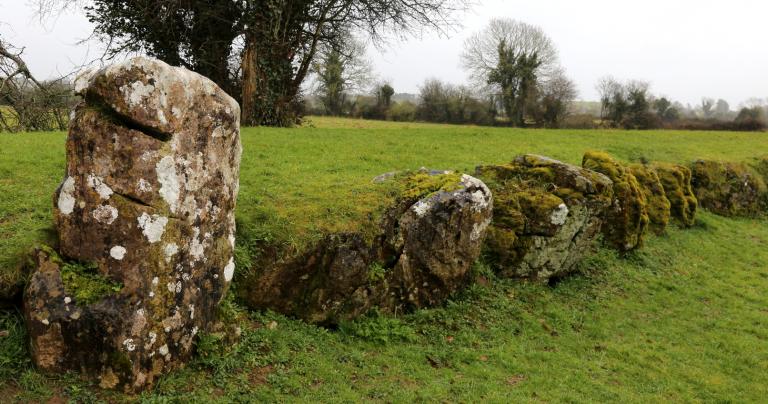
Certainly, there were high points for our ancestral religions. As a Druid, I look back to the pre-Roman times when the original Druids were the priests, record-keepers, and advisors of Celtic societies. I’m inspired by those Druids, even though we know very little about them.
But when we do this, we’re arbitrarily picking one point in time. Because there was no time when everything was perfect and fixed.
The myth of lost knowledge
We are not so far removed from the Dark Ages – so named not because nothing was going on, but because we have few written records to enlighten us as to what was happening. We are even less far removed from the Renaissance – the “reawakening.” When you have nothing, finding anything is a monumental occurrence. The idea of finding lost treasure – either gold or wisdom – still resonates with us.
And so we tend to treat the treasures we have – objects, stories, structures – as infallible guides to the traditions of our ancestors. We think if we could just find more, we’d learn more and know more and we’d be able to practice more authentically.
Except we’ll never have the whole story. Even if we found complete prayer books, liturgies, and liturgical calendars, we would still be living in a very different world.
And there’s still the problem of the Golden Age. We might know much about the beliefs and practices of a society at one point in time, but that would tell us little about the tradition at other points in time.
The idea that we’d be all set if we could just find a trove of lost knowledge is strong. But mostly we can’t, and even if we could it wouldn’t answer all our questions here and now.
The myth of “once and for all”
We live in a world still dominated by Christianity and its idea of a faith “handed down once and for all.” Whether this works for Christians is a matter for Christians to decide. It doesn’t work for Pagans.
It’s ironic that Pagans who are quick to insist that there is no One True Way are often just as quick to insist there is only one way to be a Druid or a Heathen or a witch. Certainly, individual traditions have boundaries – Paganism is not “anything goes.” But the Christian belief that anything of any importance was fixed long ago and can never change has no place in a religion that is about creating change.

A better approach: the models of science and of art
Rather than these three myths, let’s ground our Pagan religions in the model of science and in the model of art.
Science and the practical application of science progress. The Romans built some fantastic roads – 2000 years later some of them are still in existence. But if I’m going to build a road or especially a bridge, I want it built to modern engineering standards.
That meme comparing pristine Roman roads to pothole-filled modern roads? It ignores the fact that no Roman road ever had to support 80,000 pound trucks in freeze-thaw-refreeze weather.
The Egyptians had some remarkable medical care. But if I need surgery, I want the most up-to-date methods possible – including general anesthesia.
Likewise, our religion and spirituality should rooted in the past but always moving forward.
Perhaps a more relevant model is art. Paleolithic cave paintings and rock art are amazing and inspiring. But no one thinks that’s the epitome of art. For centuries art improved by becoming more realistic and life-like. Photography made realism less relevant. Now good art is expressive art – art that tells a story, that makes the viewer feel something.
What style does that best? Impressionism? Surrealism? Abstract? Something else? Artists choose the style that fits them and the message they’re trying to convey.
Likewise, our religion and spirituality need to fit us and our world here and now, not a world that hasn’t existed for centuries.
What produces authentic results?
If you want authentic religion, look for what produces authentic results.
Connections. What beliefs and practices help us form and maintain connections, with our Gods and ancestors, with our co-religionists, and with the rest of the world? If it helps us build strong respectful relationships, it’s authentic.
Understanding. What helps us understand the world and our place in it? What helps us look up at the night sky and realize that the universe is 14 billion years old, and yet here we are, contemplating it all? If it helps us put ourselves into proper context, it’s authentic.
Dealing with Life. It’s been said that to be human is to comprehend that we are alive, and that someday we will die. What helps us deal with aging, death, and loss? What helps us deal with war, plague, and famine? What helps us deal with the ordinary, day to day challenges that are usually inconsequential but occasionally overwhelming? If it helps us keep going when times are hard, it’s authentic.

Something to build, not something to find
In a better world, we would be born into the religion that’s best for us. We’d be taught who our Gods are and how to interact with Them as we grew up. Those of us who are Pagan do not live in such a world. Nor, as with some other religions, can we simply find the “right” tradition and plug into it.
We have to build it.
I wish it were not so. I wish there was a Druid grove a mile from my house with an unbroken connection to pre-Roman Britain and Ireland. There is not. So we have to build what we need.
We want to build it authentically. That’s a good desire, an honest desire, a holy desire.
But we have to build it for here and now, not for there and then.
We will find our authenticity in the present, or we will not find it at all.
Previous Post

February 27, 2022
Power: Trust Yourself
Next Post

March 6, 2022 Spiritual Practice on Vacation: If You Have To Ask, Don’t
Browse Our Archives
Select a Category Books Community CUUPS Druidry Foundations and Context Gods and Goddesses Magic Myth Nature Ritual Spiritual Practice Theology Travel Uncategorized Videos
Select a Month November 2026 October 2026 September 2026 August 2026 July 2026 June 2026 May 2026 April 2026 March 2026 February 2026 January 2026 December 2025 November 2025 October 2025 September 2025 August 2025 July 2025 June 2025 May 2025 April 2025 March 2025 February 2025 January 2025 December 2024 November 2024 October 2024 September 2024 August 2024 July 2024 June 2024 May 2024 April 2024 March 2024 February 2024 January 2024 December 2023 November 2023 October 2023 September 2023 August 2023 July 2023 June 2023 May 2023 April 2023 March 2023 February 2023 January 2023 December 2022 November 2022 October 2022 September 2022 August 2022 July 2022 June 2022 May 2022 April 2022 March 2022 February 2022 January 2022 December 2021 November 2021 October 2021 September 2021 August 2021 July 2021 June 2021 May 2021 April 2021 March 2021 February 2021 January 2021 December 2020 November 2020 October 2020 September 2020 August 2020 July 2020 June 2020 May 2020 April 2020 March 2020 February 2020 January 2020 December 2019 November 2019 October 2019 September 2019 August 2019 July 2019 June 2019 May 2019 April 2019 March 2019 February 2019 January 2019 December 2018 November 2018 October 2018 September 2018 August 2018 July 2018 June 2018 May 2018 April 2018 March 2018 February 2018 January 2018 December 2017 November 2017 October 2017 September 2017 August 2017 July 2017 June 2017 May 2017 April 2017 March 2017 February 2017 January 2017 December 2016 November 2016 October 2016 September 2016 August 2016 July 2016 June 2016 May 2016 April 2016 March 2016 February 2016 January 2016 December 2015 November 2015 October 2015 September 2015 August 2015 July 2015 June 2015 May 2015 April 2015 March 2015 February 2015 January 2015 December 2014 November 2014 October 2014 September 2014 August 2014 July 2014 June 2014 May 2014 April 2014 March 2014 February 2014 January 2014 December 2013 November 2013 October 2013 September 2013 August 2013 July 2013 June 2013 May 2013 April 2013 March 2013 February 2013 January 2013 December 2012 November 2012 October 2012 September 2012 August 2012 July 2012 June 2012 May 2012 April 2012 March 2012 February 2012 January 2012 December 2011 November 2011 October 2011 September 2011 August 2011 July 2011 June 2011 May 2011 April 2011 March 2011 February 2011 January 2011 December 2010 November 2010 October 2010 September 2010 August 2010 July 2010 June 2010 May 2010 April 2010 March 2010 February 2010 January 2010 December 2009 November 2009 October 2009 September 2009 August 2009 July 2009 June 2009 May 2009 April 2009 March 2009 February 2009 January 2009 December 2008 November 2008 October 2008 September 2008 August 2008 July 2008 June 2008
Follow Us!
TAKE THE
Religious Wisdom Quiz
Who did an angel tell to name his son John?
Select your answer to see how you score.
Nathan Simeon Zechariah Joseph
Related posts from John Beckett

Pagans And The Rise Of The Religious Left

Why Halloween Is So Popular – And So...

The Pillar of the Boatmen: the Ancient Monument...
TRENDING AT PATHEOS Pagan

Sunday Readings: Stay Awake and Hope
The First Sunday of Advent begins a new liturgical year, and the...

Are You a Scrooge or an Ebenezer?
A Call to Remember As the Christmas season begins, will we remember...

Noah’s Ark Archaeologists: Gopher Wood or Should We...
Ancient wood, a boat-shaped formation and dates that invite a second look:...

Smart people saying smart things (11.24.26)
Please take time to listen to Perry Bacon, Sarah Posner, Adam Serwer,...

The Contingency of Our Technology
Last week we were hit with a raft of massive technology outages....

In 1939, President Franklin D. Roosevelt moved Thanksgiving from November 30 to...
view all Pagan blogs
Ad-Free & Subscriber Log-In Subscription Support
- About Us
- 2026 Calendar
- Videos
- Podcasts
- Library of World Religions
- Faith In Media Tracker
- Advertise With Us
- Write for Us
- Privacy Policy
- Terms of Service
- Do Not Sell My Data
- Contact Us
- Radiant Digital
- Manage Newsletter Subscriptions
- Unsubscribe From Notifications
- Sitemap
Copyright 2008-2026, Patheos, part of the Radiant Digital network of media brands. All rights reserved.
Subscription Support Ad-Free & Subscriber Log-In
Follow Patheos