
BuddhistCatholicContemplativeEvangelicalGeneral ChristianHinduJewishLatter-day SaintMuslimNew VisionsProgressive Christian
Beliefs
- Buddhist
- Catholic
- Contemplative
- Evangelical
- General Christian
- Hindu
- Jewish
- Latter-day Saint
- More Voices
- Muslim
- New Visions
- Pagan
- Progressive Christian
Topics
- Religion News
- Food and Religion
- Sports and Religion
- Religious Art
- Religious Music and Entertainment
- Religious Events
- History and Religion
- Style and Religion
- Politics and Religion
- Women in Religion
- Recreation Outdoors and Religion
- Business Finance and Religion
- Careers Workplace and Religion
- Education and Religion
- Family Parenting and Religion
- Health Fitness and Religion
- Home and Religion
- Relationships and Religion
- Technology and Religion
- Travel and Religion
Columnists
- Buddhist Columnists
- Business Finance and Religion Columnists
- Careers Workplace and Religion Columnists
- Catholic Columnists
- Contemplative Columnists
- Education and Religion Columnists
- Evangelists Columnists
- Family Parenting and Religion Columnists
- General Christian Columnists
- Health Fitness and Religion Columnists
- Hindu Columnists
- History and Religion Columnists
- Home and Religion Columnists
- Jewish Columnists
- More Voices Columnists
- Latter Day Columnists
- Muslim Columnists
- New Visions Columnists
- Nonreligious Columnists
- Pagan Columnists
- Politics and Religion Columnists
- Progressive Columnists
- Recreation Outdoors and Religion Columnists
- Relationships and Religion Columnists
- Religion News Columnists
- Religious Art Columnists
- Religious Events Columnists
- Religious Music and Entertainment Columnists
- Sports and Religion Columnists
- Style and Religion Columnists
- Technology and Religion Columnists
- Travel and Religion Columnists
- Women in Religion Columnists
Resource Library
- 2026 Calendar
- Library of World Religions
- The 100 Most Holy Places on Earth
- Patheos Answers
- Podcasts
- Videos
- Faith Leaders Database
- Anglican Episcopalian
- Bahai
- Baptist
- Buddhism
- Christianity
- Confucianism
- Eastern Orthodoxy
- Hinduism
- Holiness and Pentecostal
- ISKCON
- Islam
- Judaism
- Lutheran
- Methodist
- The Church of Jesus Christ of Latter-day Saints
- New Age
- Paganism
- Presbytarian and Reformed
- Protestantism
- Religion Behind the Scenes
- Roman Catholic
- Scientology
- Shia Islam
- Sikhism
- Sufism
- Sunni Islam
- Taoism
- Zen
- See all religions
Research Tools
 Ad-Free & Subscriber Log-In Subscription Support
Ad-Free & Subscriber Log-In Subscription Support
Follow Patheos 

- Trending:
- Forgiveness
- |
- Marriage
- |
- Consciousness
- |
- Death Penalty
- |
- Election
- |
- Halloween

- Home
- Pagan
- The Steps of Pagan Religious Life – A Roadmap
The Steps of Pagan Religious Life – A Roadmap
Last updated on: February 10, 2022 at 3:00 am by John Beckett
The Steps of Pagan Religious Life – A Roadmap 2022-02-08T14:56:55-06:00 John Beckett
Patheos Explore the world's faith through different perspectives on religion and spirituality! Patheos has the views of the prevalent religions and spiritualities of the world.
What does a mature and effective Pagan and polytheist spiritual practice look like? What are the steps along the path? How do you get there?
If our Pagan religions were more widespread and institutionalized, we would grow up knowing what that looks like, because we would see other people doing it on a regular basis. Instead, we grow up learning something about the spiritual practices and religious lives of Roman Catholics, Mainline Protestants, and Evangelical Protestants. Depending on where we live and our family background, we may learn something about the religious lives of Jews or Muslims, Buddhists or Hindus.
But rarely Pagans.
Recently I had a question asking about “levels of religious life” as a Pagan. There are two problems in answering that question.
The first is that Paganism isn’t one religion, it’s many. Some traditions have a well-defined structure that can provide guidance for a lifetime. Different traditions have different structures – the roadmap for a Thelemite is different from that of a Gardnerian Wiccan, which is different still from an OBOD Druid.
The second problem is that many Pagans have an extreme dislike for anything resembling hierarchy. The very idea of “levels” is anathema to them.
Still, it’s a legitimate question. Religious freedom need not lead to religious anarchy – particularly for those who don’t want religious anarchy. Those who are starting out can benefit by seeing what those who have gone before them have done – there’s no need for everyone to start from zero.
So in this post I want to talk about the steps of Pagan religious life. I want to draw a map to show people an effective approach to building and advancing their practice in a way that’s meaningful and helpful. It’s not the only way and it’s certainly not the One True Way, but it’s a way – and it’s a way that works.
I’m writing primarily for solitary practitioners and for those who are affiliated with informal groups. If you’re a Gardnerian Wiccan, you’ve already got a roadmap – you don’t need mine. And I’m writing for people who want to grow their practice – who want to make it deeper and more meaningful. If you’re happy where you are, if your goal is to “just be” then this post isn’t for you.
But if you’re looking for a roadmap to greater Pagan spiritual depth, read on.

Seeker
This is where most of us start. We’re dissatisfied where we are. We’re in a religion where we’re told we have to believe things we can’t honestly believe. We’re told we have to vote for certain parties and candidates, even though they’re actively opposed to our values. We know we need something else, but we don’t know what.
Or we’re in no religion, and we feel the call to something more. Either way, we want something different, but we don’t know what. We don’t even know what our options are.
And so we seek – we try to discover what’s out there, looking for what might be right for us.
The term “seeker” isn’t popular with some religious people. Too often it refers to people who are perpetual seekers and who often take bits and pieces of traditions out of their sacred contexts. Often it’s people whose spirituality is a mile wide and an inch deep.
But we live in the most religiously diverse society in the history of humanity. We owe it to ourselves to investigate not just one path but many paths. Read books, attend services, talk to practitioners. You’re making an important decision. Do your best to make a well-informed decision.
Explorer
I don’t like the term “explorer” – it has imperialist and colonialist implications. But I don’t have a better one (without appropriating jargon from another religion), and it is very descriptive, so it’s what I’m using.
At some point, your seeking will lead you to something that seems like it might be right for you. Then it’s time to stop looking around and start looking more deeply where you are. This is the “try it on” step in the process. You move from reading to doing – and you read some deeper books. You don’t just talk to practitioners, you practice with them. You attend services regularly.
And you stop window-shopping other religions and traditions.
You’ve already recognized that this path might be right for you. Now you’re trying to learn enough to decide if it really is.
Devotee
Maybe you learn and do enough to say “this is the right path for me.” Or maybe you read and study and practice and one day you look back and you realize you’ve been following this path for a year – and you don’t really want to try anything else.
At this point, you’ve got a regular spiritual practice. It may be in its early stages, but you’re praying, meditating, and making offerings on a daily or weekly basis. You’re doing something for the high days in your tradition. If magic is part of your tradition, you’re doing something at least monthly. You may not have a patron deity – you may never have a patron deity and that’s OK – but there’s a God or several Gods or a pantheon you’re interested in and you’re actively worshipping, working with, and working for Them.
You’re now devoted to this path, to this tradition, to these Gods.
It’s not a permanent relationship. You can still change your mind if it doesn’t work out, or if you run into something that blows you away and demands that you check it out. But you’re not looking for something to blow you away. You’re not a seeker or an explorer anymore. You’ve found where you belong, at least for now.
In a perfect world, everyone would eventually get to this step – everyone would find where they belong. In reality, some people are addicted to seeking, and others just aren’t interested in religion and spirituality at any level. So be it.
But if you want real spiritual depth in your life, you’ve got to get to this step.
Formal devotee
Some people, perhaps many people, will never go past the devotee step. They do what they do, they’re happy with it, and it’s enough for them. It really is enough.
Those who say “everybody should do their own thing” have a point. But some people’s “own thing” is greater depth and greater commitment. Mine certainly is.
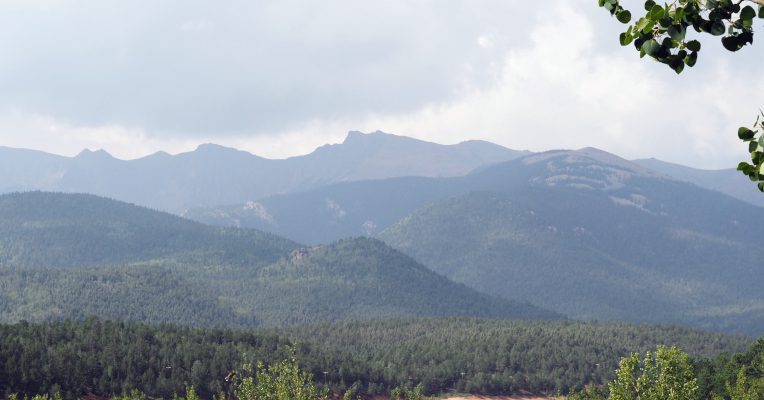
At some point you realize this isn’t just a good path, it’s the right path for you. They’re not just Gods, They’re the Gods you want to worship and work with for the rest of your life. It’s not “many paths up one mountain” but rather many paths up many different mountains, and this is the mountain where you belong.
It’s time to make your devotion formal.
Sometimes this means initiation. Sometimes it means taking an oath. Sometimes it means recognizing that you crossed a line a long time ago and you can’t uncross it.
This is like a marriage – it’s intended to be “till death do us part.” You can get out of it (sometimes, maybe) but it’s expensive and messy and painful. And so it shouldn’t be entered into lightly.
But if you want it, and you need it, and you’re called to it, you can’t imagine doing anything else.

As I see it – and as I live it – this is the top step. This is as high as you can climb, or if you prefer, as deep as you can go. Once you’re formally committed to your Gods and your tradition, all that’s left is to live out that commitment as fully as you can. There’s a lot of work left to be done – work that may take many forms – but there are no more steps to climb.
There are, however, two critical roles that you may – or may not – be called to fill.
Priest
I’ve written a fair amount on Pagan priesthood over the years. Rather than restate it here, I’ll refer you to these four posts:
Priesthood – A Modern Pagan View (2014)
Pagan Sacred Callings That Aren’t Priesthood (2017)
15 Roles of Pagan Priesthood – How Many Is Too Many? (2019)
A Practical Guide to Pagan Priesthood: A Book Review (2020)
For the purposes of this discussion, what’s important is that a priest is a consecrated religious specialist who 1) serves their God or Gods, 2) mediates for those Gods, and 3) serves their community.
But priesthood isn’t something everyone is called to be. It’s not a level in a hierarchy. It’s a set of duties and responsibilities, fulfilled within the context of a sacred relationship.
Mainly, it’s a lot of work.
Teacher
You can teach at any level. Or rather, people at every level teach. That said, seekers and explorers shouldn’t teach. That’s one of the primary complaints against them – too many people read a book and then decide they’re ready to teach. Or these days, ready to become a social media influencer.
The first obligation of a teacher isn’t to the students, but to the tradition: to represent it faithfully and to present it accurately and effectively. You can’t do that if you don’t understand it, and you can’t understand it if you haven’t been practicing it long enough and deeply enough.
But by the time you’re a devotee, you probably understand your tradition well enough to teach at least the basics. If you’re a formal devotee, you’re likely to be asked to teach – or told to teach.
Teaching is a tremendous obligation, to your tradition and to your students. Do your best and never pretend you know more than you do and you’ll do fine.
But as with priesthood, teaching isn’t a level in a hierarchy. It’s a role to be filled.

The roadmap
What we do at each of these steps looks very similar. Read and study. Pray, meditate, and make offerings. Celebrate the high days and holy days. Worship our Gods and do Their work in this world. Learn and grow, serve our communities and our world.
At each step, what changes is the depth and intensity of our practices. What really changes is our commitment to our path and tradition.
We begin as seekers who don’t even know what’s out there. Something grabs our attention and we become explorers, trying to learn more about it and seeing if it’s right for us. We pick a path – either with a conscious choice or because we start walking it and never see fit to stop – and so we become devotees. And at some point we make that choice permanent – we become formal devotees.
None of these steps carry rank and privilege, especially for those who practice solitary. Rather, they reflect an incremental increase in understanding, commitment, and obligation.
Blessings to you on your path, where ever it may lead.
Previous Post

February 8, 2022
Those Who Burn Books Will Eventually Burn People
Next Post

February 13, 2022 This Far and No Farther
Browse Our Archives
Select a Category Books Community CUUPS Druidry Foundations and Context Gods and Goddesses Magic Myth Nature Ritual Spiritual Practice Theology Travel Uncategorized Videos
Select a Month October 2026 September 2026 August 2026 July 2026 June 2026 May 2026 April 2026 March 2026 February 2026 January 2026 December 2025 November 2025 October 2025 September 2025 August 2025 July 2025 June 2025 May 2025 April 2025 March 2025 February 2025 January 2025 December 2024 November 2024 October 2024 September 2024 August 2024 July 2024 June 2024 May 2024 April 2024 March 2024 February 2024 January 2024 December 2023 November 2023 October 2023 September 2023 August 2023 July 2023 June 2023 May 2023 April 2023 March 2023 February 2023 January 2023 December 2022 November 2022 October 2022 September 2022 August 2022 July 2022 June 2022 May 2022 April 2022 March 2022 February 2022 January 2022 December 2021 November 2021 October 2021 September 2021 August 2021 July 2021 June 2021 May 2021 April 2021 March 2021 February 2021 January 2021 December 2020 November 2020 October 2020 September 2020 August 2020 July 2020 June 2020 May 2020 April 2020 March 2020 February 2020 January 2020 December 2019 November 2019 October 2019 September 2019 August 2019 July 2019 June 2019 May 2019 April 2019 March 2019 February 2019 January 2019 December 2018 November 2018 October 2018 September 2018 August 2018 July 2018 June 2018 May 2018 April 2018 March 2018 February 2018 January 2018 December 2017 November 2017 October 2017 September 2017 August 2017 July 2017 June 2017 May 2017 April 2017 March 2017 February 2017 January 2017 December 2016 November 2016 October 2016 September 2016 August 2016 July 2016 June 2016 May 2016 April 2016 March 2016 February 2016 January 2016 December 2015 November 2015 October 2015 September 2015 August 2015 July 2015 June 2015 May 2015 April 2015 March 2015 February 2015 January 2015 December 2014 November 2014 October 2014 September 2014 August 2014 July 2014 June 2014 May 2014 April 2014 March 2014 February 2014 January 2014 December 2013 November 2013 October 2013 September 2013 August 2013 July 2013 June 2013 May 2013 April 2013 March 2013 February 2013 January 2013 December 2012 November 2012 October 2012 September 2012 August 2012 July 2012 June 2012 May 2012 April 2012 March 2012 February 2012 January 2012 December 2011 November 2011 October 2011 September 2011 August 2011 July 2011 June 2011 May 2011 April 2011 March 2011 February 2011 January 2011 December 2010 November 2010 October 2010 September 2010 August 2010 July 2010 June 2010 May 2010 April 2010 March 2010 February 2010 January 2010 December 2009 November 2009 October 2009 September 2009 August 2009 July 2009 June 2009 May 2009 April 2009 March 2009 February 2009 January 2009 December 2008 November 2008 October 2008 September 2008 August 2008 July 2008 June 2008
Follow Us!
TAKE THE
Religious Wisdom Quiz
What Christian group is known for singing acapella during worship?
Select your answer to see how you score.
Churches of Christ Catholics Methodists Baptists
Related posts from John Beckett




What We Lose When “Ask AI” Becomes A...
TRENDING AT PATHEOS Pagan

Swimfan: Forgotten Aughts Pleasures
This is a recovery effort. In 2002, My Big Fat Greek Wedding...

Top Three Anti-Catholic Lies About Catholicism
This is my initial transcript for the video, "THE 3 WORST...

Pope Leo Celebrates Mass for Nurses & Docs...
I don't have any idea how he did it, but Pope Leo...

The Sermon on the Mount, Part I: Matthew...
The Sermon on the Mount, Part I (Matthew 4:12-5:12) St. Matthew moves...

What's up from Crossway: Reviewing some of their latest A few weeks...

Janie Learns the Way of the Cross: A...
Teaching children about Jesus' Passion can be challenging. Many parents and educators...
view all Pagan blogs
Ad-Free & Subscriber Log-In Subscription Support
- About Us
- 2026 Calendar
- Videos
- Podcasts
- Library of World Religions
- Faith In Media Tracker
- Advertise With Us
- Write for Us
- Privacy Policy
- Terms of Service
- Do Not Sell My Data
- Contact Us
- Radiant Digital
- Manage Newsletter Subscriptions
- Unsubscribe From Notifications
- Sitemap
Copyright 2008-2026, Patheos. All rights reserved.
Subscription Support Ad-Free & Subscriber Log-In
Follow Patheos