
BuddhistCatholicContemplativeEvangelicalGeneral ChristianHinduJewishLatter-day SaintMuslimNew VisionsProgressive Christian
Beliefs
- Buddhist
- Catholic
- Contemplative
- Evangelical
- General Christian
- Hindu
- Jewish
- Latter-day Saint
- More Voices
- Muslim
- New Visions
- Pagan
- Progressive Christian
Topics
- Religion News
- Food and Religion
- Sports and Religion
- Religious Art
- Religious Music and Entertainment
- Religious Events
- History and Religion
- Style and Religion
- Politics and Religion
- Women in Religion
- Recreation Outdoors and Religion
- Business Finance and Religion
- Careers Workplace and Religion
- Education and Religion
- Family Parenting and Religion
- Health Fitness and Religion
- Home and Religion
- Relationships and Religion
- Technology and Religion
- Travel and Religion
Columnists
- Buddhist Columnists
- Business Finance and Religion Columnists
- Careers Workplace and Religion Columnists
- Catholic Columnists
- Contemplative Columnists
- Education and Religion Columnists
- Evangelists Columnists
- Family Parenting and Religion Columnists
- General Christian Columnists
- Health Fitness and Religion Columnists
- Hindu Columnists
- History and Religion Columnists
- Home and Religion Columnists
- Jewish Columnists
- More Voices Columnists
- Latter Day Columnists
- Muslim Columnists
- New Visions Columnists
- Nonreligious Columnists
- Pagan Columnists
- Politics and Religion Columnists
- Progressive Columnists
- Recreation Outdoors and Religion Columnists
- Relationships and Religion Columnists
- Religion News Columnists
- Religious Art Columnists
- Religious Events Columnists
- Religious Music and Entertainment Columnists
- Sports and Religion Columnists
- Style and Religion Columnists
- Technology and Religion Columnists
- Travel and Religion Columnists
- Women in Religion Columnists
Resource Library
- 2026 Calendar
- Library of World Religions
- The 100 Most Holy Places on Earth
- Patheos Answers
- Podcasts
- Videos
- Faith Leaders Database
- Anglican Episcopalian
- Bahai
- Baptist
- Buddhism
- Christianity
- Confucianism
- Eastern Orthodoxy
- Hinduism
- Holiness and Pentecostal
- ISKCON
- Islam
- Judaism
- Lutheran
- Methodist
- The Church of Jesus Christ of Latter-day Saints
- New Age
- Paganism
- Presbytarian and Reformed
- Protestantism
- Religion Behind the Scenes
- Roman Catholic
- Scientology
- Shia Islam
- Sikhism
- Sufism
- Sunni Islam
- Taoism
- Zen
- See all religions
Research Tools
 Ad-Free & Subscriber Log-In Subscription Support
Ad-Free & Subscriber Log-In Subscription Support
Follow Patheos 

- Trending:
- Forgiveness
- |
- Marriage
- |
- Consciousness
- |
- Death Penalty
- |
- Election
- |
- Halloween

- Home
- Pagan
- Churches That Look Like Big Box Stores and What That Means For Pagans
Churches That Look Like Big Box Stores and What That Means For Pagans
Last updated on: December 9, 2021 at 3:00 am by John Beckett
Churches That Look Like Big Box Stores and What That Means For Pagans 2021-12-07T11:06:20-06:00 John Beckett
Patheos Explore the world's faith through different perspectives on religion and spirituality! Patheos has the views of the prevalent religions and spiritualities of the world.
The picture below is of a new building that’s going up a few miles from my house. Take a look at it – what do you think it’s going to be?
My first guess was a grocery store, or maybe one of the large fitness center chains. It could be big box retail, but the location (on a connecting street, not a major thoroughfare) makes that unlikely. In any case, the aesthetics scream “sales.”
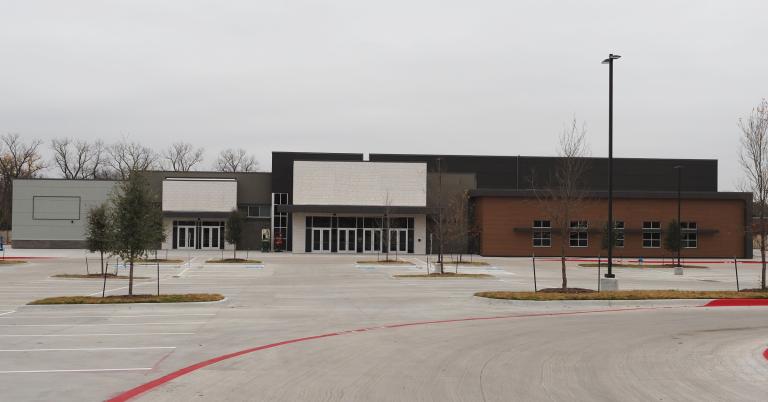
It’s a church.
Now, it has signage that makes it clear it’s a church. I took that out of the photo, in part because I started thinking about this well before the signage went up, and in part because I don’t want to call out this particular church. They’re hardly the only ones doing this.
They’re an Evangelical church, though not the worst of the Evangelicals. According to the material on their website they’re not Calvinists, and their denomination ordains women… though there are no women on the pastoral staff of this particular church. I’m sure they’re good people doing the best they can.
Some of you have already jumped to “it fits – Evangelicalism is all about selling.” You’re not wrong. But my purpose in this post isn’t to bash Evangelicals. I judge them as I judge all religions: by how they live their lives and especially by how they treat other people. I’m not running an inquisition on heresy, architectural or otherwise.
Instead, I want to use this post to talk about the significance of architecture and other aesthetics in religion, and what we can learn from it as Pagans who for the most part do not have our own buildings.
Unmistakable holy places
The cathedrals and churches of medieval Europe were used for many purposes, both sacred and secular. Large indoor spaces were few and everyone was assumed to be Christian, so of course communities met there for a variety of reasons. But they were built as shrines to the glory of their God and as monuments to the majesty of their city. They were extravagant in an era where resources were severely limited. They were both an act of religious devotion and an expression of community pride (and at least part of the time, an expression of the egos of their leaders).
I’ve visited some of these cathedrals. Most of them are more museums than churches (fine buildings alone won’t save a religion that fails to be meaningful to its followers), but they’re still places of power. The architecture and the aesthetics call you to slow down, to remember your sacred stories, to pray, and to listen for the presence of your God.
Whether majestic cathedral or small parish church, there is no question what these buildings are, what they’re for, and who they’re for.
No one is going to mistake them for a grocery store.
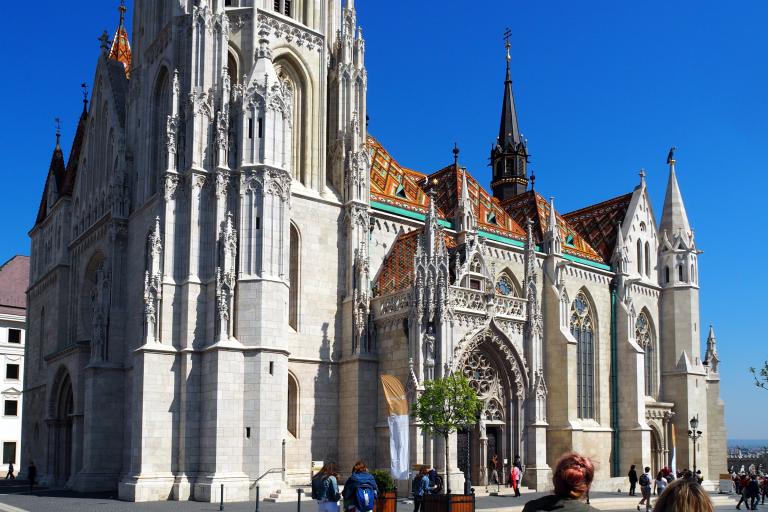
Matthias Church – Budapest
Timeless meeting houses
I grew up going to a small Baptist church in Tennessee. Like the cathedrals of Europe, it was built by people who were mostly poor… only without the financial backing of rich city leaders. It was a plain white rectangular building with a tall steeple – without a cross, because that would be too much like the Catholics. It was part of the Puritanical tradition of simple meeting houses, a practice followed both by New England Congregationalists (some of whom would eventually become Unitarian Universalists) and Southern Evangelicals.
The interior was as plain as the exterior. Hardwood floors, white walls, hard wooden pews, a message board for listing attendance and offerings (that was rarely updated), and a clock on the back wall where only the preacher could see it, even though he ignored it.
It was simple, but there was never a question of what this building was – you didn’t need a sign to tell you it was a church. You knew that when you saw it from the road, and you certainly knew it when you walked in the door.
If I recall correctly, the original building was built in the 1930s. A Sunday School wing was added in the 1950s, and the sanctuary was enlarged in the 1970s. At some point the exterior was bricked – it’s no longer white. But it’s still there, and it’s likely to be there for many years to come.
The life expectancy of a big box store is 20 to 30 years.
Hagia Sophia – built as a church, now a mosque – is over 1500 years old. Westminster Abbey is over 700. Numerous churches in the United States are over 300.
What does it say when you build a church you know won’t last 50 years?

UU Church of Manchester NH
Form follows function
I’ve heard “form follows function” all my life. As it turns out, that’s not some ancient proverb. Rather, it’s the philosophy of 19th century American architect Louis Sullivan, who built some of the earliest skyscrapers.
Frank Lloyd Wright, a student of Sullivan, said “the higher truth is that form and function are one.” I think Wright was correct.
Imagine a meeting between the leaders of a church such as this and the architects they’ve hired to design and build a new church for them.
Architects: “So, what are you looking for in your new building?”
Church Leaders: “Well, we need space for classes and meetings. We need a big kitchen and a place for all of us to eat. And we need a theater with a big stage and lights and screens for our worship band and for our rock star pastor.”
Architects: “OK, what about the congregation?”
Church Leaders: “They’ll need comfortable seats. With cup holders.”
Architects: “How are they going to approach the altar?”
Church Leaders: “What’s an altar?”
Architects: “How are they going to participate in the worship?”
Church Leaders: “Oh, they can stand up and raise their hands.”
Architects: “Very well. One corporate standard big box coming up.”
Form follows function.
What this means for us: aesthetics matter
Perhaps someday we’ll have Pagan temples like our Greek, Roman, and Egyptian ancestors had: beautiful buildings that will proclaim the glory of our Gods and the strength of our communities. I doubt I’ll see them in my lifetime. Perhaps we don’t need them – that’s a different debate for a different time.
There’s a reason why most modern Pagan rituals begin by cleansing and creating sacred space. It’s not that the land and the buildings where we gather are dirty. It’s that they’re profane – they’re ordinary. Casting a circle, cleansing the circle, and performing a series of invocations serve to build a temple – space that is sacred (i.e. – set aside) if only for an hour or so.
Our ritual work is important, but so are all the decorations and accoutrements: altars with altar cloths, candles, statuary, offering bowls, and such. Ritual fires, especially a large central fire. Quarter altars and secondary shrines. Wall coverings, artwork, and all the things that tell us “this place is special.”
If you’ve got access to a clearing in the woods, you may need nothing more than a fire – Nature can provide all the aesthetics you need. If you’re using your back yard, you may need quite a bit to mask the ordinariness. If you’re using your bedroom because that’s all you have, you’ll need all you can get, and you’ll need to focus on yourself (clothes, jewelry, etc.) at least as much as you focus on your surroundings.
Aesthetics alone accomplish nothing. But they help put us in the right frame of mind to worship the Gods, to journey to the Otherworld, to work magic, or to do whatever it is we want to do in our rituals.
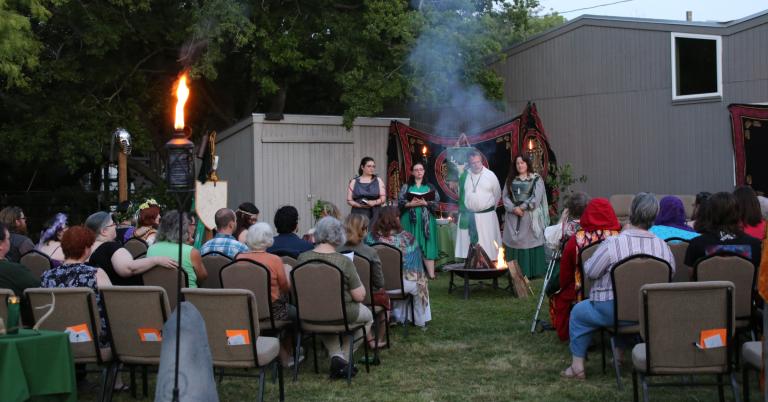
Denton CUUPS Beltane 2017
Form follows function for Pagans too
Focusing on function to the exclusion of form is bad. Focusing on form to the exclusion of function is worse.
Some of the worst Pagan rituals I’ve attended were when small groups led a main ritual at a big gathering. They took a ritual that worked great for 13 people and tried to do the same things for 100. And so we had people waiting around for 15 minutes while each person was individually cleansed as they entered the circle. Everyone stood in one circle – because that’s what Pagans do, right? – that was so big no one could hear and see what was going on.
Many Pagans are allergic to hierarchy (I’m allergic to arbitrary hierarchy) but sometimes rows of seating just make sense. I’m fond of concentric semi-circles.
Whether you’re building a temple that will last a thousand years or that will be disassembled at the end of the evening, make sure your form supports your function.
Everyone makes tradeoffs – what do you choose?
The leaders of this church obviously had a significant budget, but not an unlimited budget. They chose program space over sacred space. They chose a parking lot over a front lawn. They chose size over visual identity and speed of construction over long-term durability.
They made a tradeoff. Was it the right tradeoff? That’s not for me to say.
I will say I’m disappointed to have yet another big box in the neighborhood, especially when it could have been something beautiful and powerful.
As Pagans begin to gather in person again, I hope we’ll give some extra thought to the aesthetics of our spaces. How can we make them temples to the glory of our Gods and shrines to the power of our magic, even if only for an evening?
Previous Post

December 7, 2021
Do You Really Want To Find Your Destiny?
Next Post

December 12, 2021 The First Solstice: A Story That Never Was But Is Again
Browse Our Archives
Select a Category Books Community CUUPS Druidry Foundations and Context Gods and Goddesses Magic Myth Nature Ritual Spiritual Practice Theology Travel Uncategorized Videos
Select a Month October 2026 September 2026 August 2026 July 2026 June 2026 May 2026 April 2026 March 2026 February 2026 January 2026 December 2025 November 2025 October 2025 September 2025 August 2025 July 2025 June 2025 May 2025 April 2025 March 2025 February 2025 January 2025 December 2024 November 2024 October 2024 September 2024 August 2024 July 2024 June 2024 May 2024 April 2024 March 2024 February 2024 January 2024 December 2023 November 2023 October 2023 September 2023 August 2023 July 2023 June 2023 May 2023 April 2023 March 2023 February 2023 January 2023 December 2022 November 2022 October 2022 September 2022 August 2022 July 2022 June 2022 May 2022 April 2022 March 2022 February 2022 January 2022 December 2021 November 2021 October 2021 September 2021 August 2021 July 2021 June 2021 May 2021 April 2021 March 2021 February 2021 January 2021 December 2020 November 2020 October 2020 September 2020 August 2020 July 2020 June 2020 May 2020 April 2020 March 2020 February 2020 January 2020 December 2019 November 2019 October 2019 September 2019 August 2019 July 2019 June 2019 May 2019 April 2019 March 2019 February 2019 January 2019 December 2018 November 2018 October 2018 September 2018 August 2018 July 2018 June 2018 May 2018 April 2018 March 2018 February 2018 January 2018 December 2017 November 2017 October 2017 September 2017 August 2017 July 2017 June 2017 May 2017 April 2017 March 2017 February 2017 January 2017 December 2016 November 2016 October 2016 September 2016 August 2016 July 2016 June 2016 May 2016 April 2016 March 2016 February 2016 January 2016 December 2015 November 2015 October 2015 September 2015 August 2015 July 2015 June 2015 May 2015 April 2015 March 2015 February 2015 January 2015 December 2014 November 2014 October 2014 September 2014 August 2014 July 2014 June 2014 May 2014 April 2014 March 2014 February 2014 January 2014 December 2013 November 2013 October 2013 September 2013 August 2013 July 2013 June 2013 May 2013 April 2013 March 2013 February 2013 January 2013 December 2012 November 2012 October 2012 September 2012 August 2012 July 2012 June 2012 May 2012 April 2012 March 2012 February 2012 January 2012 December 2011 November 2011 October 2011 September 2011 August 2011 July 2011 June 2011 May 2011 April 2011 March 2011 February 2011 January 2011 December 2010 November 2010 October 2010 September 2010 August 2010 July 2010 June 2010 May 2010 April 2010 March 2010 February 2010 January 2010 December 2009 November 2009 October 2009 September 2009 August 2009 July 2009 June 2009 May 2009 April 2009 March 2009 February 2009 January 2009 December 2008 November 2008 October 2008 September 2008 August 2008 July 2008 June 2008
Follow Us!
TAKE THE
Religious Wisdom Quiz
What did Ezekiel cook his food over as a sign of coming judgment?
Select your answer to see how you score.
Stones Ashes Cow dung Wood
Related posts from John Beckett




What We Lose When “Ask AI” Becomes A...
TRENDING AT PATHEOS Pagan

Janie Learns the Way of the Cross: A...
Teaching children about Jesus' Passion can be challenging. Many parents and educators...

Looking For Good Catholic Writing - October 2026
He alone extends the heavens, and he walks upon the waves of...

In "Irreplaceable," our book on vocation and technology, Trevor Sutton and I...

I was strolling through the top floor of the brand new Parthenon...

What Does Gêvâh Mean For Kimberley Guifoyle &...
This week, a lot of the news is focused on Kimberly Guilfoyle....

INNER CIRCLE: Profound Mystery (Of Christ In All...
Ephesians 5:31-32 “For this reason, a man will leave his father and...
view all Pagan blogs
Ad-Free & Subscriber Log-In Subscription Support
- About Us
- 2026 Calendar
- Videos
- Podcasts
- Library of World Religions
- Faith In Media Tracker
- Advertise With Us
- Write for Us
- Privacy Policy
- Terms of Service
- Do Not Sell My Data
- Contact Us
- Radiant Digital
- Manage Newsletter Subscriptions
- Unsubscribe From Notifications
- Sitemap
Copyright 2008-2026, Patheos. All rights reserved.
Subscription Support Ad-Free & Subscriber Log-In
Follow Patheos