
BuddhistCatholicContemplativeEvangelicalGeneral ChristianHinduJewishLatter-day SaintMuslimNew VisionsProgressive Christian
Beliefs
- Buddhist
- Catholic
- Contemplative
- Evangelical
- General Christian
- Hindu
- Jewish
- Latter-day Saint
- More Voices
- Muslim
- New Visions
- Pagan
- Progressive Christian
Topics
- Religion News
- Food and Religion
- Sports and Religion
- Religious Art
- Religious Music and Entertainment
- Religious Events
- History and Religion
- Style and Religion
- Politics and Religion
- Women in Religion
- Recreation Outdoors and Religion
- Business Finance and Religion
- Careers Workplace and Religion
- Education and Religion
- Family Parenting and Religion
- Health Fitness and Religion
- Home and Religion
- Relationships and Religion
- Technology and Religion
- Travel and Religion
Columnists
- Buddhist Columnists
- Business Finance and Religion Columnists
- Careers Workplace and Religion Columnists
- Catholic Columnists
- Contemplative Columnists
- Education and Religion Columnists
- Evangelists Columnists
- Family Parenting and Religion Columnists
- General Christian Columnists
- Health Fitness and Religion Columnists
- Hindu Columnists
- History and Religion Columnists
- Home and Religion Columnists
- Jewish Columnists
- More Voices Columnists
- Latter Day Columnists
- Muslim Columnists
- New Visions Columnists
- Nonreligious Columnists
- Pagan Columnists
- Politics and Religion Columnists
- Progressive Columnists
- Recreation Outdoors and Religion Columnists
- Relationships and Religion Columnists
- Religion News Columnists
- Religious Art Columnists
- Religious Events Columnists
- Religious Music and Entertainment Columnists
- Sports and Religion Columnists
- Style and Religion Columnists
- Technology and Religion Columnists
- Travel and Religion Columnists
- Women in Religion Columnists
Resource Library
- 2026 Calendar
- Library of World Religions
- The 100 Most Holy Places on Earth
- Patheos Answers
- Podcasts
- Videos
- Faith Leaders Database
- Anglican Episcopalian
- Bahai
- Baptist
- Buddhism
- Christianity
- Confucianism
- Eastern Orthodoxy
- Hinduism
- Holiness and Pentecostal
- ISKCON
- Islam
- Judaism
- Lutheran
- Methodist
- The Church of Jesus Christ of Latter-day Saints
- New Age
- Paganism
- Presbytarian and Reformed
- Protestantism
- Religion Behind the Scenes
- Roman Catholic
- Scientology
- Shia Islam
- Sikhism
- Sufism
- Sunni Islam
- Taoism
- Zen
- See all religions
Research Tools
 Ad-Free & Subscriber Log-In Subscription Support
Ad-Free & Subscriber Log-In Subscription Support
Follow Patheos 

- Trending:
- Forgiveness
- |
- Marriage
- |
- Consciousness
- |
- Death Penalty
- |
- Election
- |
- Halloween

- Home
- Pagan
- The Pew Doors of St. Cuthbert’s – A Cautionary Tale for Us All
The Pew Doors of St. Cuthbert’s – A Cautionary Tale for Us All
Last updated on: September 19, 2021 at 3:00 am by John Beckett
The Pew Doors of St. Cuthbert’s – A Cautionary Tale for Us All 2021-09-15T18:49:54-06:00 John Beckett
Patheos Explore the world's faith through different perspectives on religion and spirituality! Patheos has the views of the prevalent religions and spiritualities of the world.
What happens when we cling to religious edifices from a bygone era even though they cause more harm than good in our times? Here’s an interesting story that serves as an illustration, and as a cautionary tale for all of us.
We begin with an article from the Church Times, a U.K. newspaper that covers the Anglican Church but is independent from it. It concerns St. Cuthbert’s, the parish church of the village of Over Kellet in northwest England. The building is listed as a historic site, and thus has restrictions on what modifications can be made.
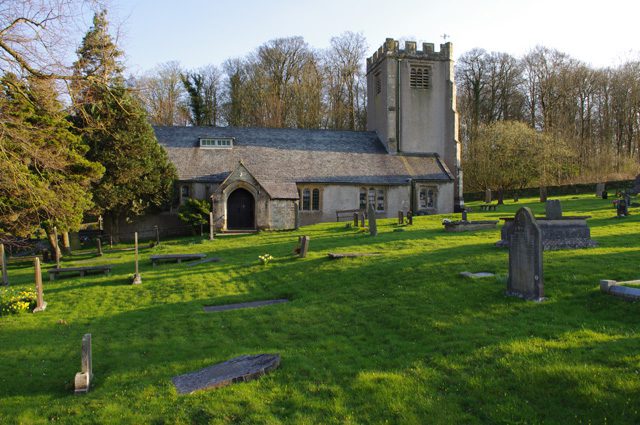
St. Cuthbert’s Church – Over Kellet – England. Photo by Ian Taylor, used under Creative Commons License.
St. Cuthbert’s has box pews – more on that later. Last year the church removed the doors from the boxes. That removed a touchpoint and a possible source of transmission for the Covid-19 virus. This year, the church applied for permission to leave the doors off permanently. They said that would make the church “more accessible and welcoming” especially to those with limited mobility.
The Diocesan Chancellor denied permission, based largely on recommendations from various historical societies. The doors must now be replaced.
St. Cuthbert’s is not Westminster Abbey or one of the other large cathedrals that are more museums and tourist attractions than working churches. It’s a very old building, but it’s an active parish church – it’s part of a living community. But some people want to keep it frozen in the past.
This essay is not about what are and aren’t proper pandemic protocols (unlike what we thought at the beginning of the pandemic, it now appears there is little chance of Covid transmission via surface contact). Nor is this about the question of local control vs. central control (I generally prefer local control over local matters and central control over matters of general interest). It’s not even about whether box pews should or shouldn’t have doors.
Rather, it’s about what happens when we allow religion to be frozen in the past and become an museum exhibit rather than a living tradition.
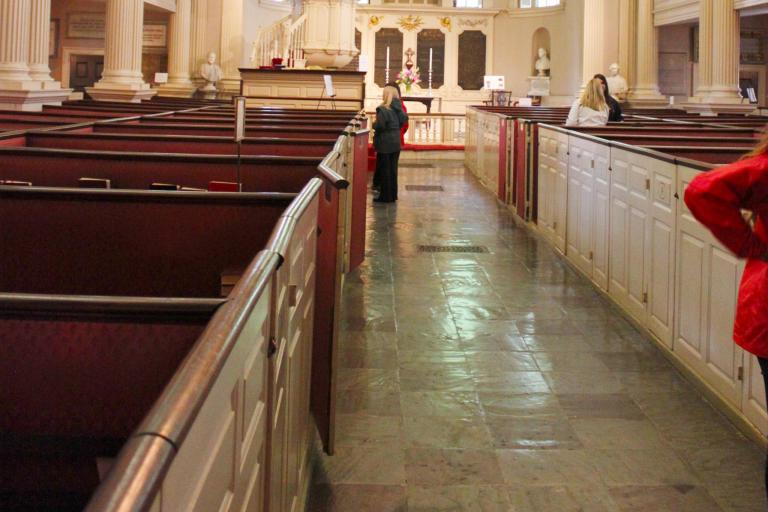
Box pews – with doors – in King’s Chapel, Boston – 2013
Box pews – artifacts of a bygone era
The earliest Christian churches did not have pews, or any other seating. They first appeared in the 13th century, but they didn’t become common until the Protestant Reformation. When the sermon replaced holy communion as the center point of the service, seating became necessary. But who would pay to install seating?
In many churches, that responsibility fell to individual families. Box pews allowed them to clearly delineate their property, and they provided some protection from cold drafts. Other churches used pew rentals as a major source of fundraising, and rent could be very high, particularly for pews in desirable locations.
The practice was brought to the Americas – many Colonial era churches still have box pews. I saw a couple of them when I visited Boston a few years ago, including some in churches that are now Unitarian Universalist.
Some churches were “closed” – if you didn’t own or rent a pew, you couldn’t attend. No doubt this played a large part in the historically low church attendance during the Revolutionary War era.
The practice of pew rentals didn’t end in some locations until the 20th century. Churches realized that it wasn’t very welcoming and discouraged people from attending.
But the box pews remain in many churches, artifacts of a bygone era.
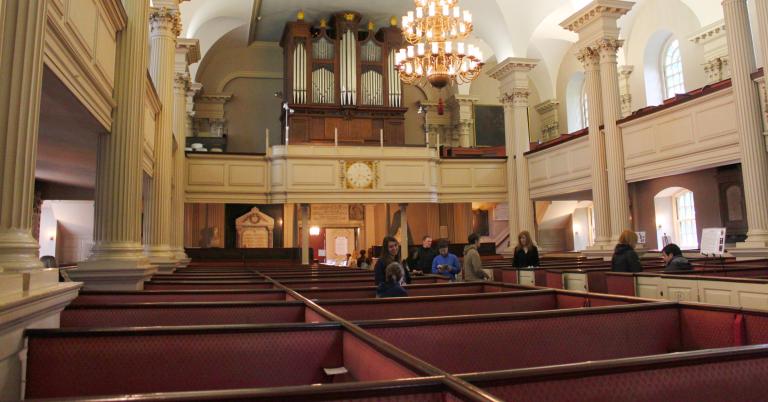
Box pews in King’s Chapel, Boston – 2013
St. Cuthbert’s – a thousand year old church
According to information on the church website, there has been a church in the village of Over Kellet since the 900s. The current stone building dates to about 1215. A tower was built in the 1300s and enlarged in the 1500s when a major tear-down-and-rebuild project took place. Further additions and renovations were made in 1856, 1909, and 2006.
The pews in question were installed in 1817 – they’re a relatively late addition.
As an American, I’m in awe of buildings and other structures that have existed for many centuries. I’m annoyed by our tendency to tear down anything more than 20 years old so we can build something bigger and newer. There is value in preserving our architectural heritage.
St. Cuthbert’s has been a living church for over a thousand years. It’s been modified numerous times, sometimes extensively. But now it’s considered “a building of special architectural or historic interest” and is being placed in a glass case (metaphorically speaking) where it will be suspended in time forever, regardless of the needs of the congregation. Previous generations were free to modify the building – and they did. Future generations are not.
Bryn Celli Ddu – five thousand years old and still living
Bryn Celli Ddu is a henge and tomb-shrine on the island of Anglesey in Wales. It’s also the site of public high day celebrations by the Anglesey Druid Order. I visited it in 2014 and again in 2018 – the last visit inspired a blog post I titled The Impact of Human Activity on Sacred Sites.
The contemporary Druids are very respectful of Bryn Celli Ddu, but they see her as a living person – a person who wants people to come and experience her and celebrate with her.
Like St. Cuthbert’s, Bryn Celli Ddu has been built and rebuilt multiple times. It began as a simple gathering place. Then a ditch and bank were constructed – the ditch is still there, but the bank is gone. Standing stones were set up, then they were removed and the passage tomb installed. And then it was abandoned and forgotten.
Modern exploration began in the 1800s. In the 1900s some reconstruction occurred, including installing concrete roof pillars for safety reasons.
Over the past 30 years, modern Druids have processed into the henge by the same route. In doing so, they’ve worn a path into the ground. When future archaeologists examine the site, they’ll be able to determine how it looked in past millennia, and they’ll also be able to see how it was used in the 21st century.

Bryn Celli Ddu. See how the ground bends toward the stones that frame the opening in the mound. See not just wear on the grass, but indentations in the ground. A path has been worn into the ground – a new path, the result of 30 years of modern Druid processions.
The question of appropriate modifications vs. inappropriate ones is worthy of debate. I touched on this earlier this year in a post about the Roman Colosseum getting a new floor. I’m glad that concerts and other cultural events will be held in the Colosseum once again. I would be far less happy if it was being turned into apartments. But places that were built to be used need to be used, not just admired from an antiseptic distance.
As with buildings, so with culture and doctrine
Buildings are living parts of a religious tradition – they need to change and grow over time. And what’s true of physical structures is also true of other parts of the tradition.
Some Christian denominations still refuse to ordain women – or otherwise consider them the equals of men – because that’s how things were done for centuries. Some have made hating gay people the essence of their religion… or at least, that’s what they argue in court. Much of the problem with the Taliban is their desire to force everyone to conform to the cultural norms of 7th century Arabia.
Some such problems are less damaging but no less problematic. As we discussed in the last post, too many modern Pagans are more concerned with re-creating a Golden Age that never was than they are with building a robust religion here and now.

Inside a box pew – King’s Chapel, Boston – 2013
At its core, a religion is the accumulated wisdom of those who came before us. It provides guidance as to how best to relate to the Gods and spirits, to the natural world, and to each other. It’s what has been shown to work best when it comes to living a good and virtuous life. This wisdom should be respected, and it should be changed slowly and with serious deliberation.
But when it needs to change, it must change. If it becomes frozen in the past, then priests and practitioners become museum curators, obsessed with preserving what was while the tradition takes another step toward irrelevancy and eventual death.
Whether or not St. Cuthbert’s replaces the doors to their box pews is far from the most important issue of the day to the church, much less to the rest of us.
What’s important is the dangerous idea that an edifice of religion be maintained in perpetuity even though it no longer serves the religious tradition or its practitioners.
And that’s something we all need to think about very carefully.
Previous Post

September 16, 2021
5 Things I Had to Unlearn as a Pagan
Next Post

September 21, 2021 Magical Pictures on My Office Wall
Browse Our Archives
Select a Category Books Community CUUPS Druidry Foundations and Context Gods and Goddesses Magic Myth Nature Ritual Spiritual Practice Theology Travel Uncategorized Videos
Select a Month October 2026 September 2026 August 2026 July 2026 June 2026 May 2026 April 2026 March 2026 February 2026 January 2026 December 2025 November 2025 October 2025 September 2025 August 2025 July 2025 June 2025 May 2025 April 2025 March 2025 February 2025 January 2025 December 2024 November 2024 October 2024 September 2024 August 2024 July 2024 June 2024 May 2024 April 2024 March 2024 February 2024 January 2024 December 2023 November 2023 October 2023 September 2023 August 2023 July 2023 June 2023 May 2023 April 2023 March 2023 February 2023 January 2023 December 2022 November 2022 October 2022 September 2022 August 2022 July 2022 June 2022 May 2022 April 2022 March 2022 February 2022 January 2022 December 2021 November 2021 October 2021 September 2021 August 2021 July 2021 June 2021 May 2021 April 2021 March 2021 February 2021 January 2021 December 2020 November 2020 October 2020 September 2020 August 2020 July 2020 June 2020 May 2020 April 2020 March 2020 February 2020 January 2020 December 2019 November 2019 October 2019 September 2019 August 2019 July 2019 June 2019 May 2019 April 2019 March 2019 February 2019 January 2019 December 2018 November 2018 October 2018 September 2018 August 2018 July 2018 June 2018 May 2018 April 2018 March 2018 February 2018 January 2018 December 2017 November 2017 October 2017 September 2017 August 2017 July 2017 June 2017 May 2017 April 2017 March 2017 February 2017 January 2017 December 2016 November 2016 October 2016 September 2016 August 2016 July 2016 June 2016 May 2016 April 2016 March 2016 February 2016 January 2016 December 2015 November 2015 October 2015 September 2015 August 2015 July 2015 June 2015 May 2015 April 2015 March 2015 February 2015 January 2015 December 2014 November 2014 October 2014 September 2014 August 2014 July 2014 June 2014 May 2014 April 2014 March 2014 February 2014 January 2014 December 2013 November 2013 October 2013 September 2013 August 2013 July 2013 June 2013 May 2013 April 2013 March 2013 February 2013 January 2013 December 2012 November 2012 October 2012 September 2012 August 2012 July 2012 June 2012 May 2012 April 2012 March 2012 February 2012 January 2012 December 2011 November 2011 October 2011 September 2011 August 2011 July 2011 June 2011 May 2011 April 2011 March 2011 February 2011 January 2011 December 2010 November 2010 October 2010 September 2010 August 2010 July 2010 June 2010 May 2010 April 2010 March 2010 February 2010 January 2010 December 2009 November 2009 October 2009 September 2009 August 2009 July 2009 June 2009 May 2009 April 2009 March 2009 February 2009 January 2009 December 2008 November 2008 October 2008 September 2008 August 2008 July 2008 June 2008
Follow Us!
TAKE THE
Religious Wisdom Quiz
What does "Golgotha" literally mean?
Select your answer to see how you score.
Suffering ground Crucifixion hill Skull place Place of death
Related posts from John Beckett


The Vampire Films of Jean Rollin


Bo French Doesn’t Understand Texas
TRENDING AT PATHEOS Pagan

Nearly every morning, I make the drive to Detroit with my high-school-age...

The Real AI Story Is Adoption Without Trust
Artificial intelligence has crossed a political threshold. It is no longer a...

A new article, written by Jeff Lindsay and Gale L. Pooley,...

Swimfan: Forgotten Aughts Pleasures
This is a recovery effort. In 2002, My Big Fat Greek Wedding...

Top Three Anti-Catholic Lies About Catholicism
This is my initial transcript for the video, "THE 3 WORST...

Pope Leo Celebrates Mass for Nurses & Docs...
I don't have any idea how he did it, but Pope Leo...
view all Pagan blogs
Ad-Free & Subscriber Log-In Subscription Support
- About Us
- 2026 Calendar
- Videos
- Podcasts
- Library of World Religions
- Faith In Media Tracker
- Advertise With Us
- Write for Us
- Privacy Policy
- Terms of Service
- Do Not Sell My Data
- Contact Us
- Radiant Digital
- Manage Newsletter Subscriptions
- Unsubscribe From Notifications
- Sitemap
Copyright 2008-2026, Patheos. All rights reserved.
Subscription Support Ad-Free & Subscriber Log-In
Follow Patheos