
BuddhistCatholicContemplativeEvangelicalGeneral ChristianHinduJewishLatter-day SaintMuslimNew VisionsProgressive Christian
Beliefs
- Buddhist
- Catholic
- Contemplative
- Evangelical
- General Christian
- Hindu
- Jewish
- Latter-day Saint
- More Voices
- Muslim
- New Visions
- Pagan
- Progressive Christian
Topics
- Religion News
- Food and Religion
- Sports and Religion
- Religious Art
- Religious Music and Entertainment
- Religious Events
- History and Religion
- Style and Religion
- Politics and Religion
- Women in Religion
- Recreation Outdoors and Religion
- Business Finance and Religion
- Careers Workplace and Religion
- Education and Religion
- Family Parenting and Religion
- Health Fitness and Religion
- Home and Religion
- Relationships and Religion
- Technology and Religion
- Travel and Religion
Columnists
- Buddhist Columnists
- Business Finance and Religion Columnists
- Careers Workplace and Religion Columnists
- Catholic Columnists
- Contemplative Columnists
- Education and Religion Columnists
- Evangelists Columnists
- Family Parenting and Religion Columnists
- General Christian Columnists
- Health Fitness and Religion Columnists
- Hindu Columnists
- History and Religion Columnists
- Home and Religion Columnists
- Jewish Columnists
- More Voices Columnists
- Latter Day Columnists
- Muslim Columnists
- New Visions Columnists
- Nonreligious Columnists
- Pagan Columnists
- Politics and Religion Columnists
- Progressive Columnists
- Recreation Outdoors and Religion Columnists
- Relationships and Religion Columnists
- Religion News Columnists
- Religious Art Columnists
- Religious Events Columnists
- Religious Music and Entertainment Columnists
- Sports and Religion Columnists
- Style and Religion Columnists
- Technology and Religion Columnists
- Travel and Religion Columnists
- Women in Religion Columnists
Resource Library
- 2026 Calendar
- Library of World Religions
- The 100 Most Holy Places on Earth
- Patheos Answers
- Podcasts
- Videos
- Faith Leaders Database
- Anglican Episcopalian
- Bahai
- Baptist
- Buddhism
- Christianity
- Confucianism
- Eastern Orthodoxy
- Hinduism
- Holiness and Pentecostal
- ISKCON
- Islam
- Judaism
- Lutheran
- Methodist
- The Church of Jesus Christ of Latter-day Saints
- New Age
- Paganism
- Presbytarian and Reformed
- Protestantism
- Religion Behind the Scenes
- Roman Catholic
- Scientology
- Shia Islam
- Sikhism
- Sufism
- Sunni Islam
- Taoism
- Zen
- See all religions
Research Tools
 Ad-Free & Subscriber Log-In Subscription Support
Ad-Free & Subscriber Log-In Subscription Support
Follow Patheos 

- Trending:
- Forgiveness
- |
- Marriage
- |
- Consciousness
- |
- Death Penalty
- |
- Election
- |
- Halloween

- Home
- Pagan
- Elves, Witches & Gods
Elves, Witches & Gods
Last updated on: July 25, 2021 at 3:00 am by John Beckett
Elves, Witches & Gods 2021-07-20T12:09:10-06:00 John Beckett
Patheos Explore the world's faith through different perspectives on religion and spirituality! Patheos has the views of the prevalent religions and spiritualities of the world.
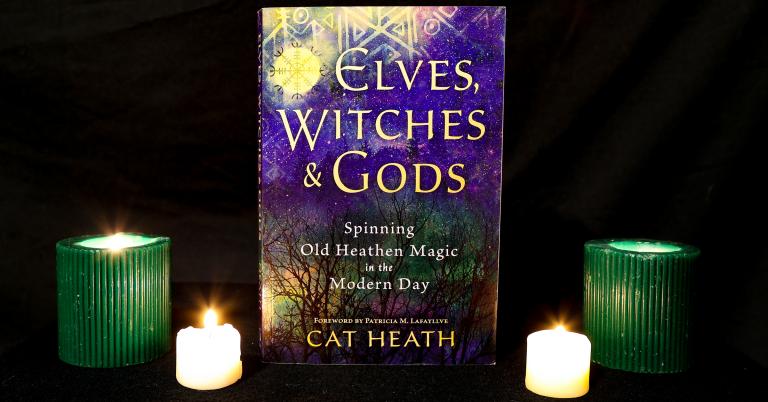
Elves, Witches & Gods: Spinning Old Heathen Magic in the Modern Day
by Cat Heath
Llewellyn Publications – March 2021
352 pages
Paperback: $21.99, Kindle: $16.49
Magic is never practiced in a vacuum. Magic is always practiced in the context of culture and religion.
The grimoire magic of the Middle Ages is firmly grounded in the Christianity of that period. Kabbalah is grounded in Judaism. Even that most anti-dogmatic of magical systems – chaos magic – is grounded in post-modernism and secularism.
And that brings us to Cat Heath’s new book Elves, Witches & Gods: Spinning Old Heathen Magic in the Modern Day. The title tells you exactly what it is: magic, grounded in what we know about the practices of the ancient Norse (especially Icelanders) and Anglo-Saxons, adapted for contemporary Heathens.
I’m not a Heathen. But as a Pagan, a polytheist, and a Druid, I’m very “Heathen-adjacent.” I know some Heathens who do not practice magic. Certainly that’s their right. But early in the book, Cat says “the Heathen worldview has always been inherently magical.”
Cat goes on to say:
As a general rule, magic, or the types of magic practiced by a culture, is not separate from the wider overarching worldview of that culture. In other words, when determining the likelihood of how a type of magic may have been practiced, it’s important to make sure that it is congruous with the way that culture saw the world in the first place.
We know some things about ancient Heathen magic. But most of the written records are at a very high level: we know the name of a practice, but we have no details on how it was done. Figuring that out requires historical research. When that isn’t enough, we can use nearby cultures as a proxy. And then we need the most important step – trying it out and seeing if it works.
One of those Heathen practices is “going under the cloak” – covering yourself and going into trance to communicate with various spirits to obtain information and wisdom. The name tells us something about it, but not a lot. Cat describes their research, their cross-cultural comparisons, and their experimentation. They conclude by saying:
From the perspective of reconstruction, we cannot say that the method of going under the cloak that I have been working with is the same as that depicted in the Icelandic accounts. However, from a practical standpoint, I seem to have found a way of going under the cloak that yields results.
If you want a quick summary of Elves, Witches & Gods, it’s this: this is Heathen magic that strives to be authentic, but that insists on being effective. It’s magic that works.
Part One: Cosmology
The book is divided into two sections – the first is cosmology.
Cosmologies are not just a way of making sense of a reality that we can barely perceive, but a user interface too. We may as well make sure our interfaces are useful.
It begins with an overview of what we know about Heathen magic. Then it dives into the associated deities. This isn’t as clear and straightforward as many of us like it to be. Most important is the Spinning Goddess (most likely several Spinning Goddesses) and the magic of spinning – this leads to the concept of fate as something that is spun.
Equally important is the God of the Spear: Óðinn. Of Him, Heath says:
A mad, possessed and ever-changing seer is far from the idea of Óðinn-as-king or warband leader. Yet in my experience, it is this Óðinn, the peripatetic seiðmaðr dressed as a woman who trucks with spirits and makes prophecies with clever words, who has the most to teach us about magic.
Magic is something taught to us by the Gods. And They will teach us just as They taught our ancestors, if we will listen. The book discusses offerings, shrines, and other practices that help us form and maintain relationships with the Gods – with these Gods.
Some magic comes from – or through – the elves. But do not expect this to come quickly and easily.
If you seek a magical partnership with one of the álfar, you will discover that the witch-elf relationship is by necessity a close one; the time, effort, and offerings you make now are part of the foundation for it.
Chapter 5 covers foundational ideas: hæl, luck, the soul, and fate. All of this helps build a Heathen context for working magic – a context that is very different from the Christian and materialist context of our mainstream society.
Part Two: The Practice of Heathen Magic
Having built a foundation in Part One, Part Two moves into practice. It begins with basic skills that will be familiar to most of us: meditation, visualization, dream work, and energy work. It covers magical tools and how to make them. While making some tools are beyond the resources of the average practitioner “it’s the tools you birth that will remain the most connected to you and for which you will ultimately be responsible.”
Chapter 8 covers liminality, trance, and working with the dead. This work is not unique to Heathenry, but the book teaches it from a Heathen perspective.
The chapter on fiber magic is one of the few I’ve seen on this topic from any source. Traditionally, spinning and weaving have been considered women’s work, and as such hasn’t been as valued as other forms of magic. But it can be extremely effective. The book includes explanations, exercises, and charms to do your own fiber magic. This isn’t quick and easy to learn – it takes practice to do it well.
The book concludes with a chapter on “Rites, Rituals, and Celebrations” – a quick guide to Heathenry in practice.
Who should read this book?
Heathens. This book is intended for modern Heathens. If you follow one of the Northern paths, you need to read this book. Even if you don’t practice magic yourself, Elves, Witches & Gods will help you better understand what your ancestors did and the context in which they did it.
Polytheists. The information on Freyja, Holda, Óðinn, and Freyr alone make the book worth reading. Even if you follow a different path, these are deities who are active in our world, and knowing something about Them is a good thing. So is the presentation of a polytheist and magical worldview.
Fair warning: I heard from Óðinn while I was reading this book. Apparently I’m not the only one. My answer is still “no.” But His offers are getting awfully attractive.
Witches and other magicians. This book is full of useful magical techniques and practices. Not all of them can be used outside of a Heathen context, but some can, just as Cat incorporated adjacent and modern practices into their magic. If nothing else, Elves, Witches & Gods will deepen your understanding of magical theory.

This is not a 101-level book. While a sharp beginner could make their way through it OK, it’s best if you have at least a bit of experience with polytheism and with magic. The workings in it are not safe, in the way that a power saw is not safe. Use it properly and be ready for the unexpected and you’ll be OK. Approach it without proper respect and you stand a good chance of getting hurt.
But if you’re looking for a resource on Heathen magic, or just on magic that works, I highly recommend Elves, Witches & Gods.
The foreword by Patricia Lafayllve, author of A Practical Heathen’s Guide to Asatru, was inadvertently left out of the final printing. It’s available online and it’s well worth the minute or two it will take to read it, particularly if you’re undecided as to whether or not you want to read Elves, Witches & Gods.
For those who care about such things, I bought my copy of Elves, Witches & Gods. Cat Heath is a friend and a magical colleague, but if I couldn’t honestly recommend this book I’d conveniently forget to review it (I’m late with the review, but I never forgot about it). My only obligation in a book review is to you, the reader. And my honest assessment is that Elves, Witches & Gods is excellent.
Previous Post

July 22, 2021
Is it Lughnasadh without Lugh?
Next Post
July 27, 2021 How to Find a Good Reader
Browse Our Archives
Select a Category Books Community CUUPS Druidry Foundations and Context Gods and Goddesses Magic Myth Nature Ritual Spiritual Practice Theology Travel Uncategorized Videos
Select a Month October 2026 September 2026 August 2026 July 2026 June 2026 May 2026 April 2026 March 2026 February 2026 January 2026 December 2025 November 2025 October 2025 September 2025 August 2025 July 2025 June 2025 May 2025 April 2025 March 2025 February 2025 January 2025 December 2024 November 2024 October 2024 September 2024 August 2024 July 2024 June 2024 May 2024 April 2024 March 2024 February 2024 January 2024 December 2023 November 2023 October 2023 September 2023 August 2023 July 2023 June 2023 May 2023 April 2023 March 2023 February 2023 January 2023 December 2022 November 2022 October 2022 September 2022 August 2022 July 2022 June 2022 May 2022 April 2022 March 2022 February 2022 January 2022 December 2021 November 2021 October 2021 September 2021 August 2021 July 2021 June 2021 May 2021 April 2021 March 2021 February 2021 January 2021 December 2020 November 2020 October 2020 September 2020 August 2020 July 2020 June 2020 May 2020 April 2020 March 2020 February 2020 January 2020 December 2019 November 2019 October 2019 September 2019 August 2019 July 2019 June 2019 May 2019 April 2019 March 2019 February 2019 January 2019 December 2018 November 2018 October 2018 September 2018 August 2018 July 2018 June 2018 May 2018 April 2018 March 2018 February 2018 January 2018 December 2017 November 2017 October 2017 September 2017 August 2017 July 2017 June 2017 May 2017 April 2017 March 2017 February 2017 January 2017 December 2016 November 2016 October 2016 September 2016 August 2016 July 2016 June 2016 May 2016 April 2016 March 2016 February 2016 January 2016 December 2015 November 2015 October 2015 September 2015 August 2015 July 2015 June 2015 May 2015 April 2015 March 2015 February 2015 January 2015 December 2014 November 2014 October 2014 September 2014 August 2014 July 2014 June 2014 May 2014 April 2014 March 2014 February 2014 January 2014 December 2013 November 2013 October 2013 September 2013 August 2013 July 2013 June 2013 May 2013 April 2013 March 2013 February 2013 January 2013 December 2012 November 2012 October 2012 September 2012 August 2012 July 2012 June 2012 May 2012 April 2012 March 2012 February 2012 January 2012 December 2011 November 2011 October 2011 September 2011 August 2011 July 2011 June 2011 May 2011 April 2011 March 2011 February 2011 January 2011 December 2010 November 2010 October 2010 September 2010 August 2010 July 2010 June 2010 May 2010 April 2010 March 2010 February 2010 January 2010 December 2009 November 2009 October 2009 September 2009 August 2009 July 2009 June 2009 May 2009 April 2009 March 2009 February 2009 January 2009 December 2008 November 2008 October 2008 September 2008 August 2008 July 2008 June 2008
Follow Us!
TAKE THE
Religious Wisdom Quiz
What does the Greek word 'Logos' mean in the Bible?
Select your answer to see how you score.
Word Life Grace Truth
Related posts from John Beckett




What We Lose When “Ask AI” Becomes A...
TRENDING AT PATHEOS Pagan

The Sermon on the Mount, Part I: Matthew...
The Sermon on the Mount, Part I (Matthew 4:12-5:12) St. Matthew moves...

What's up from Crossway: Reviewing some of their latest A few weeks...

Janie Learns the Way of the Cross: A...
Teaching children about Jesus' Passion can be challenging. Many parents and educators...

Looking For Good Catholic Writing - October 2026
He alone extends the heavens, and he walks upon the waves of...

In "Irreplaceable," our book on vocation and technology, Trevor Sutton and I...

I was strolling through the top floor of the brand new Parthenon...
view all Pagan blogs
Ad-Free & Subscriber Log-In Subscription Support
- About Us
- 2026 Calendar
- Videos
- Podcasts
- Library of World Religions
- Faith In Media Tracker
- Advertise With Us
- Write for Us
- Privacy Policy
- Terms of Service
- Do Not Sell My Data
- Contact Us
- Radiant Digital
- Manage Newsletter Subscriptions
- Unsubscribe From Notifications
- Sitemap
Copyright 2008-2026, Patheos. All rights reserved.
Subscription Support Ad-Free & Subscriber Log-In
Follow Patheos