
BuddhistCatholicContemplativeEvangelicalGeneral ChristianHinduJewishLatter-day SaintMuslimNew VisionsProgressive Christian
Beliefs
- Buddhist
- Catholic
- Contemplative
- Evangelical
- General Christian
- Hindu
- Jewish
- Latter-day Saint
- More Voices
- Muslim
- New Visions
- Pagan
- Progressive Christian
Topics
- Religion News
- Food and Religion
- Sports and Religion
- Religious Art
- Religious Music and Entertainment
- Religious Events
- History and Religion
- Style and Religion
- Politics and Religion
- Women in Religion
- Recreation Outdoors and Religion
- Business Finance and Religion
- Careers Workplace and Religion
- Education and Religion
- Family Parenting and Religion
- Health Fitness and Religion
- Home and Religion
- Relationships and Religion
- Technology and Religion
- Travel and Religion
Columnists
- Buddhist Columnists
- Business Finance and Religion Columnists
- Careers Workplace and Religion Columnists
- Catholic Columnists
- Contemplative Columnists
- Education and Religion Columnists
- Evangelists Columnists
- Family Parenting and Religion Columnists
- General Christian Columnists
- Health Fitness and Religion Columnists
- Hindu Columnists
- History and Religion Columnists
- Home and Religion Columnists
- Jewish Columnists
- More Voices Columnists
- Latter Day Columnists
- Muslim Columnists
- New Visions Columnists
- Nonreligious Columnists
- Pagan Columnists
- Politics and Religion Columnists
- Progressive Columnists
- Recreation Outdoors and Religion Columnists
- Relationships and Religion Columnists
- Religion News Columnists
- Religious Art Columnists
- Religious Events Columnists
- Religious Music and Entertainment Columnists
- Sports and Religion Columnists
- Style and Religion Columnists
- Technology and Religion Columnists
- Travel and Religion Columnists
- Women in Religion Columnists
Resource Library
- 2026 Calendar
- Library of World Religions
- The 100 Most Holy Places on Earth
- Patheos Answers
- Podcasts
- Videos
- Faith Leaders Database
- Anglican Episcopalian
- Bahai
- Baptist
- Buddhism
- Christianity
- Confucianism
- Eastern Orthodoxy
- Hinduism
- Holiness and Pentecostal
- ISKCON
- Islam
- Judaism
- Lutheran
- Methodist
- The Church of Jesus Christ of Latter-day Saints
- New Age
- Paganism
- Presbytarian and Reformed
- Protestantism
- Religion Behind the Scenes
- Roman Catholic
- Scientology
- Shia Islam
- Sikhism
- Sufism
- Sunni Islam
- Taoism
- Zen
- See all religions
Research Tools
 Ad-Free & Subscriber Log-In Subscription Support
Ad-Free & Subscriber Log-In Subscription Support
Follow Patheos 

- Trending:
- Forgiveness
- |
- Marriage
- |
- Consciousness
- |
- Death Penalty
- |
- Election
- |
- Halloween

- Home
- Pagan
- What to Do for Midsummer This Year
What to Do for Midsummer This Year
Last updated on: June 13, 2021 at 3:00 am by John Beckett
What to Do for Midsummer This Year 2021-06-11T09:04:25-06:00 John Beckett
Patheos Explore the world's faith through different perspectives on religion and spirituality! Patheos has the views of the prevalent religions and spiritualities of the world.
I would love to celebrate the Summer Solstice in the ancient Druid tradition… if only we knew what that was.
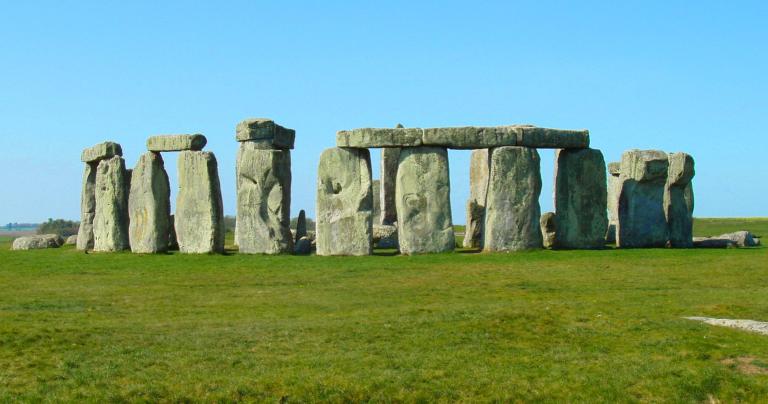
Mention Druids and Summer Solstice and most people think of large gatherings at Stonehenge. But the Druids didn’t build Stonehenge. Its last building stage was completed no later than 1500 BCE, while the Druids – the priestly class of the Celtic peoples – didn’t arrive until several centuries later. Or more properly, Celtic culture arrived then – “Celtic” is a culture, not a bloodline.
I have to think the Druids worshipped or celebrated or at least did something at Stonehenge – how could they resist making use of such a powerful and unique structure? But we have no evidence of how they did, or even if they did. It’s entirely possible they saw it as a dangerous place belonging to “the old ones” – some place to be avoided.
And in any case it’s clear to me that the people who built Stonehenge 5000 years ago built it to mark the Winter Solstice, not the Summer Solstice.
The modern Druid tradition of gathering at Stonehenge on the Summer Solstice began in the late 1800s. In recent years it’s turned into a gathering for tens of thousands of people looking for a party. After being closed for the pandemic last year, English Heritage is planning to reopen it this year, with some social distancing in place. For those of us who can’t be there, they will once again live stream the sunset and sunrise.
Not many ancient Midsummer traditions
There aren’t a lot of ancient traditions around Midsummer. This article from last year from the Irish website An Sionnach Fionn says “The Summer Solstice Was Not A Celtic Irish Festival.” Most of what we have from medieval times is centered around the Christian St. John’s Eve, celebrated on June 23 – one to three days after the Summer Solstice.
Shakespeare’s play A Midsummer Night’s Dream (written around 1596) draws mainly on the sources of that era. Or so literary scholars believe – appropriately, no one is really sure.
There are some traditional celebrations in Eastern Europe that appear to have Pagan roots. Again, no one is sure how deep those roots go into pre-Christian religion.
If you want a “traditional” celebration probably the best you can do is to gather around a bonfire and have a drink or two with friends and family. Of course, that’s a good thing to do any time of year.
A slow time in an agricultural society
There’s a reason why there aren’t many ancient traditions around the Summer Solstice – it wasn’t an important point in time for ancient people.
In an agricultural society, Spring is the time for planting, and for new beginnings. Late Summer and early Fall are the times for harvesting, feasting (now that they finally have plenty of food), and giving thanks. Midsummer is a time when not a lot is happening. There’s the usual weeding and watering and trying to keep other animals from eating your crops before they mature, but for the most part this is a slow time in the fields.
It’s worth marking the longest day of the year, particularly in the far northern regions where the days are really long at the Summer Solstice. But people in moderate climates don’t dread the heat of Summer like they dread the cold of Winter. So there’s not a strong emotional connection with the Summer Solstice like we see with the rebirth of the Sun at the Winter Solstice.
Ideas for celebrations
So, how should we celebrate? In 2015 I wrote Summer Solstice – A Solitary Ritual. It focuses on greeting the Sun at sunrise. In 2018 I wrote 8 Things to do for Summer Solstice as a Solitary Pagan. They include different approaches to honoring the Sun and/or a Sun God, keeping an all-night vigil, and gathering herbs. Jason Mankey has a list of 7 Ways to Celebrate the Summer Solstice. Any or all of these would be good things to do.
Denton CUUPS has a long tradition of celebrating the Summer Solstice with an Egyptian Temple Ritual. It’s less about the liturgical calendar of ancient Egypt and more about our relationships with the Neteru, the Gods of Egypt. We’ll be doing that again this year. It will be online – you’re all invited to participate. It will be Saturday, June 19 at 7:30 PM CDT, on the Denton CUUPS YouTube channel. The ritual calls on and honors Sekhmet, and it runs a little under a half hour.
I’ve been doing my own online rituals ever since the pandemic began. As I announced in my newsletter last week, I’m not doing that this time. I simply don’t have the bandwidth to write, perform, and edit a ritual in addition to everything else I’ve got going on.
The beginning of the end… and a new beginning
Still, I feel the need to do something for the Summer Solstice. It’s one of the eight high days on the modern Pagan Wheel of the Year – that alone makes it worth celebrating.
More than that, there are two things going on at the moment that could use some Solstice energy.
The first is the reopening of society. Now, we were talking about “reopening” last May – that didn’t work out so well. As Dr. Fauci said, the virus makes its own timeline. What happened in the Fall and early Winter was far worse than what we experienced last Spring and Summer, at least in the United States.
But now things are looking better, mainly due to increased vaccinations. So while we can debate what precautions are still necessary, the numbers say it really is time to start getting back to normal.
Except there is no “normal” to get back to. The world has changed dramatically in the past 15 months and we can’t go back. We have to go forward into a world that is socially, economically, and medically different from what we remember.
The Summer Solstice feels like a good time to work magic for a safe and successful beginning in this strange new world. Not to make plans (like the secular New Year) but to equip ourselves with the tools we’ll need to survive and succeed in the coming months.
Preparing for the June Full Moon
The moment of the Summer Solstice (Sunday, June 20 at 10:31 PM CDT) is about three and a half days before the June Full Moon (Thursday, June 24 at 1:39 PM CDT). I challenged all of us to work some big magic the evening of Wednesday the 23rd. That means me too. Especially me.
This makes the Solstice a convenient time to grab some of the power of the Sun at its height and direct it either toward your goal or toward your preparations for your Full Moon working.
My Full Moon working is a ritual of spiritual development, not to manifest something tangible. As such, the Solstice presents a great opportunity for some preliminary cleansing. If sunlight is the best disinfectant (a political statement that holds true in many other areas) then the Sun at its zenith is a great time to burn off some of the spiritual detritus that has accumulated over the past 15 months, and longer.
Your working may have other needs and the Solstice may present you with other opportunities. Give it some thought, some meditation, and some divination and see what you can come up with.
Midsummer 2021
The bad news for those looking for “traditional” Summer Solstice celebrations is that we don’t have a lot to work with – certainly not as much as the Winter Solstice. The good news is that we can create our own traditions, based on our needs here and now. That’s the case every year, but it’s especially true this year.
This year’s Midsummer feels like a turning point – like we’re leaving one distinct period and entering another very different one. There are two parts to any such times: what Life throws at us, and how we respond. While I very strongly believe we do not “create our own reality” I just strongly believe we can influence reality for the better.
This is a time to exercise what influence we have, especially what influence we have over ourselves – which is considerable even if it isn’t absolute.
May your Solstice be happy and strong.
Want to get my personal weekly newsletter every Friday? It covers things that don’t fit into the blog format, mostly in my usual range: Paganism, polytheism, and magic. Current events and politics. What I’m working on that you’ll see in the near to medium future – be the first to find out about things like this.
Sign up on my teaching site https://undertheancientoaks.com/
Enter your e-mail in the big green block and do the not-a-robot thing. You’ll get a confirmation e-mail – respond to it and you’re set. You have to respond to the confirmation e-mail – my mailing service wants to make sure you really want the newsletters and someone isn’t signing you up for something you don’t want.
Previous Post
June 8, 2021
Are Humans the Children of the Gods?
Next Post

June 15, 2021 Why Do So Many of Us Want to Run Away?
Browse Our Archives
Select a Category Books Community CUUPS Druidry Foundations and Context Gods and Goddesses Magic Myth Nature Ritual Spiritual Practice Theology Travel Uncategorized Videos
Select a Month October 2026 September 2026 August 2026 July 2026 June 2026 May 2026 April 2026 March 2026 February 2026 January 2026 December 2025 November 2025 October 2025 September 2025 August 2025 July 2025 June 2025 May 2025 April 2025 March 2025 February 2025 January 2025 December 2024 November 2024 October 2024 September 2024 August 2024 July 2024 June 2024 May 2024 April 2024 March 2024 February 2024 January 2024 December 2023 November 2023 October 2023 September 2023 August 2023 July 2023 June 2023 May 2023 April 2023 March 2023 February 2023 January 2023 December 2022 November 2022 October 2022 September 2022 August 2022 July 2022 June 2022 May 2022 April 2022 March 2022 February 2022 January 2022 December 2021 November 2021 October 2021 September 2021 August 2021 July 2021 June 2021 May 2021 April 2021 March 2021 February 2021 January 2021 December 2020 November 2020 October 2020 September 2020 August 2020 July 2020 June 2020 May 2020 April 2020 March 2020 February 2020 January 2020 December 2019 November 2019 October 2019 September 2019 August 2019 July 2019 June 2019 May 2019 April 2019 March 2019 February 2019 January 2019 December 2018 November 2018 October 2018 September 2018 August 2018 July 2018 June 2018 May 2018 April 2018 March 2018 February 2018 January 2018 December 2017 November 2017 October 2017 September 2017 August 2017 July 2017 June 2017 May 2017 April 2017 March 2017 February 2017 January 2017 December 2016 November 2016 October 2016 September 2016 August 2016 July 2016 June 2016 May 2016 April 2016 March 2016 February 2016 January 2016 December 2015 November 2015 October 2015 September 2015 August 2015 July 2015 June 2015 May 2015 April 2015 March 2015 February 2015 January 2015 December 2014 November 2014 October 2014 September 2014 August 2014 July 2014 June 2014 May 2014 April 2014 March 2014 February 2014 January 2014 December 2013 November 2013 October 2013 September 2013 August 2013 July 2013 June 2013 May 2013 April 2013 March 2013 February 2013 January 2013 December 2012 November 2012 October 2012 September 2012 August 2012 July 2012 June 2012 May 2012 April 2012 March 2012 February 2012 January 2012 December 2011 November 2011 October 2011 September 2011 August 2011 July 2011 June 2011 May 2011 April 2011 March 2011 February 2011 January 2011 December 2010 November 2010 October 2010 September 2010 August 2010 July 2010 June 2010 May 2010 April 2010 March 2010 February 2010 January 2010 December 2009 November 2009 October 2009 September 2009 August 2009 July 2009 June 2009 May 2009 April 2009 March 2009 February 2009 January 2009 December 2008 November 2008 October 2008 September 2008 August 2008 July 2008 June 2008
Follow Us!
TAKE THE
Religious Wisdom Quiz
What did God create on the second day?
Select your answer to see how you score.
Trees Sun Fish Sky
Related posts from John Beckett




What We Lose When “Ask AI” Becomes A...
TRENDING AT PATHEOS Pagan

The First Eucharistic Controversy: Christ’s Real Presence
For Catholics, the Eucharist is the source and summit of the Christian...

How to Make a Decision When You Can't...
Main point: It’s much more valuable to stay close to God so...

Archdiocese Hosts Military Marriage Retreat in Germany
RASTATT, Germany — The transient military lifestyle, with its frequent deployments and...

Nearly every morning, I make the drive to Detroit with my high-school-age...

The Real AI Story Is Adoption Without Trust
Artificial intelligence has crossed a political threshold. It is no longer a...

A new article, written by Jeff Lindsay and Gale L. Pooley,...
view all Pagan blogs
Ad-Free & Subscriber Log-In Subscription Support
- About Us
- 2026 Calendar
- Videos
- Podcasts
- Library of World Religions
- Faith In Media Tracker
- Advertise With Us
- Write for Us
- Privacy Policy
- Terms of Service
- Do Not Sell My Data
- Contact Us
- Radiant Digital
- Manage Newsletter Subscriptions
- Unsubscribe From Notifications
- Sitemap
Copyright 2008-2026, Patheos. All rights reserved.
Subscription Support Ad-Free & Subscriber Log-In
Follow Patheos