
BuddhistCatholicContemplativeEvangelicalGeneral ChristianHinduJewishLatter-day SaintMuslimNew VisionsProgressive Christian
Beliefs
- Buddhist
- Catholic
- Contemplative
- Evangelical
- General Christian
- Hindu
- Jewish
- Latter-day Saint
- More Voices
- Muslim
- New Visions
- Pagan
- Progressive Christian
Topics
- Religion News
- Food and Religion
- Sports and Religion
- Religious Art
- Religious Music and Entertainment
- Religious Events
- History and Religion
- Style and Religion
- Politics and Religion
- Women in Religion
- Recreation Outdoors and Religion
- Business Finance and Religion
- Careers Workplace and Religion
- Education and Religion
- Family Parenting and Religion
- Health Fitness and Religion
- Home and Religion
- Relationships and Religion
- Technology and Religion
- Travel and Religion
Columnists
- Buddhist Columnists
- Business Finance and Religion Columnists
- Careers Workplace and Religion Columnists
- Catholic Columnists
- Contemplative Columnists
- Education and Religion Columnists
- Evangelists Columnists
- Family Parenting and Religion Columnists
- General Christian Columnists
- Health Fitness and Religion Columnists
- Hindu Columnists
- History and Religion Columnists
- Home and Religion Columnists
- Jewish Columnists
- More Voices Columnists
- Latter Day Columnists
- Muslim Columnists
- New Visions Columnists
- Nonreligious Columnists
- Pagan Columnists
- Politics and Religion Columnists
- Progressive Columnists
- Recreation Outdoors and Religion Columnists
- Relationships and Religion Columnists
- Religion News Columnists
- Religious Art Columnists
- Religious Events Columnists
- Religious Music and Entertainment Columnists
- Sports and Religion Columnists
- Style and Religion Columnists
- Technology and Religion Columnists
- Travel and Religion Columnists
- Women in Religion Columnists
Resource Library
- 2026 Calendar
- Library of World Religions
- The 100 Most Holy Places on Earth
- Patheos Answers
- Podcasts
- Videos
- Faith Leaders Database
- Anglican Episcopalian
- Bahai
- Baptist
- Buddhism
- Christianity
- Confucianism
- Eastern Orthodoxy
- Hinduism
- Holiness and Pentecostal
- ISKCON
- Islam
- Judaism
- Lutheran
- Methodist
- The Church of Jesus Christ of Latter-day Saints
- New Age
- Paganism
- Presbytarian and Reformed
- Protestantism
- Religion Behind the Scenes
- Roman Catholic
- Scientology
- Shia Islam
- Sikhism
- Sufism
- Sunni Islam
- Taoism
- Zen
- See all religions
Research Tools
 Ad-Free & Subscriber Log-In Subscription Support
Ad-Free & Subscriber Log-In Subscription Support
Follow Patheos 

- Trending:
- Forgiveness
- |
- Marriage
- |
- Consciousness
- |
- Death Penalty
- |
- Election
- |
- Halloween

- Home
- Pagan
- Building a Place Where We Belong
Building a Place Where We Belong
Last updated on: January 3, 2021 at 3:00 am by John Beckett
Building a Place Where We Belong 2021-01-02T09:32:29-06:00 John Beckett
Patheos Explore the world's faith through different perspectives on religion and spirituality! Patheos has the views of the prevalent religions and spiritualities of the world.
The matters of cultural appropriation and closed practices have been in the forefront of the Pagan internet for the past few weeks. They’re never far from the surface.
Recent conversation has been less than helpful. A few people still insist that anything and everything is theirs for the taking, no matter who gets hurt in the process. Most people mean well, but too many are more interested in being on the right side than in doing the right things – or in being historically accurate.
By now you’ve probably heard that some are saying Tarot is a closed practice of the Romani people, and the rest of us should stop reading cards. This idea demonstrates a complete ignorance of the origins of Tarot. The cards were originally created for Tarocchi and other games in 15th century Europe – their use in divination came much later. Beyond that, incorrectly ascribing ownership of the Tarot to the Romani perpetuates racist stereotypes against them, namely that they’re all fortune tellers and likely swindlers.
While I support those who call out cultural appropriation in an attempt to end it (at least when they do it accurately), I’m frustrated by those who seem to enjoy scolding beginners but who never offer an ethical alternative. It’s not the job of oppressed people to educate those who are stealing from them, but if you’re relatively privileged, you have an obligation to use some of that privilege to build a better, more ethical world.
As good liberals, we don’t want to punish crime – we want to build a society where crime is unnecessary and therefore rare.
What can we do to build a Pagan movement where cultural appropriation doesn’t happen because no one feels the need to do it?
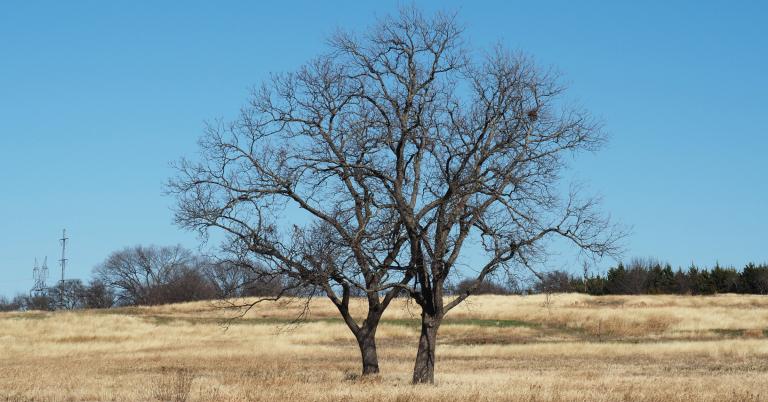
We all want to belong somewhere
I keep repeating this in hopes that it will sink in: religion isn’t about what you believe. Religion is about what you do, who you are, and whose you are. It’s about what binds us together: beliefs and ritual practices, to be sure. But also stories, foods, clothes, music – all the things we share in common. Good religion says “you belong here.”
In a perfect world we would all belong where we are. But our world is far from perfect, and many of us grew up in religions and cultures were we don’t belong. I certainly didn’t belong in the fundamentalist church were I grew up.
If we don’t belong here – where ever here is for you – where do we belong?
DNA is not religion… or culture
Here’s another thing I hope will eventually sink in: religion and culture are spread by contact, not by blood. If you live in the United States, finding out that your ancestors came from Ireland or Norway or Greece doesn’t mean you’re Irish or Norwegian or Greek. It means you’re an American of Irish or Norwegian or Greek descent.
And also, Greece is 90% Orthodox, Ireland is 78% Catholic, and Norway is 68% Lutheran. Yes, there are Pagan movements in all those countries, but they’re small minorities.
If you really want to be a part of another culture, most – though not all – will accept you. But you have to do it their way: live on the land, learn the language, join in the work of supporting the people. Declaring that you already are a part of the culture because your great grandmother who you never met came from there is offensive to those who live in those lands.
Besides, it isn’t true. And pretending to be something you aren’t isn’t very satisfying.

We can’t follow the roadmap of the large religions
If you’re a Christian, there are opportunities for you to “plug in” at whatever level seems right to you, pretty much anywhere in this country. If you’re a Jew, a Muslim, a Hindu, or a Buddhist there are fewer opportunities – particularly outside large cities – but they’re still available.
If you’re a Pagan or a polytheist, there’s not much.
In the past, this is where I would make a plea to start building institutions and infrastructure. I’m done with that. As a movement, we aren’t willing to invest our time and money building for the future. Far too many of us are more interested in doing our own thing than in working together, much less in compromising for the greater good.
If your deep desire is to find a place where you belong but your top priority is that “nobody’s going to tell me what to do!” you will always be disappointed. All healthy groups and traditions have boundaries and standards.
We can build strong local groups: covens, groves, and the like. We can network using the internet, and when in-person gatherings become possible again, through conventions and conferences.
But mainly, we’re going to have to build our modern Pagan religions on individual practice.
Real roots have to be grown
It is unfortunate – though not at all surprising, in that “grass is always greener” way – that so many of us try to form connections with lands where we’ve never been and ignore the land where we live.
I grew up in Tennessee. I felt at home in the hills and trees. I go back there once a year or so to visit family and friends, and I still feel a connection to it.
But like so many people throughout history, I moved for a better opportunity. I came to Texas in late 2001 – it took me till 2014 to realize that I was going to stay here and I needed to make it my home. I needed to form a connection to the land.
The history of humanity is the history of migration. It’s the story of immigrants and refugees, of invaders and colonists. It’s the story of people forced off the land, and people brought forcibly to the land.
All these people had to form connections with the land where they moved. They had to go from simply living on the land to becoming part of the land. So do we. We need to grow roots where we are.
That’s not something you can get by buying a t-shirt, or a flag, or anything else. It only comes by getting outside – and getting outside your head – and getting your hands dirty. It takes time. It takes work.
But what it builds is real.
Relationships have to be formed and maintained
Religion and culture are about forming and maintaining a group identity, which in turn supports maintaining and strengthening the group and its members.
And all relationships require work.
As a polytheist, I have relationships with my Gods – the deities who I worship, work with, and work for. I maintain those relationships with prayer, meditation, offerings, and with tangible work to manifest Their virtues and values in this world.
I have relationships with my ancestors. I maintain them with offerings and meditation, and with doing my best to be someone who someday will be a worthy ancestor.
And I have relationships with my co-religionists – the people who see the world and relate to it as I do, more or less. Some of these are my local friends and family of choice, without whom I never would have made it through 2020. These are the people I count on, and I do my best to be sure they can count on me.
There simply is no substitute for building relationships, in this world and between the worlds.
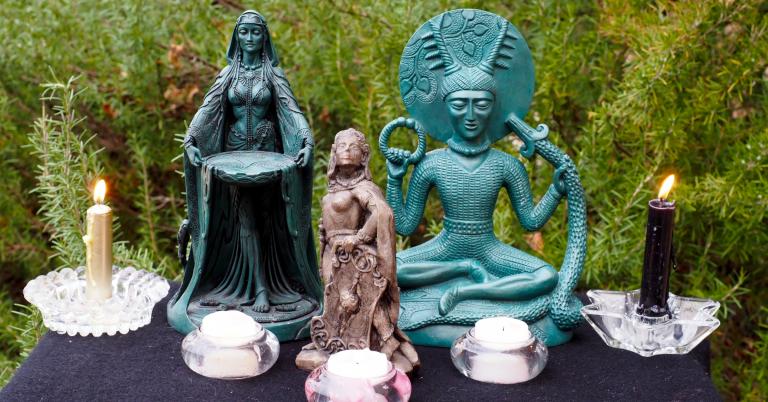
We are building a new tradition
I value the work of Pagan reconstructionists, especially the historians, archaeologists, anthropologists, and others whose scholarship helps us better understand and appreciate the religions of our ancestors. So much of what should be our cultural heritage was lost or destroyed in the conversion to Christianity (see The Darkening Age by Catherine Nixey for details you may not know). I wish my Druidry had a 2500 year lineage instead of only 300 years.
But it doesn’t, and that’s OK.
We are not pre-Christian Norse or pre-Roman Celts or anything like that. We are 21st century Americans (or whatever you happen to be). We are inspired by our ancient ancestors and we can relate to them, but we aren’t them. We need to build a new tradition that while grounded in timeless principles speaks to our needs and our experiences here and now.
Some of these traditions already exist. Modern Druidry’s 300 years isn’t “since time immemorial” but it’s something. Gardnerian Wicca is legitimately 70 years old. Covenant of the Goddess is 45. There are groups and traditions out there, even if they’re not as widespread and well-established as the Catholic church.
And what of those of us who don’t fit neatly into any of those? I still don’t have a name for what I call “ancestral, devotional, ecstatic, oracular, magical, public, Pagan polytheism.”
But it’s what I’m called to do.
And it’s what I’m called to be.
And so I’m building it, one offering, one prayer, one ritual, one blog post at a time.
This is where I belong. Maybe you belong here too – if so, welcome. It’s not as cool as calling yourself a Viking or anything like that. It’s not as easy as taking a DNA test and declaring that you’re this or that.
But it’s a lot more real.
Previous Post

January 1, 2021
Divination For 2021
Next Post

January 5, 2021 Rebooting Stale Devotion
Browse Our Archives
Select a Category Books Community CUUPS Druidry Foundations and Context Gods and Goddesses Magic Myth Nature Ritual Spiritual Practice Theology Travel Uncategorized Videos
Select a Month October 2026 September 2026 August 2026 July 2026 June 2026 May 2026 April 2026 March 2026 February 2026 January 2026 December 2025 November 2025 October 2025 September 2025 August 2025 July 2025 June 2025 May 2025 April 2025 March 2025 February 2025 January 2025 December 2024 November 2024 October 2024 September 2024 August 2024 July 2024 June 2024 May 2024 April 2024 March 2024 February 2024 January 2024 December 2023 November 2023 October 2023 September 2023 August 2023 July 2023 June 2023 May 2023 April 2023 March 2023 February 2023 January 2023 December 2022 November 2022 October 2022 September 2022 August 2022 July 2022 June 2022 May 2022 April 2022 March 2022 February 2022 January 2022 December 2021 November 2021 October 2021 September 2021 August 2021 July 2021 June 2021 May 2021 April 2021 March 2021 February 2021 January 2021 December 2020 November 2020 October 2020 September 2020 August 2020 July 2020 June 2020 May 2020 April 2020 March 2020 February 2020 January 2020 December 2019 November 2019 October 2019 September 2019 August 2019 July 2019 June 2019 May 2019 April 2019 March 2019 February 2019 January 2019 December 2018 November 2018 October 2018 September 2018 August 2018 July 2018 June 2018 May 2018 April 2018 March 2018 February 2018 January 2018 December 2017 November 2017 October 2017 September 2017 August 2017 July 2017 June 2017 May 2017 April 2017 March 2017 February 2017 January 2017 December 2016 November 2016 October 2016 September 2016 August 2016 July 2016 June 2016 May 2016 April 2016 March 2016 February 2016 January 2016 December 2015 November 2015 October 2015 September 2015 August 2015 July 2015 June 2015 May 2015 April 2015 March 2015 February 2015 January 2015 December 2014 November 2014 October 2014 September 2014 August 2014 July 2014 June 2014 May 2014 April 2014 March 2014 February 2014 January 2014 December 2013 November 2013 October 2013 September 2013 August 2013 July 2013 June 2013 May 2013 April 2013 March 2013 February 2013 January 2013 December 2012 November 2012 October 2012 September 2012 August 2012 July 2012 June 2012 May 2012 April 2012 March 2012 February 2012 January 2012 December 2011 November 2011 October 2011 September 2011 August 2011 July 2011 June 2011 May 2011 April 2011 March 2011 February 2011 January 2011 December 2010 November 2010 October 2010 September 2010 August 2010 July 2010 June 2010 May 2010 April 2010 March 2010 February 2010 January 2010 December 2009 November 2009 October 2009 September 2009 August 2009 July 2009 June 2009 May 2009 April 2009 March 2009 February 2009 January 2009 December 2008 November 2008 October 2008 September 2008 August 2008 July 2008 June 2008
Follow Us!
TAKE THE
Religious Wisdom Quiz
What was the capacity of a bath?
Select your answer to see how you score.
15 liters 10 liters 30 liters 22 liters
Related posts from John Beckett


The Vampire Films of Jean Rollin


Bo French Doesn’t Understand Texas
TRENDING AT PATHEOS Pagan

Pope Leo Celebrates Mass for Nurses & Docs...
I don't have any idea how he did it, but Pope Leo...

The Sermon on the Mount, Part I: Matthew...
The Sermon on the Mount, Part I (Matthew 4:12-5:12) St. Matthew moves...

What's up from Crossway: Reviewing some of their latest A few weeks...

Janie Learns the Way of the Cross: A...
Teaching children about Jesus' Passion can be challenging. Many parents and educators...

Looking For Good Catholic Writing - October 2026
He alone extends the heavens, and he walks upon the waves of...

In "Irreplaceable," our book on vocation and technology, Trevor Sutton and I...
view all Pagan blogs
Ad-Free & Subscriber Log-In Subscription Support
- About Us
- 2026 Calendar
- Videos
- Podcasts
- Library of World Religions
- Faith In Media Tracker
- Advertise With Us
- Write for Us
- Privacy Policy
- Terms of Service
- Do Not Sell My Data
- Contact Us
- Radiant Digital
- Manage Newsletter Subscriptions
- Unsubscribe From Notifications
- Sitemap
Copyright 2008-2026, Patheos. All rights reserved.
Subscription Support Ad-Free & Subscriber Log-In
Follow Patheos