
BuddhistCatholicContemplativeEvangelicalGeneral ChristianHinduJewishLatter-day SaintMuslimNew VisionsProgressive Christian
Beliefs
- Buddhist
- Catholic
- Contemplative
- Evangelical
- General Christian
- Hindu
- Jewish
- Latter-day Saint
- More Voices
- Muslim
- New Visions
- Pagan
- Progressive Christian
Topics
- Religion News
- Food and Religion
- Sports and Religion
- Religious Art
- Religious Music and Entertainment
- Religious Events
- History and Religion
- Style and Religion
- Politics and Religion
- Women in Religion
- Recreation Outdoors and Religion
- Business Finance and Religion
- Careers Workplace and Religion
- Education and Religion
- Family Parenting and Religion
- Health Fitness and Religion
- Home and Religion
- Relationships and Religion
- Technology and Religion
- Travel and Religion
Columnists
- Buddhist Columnists
- Business Finance and Religion Columnists
- Careers Workplace and Religion Columnists
- Catholic Columnists
- Contemplative Columnists
- Education and Religion Columnists
- Evangelists Columnists
- Family Parenting and Religion Columnists
- General Christian Columnists
- Health Fitness and Religion Columnists
- Hindu Columnists
- History and Religion Columnists
- Home and Religion Columnists
- Jewish Columnists
- More Voices Columnists
- Latter Day Columnists
- Muslim Columnists
- New Visions Columnists
- Nonreligious Columnists
- Pagan Columnists
- Politics and Religion Columnists
- Progressive Columnists
- Recreation Outdoors and Religion Columnists
- Relationships and Religion Columnists
- Religion News Columnists
- Religious Art Columnists
- Religious Events Columnists
- Religious Music and Entertainment Columnists
- Sports and Religion Columnists
- Style and Religion Columnists
- Technology and Religion Columnists
- Travel and Religion Columnists
- Women in Religion Columnists
Resource Library
- 2026 Calendar
- Library of World Religions
- The 100 Most Holy Places on Earth
- Patheos Answers
- Podcasts
- Videos
- Faith Leaders Database
- Anglican Episcopalian
- Bahai
- Baptist
- Buddhism
- Christianity
- Confucianism
- Eastern Orthodoxy
- Hinduism
- Holiness and Pentecostal
- ISKCON
- Islam
- Judaism
- Lutheran
- Methodist
- The Church of Jesus Christ of Latter-day Saints
- New Age
- Paganism
- Presbytarian and Reformed
- Protestantism
- Religion Behind the Scenes
- Roman Catholic
- Scientology
- Shia Islam
- Sikhism
- Sufism
- Sunni Islam
- Taoism
- Zen
- See all religions
Research Tools
 Ad-Free & Subscriber Log-In Subscription Support
Ad-Free & Subscriber Log-In Subscription Support
Follow Patheos 

- Trending:
- Forgiveness
- |
- Marriage
- |
- Consciousness
- |
- Death Penalty
- |
- Election
- |
- Halloween

- Home
- Pagan
- A Ritual of Oathtaking
A Ritual of Oathtaking
Last updated on: January 31, 2021 at 3:00 am by John Beckett
A Ritual of Oathtaking 2021-01-25T20:28:04-06:00 John Beckett
Patheos Explore the world's faith through different perspectives on religion and spirituality! Patheos has the views of the prevalent religions and spiritualities of the world.
I’ve written about oaths several times over the years, but I recently got a question I haven’t addressed before. Erin asked:
I’ve been called to take a formal oath to The Morrigan. She’s clear that this is a formalization of our existing relationship, and She and I have been negotiating our agreement. I was wondering if you have any suggestions of how to go about a formal oathtaking.
Not everyone is called to take an oath to a deity. And for those who are, there’s no one right way to do it. I’ve done it three times – the first two were slightly different and the third was very different. Based on my experiences – including experiences of facilitating and witnessing oaths made by others – this is my suggested approach.

Understand exactly what you’re getting into
Do you take an oath or do you make an oath? This website says there’s a slight semantic difference of interest to Christians who believe their religion forbids swearing oaths, but for the rest of us there’s no difference. Taking or making, an oath is a solemn promise to do – or to not do – certain things in certain ways in certain contexts.
Make sure you know exactly what you’re promising.
If you’re contemplating taking an oath to a deity – or to anyone else – I suggest you read these three blog posts.
Why Would Anyone Take an Oath to a God?
6 Reasons You Shouldn’t Swear an Oath to a God (and 3 Reasons You Should)
You may want to read them twice, just to be sure you get it – it’s that important. But today’s post assumes you’ve already done that, so I’ll summarize them in one sentence: do not promise what you cannot do, or what you will not do.
You’re unlikely to be struck by lightning if you break an oath, but there will be consequences. You don’t have to swear an oath (unless you do) so if you aren’t absolutely sure it’s what you want to do and what you will do, don’t do it.
Negotiate the oath
What are you being asked to do? Serve your deity forever? We are immortal and forever is a very long time – you might want to limit that to “for the rest of this ordinary life.” Or maybe not even that long – how about “for the next five calendar years and then we’ll renegotiate”?
Read Negotiating With the Gods from 2017. It was written specifically in this context. Get clarity on what you’re being asked to do. If it doesn’t sound good to you, make a counteroffer. There’s no guarantee your counter will be accepted, but you’ll never know if you don’t ask.
What’s in it for you? In some cases, simply being in close communion with a God and being a part of Their work is enough to make it worthwhile – it was (and is) for me. But if there’s something you want – especially if it’s something you feel like you need in order to do what you’re being asked to do – don’t be afraid to ask for it.
When the negotiations are complete, put the oath in writing. You can hand-write it in calligraphy on fancy paper or you can type it into a Word document and print it out in Times New Roman. The Gods’ memories may be perfect but yours isn’t – write it down.

Have it reviewed by a priest, a lawyer, and a diviner
An oath is essentially a contract. There’s a reason why human contracts are so long and use such odd language – they try to be extremely precise about what is being agreed to under all possible circumstances. The Gods are virtuous, but “that’s not what I had in mind” isn’t going to cut it if that’s what you promised to do.
Ideally your oath will be reviewed by three people. The first is a priest of the God you’re swearing the oath to. This is someone with some familiarity with the deity, who has an idea of what They want and how various clauses might be interpreted.
The second is a lawyer – someone who’s used to reading contracts. If you can’t find a lawyer you trust to understand a polytheist oath, an engineer or a programmer is the next best thing. They’re used to reading and writing detailed specifications, and thinking of all the different ways they might play out.
The third is a diviner. Even if you’re good at divining for yourself, have someone else read cards or runes or bones and see what they can see. You need an objective opinion before you make a sacred commitment.
If any of these people tell you there’s a problem with your oath, re-negotiate it before you take it. Afterwards is too late.
Create a ritual for taking the oath
Now we get to the core of Erin’s question. This can be a large formal ritual, or it can be something you do on your own. There is no one right way. But an oath to a God is a big deal, and it deserves some ceremony.
This isn’t worship. There’s no need to go through your entire liturgy. But some sacred theatre is helpful.
This is a good time for pre-ritual cleansing – maybe a ritual bath, or at least changing clothes. Spend some time in meditation and contemplation – get your mind in the right place before you begin.
Set an altar, light candles, go through some sort of formal opening. A ritual procession helps emphasize that you’re beginning a journey. It doesn’t have to be a long procession – from your back door to an altar set up in your back yard, or even down the hall and into your bedroom can be enough.

Invite witnesses
While you don’t have to have witnesses, it’s good to share important occasions with your friends and allies. And having witnesses aids in accountability – if you’re lucky your human friends will remind you that you aren’t keeping your oath before a God decides you’re an oath breaker.
Not all witnesses are among the living – you may want to invite your ancestors and other spiritual allies to be a part of the ceremony. Use discretion – your grandmother who was a devout Baptist may not appreciate you swearing an oath to a Pagan God.
Invite the Deity of the Occasion
Since They asked you for an oath, presumably They’re going to be there. Still, it’s polite to formally invite Them into the ritual space. And if you invite Them in, you probably should make hospitality offerings. This isn’t worship, but offerings are one way we show proper respect for the Gods.
You may want or need to have someone act as proxy for the Deity of the Occasion. When I took my oath to the Morrigan, I asked a friend who is Her sworn priest to officiate, and to accept the oath on Her behalf. There was no proxy when I took my oath to Cernunnos.
Take the oath – say the words
This is why you came here – this is the whole purpose of the ritual.
Write the words beforehand, then read the words you wrote – the words you negotiated. Unless your oath is very short, don’t try to memorize it. If you slip up and say the wrong words, will you be held to the spoken words or to the written words – or to both? Just read them. The Gods are virtuous and honorable but many will consider your sloppy mistakes to be your problem, not Theirs.
The Fair Folk will consider them to be your problem, but you shouldn’t swear an oath to the Fair Folk… unless you have to…
Leave room for a response
An oath is a contract and must be agreed to by both parties. If you’ve negotiated the oath beforehand this should be a formality, but it’s a formality that should be observed.
What form will the response take ? There may be a sign in Nature. You may need to take an omen – draw a rune or a card for confirmation. The officiant may hear directly from Them, especially if they have a priestly connection. Or you may hear that same voice that called you to take the oath saying “I accept your promise.”
I’ve never had an oath rejected – either my own or one I was facilitating – but it is a possibility. If it happens, figure out what’s wrong and fix it.
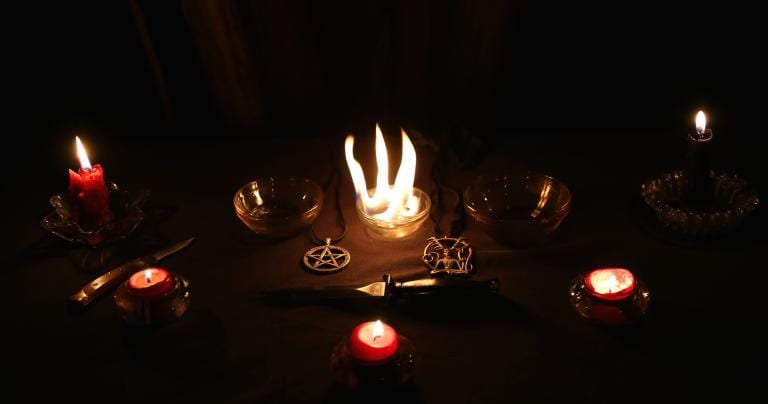
Seal the oath
Sealing the oath is a way of saying “it’s done.” There are many ways to do this, including literally sealing it with wax and a signet. You can seal it with your blood. I generally don’t recommend using blood in rituals, but I’ve done it. You can offer it to the fire – now it’s committed fully to the world of spirit. There are many other ways to finalize the oath – pick what seems right for this occasion.
If you keep the paper, put it some place safe. You may want your officiant to keep it for you. It is a sacred document and should be treated with respect.
Say goodbye
As with ordinary rituals, when you’re done say farewell to everyone you invited in – including the Deity of the Occasion. Say some closing words – perhaps a formal benediction, or perhaps something as simple as “this ritual of oathtaking is now complete.”
Do what you said you’d do
The ritual may be over, but the oath lasts forever – or at least, for as long as you agreed to abide by it. And the time to start fulfulling it is now.
Even with a strong and honored oath, a relationship with a deity will still wax and wane. You aren’t Their only concern, and They aren’t yours. There are things I do every day, others I do every week, and others I do every season. And then there are the big things that come when they come, projects and assignments that were either explicitly a part of my oaths, or that were implied by them.
Oaths are sacred commitments that should never be taken lightly or carelessly. But my oaths have helped my relationships grow stronger and deeper, and that makes my life better. I pray that your oaths will do the same for you.
Previous Post
January 28, 2021
Denton CUUPS Online Imbolc Ritual: January 30
Next Post

February 2, 2021 QAnon and the Great Disappointment of 1844
Browse Our Archives
Select a Category Books Community CUUPS Druidry Foundations and Context Gods and Goddesses Magic Myth Nature Ritual Spiritual Practice Theology Travel Uncategorized Videos
Select a Month October 2026 September 2026 August 2026 July 2026 June 2026 May 2026 April 2026 March 2026 February 2026 January 2026 December 2025 November 2025 October 2025 September 2025 August 2025 July 2025 June 2025 May 2025 April 2025 March 2025 February 2025 January 2025 December 2024 November 2024 October 2024 September 2024 August 2024 July 2024 June 2024 May 2024 April 2024 March 2024 February 2024 January 2024 December 2023 November 2023 October 2023 September 2023 August 2023 July 2023 June 2023 May 2023 April 2023 March 2023 February 2023 January 2023 December 2022 November 2022 October 2022 September 2022 August 2022 July 2022 June 2022 May 2022 April 2022 March 2022 February 2022 January 2022 December 2021 November 2021 October 2021 September 2021 August 2021 July 2021 June 2021 May 2021 April 2021 March 2021 February 2021 January 2021 December 2020 November 2020 October 2020 September 2020 August 2020 July 2020 June 2020 May 2020 April 2020 March 2020 February 2020 January 2020 December 2019 November 2019 October 2019 September 2019 August 2019 July 2019 June 2019 May 2019 April 2019 March 2019 February 2019 January 2019 December 2018 November 2018 October 2018 September 2018 August 2018 July 2018 June 2018 May 2018 April 2018 March 2018 February 2018 January 2018 December 2017 November 2017 October 2017 September 2017 August 2017 July 2017 June 2017 May 2017 April 2017 March 2017 February 2017 January 2017 December 2016 November 2016 October 2016 September 2016 August 2016 July 2016 June 2016 May 2016 April 2016 March 2016 February 2016 January 2016 December 2015 November 2015 October 2015 September 2015 August 2015 July 2015 June 2015 May 2015 April 2015 March 2015 February 2015 January 2015 December 2014 November 2014 October 2014 September 2014 August 2014 July 2014 June 2014 May 2014 April 2014 March 2014 February 2014 January 2014 December 2013 November 2013 October 2013 September 2013 August 2013 July 2013 June 2013 May 2013 April 2013 March 2013 February 2013 January 2013 December 2012 November 2012 October 2012 September 2012 August 2012 July 2012 June 2012 May 2012 April 2012 March 2012 February 2012 January 2012 December 2011 November 2011 October 2011 September 2011 August 2011 July 2011 June 2011 May 2011 April 2011 March 2011 February 2011 January 2011 December 2010 November 2010 October 2010 September 2010 August 2010 July 2010 June 2010 May 2010 April 2010 March 2010 February 2010 January 2010 December 2009 November 2009 October 2009 September 2009 August 2009 July 2009 June 2009 May 2009 April 2009 March 2009 February 2009 January 2009 December 2008 November 2008 October 2008 September 2008 August 2008 July 2008 June 2008
Follow Us!
TAKE THE
Religious Wisdom Quiz
What kind of bird did Noah send out second from the ark?
Select your answer to see how you score.
Owl Eagle Dove Pidgeon
Related posts from John Beckett




What We Lose When “Ask AI” Becomes A...
TRENDING AT PATHEOS Pagan

The Sermon on the Mount, Part I: Matthew...
The Sermon on the Mount, Part I (Matthew 4:12-5:12) St. Matthew moves...

What's up from Crossway: Reviewing some of their latest A few weeks...

Janie Learns the Way of the Cross: A...
Teaching children about Jesus' Passion can be challenging. Many parents and educators...

Looking For Good Catholic Writing - October 2026
He alone extends the heavens, and he walks upon the waves of...

In "Irreplaceable," our book on vocation and technology, Trevor Sutton and I...

I was strolling through the top floor of the brand new Parthenon...
view all Pagan blogs
Ad-Free & Subscriber Log-In Subscription Support
- About Us
- 2026 Calendar
- Videos
- Podcasts
- Library of World Religions
- Faith In Media Tracker
- Advertise With Us
- Write for Us
- Privacy Policy
- Terms of Service
- Do Not Sell My Data
- Contact Us
- Radiant Digital
- Manage Newsletter Subscriptions
- Unsubscribe From Notifications
- Sitemap
Copyright 2008-2026, Patheos. All rights reserved.
Subscription Support Ad-Free & Subscriber Log-In
Follow Patheos